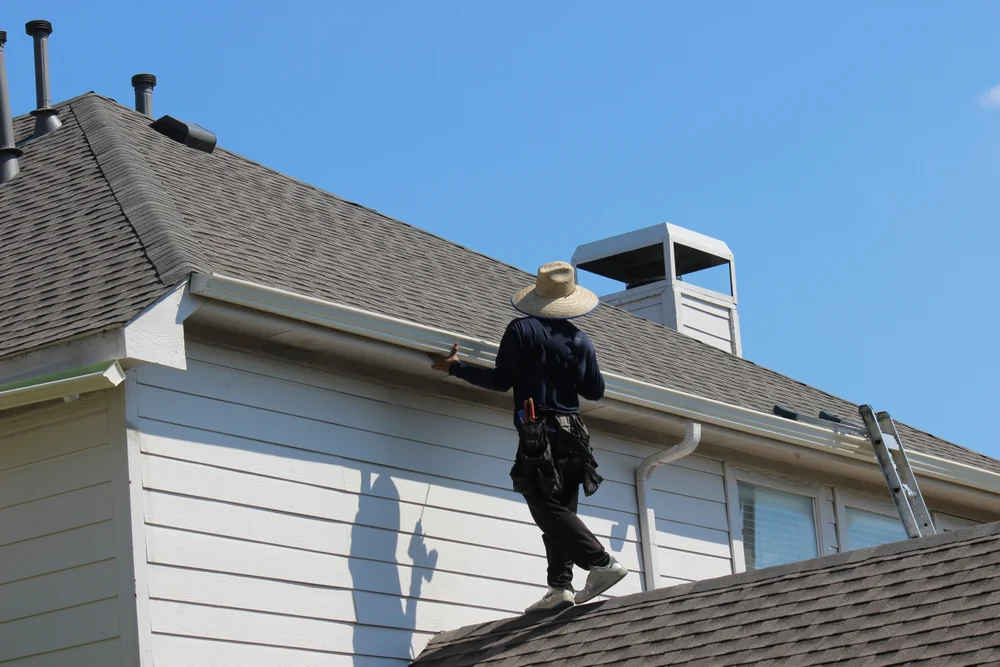
Not sure if your roof has a problem? Here's how to tell — and what to do before a small issue turns into a much bigger one.
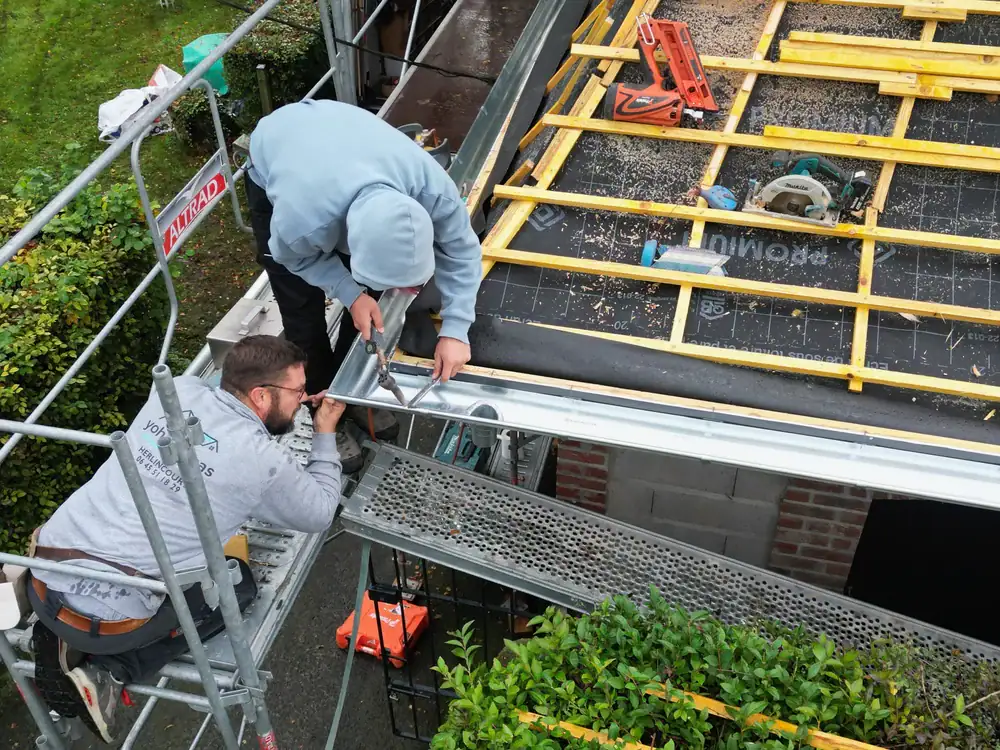
Here’s the thing about roof damage in New England — it rarely looks like much from the street. A roof can appear completely intact while shingles are cracked underneath, flashing has shifted after a nor’easter, or the underlayment has already been exposed to moisture for weeks. By the time you notice a water stain on the ceiling, the damage has usually been building for a while.
If you’re a homeowner in Greenvale, Rockingham County, Hillsborough County, or anywhere across Essex County and Middlesex County, this guide is for you. We’ll walk through the warning signs that actually matter, explain what causes them in our specific climate, and help you figure out what to do next.
Generic roofing advice tells you to look for missing shingles and call a contractor. That’s not wrong, but it’s not the whole picture — especially here. Essex County’s North Shore communities, the Greenvale area, and the towns stretching up through Rockingham and Hillsborough Counties all deal with a specific set of conditions that accelerate roof wear faster than most national averages suggest.
Freeze-thaw cycles are the biggest culprit. Snow melts on a warmer section of the roof, travels toward the eave, and refreezes when it hits the cold overhang. That cycle repeats all winter, and every time it does, it stresses the shingles, forces water into small cracks, and puts pressure on the flashing around chimneys and skylights. Coastal communities in Essex County face the added strain of salt air, which corrodes metal flashing and fasteners faster than inland areas.
The result is that damage here tends to be hidden, cumulative, and easy to underestimate until it isn’t.
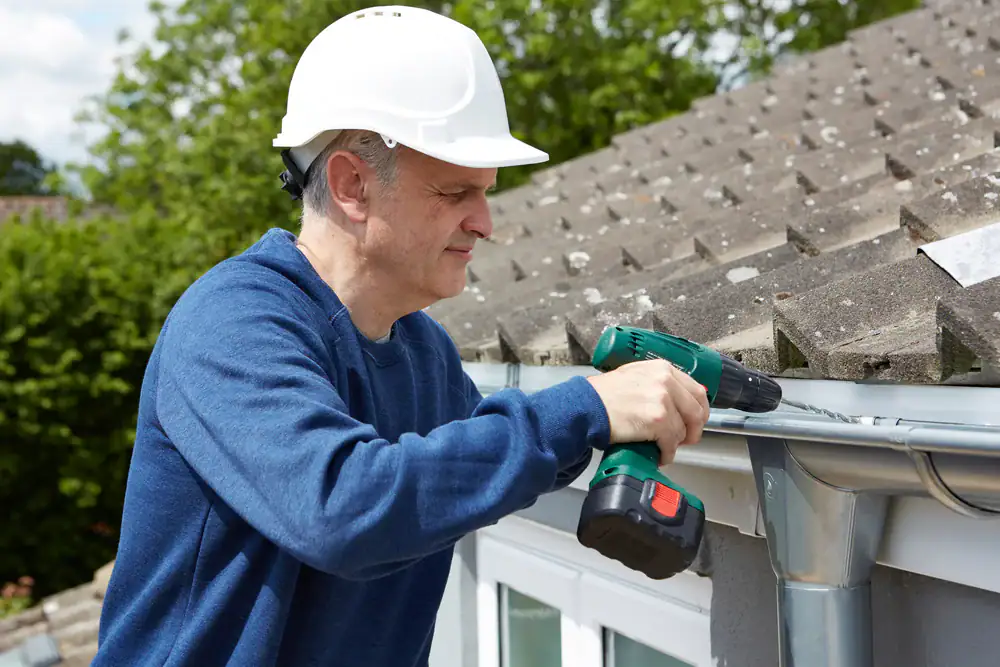
Most homeowners know to look for a leak. What they miss are the earlier signals — the ones that show up before water ever reaches the ceiling.
Granule loss is one of the clearest. Asphalt shingles are coated in granules that protect the material underneath from UV exposure and moisture. As a roof ages, those granules start washing off. If you’re finding a noticeable amount of gritty, sand-like material in your gutters or at the base of your downspouts, that’s not just debris — it’s your shingles telling you they’re near the end of their useful life. Once the granules go, the asphalt underneath breaks down quickly, especially through a New England winter.
Curling or cupping at the edges of shingles is another one. You can often spot this from the ground if you know what to look for — the corners of the shingles lift slightly rather than lying flat. On older homes in the Greenvale area and across the North Shore, this tends to show up first on north-facing slopes and around the chimney, where ice sits longest and runoff hits hardest.
Missing shingles after a wind event are the most obvious sign, but even a single missing shingle matters more than it seems. It’s not just the exposed spot — it’s what that gap means for the surrounding shingles and the underlayment beneath them. After any significant storm across Essex County or into southern New Hampshire, where gusts regularly exceed 50 mph, it’s worth taking a careful look at your roof rather than assuming everything held.
Flashing failures are trickier because they’re hard to see without getting up close. The metal strips that seal the edges around your chimney, skylights, and roof valleys are often the first place water finds a way in. If your home is more than 15 years old and hasn’t had the flashing inspected, that’s worth adding to your list.
Asphalt shingles typically last 20 to 25 years in this climate. If your roof is approaching that range, the warning signs above aren’t just cosmetic concerns — they’re legitimate reasons to have a roofing contractor take a real look.
Ice dams deserve their own conversation because they’re so common here and so frequently misunderstood. Massachusetts saw a resurgence of ice dam-related insurance claims in early 2026 — the first significant wave in several years — and it caught a lot of homeowners off guard.
Here’s how they form. When heat escapes through your roof, it warms the snow sitting on the upper portions of the roof deck. That snow melts and runs downhill toward the eave, which stays cold because it extends past the exterior wall. When the melt water hits that cold zone, it refreezes. Over several cycles, a wall of ice builds up along the eave — and that ice dam starts forcing water backward, up under the shingles, where it can reach the underlayment, the decking, and eventually your interior walls and ceilings.
The damage isn’t always immediate or dramatic. Sometimes it shows up as a faint stain on a ceiling near an exterior wall. Sometimes it’s a subtle soft spot in the drywall. By the time it’s visible, the moisture has usually been sitting there long enough to create conditions for mold and rot.
Ice dam removal itself can cost up to $4,000 — and that’s before addressing any interior damage left behind. The more important point is that ice dams are often a symptom of a ventilation or insulation problem, not just a weather event. A roof that’s properly ventilated loses less heat through the deck, which means less snowmelt and fewer ice dams. If you’ve dealt with ice dams repeatedly, it’s worth having a contractor evaluate whether your roofing system is set up to handle New England winters correctly — not just patching the result each time.
For homeowners in Rockingham County’s coastal communities or the inland towns of Hillsborough County, the same dynamics apply. The freeze-thaw cycle doesn’t care about county lines.
Want live answers?
Connect with a Paradise Remodeling Inc. expert for fast, friendly support.
This is the question most homeowners are really asking when they start looking up roofing contractors. Nobody wants to spend money on a full replacement if a repair will hold. And nobody wants to spend money on a repair that fails within a season because the roof was already past its useful life.
The honest answer depends on a few factors: how old the roof is, how widespread the damage is, and whether the problems are concentrated or scattered across multiple areas. A roof under 15 years old with damage isolated to one section is usually a strong candidate for repair. A roof over 20 years old with granule loss across multiple slopes, leaking in more than one area, and shingles that are curling or cracking throughout — that’s a replacement conversation.
The mistake we see most often is homeowners patching a roof that’s already telling them it’s done, then dealing with the same problems the following winter.
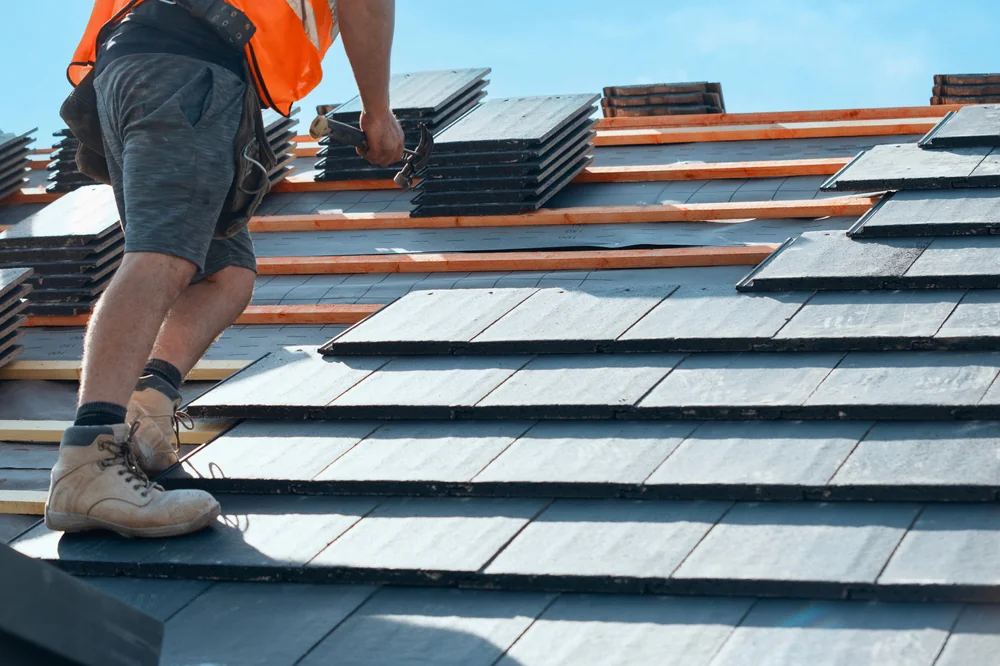
There’s a version of a roof inspection that’s really just a contractor pulling into your driveway, glancing up, and giving you a number. That’s not an inspection — it’s a guess. And in a market like Essex County or southern New Hampshire, where homes are a serious financial asset and roofing conditions are specific to the local climate, a guess isn’t good enough.
A real inspection means getting up on the roof and checking the shingles for granule loss, cracking, and curling. It means examining the flashing around every penetration point — chimney, skylights, vents. It means looking at the gutters, the fascia, the soffit, and the condition of the decking where it’s accessible. It means checking for signs of moisture intrusion in the attic, evaluating the ventilation, and looking for any areas where the underlayment may have been compromised.
When we come out to look at a roof, that’s what we do. We check for storm damage, worn shingles, flashing issues, ventilation problems, and anything else that could cause trouble down the line. Then we give you a clear, written estimate — no hidden fees, no surprise charges. You’ll know what materials we’re recommending, why we’re recommending them for this specific climate, and what the timeline looks like.
If you’re filing an insurance claim after storm damage, we document everything and help you through that process. That’s something a lot of homeowners don’t realize they can ask for — and it makes a real difference when you’re trying to get a claim approved.
The materials we use — including products from CertainTeed and Owens Corning — are specifically selected for New England’s freeze-thaw cycles and moisture conditions, not just whatever happens to be available. That distinction matters when you’re counting on a roof to hold up through a Rockingham County winter or a nor’easter coming off the Essex County coast.
The roofing industry has a well-earned reputation for contractors who show up after a storm, push for a fast decision, and disappear when something goes wrong. That pattern is real, and it’s worth knowing how to avoid it.
In Massachusetts, any contractor doing roofing work should hold a Construction Supervisor License and a Home Improvement Contractor registration — both are verifiable through the state. In New Hampshire, equivalent licensing requirements apply. If a contractor can’t provide those credentials upfront, that’s a clear signal to keep looking.
Beyond the basics, manufacturer certifications tell you something meaningful. We’re an Owens Corning Preferred Contractor, which requires passing an installation workmanship inspection, carrying over $1,000,000 in general liability insurance, and meeting continuous standards for quality and customer service. It’s not a designation that gets handed out freely, and it matters to homeowners because it unlocks warranty tiers that most contractors simply can’t offer.
Insurance is non-negotiable. Workers’ compensation and general liability coverage protect you as the homeowner — if a crew member is injured on your property and the contractor isn’t properly insured, you can be held liable. Ask for documentation before any work begins.
References and reviews matter, but specificity matters more than volume. Look for reviews that describe the actual experience — how the crew communicated, whether the timeline held, whether the site was cleaned up, whether the final result matched what was quoted. The reviews we’ve received consistently highlight the same things: showing up on time, transparent pricing, thorough cleanup, and direct access to the owner when questions come up. Those aren’t marketing points — they’re what the job actually looks like.
For homeowners in Greenvale and across the North Shore, where properties carry significant value and older housing stock means roofing decisions come up more frequently, getting the contractor selection right is worth the extra time.
If you’ve read through this and recognized one or more of the warning signs — granule loss, curling shingles, flashing concerns, a history of ice dams, a roof that’s pushing 20 years — the right move is a real inspection, not more waiting. Small problems in New England don’t stay small through winter.
The goal of an inspection isn’t to sell you something. It’s to tell you honestly what’s going on and what your options are. Sometimes the answer is a targeted repair. Sometimes it’s a replacement conversation. Either way, you’ll have the information you need to make a decision without guessing.
If you’re in Greenvale, anywhere across Essex County, southern New Hampshire, or Middlesex County, Paradise Remodeling Inc is available to come out, take a real look, and give you a straight answer about what your roof needs and what it’ll cost.
Summary:
Article details:
Share: