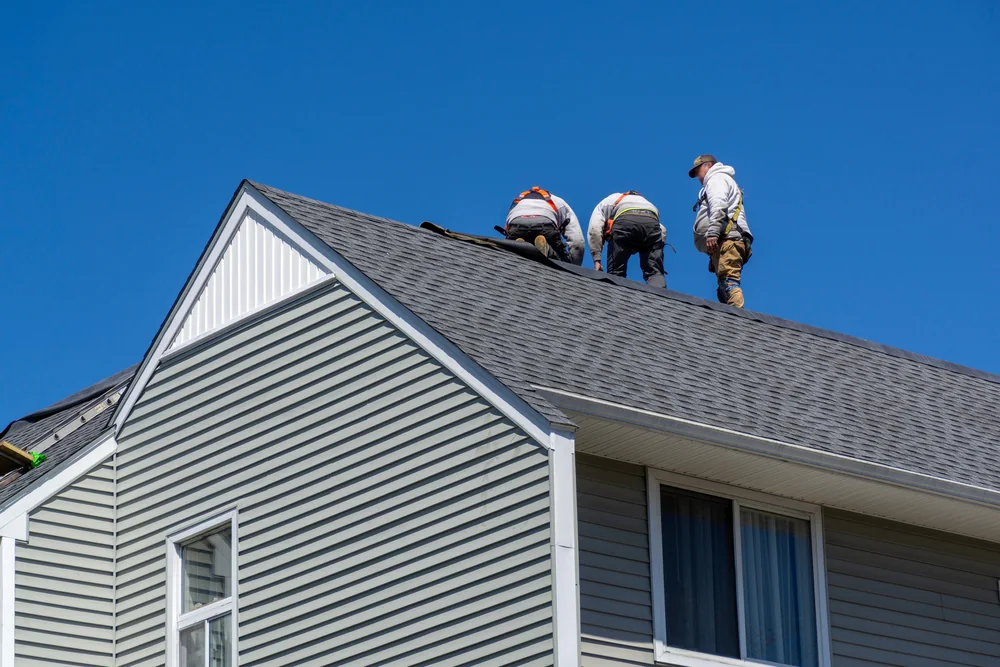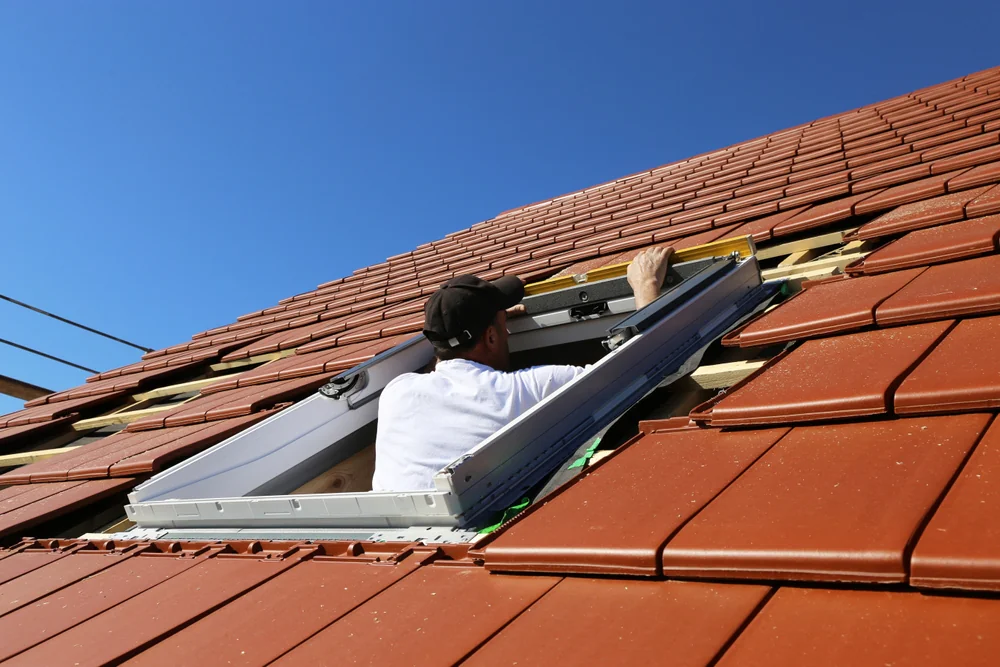
From ice dam damage to flat-roof repairs on triple-deckers, here's what roofing in Lawrence, MA actually looks like — and how to hire right.
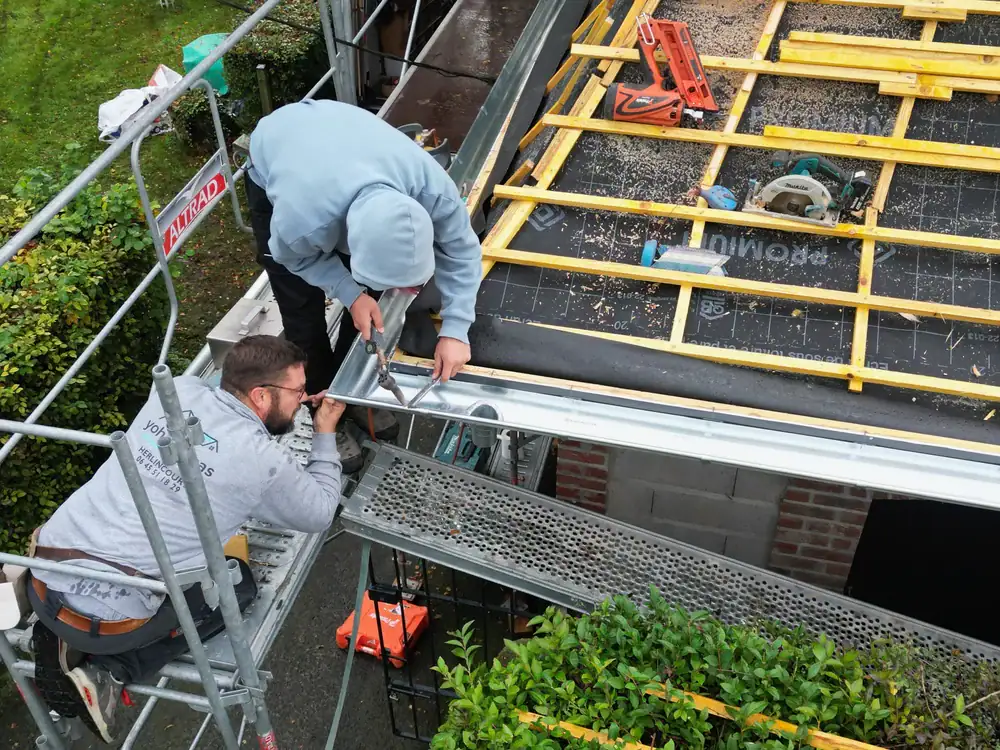
If you own a home — or a multi-family property — in Lawrence, you already know the roof takes a beating. Winters here aren’t gentle. The Merrimack Valley gets hit with freeze-thaw cycles, ice dams, and the occasional Nor’easter that reminds everyone why roofing isn’t a job for someone cutting corners. The problem isn’t finding a roofer. It’s finding one you can actually trust to do it right, pull the permits, show up when they say they will, and still be reachable six months later if something looks off. That’s what this guide is for.
Most people think of roofing as shingles. And for homes in Andover, North Andover, or the suburban stretches of Essex County, that’s accurate — pitched roofs, asphalt shingles, maybe some flashing work around a chimney. But Lawrence is different.
The city’s older housing stock — triple-deckers, mill-era multi-family buildings, converted tenements along the Merrimack River — has a high concentration of flat and low-slope roofs. Those require membrane systems: products like GenFlex and Mule Hide, not standard shingles. A roofing contractor who only works with pitched roofs genuinely cannot service a significant portion of Lawrence’s properties.
Beyond material type, roofing services cover a wide range: full roof replacements, targeted repairs, flashing work around chimneys and vents, storm damage assessment, ice dam repairs, emergency tarping when water is actively getting in, and routine inspections that catch problems before they become expensive. Knowing which service you actually need — and having a contractor honest enough to tell you — is the first thing worth getting right.
This is the question almost every homeowner asks, and the honest answer is: it depends on what’s actually causing the problem, not just what’s visible from the ground.
A missing shingle after a storm might be a simple repair. But if that shingle came off because the underlayment has deteriorated, or because ice dams have been forcing water back under the roof edge for a few winters, a patch isn’t going to hold. You’ll be back in the same situation before the next heating season. The underlying issue — compromised underlayment, failed flashing, ice dam damage to the roof deck — doesn’t get fixed by replacing the shingle on top of it.
The honest answer usually comes after a real inspection, not a five-minute look from a ladder. A thorough inspection checks the condition of the underlayment, the flashing at every penetration point (chimney, vents, skylights, valleys), the state of the roof deck itself, and whether the attic ventilation is contributing to ice dam formation. In New England, poor attic ventilation is one of the most common hidden drivers of recurring roof problems — heat escaping through the roof melts snow at the ridge, water runs down and refreezes at the cold eaves, and ice dams form. Over time, that water backs up under the shingles and into the home.
For Lawrence’s older multi-family buildings, the calculus is often different. Flat membrane roofs have a different lifespan than pitched shingle roofs, and the failure modes look different — blistering, pooling water, seam separation. If your building has a flat roof and you’re seeing interior water stains, the issue is almost never “just a patch.” It usually means the membrane has reached the end of its useful life or a seam has failed, and a contractor who knows membrane systems (GenFlex, Mule Hide, TPO, EPDM) needs to assess it properly.
The short version: don’t let anyone tell you what your roof needs before they’ve actually looked at it carefully. And don’t let anyone talk you into a full replacement without explaining exactly why a repair won’t hold.
Yes — and this is one of the things homeowners in Lawrence and across Essex County most commonly get wrong, sometimes with real consequences.
Under Massachusetts State Building Code (780 CMR), a building permit is required for virtually all roofing work, including re-shingling. It’s not just for structural projects. If a contractor tells you permits aren’t necessary for a standard roof replacement, that’s a red flag worth taking seriously.
Here’s why it matters beyond the legal requirement: unpermitted roofing work creates problems when you sell your home. A home inspector or buyer’s attorney will flag it. Your homeowner’s insurance may also have grounds to deny a claim if damage occurs on work that was done without permits. And if a future inspection reveals unpermitted work, the cost of remediation falls on you — not the contractor who’s long gone.
Massachusetts also requires roofing contractors to hold a Home Improvement Contractor (HIC) registration for work on 1–4 family owner-occupied residential properties. When structural components are involved — roof framing, deck replacement — a Construction Supervisor License (CSL) is also required. These are two separate credentials, and both matter. You can verify a contractor’s HIC registration through the Massachusetts Office of Consumer Affairs and Business Regulation. If a contractor hesitates to give you their license number, that tells you something.
For homeowners in Hillsborough County or Rockingham County, New Hampshire, the picture is different. New Hampshire has no statewide roofing contractor license requirement. That doesn’t mean any contractor working there is unqualified, but it does mean the state isn’t doing the vetting for you. In NH, insurance documentation, manufacturer certifications, verifiable review history, and permit-pulling habits become your primary screening tools. A contractor who consistently pulls permits — even where not strictly mandated — is demonstrating a pattern of doing things by the book.
We hold HIC License #195972 in Massachusetts, and our BuildZoom score ranks us in the top 8% of 139,240 licensed contractors in the state. That ranking is tied to our permit history, not self-reporting. It’s something you can verify independently.
Want live answers?
Connect with a Paradise Remodeling Inc. expert for fast, friendly support.
The roofing market in this region has a real problem that doesn’t get talked about enough: after every significant storm, contractors from out of the area — sometimes out of state — show up soliciting work door to door. They offer fast starts and low prices. Some do decent work. Others take deposits, do minimal work, and move on before any warranty issues surface. It happens in Lawrence, in Methuen, in the Rockingham County towns just across the NH line, and throughout Essex County every spring after the ice clears.
Knowing how to screen a contractor before you hand over a deposit protects you. It’s not complicated, but it does require asking a few specific questions and actually following up on the answers.
Start with the basics that are easy to verify. Ask for their HIC registration number and look it up through the Massachusetts OCABR website. Ask whether they’ll pull the permit — and if they say it’s not necessary, ask them to explain why in writing. Ask for a certificate of insurance showing both general liability and workers’ compensation coverage. A contractor without workers’ comp creates personal liability exposure for you if someone is injured on your property.
Then look at the estimate itself. A legitimate, detailed estimate includes the specific products being used (brand names, product lines), the full scope of work, payment terms, warranty information, and projected start and completion dates. A single-page bid with just a total number is not an estimate — it’s a handshake with no accountability built in.
Ask specifically about warranties. There are two separate warranties that matter in roofing: the manufacturer warranty covering the materials, and the workmanship warranty covering the installation. If a shingle fails because it was improperly nailed, the manufacturer’s warranty doesn’t cover it — that falls under workmanship. You need both, in writing, before work begins.
Massachusetts roofing labor typically runs $60–$90 per hour. When a quote comes in dramatically below what others are offering, it’s worth asking what’s been cut. Workers’ comp insurance is expensive. Permits cost money and time. Quality materials cost more than builder-grade alternatives. A contractor who’s undercutting the market significantly is usually cutting something — and you’ll find out what after the fact.
One more thing worth checking: does the contractor have a real physical address, not just a phone number or P.O. box? A locally based contractor with a verifiable address and a decade of operating history in the area is a fundamentally different risk profile than someone who appeared after the last storm. We’re based in Methuen — right next to Lawrence — and we’ve been operating here since 2012.
Lawrence is a dense, older city — roughly 12,800 people per square mile, with a housing inventory that reflects its industrial mill history. A significant portion of the city’s buildings are multi-family: triple-deckers, converted mill-era structures, and older tenements with flat or low-slope roofs. That’s a fundamentally different roofing challenge than the pitched residential roofs you’ll find in Andover or North Andover, and it requires contractors who actually know membrane systems — not just shingle work.
The city is also majority Hispanic, with nearly 75% of residents identifying as Hispanic and close to 45% born outside the country. For a lot of Lawrence homeowners and landlords, working with a contractor who communicates in Spanish isn’t a nice-to-have — it’s the difference between understanding what’s being proposed and signing something you’re not fully clear on. We offer service in Spanish, which matters in a city where that’s the primary language for a significant portion of the community.
The weather context matters too. Lawrence sits on the Merrimack River, and the valley climate means repeated freeze-thaw cycles throughout winter — not just a few cold snaps, but dozens of freeze-thaw events that work ice into every small gap in a roofing system over years. Couple that with Nor’easters tracking up the coast into Essex County, and you have conditions that demand materials specified for this region. We use CertainTeed products engineered for New England weather on pitched roofs, and GenFlex and Mule Hide membrane systems for flat and low-slope applications — not whatever happens to be cheapest at the supply house.
For homeowners and landlords along I-495 or Route 28 commuting north into Rockingham County or Hillsborough County, New Hampshire, or east toward the coastal towns of Essex County, the same principles apply across the service area. Rockingham County towns like Derry and Salem see similar freeze-thaw pressure, and Hillsborough County gets deeper snow loads than the coast. The roofing challenges shift depending on where you are, but the standard for who you hire shouldn’t.
Getting a roof done right in this part of Massachusetts and southern New Hampshire comes down to a few things: a contractor who knows the local housing stock, pulls permits as a matter of course, uses materials suited to the actual climate, and is still reachable after the job is done. That last part matters more than most homeowners realize until they need it.
Whether you’re dealing with storm damage in Essex County, a failing membrane on a Lawrence triple-decker, ice dam repairs in Rockingham County, or a full replacement before winter in Hillsborough County, the process starts the same way — with an honest inspection and a clear, detailed estimate that tells you exactly what you’re getting.
If you have questions or want to talk through what your roof actually needs, Paradise Remodeling Inc is here. We’re local, we’re licensed, and we don’t disappear after the last shingle goes down.
Summary:
Article details:
Share: