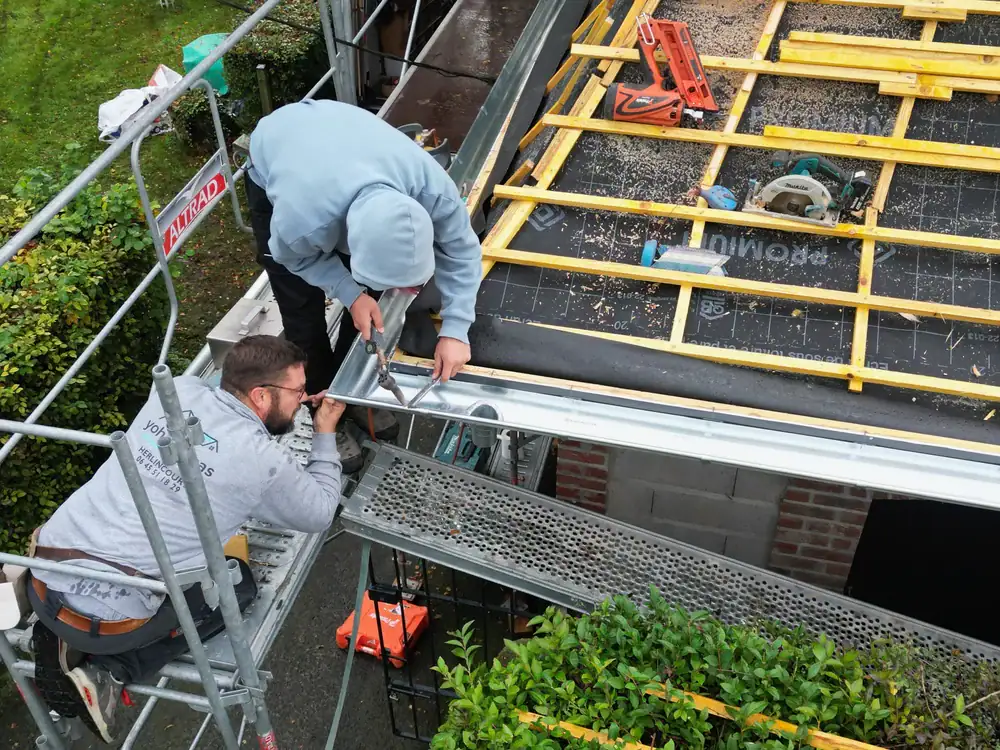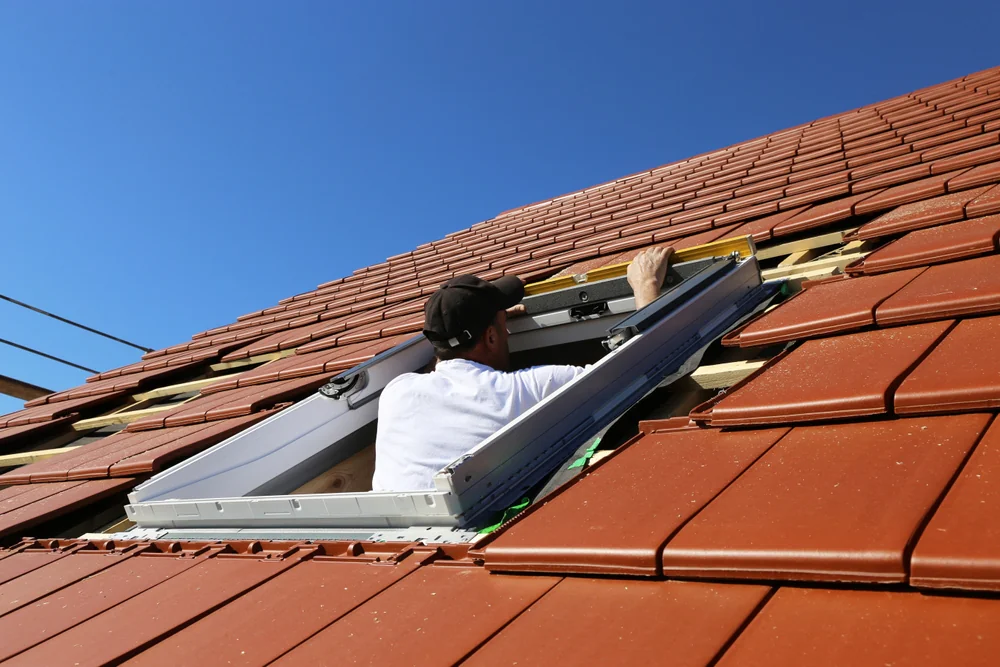
Hiring the wrong roofer in Massachusetts or New Hampshire can cost you more than a bad roof. Here's what to verify before you sign anything.
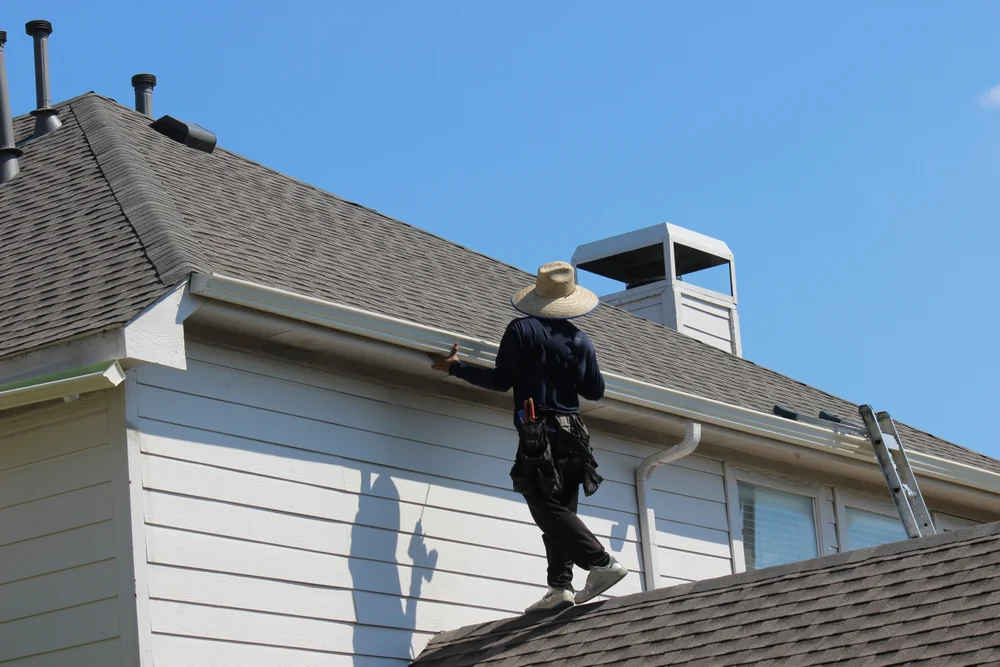
You’ve got a leak, a damaged shingle, or a roof that’s been on your mind since the last nor’easter. You search for roofers, get a few names, and suddenly you’re trying to compare people you’ve never met, with credentials you can’t easily verify, quoting prices that vary by thousands of dollars. It’s a lot. And the stakes are real — a roof replacement in this market typically runs between $10,000 and $20,000. Getting it wrong isn’t just inconvenient. It’s expensive.
Here’s what you actually need to know to hire the right roofing contractor in Essex County, MA, Middlesex County, MA, Hillsborough County, NH, and Rockingham County, NH — starting with something most homeowners don’t know at all.
When a contractor tells you they’re licensed, that doesn’t tell you much on its own. Massachusetts requires two separate credentials for roofing work on residential properties — and most homeowners don’t know that distinction exists until something goes wrong.
The first is a Home Improvement Contractor (HIC) Registration, issued through the Massachusetts Office of Consumer Affairs and Business Regulation under Chapter 142A. The second is a Construction Supervisor License (CSL), issued by the Office of Public Safety and Inspections. Both are required. One without the other isn’t enough, and a general business license doesn’t substitute for either.
The good news is that both credentials are publicly searchable. You can look up a contractor’s HIC Registration and CSL status online through the state’s licensing portals before you ever invite them onto your property. This takes about five minutes and can save you from a situation that takes months to untangle.
Why does it matter so much? Because hiring an unlicensed contractor for roofing work in Massachusetts creates real exposure for you as the homeowner. If a worker is injured on your property and the contractor doesn’t carry proper workers’ compensation insurance — which is mandatory for any Massachusetts employer — you can be held liable. If the work is done without permits and you go to sell your home, that unpermitted work becomes your problem to fix. And if the contractor disappears after taking your deposit, your legal options are significantly weaker without a licensed party to hold accountable.
Massachusetts also requires Workers’ Compensation Insurance for every employer with one or more employees, and most municipalities require General Liability Insurance of at least $500,000 to $1,000,000 at the permit stage. Ask for proof of both before any work begins. A legitimate contractor will hand it over without hesitation.
For homeowners in New Hampshire — whether you’re in Bedford, Windham, Derry, or closer to the Massachusetts border in Salem or Plaistow — the licensing structure differs from Massachusetts, but requirements still exist. Contractors working across the MA/NH border need to be compliant in both states. There’s no reciprocity agreement between them, so an out-of-state contractor registered in one state isn’t automatically legal in the other.
We hold Massachusetts HIC License #195972, which is active and verifiable. Our BuildZoom score of 105 ranks us in the top 8% of 139,240 Massachusetts licensed contractors. That’s not a marketing number — it’s a third-party ranking you can look up yourself.
After every significant weather event in this region — and there are plenty of them — a wave of out-of-state contractors follows. They show up in neighborhoods across Lawrence, Haverhill, Salem, NH, and the Merrimack Valley with low quotes, high pressure, and no verifiable local presence. They’re called storm chasers, and the pattern is consistent: they collect a deposit, do minimal or substandard work, and move on to the next storm-hit market before you realize there’s a problem.
The January 2026 storm that dropped nearly 27 inches on Gloucester and close to two feet on the New Hampshire Seacoast created exactly the conditions storm chasers look for. Widespread ice dam damage, urgent homeowners, and a market flooded with unfamiliar names. If you were searching for a roofer in the weeks after that storm in Essex County or Rockingham County, you were navigating a much noisier market than usual.
Here’s what separates a legitimate local contractor from a storm chaser. A real local roofer has a physical address you can verify — not just a phone number or a website that went live last month. They’ve been operating in your area long enough that neighbors can vouch for them or you can find genuine reviews on multiple platforms. They pull permits. They carry insurance you can verify. And they don’t pressure you to sign anything before you have a written contract in hand.
One specific red flag: any contractor who asks you to sign an Assignment of Benefits (AOB) document before formalizing a contract is asking you to hand over your insurance claim rights before you know what you’re agreeing to. Walk away from that conversation.
We’ve been operating in Essex County, Middlesex County, and southern New Hampshire since 2006. We have a physical location at 46 Elmore Street in Methuen — a five-minute drive from the New Hampshire border. When you call us, you’re reaching a team that has been here through dozens of nor’easters, ice dam seasons, and hail events, not one that arrived after the last one.
Want live answers?
Connect with a Paradise Remodeling Inc. expert for fast, friendly support.
Once you’ve confirmed a contractor is properly licensed and insured, the next step is comparing estimates intelligently. A written, itemized estimate — one that breaks out materials, labor, and timeline separately — is the baseline. If a contractor hands you a single number with no detail behind it, that’s a problem.
Price variation between estimates is normal, but dramatic differences usually mean something. An estimate that comes in significantly below the others almost always reflects a shortcut somewhere: inferior materials, unlicensed labor, skipped underlayment, or a plan to add costs through change orders once work has started.
Beyond licensing, manufacturer certifications are one of the most meaningful ways to evaluate a roofing contractor — and one of the least understood by homeowners. These aren’t certifications a contractor gives themselves. They’re granted by roofing manufacturers like Owens Corning after a contractor meets specific standards for quality, reliability, and customer satisfaction.
Why does this matter practically? Because a certified contractor can offer you warranty options that an uncertified contractor simply cannot. When you’re spending $10,000 to $20,000 on a new roof, a manufacturer-backed warranty that extends beyond the standard coverage is worth understanding. It’s protection that outlasts the contractor’s existence — which matters more than most people think when they’re making a decision.
We’re an Owens Corning Preferred Contractor. That status wasn’t handed to us — it required meeting Owens Corning’s standards and maintaining them. It also means we have access to extended warranty options for our customers that uncertified contractors can’t offer, regardless of how long they’ve been in business.
For homeowners in coastal Essex County communities like Gloucester, Marblehead, or Manchester-by-the-Sea — where salt air accelerates shingle degradation and roofs typically have a shorter lifespan than inland — the quality of materials and the warranty behind them matters even more. The same goes for communities in Rockingham County along the New Hampshire coast, where wind exposure and salt air create conditions that punish inferior installations quickly.
This is one of the most common questions homeowners ask, and one of the places where contractor honesty is most easily tested. The honest answer depends on the actual condition of your roof — not on what generates the larger job.
Most roof repairs in this area run between $1,163 and $1,603 for materials, plus labor at $60 to $90 per hour. A full replacement typically falls between $10,000 and $20,000 depending on size and materials. Those are meaningfully different numbers, and a contractor who always recommends replacement regardless of what they find is not giving you an honest assessment.
The factors that actually determine repair versus replace: the age of the roof, the extent of the damage, whether the underlying decking is compromised, and what the damage pattern tells you about the overall condition. A roof that’s 12 years old with isolated wind damage in one area is a different conversation than a 25-year-old roof with widespread granule loss, soft spots, and recurring leaks. A good contractor explains what they found, shows you photos, and walks you through the reasoning — without steering you toward the bigger job by default.
We inspect the full roof, not just the visible problem area. When it makes sense to repair, we tell you. When replacement is the better long-term decision, we explain exactly why. Our customers in Middlesex County communities like Maynard, Holliston, and Wilmington have been on the receiving end of both answers — and they know the difference between a contractor who’s honest and one who’s selling.
One more thing worth knowing: if your damage is storm-related, the repair-versus-replace conversation often involves your insurance company. We document damage thoroughly, provide detailed estimates, and can meet with your adjuster. Roof insurance claims exceeded $30 billion nationally in 2024 — and claims that are improperly documented or performed by contractors unfamiliar with the process are the ones most likely to be denied or underpaid.
Choosing a roofing contractor comes down to a short list of things you can actually verify: two active Massachusetts credentials (HIC Registration and CSL), proof of insurance, a physical local address, real reviews across multiple platforms, and a written estimate that breaks down exactly what you’re paying for. Manufacturer certifications like Owens Corning Preferred Contractor status are a meaningful bonus — they reflect third-party accountability that goes beyond what a contractor says about themselves.
The roofing market in Essex County, Middlesex County, and southern New Hampshire is busy, and it gets noisier after every storm. Knowing what to check puts you in a much stronger position than most homeowners who start with price alone.
If you’re dealing with a leak, storm damage, or a roof that’s been on your radar for a while, Paradise Remodeling Inc is happy to take a look, give you an honest assessment, and put something in writing. No pressure, no runaround — just a straight answer from a contractor who’s been doing this in your backyard since 2006.
Summary:
Article details:
Share: