Storm hit your roof? Here's what repairs actually cost in Essex County, MA — and what separates a fair quote from a bad one.
A storm rolls through, you find water stains on the ceiling or shingles in the yard, and suddenly you’re searching for answers at 11pm wondering how bad this is going to be. That’s a stressful place to be — and the last thing you need is vague contractor language or a quote that feels like it came out of thin air.
We’ve been repairing roofs in Essex County, MA since 2006, and the questions we hear most often aren’t about materials or timelines. They’re about money. What’s this going to cost? Will insurance cover it? How do I know if I’m being quoted fairly? Here’s what we actually know.
There’s no single answer to what roof repair costs in Essex County, MA after storm damage — but there is a realistic range, and understanding it puts you in a much stronger position before you call anyone.
For minor spot repairs — a handful of missing shingles, a small flashing failure, or an isolated leak with no structural involvement — most homeowners in Essex County are looking at somewhere between $300 and $900. That’s the range for work that’s genuinely contained: one problem area, no rotted decking underneath, no secondary damage to the underlayment.
Moderate storm damage is a different story. When a nor’easter lifts multiple sections of shingles, drives water under the flashing around a chimney or skylight, or leaves ice dam damage that’s worked its way into the decking, repairs typically run $900 to $3,500. The variance in that range comes down to a few key factors: how steep the roof is, what materials are involved, how far the water got before it was caught, and what the labor market looks like in your part of Essex County.
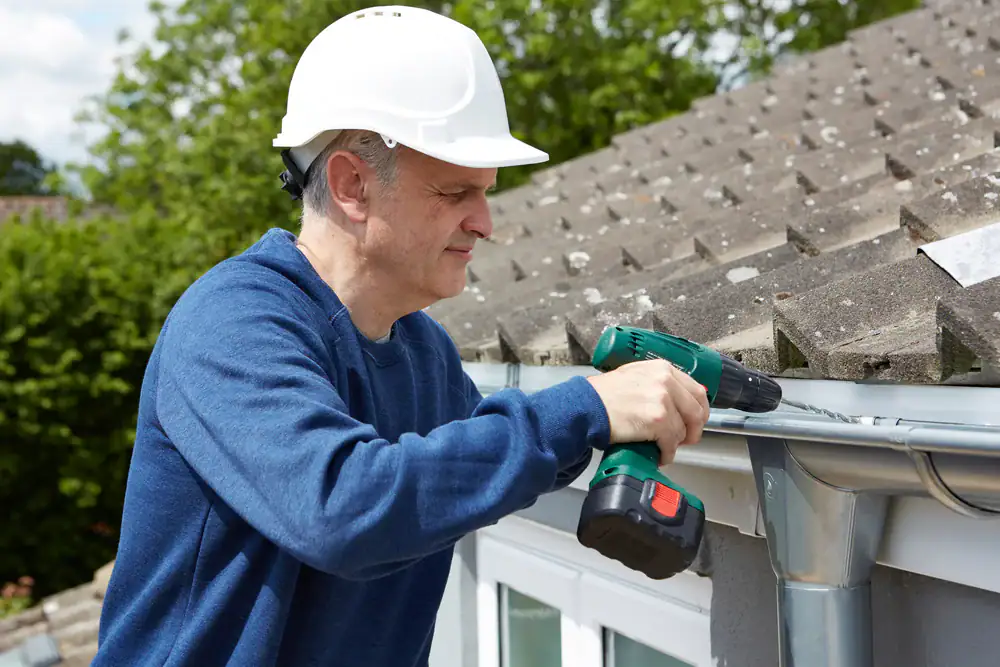
The number one reason repair costs surprise homeowners isn’t contractor markup — it’s hidden damage that only becomes visible once someone actually gets on the roof and looks. What appears to be a shingle problem from the ground is sometimes a flashing problem underneath. What looks like a flashing problem is sometimes compromised decking. A contractor who patches the surface without inspecting the structure is setting you up for the same conversation again in six months.
Roof slope is one of the first things that affects cost. Steeper pitches require more safety equipment, slower work, and more labor time — and the older Colonial and Victorian homes throughout Essex County have exactly that kind of roof geometry. These are beautiful homes, but they’re not cheap to work on.
Material matching is another cost driver that doesn’t get enough attention. When shingles are replaced on a partial section, they need to match the existing roof — both for weatherproofing and for resale value. If your roof is ten or fifteen years old, finding a close match takes more sourcing time, and sometimes the closest available option is a full-section replacement rather than a spot fix.
Decking damage is where moderate repairs start approaching replacement territory. If water has been sitting long enough to rot the plywood or OSB underneath the shingles, that structural material has to come out and be replaced before anything goes back on top. Depending on how many sheets are affected, this alone can add $500 to $1,500 or more to a repair job. It’s not an upsell — it’s a structural necessity.
Finally, labor costs in Essex County reflect the regional market. Roofing labor in this area typically runs $50 to $100 per hour, and emergency or post-storm response — when demand spikes across the county after a major weather event — can push toward the upper end of that range. Permits add another $250 to $500 depending on the town, and they’re required for most repair work in Massachusetts.
This is the conversation most homeowners dread, and it’s also the one where the wrong contractor can steer you in the wrong direction — either by pushing a replacement you don’t need, or by patching a roof that genuinely needs to come off.
The honest threshold looks something like this: if the repair cost is approaching 30 to 40 percent of what a full replacement would cost, and the roof is already 15 to 20 years old, replacement is often the smarter financial decision. A new roof in Essex County, MA averages roughly $10,500 to $14,500 depending on size, pitch, and material — so if you’re looking at a $4,000 repair on a roof that’s already showing widespread granule loss and brittleness, the math starts to shift.
That said, age alone doesn’t make a repair wrong. We’ve repaired roofs in their 20s that had one isolated problem and decades of life left in the rest of the surface. The right answer depends on the condition of the field shingles, the state of the underlayment, whether the decking is sound, and whether the damage is truly isolated or a sign of systemic deterioration.
The coastal communities in Essex County add a layer of complexity here. Salt air from the Atlantic accelerates corrosion on metal flashing and fasteners — which means roofs in Gloucester, Newburyport, Marblehead, and Beverly often show flashing failure before the shingles themselves give out. A repair that addresses only the shingles while leaving corroded flashing in place is a temporary fix. We understand this market and the difference between a surface patch and a lasting repair.
Ice dams are the other Essex County-specific factor worth naming directly. They form when heat escapes through an under-insulated attic, melts snow on the roof surface, and the meltwater refreezes at the cold eaves — backing up under shingles and forcing water into the structure. The leak that appears on your ceiling in February often started forming in December. By the time it’s visible, the water has usually traveled further than it looks, and the repair scope reflects that.
Want live answers?
Connect with a Paradise Remodeling Inc. expert for fast, friendly support.
After a major storm, contractor availability in Essex County, MA tightens fast. Everyone is calling at once, response times stretch, and a certain number of out-of-area crews show up looking for work. That’s the environment where homeowners are most likely to make a decision they regret — not because they weren’t careful, but because they were under pressure and didn’t have a clear way to evaluate who they were talking to.
The basics matter: a Massachusetts Specialty CSL license for roof covering is legally required to perform roofing work in the state. Insurance — both liability and workers’ compensation — protects you if something goes wrong on your property. These aren’t optional, and any roofing repair contractor worth hiring will confirm both without hesitation.
Beyond the table stakes, manufacturer certifications like Owens Corning Preferred Contractor status are meaningful signals. These aren’t self-reported — they require documented installation quality standards, insurance thresholds, and training compliance. They also unlock better warranty options for the homeowner. We hold Owens Corning Preferred Contractor status, and it’s something we earned through the work, not something we put on a website to fill space.
The short answer is: usually yes, for wind and hail damage — but the details matter more than the general rule.
Massachusetts homeowners insurance policies typically cover storm-caused roof damage, including wind, hail, fallen trees, and ice and snow weight. What they often don’t cover is damage that an adjuster classifies as normal wear and tear or age-related deterioration. That distinction becomes the central argument in a lot of claims, and it’s where documentation quality makes a real difference. A contractor who photographs the damage thoroughly, identifies the storm-specific cause, and provides written documentation of findings gives your claim a much stronger foundation than one who patches and leaves.
The other thing worth understanding before you file is whether your policy covers your roof on a Replacement Cost Value (RCV) or Actual Cash Value (ACV) basis. On a 15-year-old roof, that difference can exceed $10,000. With RCV coverage, you’re entitled to the cost of repairing or replacing the roof with new materials at current prices. With ACV coverage, the insurer factors in depreciation — so a roof that’s halfway through its expected life might only be covered for half the replacement value. Most homeowners don’t know which type of coverage they have until they’re already in the middle of a claim.
Supplemental claims are also worth knowing about. If additional damage is discovered during the repair — rotted decking that wasn’t visible during the initial inspection, for example — a supplemental claim allows that additional scope to be added to the original claim. We provide documentation of all work for exactly this reason, giving you the evidence you need if your claim needs to expand.
Three quotes that are all different numbers is normal. Three quotes that are all dramatically different — with no explanation for the variance — is a sign that someone isn’t telling you the full story.
A fair quote for storm damage roof repair should include a clear description of what’s being repaired and why, the materials being used and how they’ll match the existing roof, whether a full inspection was performed before the estimate was written, permit costs if applicable, and what’s not included in the scope. That last one is important. A quote that looks low because it doesn’t account for decking replacement, flashing work, or permit fees isn’t actually lower — it’s just incomplete.
One honest signal we’ve heard from customers over the years is that our quotes sometimes come in higher than the lowest bid they received. We don’t apologize for that. What we can tell you is that our quotes reflect a full inspection, honest scope, and work that’s built to last through an Essex County winter — not patched to look good long enough to collect payment. The homeowner who paid a little more for quality work instead of the lowest quote made a sound decision, and most of the time they know it by the following spring.
What you should expect from any contractor you hire: a named point of contact who stays reachable through the job, documentation you can use for insurance purposes, and a crew that shows up when they say they will. Feliciano Gomez personally oversees every project we take on — customers reach him directly, not a call center — and that accountability runs through every job from the first inspection to the final walkthrough.
If you’re dealing with an active leak or visible storm damage, the window for containing the problem is shorter than most people realize. Water that gets into the structure over a Massachusetts winter — cycling through freeze and thaw, backing up behind ice dams, working into the decking — doesn’t stay contained. A $600 repair that gets delayed becomes a $6,000 problem by March.
Get a real inspection from a licensed contractor who will tell you honestly what’s there — not just what’s visible from the driveway. Understand your insurance coverage before you file, and make sure whoever you hire can document the work properly. And if you’re comparing quotes, look at what’s actually in each one before you compare the bottom line.
We’ve been working in Essex County, MA long enough to know what storms do to the roofs here — from the coastal flashing failures in Gloucester, Newburyport, Marblehead, and Beverly to the ice dam damage that shows up in the Merrimack Valley communities every February. If you want a straight answer about what you’re dealing with, Paradise Remodeling Inc offers free quotes and responds fast — because in this business, timing matters as much as quality.
Summary:
Article details:
Share: