A hail storm hit. Now what? Here's how Essex County homeowners can spot real damage, document it properly, and navigate the insurance claim process without getting burned.
You might not have seen the hail. Maybe you heard it, or maybe a neighbor mentioned it, or maybe you just noticed a few shingles in the yard the next morning. Either way, you’re now wondering whether your roof actually took damage — and whether your insurance will cover it. That uncertainty is exactly where most homeowners in Essex County get stuck. They’re not sure what to look for, not sure what to document, and not sure who to trust when contractors start showing up at the door. This guide is meant to cut through all of that and give you a clear picture of what to do next.
Most standard homeowners insurance policies in Massachusetts do cover sudden storm damage — including hail. But “covered” doesn’t mean automatic. What gets paid out depends heavily on how the damage is documented, how quickly you act, and whether the damage is classified as storm impact versus normal wear and tear.
One thing worth knowing: Massachusetts is included in states where certain policies carry a separate wind and hail deductible, which can be higher than your standard deductible. That doesn’t mean you shouldn’t file — it just means understanding your policy before you do is worth the 20 minutes it takes.
Pull out your policy, look for the deductible section, and check whether there’s any language about cosmetic damage exclusions. Some insurers have added provisions that exclude coverage if hail only affects the appearance of a surface without compromising its function. That’s a real clause, and it matters.

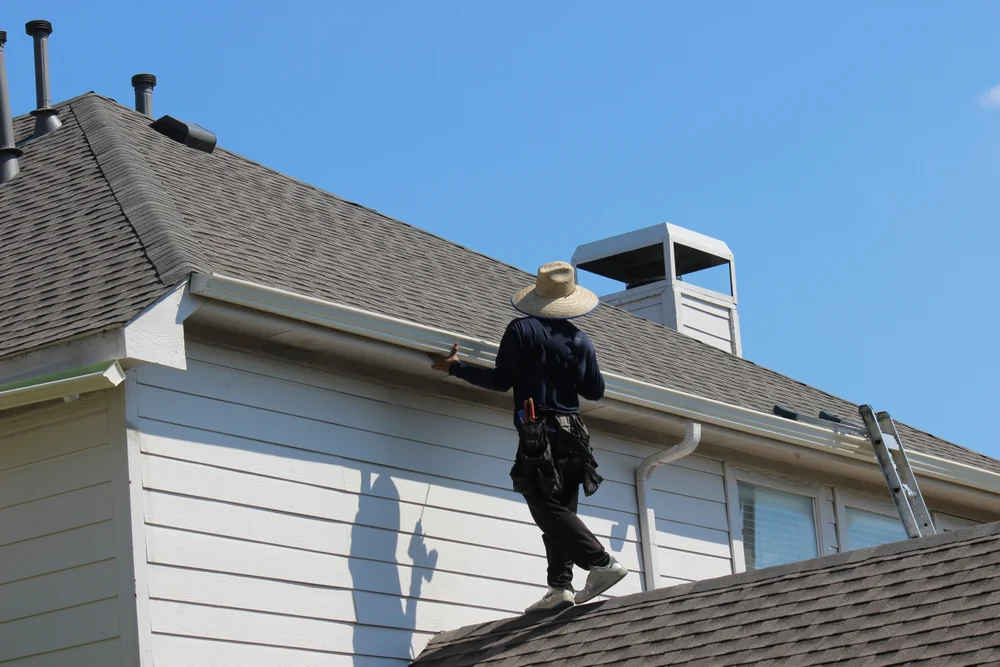
This is where most homeowners get tripped up — and where insurers find the easiest reasons to deny or reduce a claim. Hail damage on asphalt shingles is almost never visible from the ground. What you’re looking for requires either getting on a ladder or having someone who knows what they’re doing get up there for you.
Genuine hail impacts have a few consistent characteristics. The damage is random — scattered across the shingle surface with no pattern tied to edges or tab lines. The marks are roughly consistent in size, because the hailstones that fell were roughly the same size. Where granules have been knocked away, the exposed asphalt mat underneath looks dark, almost shiny — that’s fresh exposure. On older, weather-worn damage, the mat looks gray and oxidized. That distinction matters because adjusters are trained to tell the difference, and they will use it.
The soft metal test is one of the most reliable ways to confirm a storm actually produced hail significant enough to damage your roof. Check your gutters, downspouts, window screens, AC unit fins, and any aluminum flashing around your chimney or skylights. If those surfaces show circular denting consistent in size and distribution, that’s corroborating evidence that the same storm hit your shingles. Adjusters use this test too — and if you can document it before anyone touches anything, it strengthens your position considerably.
One thing to be careful about: blistering on shingles is not hail damage. Blistering looks like a raised bubble under the surface — it’s caused by manufacturing defects or poor attic ventilation, and insurers will not cover it under a storm claim. Hail creates a depression or indentation, not a raised bubble. Age-related cracking tends to follow straight lines along stress points, not the random circular pattern that a hailstone leaves. Knowing the difference before you call your insurer prevents you from filing for something that’s going to come back as a denial.
The difference between a paid claim and a denied one often comes down to what you photographed in the first 48 hours after the storm. This is where most homeowners leave money on the table — not because they didn’t take photos, but because the photos they took weren’t useful to an adjuster.
Start wide. Get photos of the full roof from each side of the house that show the overall condition and any visible disturbance — missing shingles, debris, displaced flashing. Then move in closer, to mid-range shots that show specific sections of the roof plane. Then get close-up shots of individual impact marks, ideally with something in the frame for scale — a coin or a tape measure works well. The goal is to show the random distribution of marks, the size consistency, and the fresh mat exposure underneath.
Don’t stop at the roof. Photograph your gutters from multiple angles, especially the tops of the gutter runs where hailstones would have struck flat metal. Photograph your AC unit fins, any aluminum window trim, and your downspouts. If your property has a fence, deck railing, or outdoor furniture that shows impact marks, photograph those too. Every piece of soft metal that shows denting is a piece of evidence that the hail was real, that it was significant, and that it came from the same storm event.
Keep a record of the storm date. NOAA maintains storm event data that adjusters can cross-reference, and having the date documented — whether from a weather alert, a news report, or a local notification — ties your photos to a specific event. That matters more than most homeowners realize, especially in Essex County where multiple storms can roll through in a single season and the roof may have been exposed to more than one event before anyone gets up there to look.
Want live answers?
Connect with a Paradise Remodeling Inc. expert for fast, friendly support.
Once you’ve documented the damage, the next step is contacting your insurer to open a claim. Most policies require you to file within one to two years of the storm date — but the sooner you file, the better. Waiting until damage becomes visible as a leak means you’re filing later in the window and potentially dealing with secondary damage that complicates the original claim.
When you call, have the storm date, your policy number, and your documentation ready. Your insurer will assign an adjuster to inspect the property. That inspection is the most consequential step in the process — and how prepared you are for it determines a lot about what happens next.

The adjuster works for the insurance company. That’s not a criticism — it’s just a fact worth understanding going in. Their job is to assess the damage accurately, but they’re also operating within a system that has financial incentives to classify damage as pre-existing wear, blistering, or cosmetic where possible. Being present during the inspection, and having your documentation organized, shifts that dynamic meaningfully.
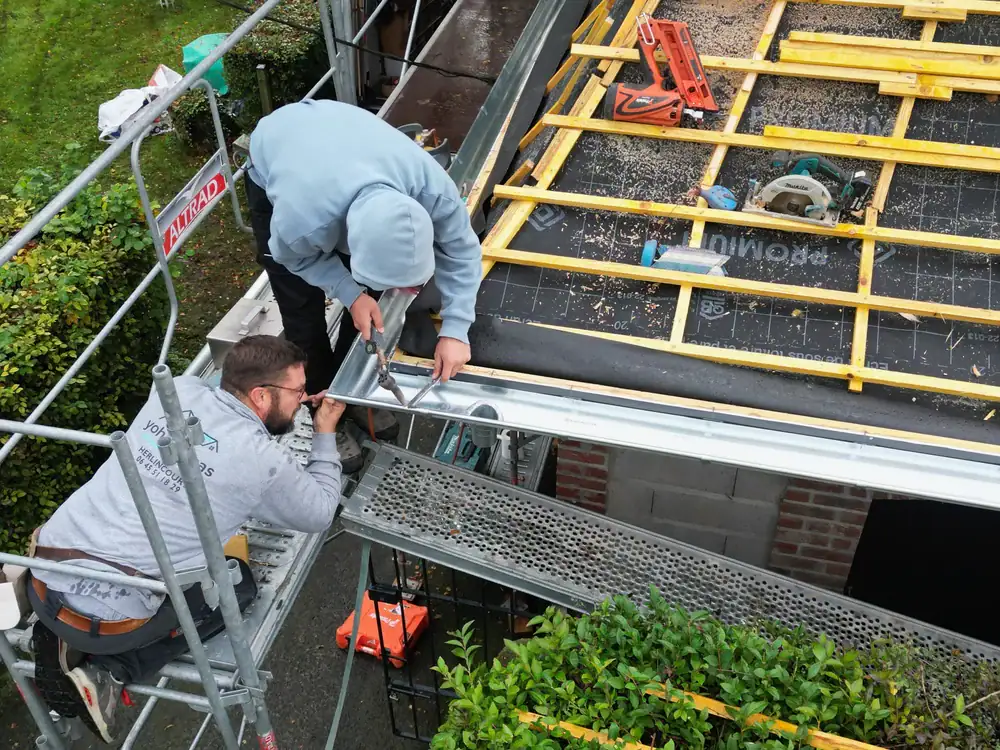
If you can, have a licensed roofing contractor present during the adjuster visit. A contractor who has worked with adjusters before knows what to point out — which roof planes took the most impact, where the soft metal evidence is strongest, what the granule loss pattern indicates about storm timing. That kind of on-site representation doesn’t require a public adjuster; it just requires a contractor who knows the process and is willing to be there.
Ask the adjuster for a written copy of their findings before they leave. You’re entitled to it, and it gives you a baseline to work from if the initial settlement offer doesn’t reflect the actual scope of damage. The first check you receive from your insurer is typically the Actual Cash Value payment — the depreciated value of the damaged materials, not the full replacement cost. The remainder, called the depreciation holdback, is released after a licensed contractor completes the repair and submits invoices. Cashing that first check and walking away means leaving real money behind.
In Massachusetts, the contractor who performs the repair must hold an active Home Improvement Contractor registration — that’s the HIC license, verifiable online through the Office of Consumer Affairs and Business Regulation. Any roofing contractor working on a residential property in this state without that registration is operating illegally, and their work may complicate your claim and void your manufacturer warranty. It takes about 60 seconds to check a contractor’s license number online. Do it before you sign anything.
Here’s something that doesn’t show up in any national roofing guide, because those guides are written for Colorado and Texas: in Essex County, hail damage rarely stays contained to the original storm event. The weather sequence here is different.
A summer hailstorm — the kind that rolls through Methuen, Haverhill, or Beverly on a July afternoon — knocks granules off shingles and leaves the underlying mat slightly more exposed than it was. That’s the damage. It may not leak immediately. It may not even show up on a casual look from the driveway. But now it’s September, and a nor’easter is pushing wind-driven rain against that compromised section of roof. By November, the vulnerability has grown. By January, that same spot is where an ice dam forms — because heat escaping through the roof deck melts snow at the ridge, water runs down to the eave where it refreezes, and the backup forces water under the shingles.
What started as a hail impact in July becomes a water stain on your ceiling in February. When you call your insurer in February, the original hail damage may no longer be visually identifiable to an adjuster who wasn’t there in July. That’s the compounding damage problem that’s specific to this part of Massachusetts, and it’s exactly why documenting hail damage immediately after a storm — not after the leak appears — is the only approach that actually protects you.
After a significant hail event in Essex County, out-of-area contractors show up fast. Some are legitimate. Many are not. Massachusetts law requires HIC registration for all residential roofing work, and storm chasers operating without it are a real problem in this market — they pressure homeowners into signing contracts before the damage scope is properly understood, and they disappear when something goes wrong. Before you talk to any contractor who knocks on your door after a storm, ask for their Massachusetts HIC license number and look it up. A legitimate contractor will hand it over without hesitation.
Hail damage is one of those problems that rewards the homeowners who move quickly and punishes the ones who wait to see how bad it gets. The documentation window closes, the insurance clock runs, and the New England weather cycle does the rest. Getting an inspection done promptly, photographing the right things, and understanding what your policy actually covers puts you in a fundamentally different position than most homeowners who go through this process.
If you’re in Essex County and you’re not sure whether your roof took damage from a recent storm, we’re glad to take a look. We’re based in Methuen, hold an active Massachusetts HIC license, and have worked on roofs across Essex County — from Beverly and Salem to Haverhill, Andover, and Newburyport. We’re an Owens Corning Preferred Contractor, and we know what hail damage looks like on roofs that have been through a New England season or two.
Reach out for a free inspection. No pressure, no commitment — just an honest assessment from someone who actually knows this market.
Summary:
Article details:
Share: