Choosing metal roofing experts isn't about finding the cheapest bid. It's about verifying the credentials that protect your investment and ensure your roof lasts 50+ years.
You’re comparing metal roofing contractors, and everyone’s website looks professional. Everyone claims experience. Everyone promises quality.
But here’s what most homeowners don’t realize until it’s too late: the difference between a qualified metal roofing expert and someone who just installed their first standing seam system last month won’t show up for 7 to 12 years. That’s when improper flashing fails. When panels installed without accounting for thermal expansion start buckling. When you discover your warranty is void because the installer lacked the manufacturer certification you didn’t know to ask about.
The good news? There are specific, verifiable credentials that separate true metal roofing experts from contractors learning on your dime. And in Massachusetts, there are legal requirements that go beyond what most states mandate. Let’s start with the licensing structure most homeowners completely miss.
Metal roofing isn’t shingles with a different material. The installation techniques, tools, and knowledge base are fundamentally different. A contractor who’s been installing asphalt roofs for 20 years doesn’t automatically know how to handle thermal movement in standing seam panels or properly seal penetrations on a metal surface.
This is why manufacturer certifications exist. Companies like Englert, McElroy Metal, and MBCI offer installer certification programs that require hands-on training, not just watching a video. These programs teach the specific installation details for their products, the common mistakes that cause callbacks, and the techniques that maximize performance.
Here’s what matters: when you hire a certified installer, you’re not just getting someone who knows metal roofing in theory. You’re getting access to extended warranties that aren’t available otherwise. Many manufacturers won’t honor weathertightness warranties unless the installation was performed by their certified contractor. That certification represents real training, usually a multi-day course with both classroom and hands-on components, followed by testing.
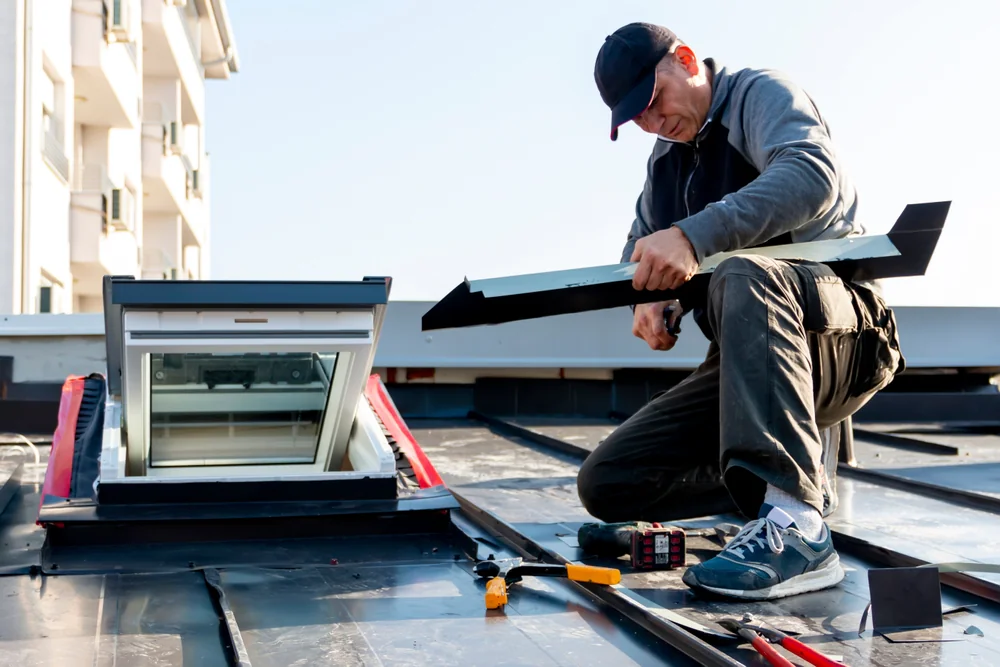
The National Roofing Contractors Association offers ProCertified credentials specifically for metal roof systems installers. To earn this certification, an installer needs a minimum of 36 months installing metal roofing systems, including experience with measuring, cutting, field fabrication, flashing details, valleys, and penetration work. Then they have to pass a rigorous hands-on skills assessment administered by an independent qualified assessor.
This isn’t a paper credential. It’s verification that someone has actually done the work and can demonstrate competency under observation. And because these certifications require renewal every three years with continuing education, certified installers stay current on evolving techniques and materials.
Beyond NRCA certifications, look for Metal Construction Association credentials. The MCA developed certification standards specifically for residential metal roofing based on industry best practices. When you see MCA certification, you’re looking at products and installers that meet published standards, not just marketing claims.
But here’s where it gets specific to Massachusetts. Professional roofing contractors in this state need more than manufacturer certifications. They need state-mandated licenses that many contractors either don’t have or don’t understand they need both of. Let’s break down what Massachusetts actually requires, because this is where a lot of homeowners get burned.
The state requires two separate credentials for most roofing work. First, there’s the Home Improvement Contractor registration through the Office of Consumer Affairs and Business Regulation. This is mandatory for any contractor doing work over $1,000 on existing one-to-four unit owner-occupied homes. It focuses on consumer protection, requires insurance, and contributes to a Guaranty Fund that can compensate homeowners up to $25,000 if things go wrong.
Second, there’s the Construction Supervisor License issued by the Office of Public Safety and Inspections. This is where technical competency comes in. To get a CSL, contractors must have at least three years of full-time roofing experience with one year in supervisory duties. They have to submit W-2s and employer letters to verify their work history. Then they take a 100-question multiple-choice exam covering construction laws, OSHA safety, plan reading, estimating, and building codes.
Here’s the part that confuses people: Massachusetts has different types of CSLs. There’s a Restricted CSL for work on one and two-family homes and buildings under 35,000 cubic feet. There’s an Unrestricted CSL for larger projects. And there’s a Specialty CSL for Roof Covering specifically.
For metal roofing work that involves any structural elements like roof framing or replacing more than 25% of sheathing or rafters, you need a contractor with both the HIC registration and the appropriate CSL. Not one or the other. Both. This dual requirement is stricter than most states, and it exists because Massachusetts takes consumer protection and technical standards seriously.
Why does this matter to you? Because if your contractor only has one of these licenses, or worse, has neither, you have zero recourse through the state if problems arise. The HIC Guaranty Fund doesn’t apply. The state won’t pursue violations. Your insurance might not cover damage caused by unlicensed work. And if an unlicensed worker gets injured on your property, you could be personally liable for their medical costs.
You can verify both credentials online in real-time. The Construction Supervisor License can be checked through the Massachusetts Board of Building Regulations and Standards website. The HIC registration can be verified through the Office of Consumer Affairs and Business Regulation portal. Takes five minutes. And any legitimate contractor will provide their license numbers without hesitation because they know you should be checking.
Beyond licensing, insurance is non-negotiable. You need to see current certificates for both general liability insurance and workers’ compensation. General liability protects your property if something gets damaged during installation. Workers’ comp protects you if someone gets hurt on your roof. Don’t accept verbal assurances. Ask for the actual Certificate of Insurance and verify it’s current. In Massachusetts, you can check workers’ comp coverage at the Department of Labor and Industries verification portal.
Want live answers?
Connect with a Paradise Remodeling Inc. expert for fast, friendly support.
Let’s get specific about what the licensing process actually involves, because understanding what your contractor had to do to get licensed tells you a lot about their competency level.
For the Construction Supervisor License exam, contractors are tested on Massachusetts building codes, which are particularly strict in areas like Essex County where coastal conditions and heavy snow loads create specific structural requirements. They’re tested on OSHA safety protocols. They need to understand how to read architectural plans and calculate material estimates accurately. This isn’t a simple test. It’s comprehensive, and it’s designed to ensure that anyone holding a CSL actually understands construction fundamentals.
The HIC registration process is different but equally important. Contractors have to register with the Secretary of State as a business entity. They pay a $150 registration fee plus a contribution to the Guaranty Fund based on company size. They’re required to display their six-digit HIC registration number on all advertisements, contracts, and permits. This makes it easy for you to verify credentials before signing anything.
Unlicensed contractors are cheaper for a reason. They’re not paying for insurance. They’re not contributing to the Guaranty Fund. They’re not maintaining the continuing education and renewal fees that licensed contractors handle. They’re cutting overhead, and they’re passing some of that savings to you in the form of a lower bid.
But here’s what you’re actually getting: no legal recourse if they abandon your project mid-installation. No access to the state Guaranty Fund if they take your deposit and disappear. No requirement that they pull proper permits or follow building codes. No insurance protection if they damage your property or if one of their workers gets injured. And no accountability to any regulatory body if their work fails.
Massachusetts specifically prohibits unlicensed contractors from performing home improvement work over $1,000. If you hire an unlicensed contractor and problems arise, you can’t file a complaint with the state. You can’t access arbitration programs. You can’t seek compensation from the Guaranty Fund. Your only option is civil court, which is expensive and time-consuming, and good luck finding that contractor when they’ve already moved on to the next town.
Beyond the legal risks, there’s the quality issue. Metal roofing done wrong doesn’t usually fail immediately. It fails gradually. Improper fastener spacing leads to panel movement. Inadequate expansion accommodation causes buckling. Poor flashing details create slow leaks that rot your sheathing before you even notice water stains. By the time you realize there’s a problem, the unlicensed contractor who installed it is long gone.
Licensed contractors, especially those with manufacturer certifications, have accountability built into the system. They maintain relationships with suppliers who won’t work with contractors who burn customers. They carry insurance that requires them to maintain certain standards. They’re subject to state oversight that can suspend or revoke their licenses for violations. They have reputations in the community they need to protect. That accountability is worth paying for.
Verification is simple if you know where to look. Start with the contractor’s license numbers. They should provide both their HIC registration number and their CSL number without you having to ask. If they hesitate or say they’ll get it to you later, that’s your first red flag.
Go to the Massachusetts Board of Building Regulations and Standards website and search their CSL database. You’re looking for an active license with no violations. Check when it was issued to see how long they’ve actually been licensed. Look for any disciplinary actions or complaints on file.
Then check the HIC registration through the Office of Consumer Affairs and Business Regulation portal. Verify the registration is current and that the business name matches what’s on their estimate. Look for any complaint history. The state maintains records of consumer complaints, arbitration cases, and Guaranty Fund claims. If a contractor has multiple complaints or unresolved issues, you’ll see them here.
For insurance, don’t just accept a copy of a certificate. Call the insurance company directly using a number you look up independently, not one provided by the contractor. Verify that the policy is current, that the coverage amounts are adequate, and that it covers the type of work being done on your property. Ask specifically about workers’ compensation coverage and confirm it covers all crew members who’ll be on site.
Manufacturer certifications can usually be verified directly with the manufacturer. If a contractor claims to be Englert certified or NRCA ProCertified, contact those organizations and confirm. Most have online databases or will verify certification status over the phone. If the contractor can’t provide certification numbers or the manufacturer has no record of them, you know they’re misrepresenting their credentials.
References are your final verification tool. Don’t just ask if they have references. Ask for references specifically for metal roofing projects similar to yours in scope and complexity. Contact those references and ask specific questions: Did the project stay on schedule? Were there any surprise costs? How did the contractor handle problems that came up? Would you hire them again? A contractor with real experience will have satisfied customers who are happy to vouch for their work.
Finding qualified metal roofing experts in Essex County, MA comes down to verification, not trust. You’re not looking for the contractor with the best sales pitch or the lowest bid. You’re looking for verifiable credentials that indicate real competency and accountability.
That means confirming both HIC registration and Construction Supervisor License in Massachusetts. It means seeing current insurance certificates and verifying them independently. It means checking for manufacturer certifications that demonstrate specialized metal roofing training. And it means doing the basic research to confirm that what contractors claim about their experience and credentials is actually true.
The metal roof you’re investing in should last 50 to 70 years if it’s installed correctly. That lifespan depends almost entirely on installation quality. Panels are either manufactured correctly or they’re not. The warranty covers material defects. What it often doesn’t cover is installation errors, which is why hiring properly trained, properly licensed contractors matters so much.
At Paradise Remodeling Inc, we maintain the licensing, insurance, and professional standards that Massachusetts requires for quality roofing work. For homeowners and commercial property owners in Essex County looking for metal roofing expertise backed by verifiable credentials and local accountability, we deliver the peace of mind that comes with knowing your investment is protected.
Summary:
Article details:
Share: