Replacing windows in Massachusetts costs more than the national guides suggest. Here's what Essex County homeowners are actually paying in 2026 — and what's changed with incentives.
If you’ve looked up window replacement costs online and then received a quote from a Massachusetts contractor, you’ve probably noticed a significant gap between those numbers. National guides tend to cite figures that don’t reflect what skilled labor actually costs in this state, what New England winters demand from a window, or what it takes to properly replace a unit in a 100-year-old Essex County home.
This guide is built around what homeowners across Essex County are actually dealing with in 2026 — real price ranges, the current incentive picture, and the local factors that affect both the cost and the urgency of getting this done.
Massachusetts is roughly 28% more expensive than the national average for home improvement work, and window replacement is no exception. Where national guides often cite figures in the $400–$800 range per window, the installed cost in Essex County and across the state typically runs between $750 and $1,800 per window, depending on the window type, material, and complexity of the installation.
For a whole-house replacement, most homeowners in our area are looking at somewhere between $10,800 and $31,363, with the average landing around $21,000. That’s a wide range, but it reflects real variables — how many windows you have, what condition the frames are in, and whether you’re doing a simple insert replacement or a full-frame tear-out.
The national figures aren’t wrong, they just don’t apply here. Skilled trade labor in Massachusetts averages $58 per hour in 2026, and labor accounts for roughly 30% of a typical window replacement project. That alone explains much of the gap.
Double-hung windows are by far the most common window type in Essex County’s housing stock, and for good reason. They suit the Colonial, Federal, and Victorian architecture that defines Salem, Newburyport, and Haverhill, and they’re practical — both sashes open, which makes cleaning easier and ventilation more flexible.
For a standard vinyl double-hung, installed cost in the Boston and North Shore area runs about $500 to $600 per window on the lower end, and up to $800 or more for higher-performance options. If you’re upgrading to fiberglass or composite frames — which hold up significantly better in coastal environments — expect to pay $1,000 to $2,200 per window installed. Wood double-hungs, which some homeowners in Salem’s historic district or Newburyport’s Federal Street corridor may need to match existing architecture, can run $1,500 to $3,000 or more per window installed.
That’s not just a material premium — it reflects the additional labor involved in fitting and finishing wood units properly.
One thing worth understanding is the difference between insert (pocket) replacement and full-frame replacement. An insert replacement leaves your existing frame in place and drops a new window unit into it. It’s faster, less disruptive, and less expensive. A full-frame replacement removes everything down to the rough opening — necessary when frames are rotted, when the original installation was poor, or when you want to change the window’s size. Full-frame costs more, but in Essex County’s older homes, it’s often the right call.
A contractor who doesn’t look at the frame condition before quoting you is skipping a step. The other factor that affects double-hung replacement cost specifically is the floor level. A window on the second or third floor of a Gloucester triple-decker or a Lynn multi-family costs more to access and install than one at grade. That should be in your written quote before work begins.
Double-hungs are the baseline, but not every home has only double-hungs. Casement windows — the kind that crank open on a hinge — are common in mid-century homes and additions, and they tend to run slightly higher than double-hungs of the same material because of the hardware involved.
Picture windows, which are fixed and don’t open, are often less expensive per unit because there’s no operating mechanism, but their size can offset that savings quickly. A large picture window in a living room or dining area may cost as much as a bay window to replace once you factor in the glass area.
Bay and bow windows are the most expensive window types to replace in Massachusetts, often running $2,000 to $5,000 or more per unit installed. They’re structural, they require careful flashing and support, and they take significantly more time to install correctly. If you have a bay window in a North Andover Colonial or a bow window in a Beverly craftsman, budget accordingly — and be cautious of any quote that seems unusually low for that scope of work.
Slider windows fall somewhere in the middle of the cost range and are common in ranch-style homes and additions built in the 1960s and 1970s, which are well-represented across Essex County’s inland towns like Peabody, Danvers, and Andover. They’re generally straightforward to replace as long as the rough opening is in good condition.
Across all window types, the material choice — vinyl, fiberglass, composite, or wood — affects both upfront cost and long-term performance. For most Essex County homeowners, vinyl is the practical choice: it doesn’t rot, doesn’t require repainting, and holds up well in freeze-thaw conditions. For coastal communities like Marblehead, Gloucester, or Rockport, fiberglass or composite frames are worth the premium because they resist salt air corrosion far better than aluminum and better than standard vinyl over time.
Want live answers?
Connect with a Paradise Remodeling Inc. expert for fast, friendly support.
A lot of homeowners are still operating on the assumption that there’s a federal tax credit available for energy-efficient windows. As of January 1, 2026, that credit — the Section 25C Energy Efficient Home Improvement Credit — has expired. It is no longer available for projects completed in 2026. Most competitor pages and homeowner guides still reference it, which creates real confusion when it comes time to file taxes.
What is still active in 2026 is the Mass Save window rebate: $75 per window for ENERGY STAR Most Efficient certified windows that replace existing single-pane windows. That’s a meaningful offset on a multi-window project, but it comes with conditions that matter.
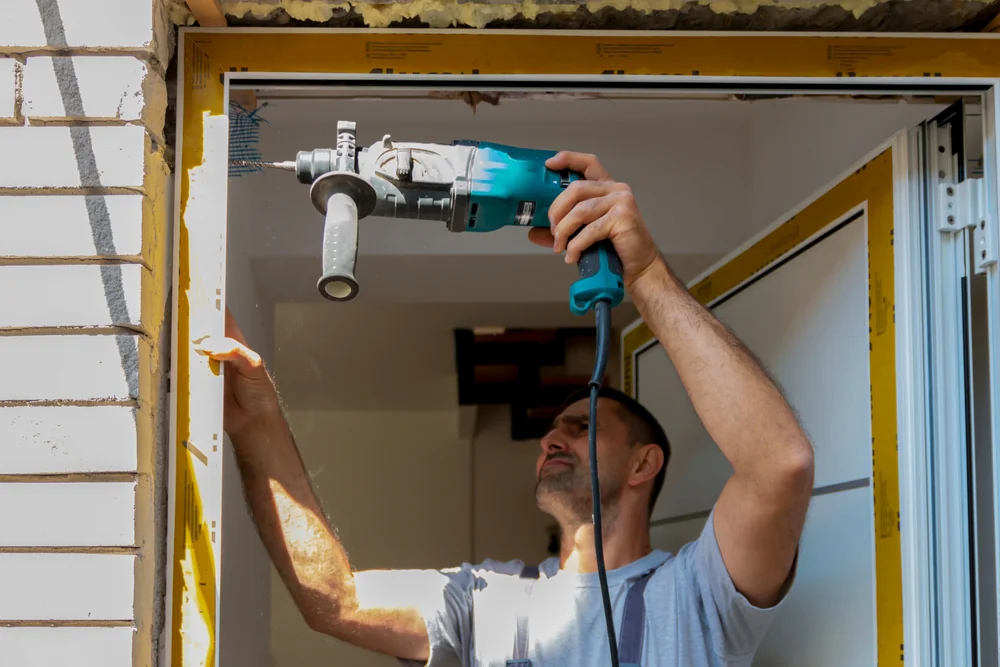
The window itself is only part of what you’re paying for. Installation labor in the Boston and North Shore area runs $50 to $200 per hour depending on complexity, and removal of your existing windows may be billed separately — typically $50 to $200 per window — if it’s not already bundled into the project quote. This is worth clarifying before you sign anything.
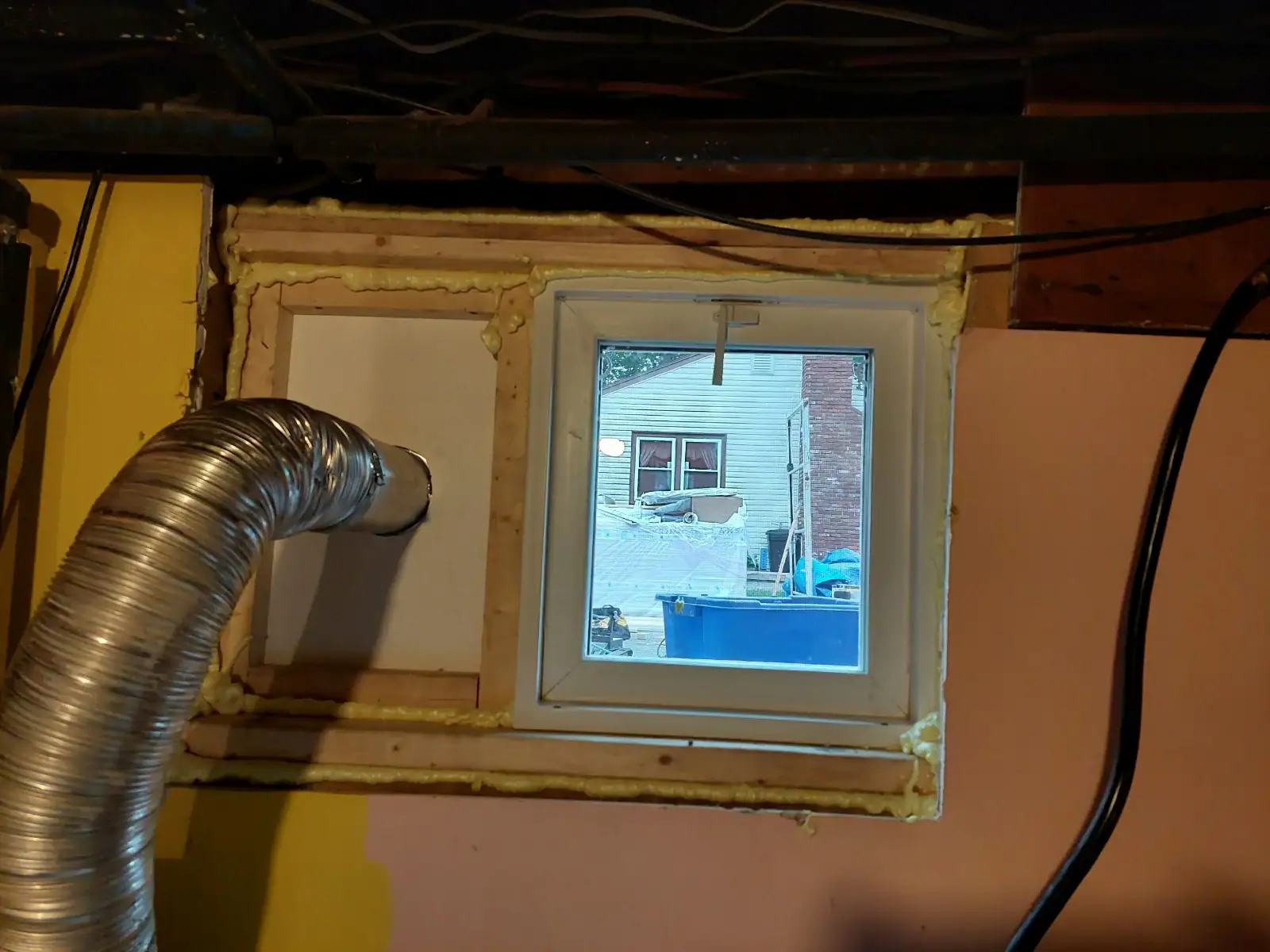
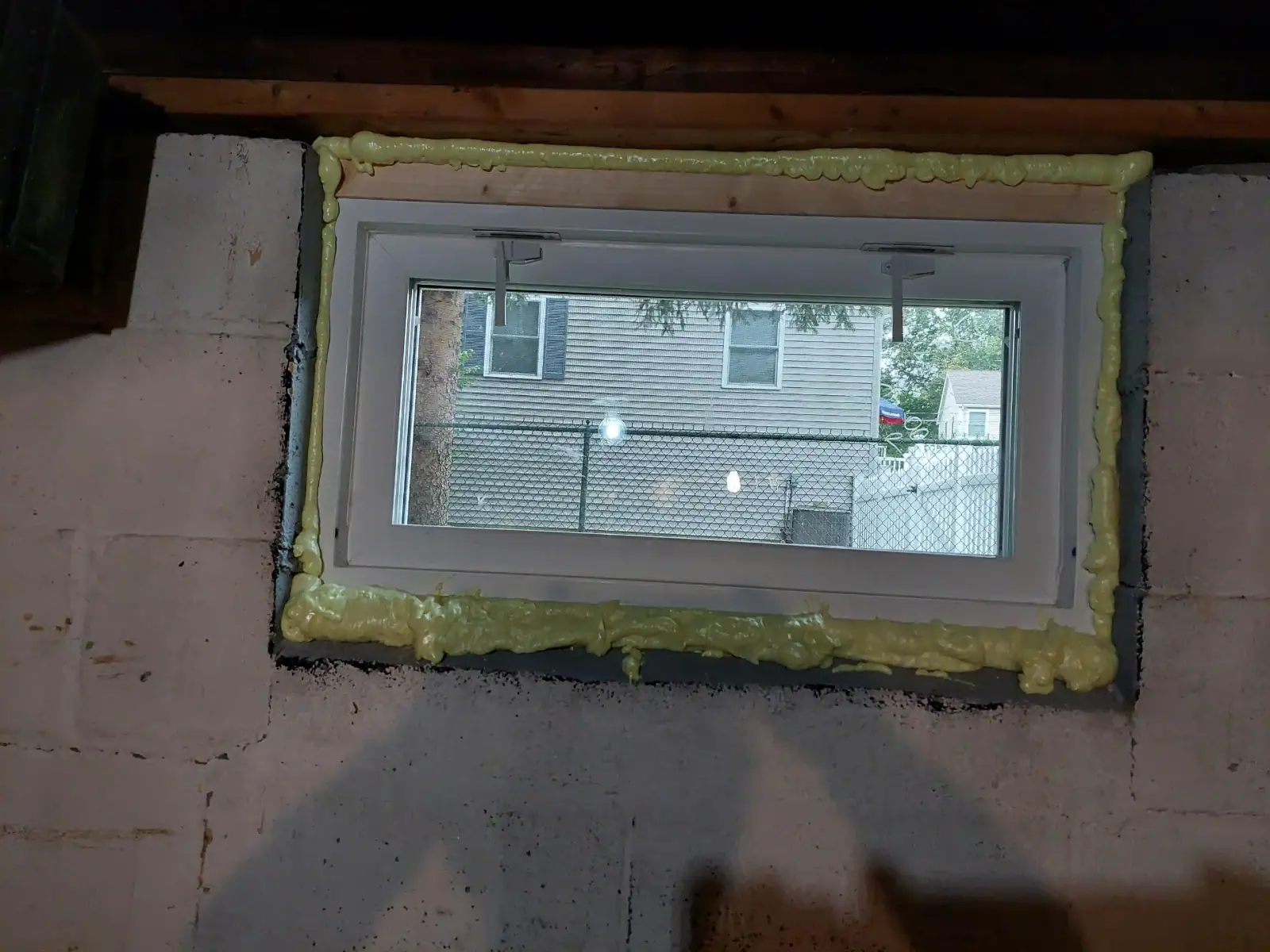
Good installation involves far more than swapping the unit. A properly installed replacement window requires correct flashing at the head and sill, air sealing around the entire rough opening, and insulation packed into any gaps before the interior trim goes back on. These steps are what determine whether your new windows actually perform as rated — whether they hold their U-factor in a January nor’easter, whether moisture stays out, and whether the seal holds through five or ten years of Essex County freeze-thaw cycles.
A window that’s installed without proper flashing will allow water infiltration at the corners. That water doesn’t announce itself — it works its way into the wall cavity, damages the sheathing, and eventually shows up as rot or mold. By then, what started as a window replacement project has become a much larger repair. This is one of the reasons that pulling a building permit for window replacement — which is required in most Massachusetts municipalities — matters. The permit triggers an inspection, and the inspection confirms the work was done correctly.
Contractors who suggest skipping the permit are cutting a corner that protects you, not them. In Massachusetts, residential window replacement on owner-occupied 1–4 unit properties also requires the contractor to hold an active Home Improvement Contractor (HIC) registration with the state’s Office of Consumer Affairs and Business Regulation. You can verify any contractor’s HIC registration on the OCABR website before you sign a contract. Our HIC license number is #195972 — look it up.
The Mass Save rebate is the primary financial incentive available to Massachusetts homeowners for window replacement in 2026. To qualify, you need to be a residential customer of a participating utility — Eversource serves most of Essex County, and they participate — and you need to be replacing existing single-pane windows with windows that carry the ENERGY STAR Most Efficient certification. That’s a higher bar than standard ENERGY STAR, and not every window on the market qualifies.
Ask your contractor specifically whether the windows they’re proposing meet the Most Efficient standard, not just standard ENERGY STAR. There’s also a weatherization component. Mass Save typically requires that you’ve completed a home energy assessment and addressed any weatherization recommendations before the window rebate is processed. If you haven’t had an assessment done, that’s actually a reasonable starting point regardless — it often surfaces other efficiency opportunities in older Essex County homes, and the assessment itself is available at no cost through Mass Save.
At $75 per window, the rebate won’t cover your project, but on a 10-window replacement it’s $750 back in your pocket, which is real money. The key is going in with accurate expectations: the federal credit that many homeowners are counting on is gone, and the Mass Save rebate has specific eligibility requirements that not every project will meet automatically.
One more thing worth knowing for homeowners in Salem or Newburyport specifically: if your property falls within a local historic district, your window replacement may require review and approval from the Historic District Commission before work begins. Some districts restrict the use of vinyl frames or require specific muntin patterns to match the historic character of the neighborhood. A contractor who’s worked in these areas before will know to ask the question. One who hasn’t may not think to raise it until after the windows have been ordered.
The energy efficiency argument for window replacement in Essex County is more financially concrete than it sounds in a generic guide. Massachusetts has some of the highest residential electricity rates in the country, and Eversource has seen rate increases in recent years. Aging single-pane or early double-pane windows can account for 25 to 40 percent of a home’s heating energy loss. When you’re heating a 19th-century Salem row house through a Massachusetts winter, that’s not a rounding error — it’s a significant monthly cost that compounds every year you wait.
Massachusetts window replacement costs more than national guides suggest, the federal tax credit expired at the end of 2025, and Essex County’s older homes and coastal climate create specific conditions that generic cost content doesn’t account for. Going into the quote process informed — knowing what a fair per-window range looks like, what labor should cover, and what questions to ask about permits and certifications — puts you in a much stronger position.
At Paradise Remodeling Inc., we serve homeowners across Essex County from our base in Methuen, we pull permits, and we give you a written quote before any work begins — no surprises at the end. Reach out to us for a free, no-obligation estimate and we’ll tell you exactly what you’re looking at.
Summary:
Article details:
Share: