Not every contractor knocking on your door after a storm is who they say they are. Here's how to find a roofer worth trusting in Essex County and southern NH.
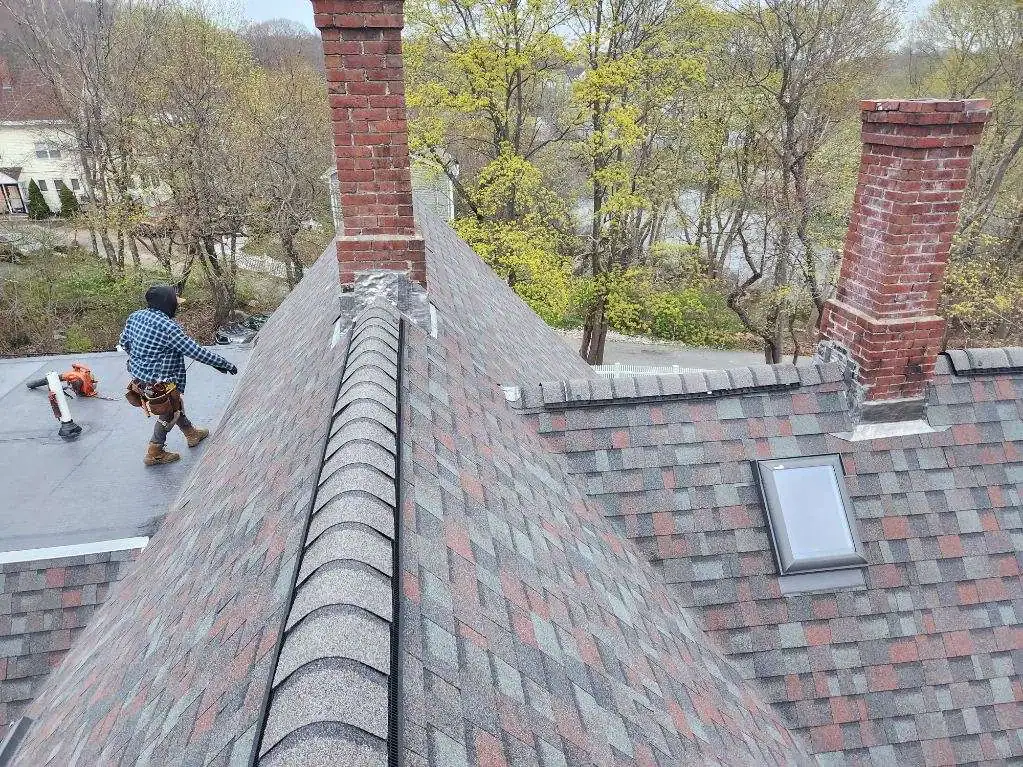
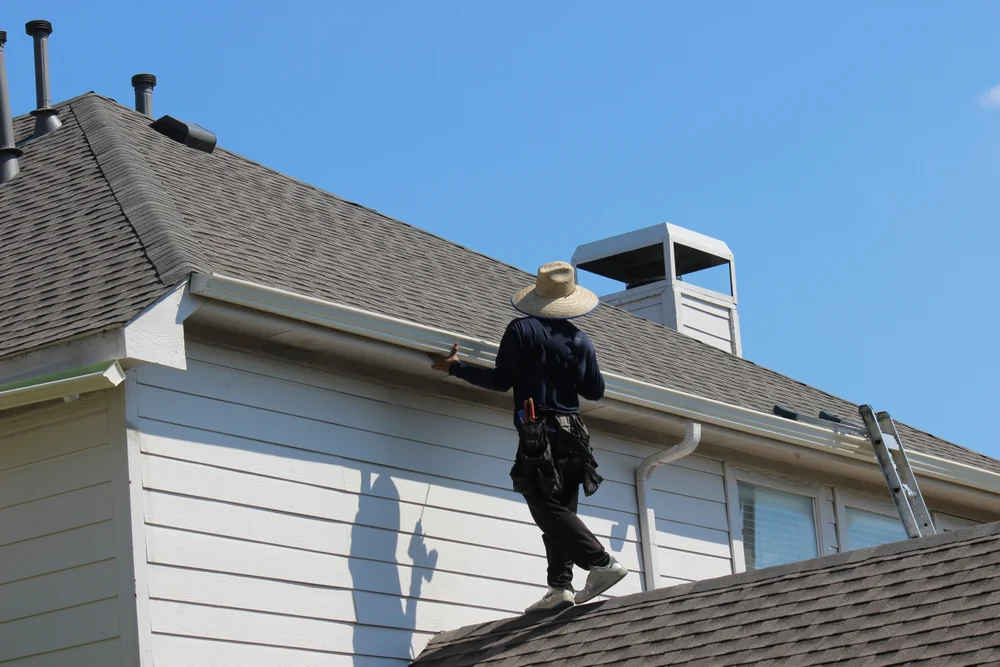
Essex County gets hit. Nor’easters off the Atlantic, ice dam season every winter, summer storms rolling up the Merrimack Valley — this area sees more weather damage than most homeowners realize. And every time a storm rolls through Lawrence, Haverhill, or Newburyport, it doesn’t just damage roofs. It brings contractors. Some of them are excellent. Some of them are out-of-state operators who showed up within 48 hours of the storm and will be gone before the first snow flies again. Knowing how to tell them apart before you sign anything — that’s what this is about.
The roofing contractor market in Massachusetts is crowded, and a lot of it looks the same from the outside. Professional website, decent Google reviews, a local phone number — none of that tells you whether the person showing up at your door is licensed in Massachusetts, carries the right insurance, or has ever worked on a New England roofline in January.
Essex County has recorded 27 weather disaster declarations since 1972 — well above the national county average. That kind of storm frequency creates a reliable market for contractors who follow damage events from state to state. They’re not scammers in the traditional sense. They’re just not yours. They don’t know your town, they won’t be here when something goes wrong six months later, and their warranties — if they offer them — are often unenforceable because they’re not certified to back them up.
The good news is that the things that separate a trustworthy local contractor from a convincing stranger are verifiable. You just need to know what to check.
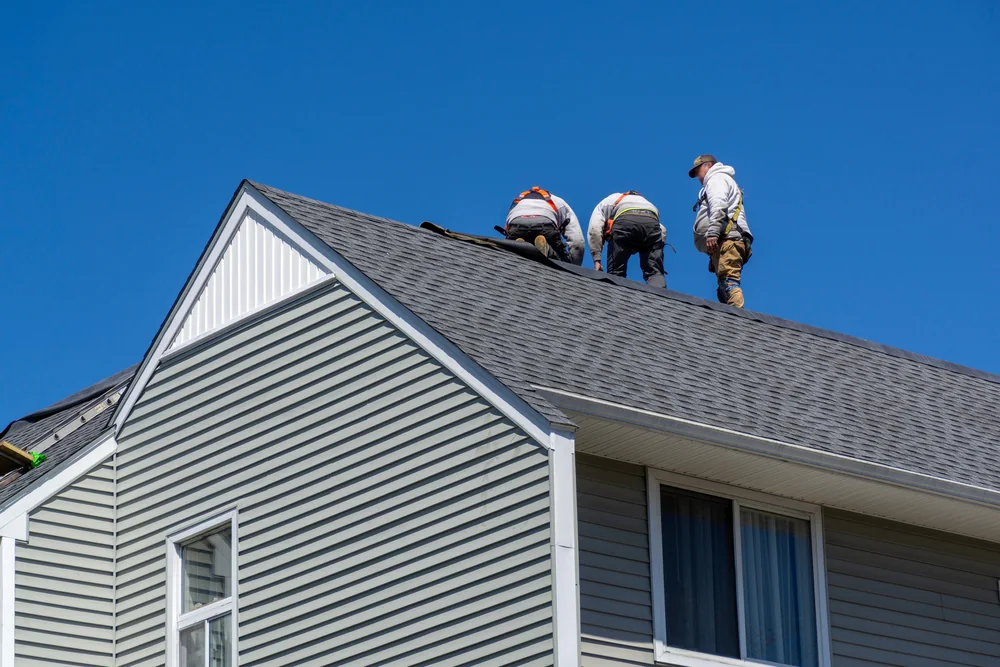
Most homeowners don’t know that Massachusetts has two separate licensing requirements for roofing contractors, and most contractor-vetting advice doesn’t explain it in state-specific terms. That gap is exactly what unlicensed operators count on.
The HIC registration applies to any contractor performing work on owner-occupied residential properties. It’s required for projects over $1,000, governed by Massachusetts General Laws Chapter 142A, and administered by the Office of Consumer Affairs and Business Regulation. It also comes with consumer protections — including a formal arbitration program and a Guaranty Fund — that only apply when you hire a registered contractor. If you hire someone without HIC registration and something goes wrong, those protections don’t exist for you.
The CSL is a separate credential required when work involves structural elements — roof framing, a href=”https://www.paradiseremodelinginc.com/services/deck/installation/”>deck replacement, anything load-bearing. It requires passing a state-administered exam, documenting at least three years of full-time construction experience, and renewing every two years with continuing education. It’s not something you pick up over a weekend.
Beyond state licensing, manufacturer certifications add another layer of third-party vetting. An Owens Corning Preferred Contractor, for example, is required to carry a minimum of $1,000,000 in general liability insurance, hold all required state and local licenses, and pass a financial stability and customer service screening. That certification isn’t self-reported — Owens Corning verifies it. And it matters practically: manufacturer warranties on shingles and roofing systems are only valid when a certified contractor installs the product using the manufacturer’s specified methods. A non-certified contractor can’t legally offer those warranties, regardless of what they tell you verbally.
Asking to see a contractor’s Massachusetts HIC registration number and CSL takes about 30 seconds. A legitimate local contractor will give you those numbers without hesitation. Someone who can’t produce them — or who gets evasive when you ask — has already told you what you need to know.
Want live answers?
Connect with a Paradise Remodeling Inc. expert for fast, friendly support.
Once you’ve confirmed that a contractor holds a valid Massachusetts HIC registration and CSL, there are a few more things worth asking before you commit to anything. None of these questions are complicated, and a contractor who’s done this work honestly for years will answer all of them without hesitation.
Ask for proof of general liability insurance and workers’ compensation coverage — not just a verbal assurance, but an actual certificate. Ask whether they’re a certified installer for the materials they’re recommending, and what manufacturer warranty that certification unlocks. Ask for a written contract that specifies the materials by name, the scope of work, the project timeline, and the payment schedule. And ask whether the owner of the company will be personally reachable throughout the project, or whether you’ll be handed off to a crew you’ve never met.
That last question matters more than most homeowners realize.
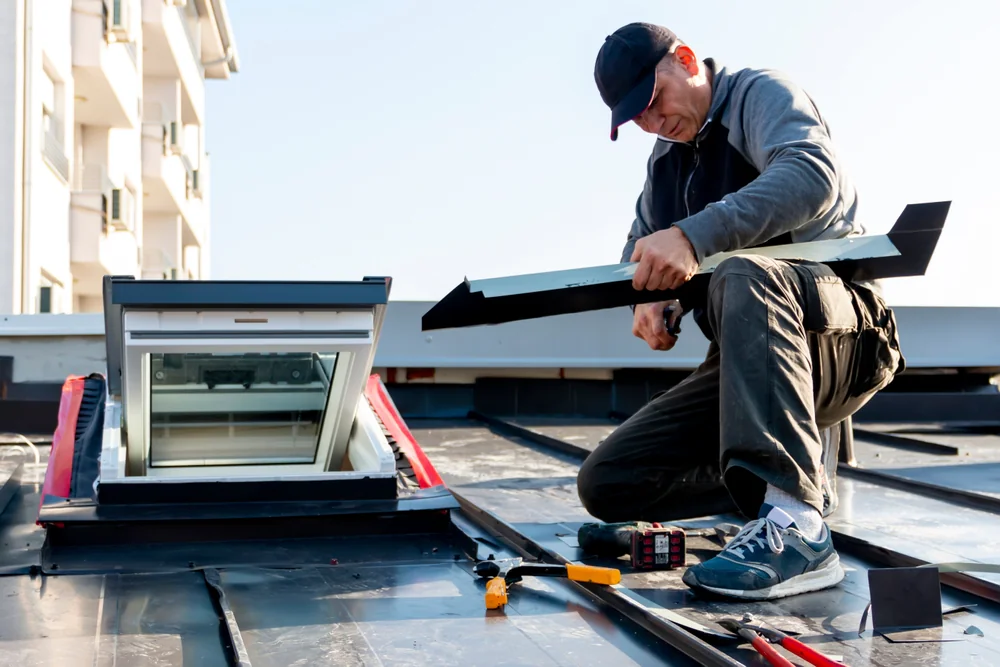
There’s a specific frustration that comes up over and over when homeowners talk about bad contractor experiences: they met someone great during the sales conversation, signed the contract, and then never saw that person again. A different crew showed up. Questions went unanswered. The job dragged on. Nobody was clearly in charge.
That pattern is more common with larger volume contractors and out-of-area operators than with owner-run local businesses. When the person who sold you the job is also the person managing the crew and answering their phone when you call, there’s a direct accountability structure that doesn’t exist when you’re three layers removed from whoever’s actually on your roof.
For a project of this scale — a full roof replacement in Essex County is a significant financial commitment — that accountability matters. You should know the name of the person responsible for your job before you sign anything, and you should be able to reach them directly if something comes up. Not a call center, not a project manager who’s juggling eight other jobs. The person whose name is on the company.
This is especially relevant in Essex County’s older housing stock. Homes in Lawrence, Salem, and Gloucester often have complex rooflines, multiple layers of previous roofing, and structural quirks that don’t show up until the tear-off starts. An experienced owner who’s worked on North Shore and Merrimack Valley homes for years will know how to handle what they find. Someone who drove in from out of state last week won’t.
Getting more than one quote is standard advice, and it’s correct — but the comparison only works if you’re comparing the same scope of work. A quote that looks significantly lower than two others isn’t necessarily a better deal. It might mean the contractor is planning a layover instead of a full tear-off, skipping underlayment, using a lower-grade shingle, or leaving damaged decking in place. None of that will be visible from the ground after the job is done. You’ll find out about it the next time you have a leak.
When you’re comparing quotes, ask each contractor to specify the same things in writing: the brand and product line of the shingles, whether the job includes a full tear-off, what underlayment they’ll use, how they’ll handle flashing around chimneys and any skylights or penetrations, and what they’ll do if they find damaged decking once the old roof comes off. Those details tell you whether you’re comparing equivalent scopes or just comparing numbers that look similar on the surface.
Also pay attention to the payment structure. A contractor who asks for a large upfront deposit — particularly one who frames it as needed to “secure materials” before the job starts — is a common warning sign. Legitimate contractors typically work on a structured payment schedule tied to project milestones, not a lump sum before work begins.
The coastal communities in Essex County, from Beverly and Gloucester out to Marblehead and Newburyport, face salt air exposure that accelerates shingle degradation faster than inland areas. If you’re in one of those towns, it’s worth asking your contractor whether they have specific experience with coastal installations and what materials they recommend for that environment. That’s a question a local contractor with years of North Shore experience will answer in detail. A storm chaser who rolled in from out of state won’t know what you’re talking about.
The homeowners who end up with a contractor they regret almost never hired someone who seemed obviously suspicious. They hired someone who seemed fine — professional enough, reasonably priced, willing to start soon. The problem was that “seemed fine” and “is actually vetted and accountable” aren’t the same thing, and in a market with as much storm activity as Essex County, the gap between those two categories gets exploited regularly.
Verify the Massachusetts HIC registration. Verify the CSL. Ask about manufacturer certifications and what they actually cover. Get everything in writing before anyone touches your roof. And find out who, specifically, is responsible for your job and how you reach them if something goes wrong.
If you’re in Essex County or southern NH and want to talk through what your roof actually needs — whether that’s a repair, a full replacement, or just an honest assessment — we’re here. We’ve been working in this area since 2006, and we’re not hard to reach.
Summary:
Article details:
Share: