Not all siding holds up the same way through a New England winter. Here's what actually matters when choosing between vinyl and fiber cement in Essex County.
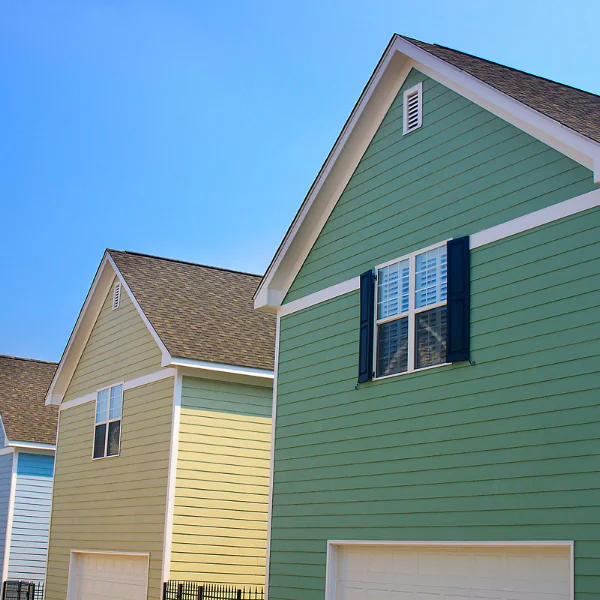
If you’ve started researching siding for your home in Methuen, Haverhill, Andover, or anywhere else in Essex County, you’ve probably already hit a wall of generic content that tells you fiber cement is the clear winner — or that vinyl is the affordable, low-maintenance choice — without ever mentioning what happens when it’s 14 degrees in January and a nor’easter is driving sleet sideways into your house.
The truth is more nuanced than either of those takes. Both materials work. Both have real trade-offs. And the right choice depends on factors that national comparison articles almost never address: your specific climate, your ownership timeline, and — critically — who’s installing it.
The Merrimack Valley — Methuen, Haverhill, Lawrence, Andover — sits inland, which means it doesn’t get the moderating effect of the Atlantic Ocean that coastal towns like Marblehead and Newburyport enjoy. Temperatures here regularly dip below 20°F from December through February, and the area experiences somewhere between 30 and 50 freeze-thaw cycles per year. That’s not a minor climate detail. It’s the single most important variable in this decision.
Both vinyl and fiber cement are marketed as cold-climate performers. But they fail in very different ways, and understanding those failure modes is more useful than any marketing claim.
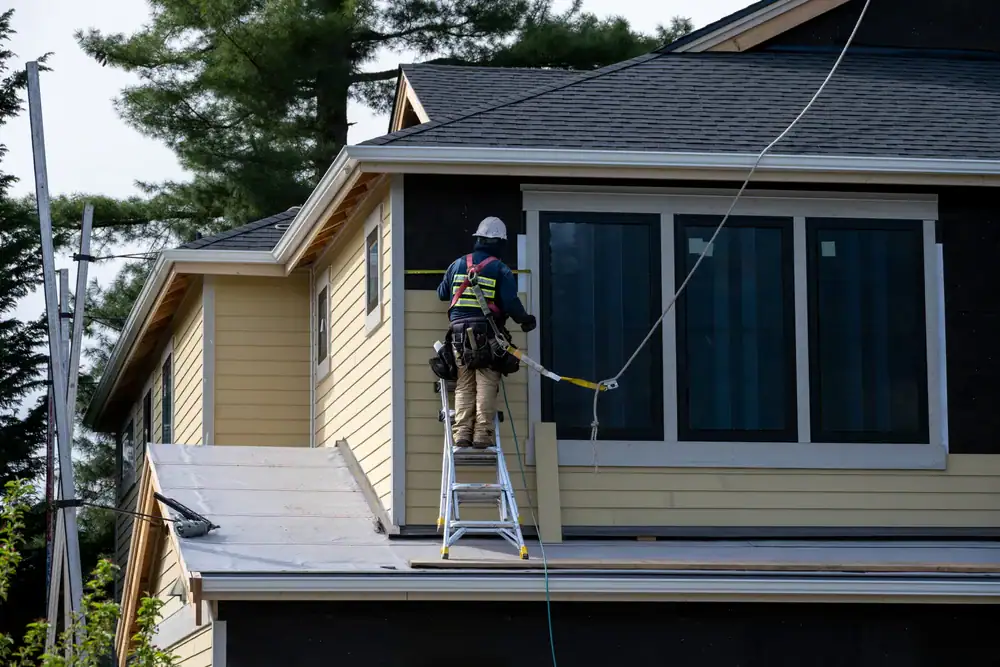
Vinyl becomes genuinely brittle below approximately 20°F. Under normal conditions that’s fine — nothing is hitting your siding. But during a cold snap, a falling branch, a misplaced ladder, or even hail can crack a panel that would have flexed and survived the same impact in warmer weather.
Standard vinyl also contracts in the cold, and if it was nailed too tightly during installation, those contraction forces can cause panels to pull away from fasteners, creating small gaps where wind-driven moisture finds its way in. Insulated vinyl — the kind with foam backing bonded to the panel — performs noticeably better in freeze-thaw conditions because the foam absorbs impact energy and reduces the contraction effect. It also improves your home’s air tightness by roughly 11%, which translates to real savings on heating costs in a climate where natural gas and heating oil bills are a significant household expense.
If you’re leaning toward vinyl for your Essex County home, insulated vinyl is the version worth pricing out. The color is baked into the PVC and cannot be repainted. Darker colors fade with UV exposure over years, and when that happens, your only option is replacement. For a homeowner planning to stay 20 years, that’s a meaningful limitation.
Fiber cement — James Hardie being the dominant brand, holding roughly 90% of the fiber cement market in North America — is dimensionally stable across temperature ranges. It doesn’t become brittle in the cold, and it won’t contract and gap the way vinyl can. That’s a genuine advantage in a freeze-thaw climate like Essex County’s.
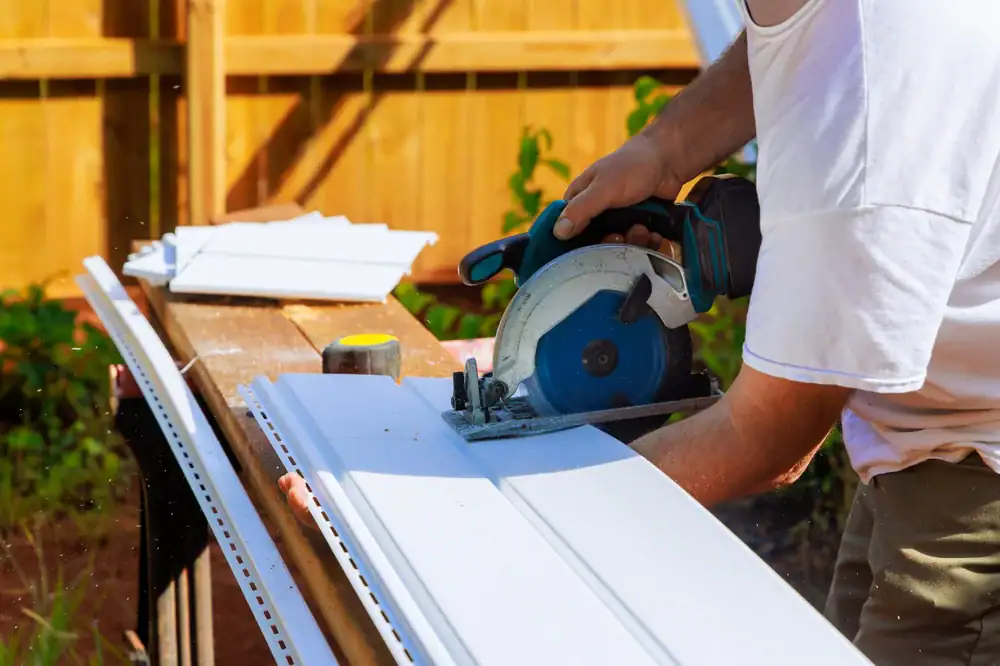
But fiber cement has its own vulnerability, and it’s one that most comparison articles gloss over: the cut edges. Fiber cement is made from sand, cement, and cellulose fibers. When panels are cut on-site, those edges are porous. In a freeze-thaw climate, unsealed edges absorb moisture, that moisture freezes, expands, and over time causes the panel to crack or delaminate from the inside out. We’ve seen the results of this on North Shore homes — a job that looked fine at installation and started failing within a few years because the crew skipped edge sealing.
James Hardie’s 30-year non-prorated warranty actually requires certified installation following their published specifications, which include sealing every cut edge. If those specs aren’t followed, the warranty is void. This is why the HZ5 product line — James Hardie’s formulation engineered specifically for freeze-thaw climates like Massachusetts — needs to be installed by someone who knows what they’re doing with it.
For coastal Essex County towns like Salem, Beverly, and Gloucester, there’s an additional factor: salt air. Fiber cement holds up well to salt air exposure, but paint adhesion requires attention in high-salt environments. Periodic inspection of the paint film is a real maintenance task in those locations, not just a theoretical one.
Want live answers?
Connect with a Paradise Remodeling Inc. expert for fast, friendly support.
Most homeowners in Essex County spend between $14,400 and $23,400 for a full siding replacement, depending on the material and the size of the home. Vinyl runs about $8 to $10 per square foot installed; James Hardie fiber cement comes in around $11 to $13 per square foot installed. On a typical home, that gap can add up to several thousand dollars — and it’s real money.
But the upfront number isn’t the whole story, and this is where most comparison content falls short.
The case for fiber cement is strongest when you’re planning to stay in the home for ten or more years. The lifespan is legitimately longer — 30 to 50 years with proper maintenance, compared to 20 to 40 years for vinyl. The ROI at resale is higher: regional data puts fiber cement at roughly 144% ROI versus about 97% for vinyl. In Essex County’s current market, where the median sold price hit $675,075 in May 2025 and home values have risen 34% since 2010, that resale difference is real money.
Fiber cement also gives you aesthetic flexibility that vinyl can’t match. It can be painted any color at any time, which means you can refresh the look of your home without replacing the siding. James Hardie’s ColorPlus factory finish can extend the time between repaints to 15 to 20 years, which reduces — though doesn’t eliminate — the maintenance burden.
The honest downside: fiber cement does require repainting. Every 10 to 15 years (or longer with ColorPlus), you’re looking at a repaint cost of roughly $3,000 to $6,000 depending on the size of your home. Over 20 years, that’s a real number to factor in. Fiber cement is also significantly heavier than vinyl — about 300 pounds per 100 square feet versus vinyl’s 60 pounds — which means it cannot be installed over existing siding. The old material has to come off first, adding $1,000 to $2,500 to the project cost. And because the installation is more complex, the consequences of a bad install are more severe.
Vinyl is genuinely the right choice in several common scenarios. If you’re planning to sell within five years, the upfront savings are significant and the ROI is still solid. If you own a rental property where zero-maintenance is the priority, vinyl’s near-zero annual upkeep cost — compared to fiber cement’s $200 to $400 per year when you factor in periodic repainting — is a legitimate financial advantage. If the budget is the binding constraint and the alternative is leaving damaged siding in place, quality vinyl installed correctly is far better than waiting.
The maintenance reality for vinyl is genuinely simple: wash it occasionally, inspect it annually, and replace any cracked panels if they get hit. That’s it. No repainting cycles, no edge sealing, no paint adhesion concerns near the coast. For the right homeowner, that simplicity has real value.
The siding material comparison ultimately comes down to a few honest questions: How long are you staying? What’s your budget? How much do you care about aesthetics and future flexibility? And — the question most comparison articles never ask — who is going to install it? Because a fiber cement job done by a crew that skips the James Hardie installation specs will fail faster than quality vinyl done right.
There’s no universal answer to the vinyl versus fiber cement question — and any contractor who gives you one without looking at your home, your timeline, and your budget is oversimplifying. What we can tell you is that both materials perform well in Essex County when they’re installed correctly, and both can fail when they’re not.
If you’re in the Merrimack Valley — Methuen, Haverhill, Lawrence, Andover — the freeze-thaw performance question matters more than it does on the coast. If you’re near Salem or Gloucester, salt air is part of the picture. If you’re in Newburyport or North Andover, where home values are higher and you’re thinking about long-term asset protection, the fiber cement premium is easier to justify.
The best next step is a free on-site assessment where someone who has actually installed both materials on Essex County homes can look at what you have, talk through what you want, and give you an honest recommendation with a transparent, itemized estimate. We’ve been doing exactly that for Essex County homeowners since 2012. We hold James Hardie Preferred Installer certification and Owens Corning Preferred Contractor status, and our Massachusetts Home Improvement Contractor License is #195972 — verifiable through the state. Our BuildZoom score of 105 ranks us in the top 8% of 139,240 licensed Massachusetts contractors.
Summary:
Article details:
Share: