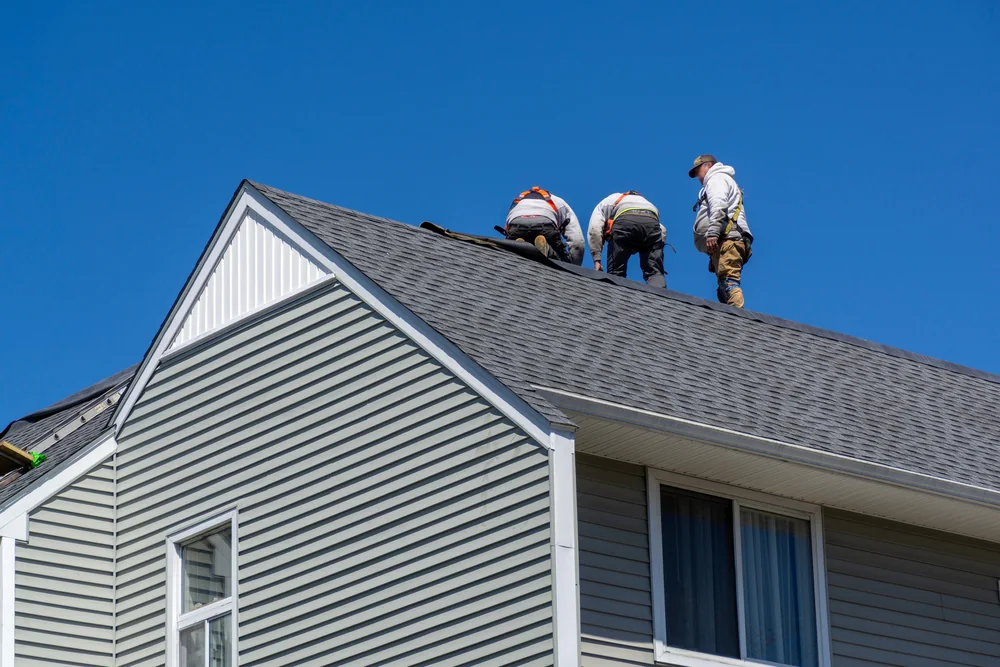
After a storm hits your roof, the first call you make matters more than you think. Here's what Essex County homeowners need to know.
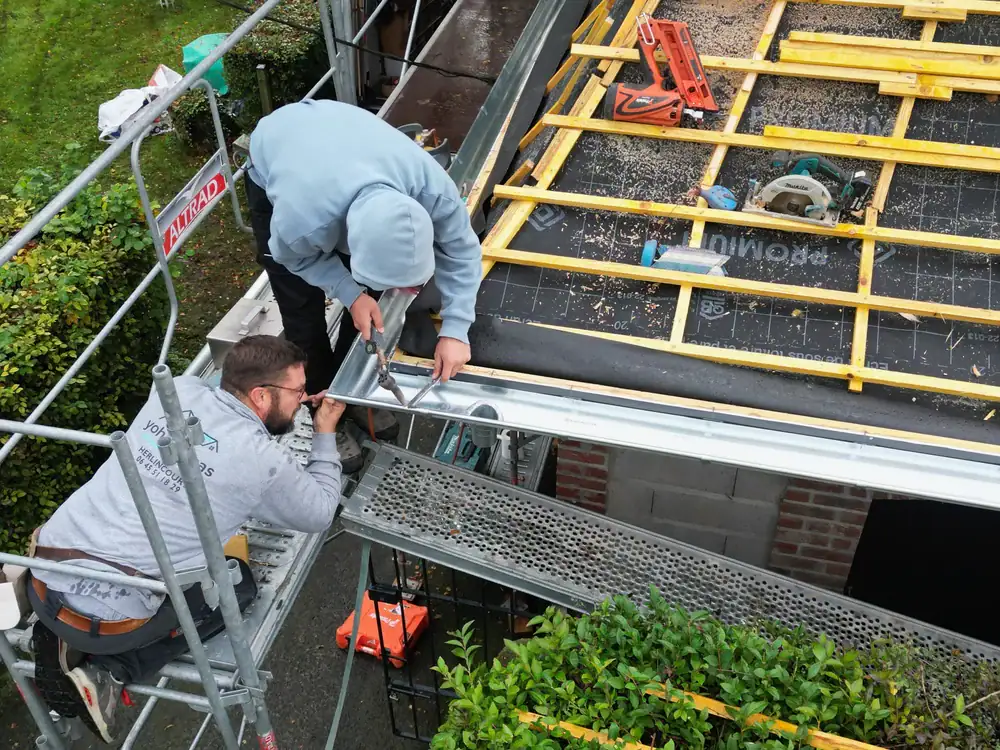
You come home after a storm and notice something’s off—a water stain spreading across the ceiling, a few shingles sitting in the yard, or a gutter hanging at an angle it definitely wasn’t at yesterday. Your first instinct is probably to call your insurance company. That’s what most people do. But in Essex County, where nor’easters roll in hard and ice dams are practically a winter tradition, that first call can shape everything that follows—including how much your insurer actually pays.
Before you dial anyone, here’s what you should know.
The insurance process after storm damage isn’t complicated, but it is sequential—and the sequence matters. Most homeowners skip a critical first step: getting a licensed local contractor on-site before the adjuster arrives.
Industry data shows that initial adjuster scopes underpay homeowners by roughly 20% on average. That’s not because adjusters are dishonest. It’s because they’re working fast, they’re not roofing specialists, and they miss things—failed flashing, compromised underlayment, damaged fascia, gutters pulled away from the roofline.
When you have a qualified contractor document the damage first, they create a complete, professional record of everything the storm touched. That documentation goes into the adjuster meeting and makes it significantly harder for the scope to come back incomplete.
Think of it less as calling a contractor instead of your insurer, and more as calling the contractor before you let the adjuster set the terms.

Standard Massachusetts homeowner policies—both HO-2 and HO-3 forms—cover windstorm and hail as named perils under dwelling coverage. That means if a nor’easter strips shingles off your North Andover colonial or a summer thunderstorm sends a branch through your Newburyport roof, you’re generally covered. The same applies to fallen trees and the structural damage they cause on impact.
What policies don’t cover is where things get complicated. Age-related wear and tear is excluded. So is damage caused by a lack of maintenance—clogged gutters that backed up and rotted the fascia, for example, or shingles that were already failing before the storm arrived.
Adjusters examine weather records and roof condition together, and they’re trained to distinguish covered storm damage from pre-existing deterioration. If your roof was already showing its age, the insurer may attribute a larger portion of the damage to that rather than to the storm event itself.
Coastal properties in Essex County face an additional wrinkle: some policies carry a separate wind or hail deductible for homes near the water. If you’re in Gloucester, MA, Marblehead, MA, or along the Ipswich shoreline, it’s worth pulling out your declarations page and confirming what your deductible structure looks like before you assume a claim is straightforward.
One more thing worth knowing: flood water is excluded from standard homeowner policies entirely. If storm surge or heavy rain pushes water in through your foundation or a low-lying entry point, that’s a separate flood insurance claim—not a roofing claim.
The distinction matters because some homeowners in the Merrimack River valley towns like Lawrence, MA, Methuen, MA, and Haverhill, MA deal with both roof damage and flooding after the same storm event and need to navigate two separate processes.
You also have a window to work with. Most insurers expect claims to be filed within 30 to 60 days of the storm event. That’s not a lot of time if you’re waiting to see whether the damage gets worse before acting. Getting a contractor on-site quickly—both to protect the home with temporary tarping and to document the damage before evidence degrades—is what keeps that window open.
Documentation is the part most homeowners underestimate, and it’s where a licensed contractor adds the most immediate value. Before any permanent repair work begins—and before the adjuster walks your roof—you want a thorough photo and video record of every visible point of damage.
Missing shingles, exposed decking, damaged flashing at the chimney or skylights, gutters pulled away from the fascia, any interior water staining—all of it should be captured while the storm’s effects are still clearly visible.
This matters for a specific reason: making permanent repairs before the adjuster inspects the damage erases the evidence the adjuster needs to justify the claim. Emergency tarping to prevent further water intrusion is not only acceptable, it’s expected—and failing to protect the property can actually give an insurer grounds to reduce or deny a claim on the basis that the homeowner didn’t take reasonable steps to mitigate further damage.
But replacing shingles, resealing flashing, or patching decking before the adjuster visits is a different matter entirely.
A contractor who understands the insurance process will document everything first, apply temporary protection where it’s needed, and then walk the adjuster through the scope of damage with the evidence already organized. That’s not a confrontational process—it’s a professional one. It also opens the door to a supplemental claim if the adjuster’s initial scope comes back incomplete, which happens often enough that it’s worth planning for rather than being surprised by.
In Essex County, where storms don’t arrive with much warning and the damage they leave behind can compound quickly—especially heading into a New England winter—getting a contractor on-site fast isn’t just about the claim. It’s about protecting the home while the process unfolds.
Want live answers?
Connect with a Paradise Remodeling Inc. expert for fast, friendly support.
Essex County has declared 27 weather disasters since 1972. A significant portion of the winter damage driving those numbers isn’t dramatic—it’s slow, quiet, and almost invisible until water starts showing up on your ceiling in January.
Ice dams are responsible for a lot of that damage, and they’re one of the most misunderstood roofing problems homeowners in this region deal with.
An ice dam forms when heat escaping through your roof melts snow near the ridge, and that meltwater runs down toward the cold eaves and refreezes. Over time, a wall of ice builds up at the edge of the roof. When more meltwater runs down behind it and has nowhere to go, it backs up under the shingles—and that’s when it finds its way into the home.
Stained ceilings, damaged insulation, drywall that has to come out: all of it starts with ice at the roofline.

Gutters don’t cause ice dams—that’s worth saying clearly because it’s a common misconception. The root cause is heat escaping through an inadequately insulated or ventilated attic. But gutters do concentrate ice and water at the most vulnerable part of the roof: the eave edge, where shingles are thinnest and where water backing up under them does the most damage fastest.
Keeping gutters clear of debris going into fall is one of the most practical steps you can take. When gutters are clogged with leaves and organic material in October and November, they hold water that freezes in place and compounds the ice dam problem at the eave. A clean gutter doesn’t prevent ice dams on its own, but it removes one of the conditions that makes them worse.
The longer-term fix lives in the attic. Proper insulation and air sealing keep the roof deck cold, which means snow melts slowly and evenly rather than running down and refreezing at the cold eaves. Attic ventilation that allows cold outside air to circulate under the roof deck works in the same direction. Neither of these is a weekend project—they require assessment by someone who understands how the roof system and the attic interact, which is why ice dam prevention is a roofing conversation as much as an insulation one.
Ice and water shield underlayment is the other piece of the puzzle. Installed at the eaves during a roof replacement or significant repair, it creates a waterproof barrier that prevents backed-up meltwater from reaching the decking even if ice does form above it.
If your roof is older and doesn’t have this underlayment—which is common in the pre-1980 colonial and garrison colonial homes that make up a large portion of the housing stock in towns like Andover, MA, North Andover, MA, and Boxford, MA—it’s worth asking about during any roofing inspection.
One thing to avoid: applying rock salt or ice melt directly to ice dams. It works quickly, which sounds like a good thing, but rapid melting creates a sudden rush of water that can overwhelm gutters and force its way through vulnerable areas faster than gradual thawing would. The short-term fix can cause more damage than the ice dam itself.
Here’s something worth understanding about how damage accumulates in this part of Massachusetts. A fall nor’easter loosens flashing, lifts shingle edges, and compromises the adhesive seal that keeps shingles lying flat. The damage might not be dramatic enough to notice from the ground.
But heading into winter, that compromised roofing system is now vulnerable to ice dam infiltration in a way it wasn’t before the storm. The ice dam doesn’t have to work as hard to find its way in—the storm already opened the door.
This is why homeowners in Essex County who deal with ice dam leaks in February should also be asking whether there was undetected storm damage in October or November that set the stage for it. The two problems are often connected, and treating them as separate events—separate contractors, separate conversations, separate timelines—means you might fix the symptom without addressing what made the roof vulnerable in the first place.
It also has insurance implications. If storm damage from a fall event contributed to the conditions that led to winter ice dam leaks, that connection needs to be documented. An insurer looking at a February water claim without context will likely attribute it to ice dams alone, which may or may not be covered depending on your policy. A contractor who understands both storm damage and ice dam mechanics can help establish that timeline clearly.
Essex County’s combination of Atlantic coastal exposure, the freeze-thaw cycles that run through the Merrimack River valley, and a housing stock that skews older means this kind of compounding damage is common—not exceptional. The colonial homes in Andover, MA and North Andover, MA, the cape-style houses in Ipswich, MA and Topsfield, MA, the older stock in Lawrence, MA and Haverhill, MA: these are buildings that weren’t designed to current insulation or weather-resistance standards, and they show it when winters get serious.
Getting a full exterior assessment after any significant storm—one that looks at the roof, gutters, flashing, and fascia together rather than each in isolation—is the most reliable way to understand what you’re actually dealing with before winter compounds it.
The short answer to the question this page started with: call a licensed local contractor before you call your insurer. Not instead of your insurer—before. Get the damage documented professionally, get temporary protection in place, and go into the adjuster meeting with a complete picture of what the storm actually did.
That sequence produces better claim outcomes and protects the home while the process unfolds.
If you’re also dealing with ice dams or want to get ahead of them before the season turns, the conversation is the same one—because the roof, the gutters, the attic, and the flashing all connect. Treating them as separate problems with separate contractors is how things get missed.
We at Paradise Remodeling Inc. handle roofing, gutters, siding, and more across Essex County, and we’re based right here in Methuen, MA—not driving in from somewhere else after a storm. If you’ve got damage now or just want to know what you’re working with before winter, reach out for a free quote.
Summary:
Article details:
Share: