Not all skylights work the same way. The difference between roof windows and traditional options affects everything from ventilation to what you'll pay—and whether water stays outside where it belongs.
You’re tired of turning on lights at noon. Your hallway feels like a cave, your bathroom has zero natural light, and you’ve been researching ways to fix it without tearing down walls. Skylights keep coming up—but so do roof windows, and you’re not entirely sure what the difference is or why it matters.
It matters because the wrong choice means paying for something that doesn’t ventilate when you need it to, leaks when it rains, or costs more to heat and cool your home. The right choice means natural light that actually improves how a space feels, proper airflow where you need it, and installation that holds up through New England winters.
Here’s what actually separates these options and what you should know before cutting into your roof.
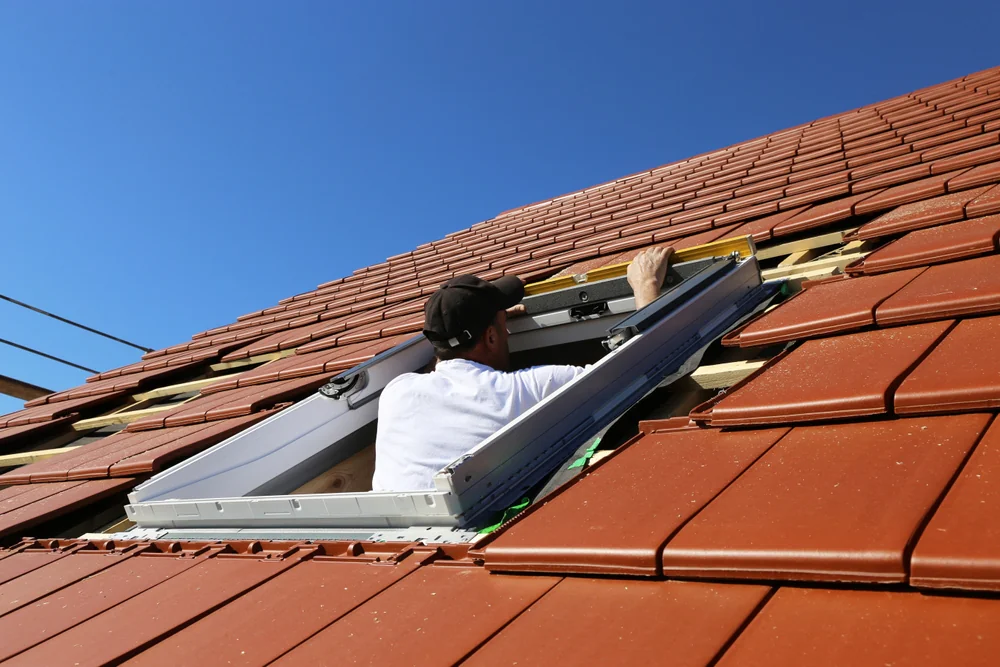
Roof windows and skylights both bring light through your roof. That’s where the similarities end. A roof window opens—manually or with a remote—to let in fresh air and provide ventilation. It’s installed flush with the roof’s pitch, usually at a minimum 15-degree angle, and functions like a traditional window you can operate.
A skylight, on the other hand, is typically fixed. It doesn’t open. Its job is to flood a room with natural light, not to ventilate. Some skylights do vent slightly to release air pressure, but they don’t swing open the way roof windows do. Skylights can sit flush with your roof or be mounted on a curb, giving you more flexibility depending on your roof type.
If you need both light and airflow—like in a bathroom or attic space—roof windows make sense. If you just want to brighten a dark hallway or stairwell without worrying about operation, a fixed skylight does the job.
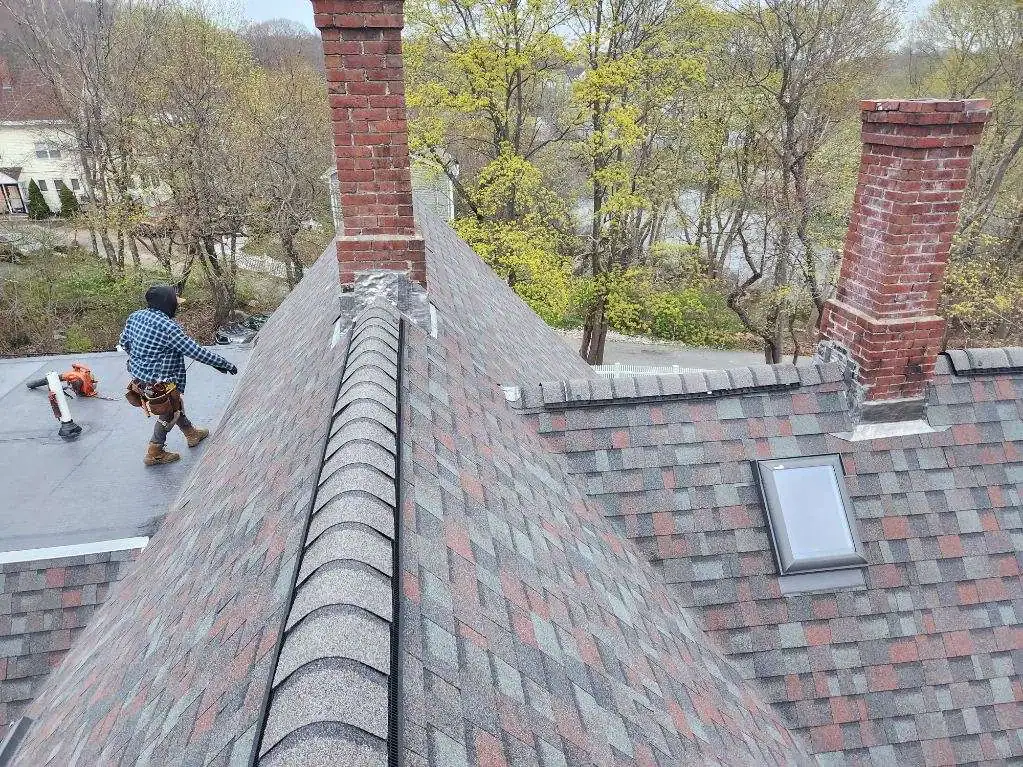
Roof windows work best in spaces where you want control over airflow. Think attic conversions, bathrooms, or upper-floor bedrooms. Because they open, they release hot, stale air that rises to the ceiling. In summer, that means natural cooling without cranking the AC. In humid spaces like bathrooms, it means moisture escapes instead of condensing on walls and ceilings.
Installation is more involved than fixed skylights. Roof windows require proper pitch—at least 15 degrees—and they need to integrate with your roof’s plane. That means more precise framing, careful flashing work, and attention to how the window operates once it’s in. If it’s installed wrong, you’re dealing with leaks, drafts, or a window that doesn’t close properly.
Roof windows also tend to cost more upfront. You’re paying for the operating mechanism, whether that’s manual, electric, or solar-powered. Electric and solar models come with remote controls and can even close automatically when rain sensors detect moisture. That convenience adds to the price, but it also means you’re not climbing up to close a window every time the weather shifts.
The other thing to consider is cleaning and maintenance. Because roof windows pivot or swing open, you can rotate the glass inward for safe cleaning from inside your home. That’s a real advantage if your roof is steep or hard to access. Fixed skylights, by comparison, collect dirt and debris on the outside, and cleaning them usually means getting on the roof.
Energy efficiency depends on how well the roof window is insulated and sealed. Modern units with double or triple glazing and low-E coatings perform well, but older models or poorly installed ones can leak heat in winter and let in too much heat in summer. If you’re in Essex County, MA, where winters are cold and summers are humid, that insulation matters.
Fixed skylights are the simplest option. They don’t open, don’t require operating mechanisms, and cost less to install than roof windows. You’re paying for a sealed unit that brings in natural light and that’s it. They’re ideal for spaces where ventilation isn’t a priority—hallways, stairwells, living rooms, or any area where you just want more daylight without adding moving parts.
Installation is more straightforward than roof windows because there’s no operation to account for. The skylight sits in the roof opening, gets flashed and sealed properly, and that’s the job. Fewer moving parts means fewer potential failure points, which is why fixed skylights tend to have lower long-term maintenance needs.
Vented skylights split the difference. They can open slightly—either manually with a pole or automatically with a remote—but they don’t swing wide like roof windows. The opening is smaller, designed to release trapped heat or humidity rather than provide full ventilation. If you want some airflow but don’t need a fully operable window, vented skylights work.
The trade-off with fixed skylights is that they don’t help with airflow. If you’re installing one in a bathroom or kitchen where moisture builds up, you’re still relying on exhaust fans to handle humidity. In a bedroom, you’re not getting the option to open it for fresh air on a nice day. That’s fine if light is the only goal, but it’s worth thinking through how the room actually gets used.
Tubular skylights are another option under the fixed category. These are small, dome-shaped units on the roof connected to a reflective tube that channels light into interior spaces. They’re budget-friendly, easy to install, and work well for closets, hallways, or bathrooms where a full skylight isn’t necessary. The downside is that they don’t provide views of the sky—just diffused light.
Energy performance varies. Fixed skylights with insulated glazing and low-E coatings can be very efficient, especially when installed on a flat or low-slope roof where heat gain is less of an issue. South or west-facing skylights can overheat a room in summer if they’re not shaded or tinted, so placement and glazing type matter.
Want live answers?
Connect with a Paradise Remodeling Inc. expert for fast, friendly support.
Leaks are the number one reason homeowners regret skylight installation. Not because skylights inherently leak, but because improper installation creates openings for water to get in. About 70% of skylight leaks come from failed flashing systems, not the skylight unit itself. That’s a flashing problem, not a product problem.
Flashing is the metal or rubberized material that seals the transition between your skylight and the roof. It directs water away from the opening and prevents it from pooling around the edges. If flashing isn’t layered correctly with your roofing materials, water finds its way under shingles, through seams, and into your attic. From there, it drips onto ceilings, stains drywall, and creates conditions for mold.
Proper roof seal starts with the right flashing kit. Quality skylights come with flashing designed specifically for that model and your roof type—whether it’s asphalt shingles, metal, or tile. Using the wrong kit or trying to make a generic flashing work is where problems start. The flashing has to integrate seamlessly with your roof’s waterproofing layers, and that requires experience.
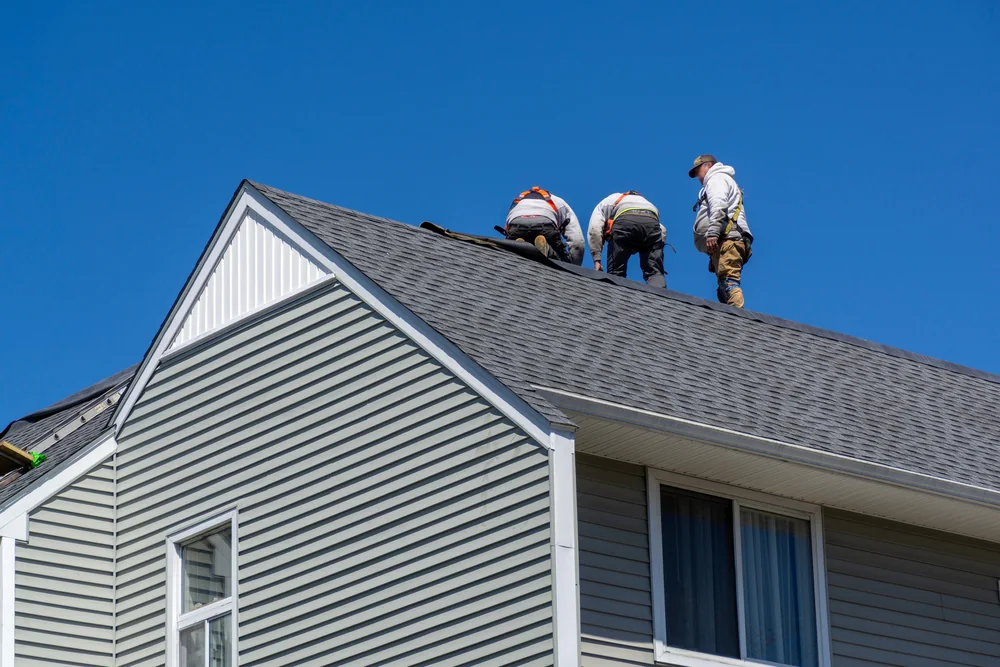
Professional installation means the flashing gets installed in the right sequence. Step flashing goes along the sides of the skylight, layered with each course of shingles so water flows over it, not under it. Head flashing at the top of the skylight sits under the shingles above it, directing water down and away from the opening. Apron flashing at the bottom sits on top of the shingles below, continuing that downward flow.
If any of those layers are out of order or improperly sealed, water gets in. That’s why experienced installers don’t skip steps or rush the flashing work. We also use high-quality sealants designed for roofing applications—not generic caulk that degrades in a year. Roofing cement or silicone sealants rated for UV exposure and temperature extremes hold up through New England’s freeze-thaw cycles.
In Essex County, MA, ice dams are a real concern. Ice dams form when heat escapes through your roof, melting snow that refreezes at the edges. That trapped water backs up under shingles and around skylight openings. Proper insulation around the skylight shaft, combined with correct flashing, prevents that backup from turning into interior leaks.
Ventilation around the skylight also matters. If the skylight isn’t properly insulated or if there’s inadequate airflow in the attic, condensation builds up on the inside of the glass. That moisture drips down, mimicking a leak even though the skylight itself is sealed. Homeowners see water and assume the skylight is leaking, but the real issue is condensation from poor ventilation.
Regular maintenance extends the life of your roof seal. That means inspecting flashing for rust, checking sealant for cracks, and clearing debris that accumulates around the skylight. Leaves, branches, and dirt trap moisture and accelerate deterioration. A professional inspection every few years catches small issues before they become expensive repairs.
The most common roof seal failure is deteriorated sealant. Over time, caulking and sealing compounds dry out, crack, and shrink. That creates gaps where water can seep through. UV exposure, temperature swings, and moisture all break down sealants faster than most homeowners expect. Reapplying sealant every few years is part of normal maintenance, not a sign that something was installed wrong.
Rusted or damaged flashing is another frequent problem. Metal flashing, especially if it’s not galvanized or coated, corrodes over time. Once rust sets in, the flashing loses its watertight seal. Replacing flashing isn’t a quick fix—it often means removing shingles around the skylight, installing new flashing, and resealing everything. That’s why using quality flashing materials from the start saves money long-term.
Poor installation is the third major cause. If the installer nails the flashing directly to the roof deck, those nail holes become leak points. Flashing should be secured in a way that doesn’t penetrate the waterproof barrier. If the installer doesn’t understand how flashing integrates with underlayment and shingles, you’re left with a skylight that leaks the first time it rains.
Structural movement can also compromise seals. Roofs shift slightly over time due to settling, temperature changes, and wind. If the skylight wasn’t installed with enough flexibility to accommodate that movement, seals crack and flashing separates from the roof. Quality installation accounts for that by using flexible sealants and proper fastening techniques.
Finally, debris buildup accelerates seal failure. Leaves and branches that collect around the skylight hold moisture against the flashing and sealant, speeding up deterioration. Regular cleaning—removing debris and checking for damage—keeps seals intact longer. If you’re in an area with heavy tree cover, plan on inspecting your skylight at least twice a year.
Skylight installation costs in Essex County, MA typically range from $1,200 to $3,500 per unit, depending on size, type, roof complexity, and whether you’re creating a new opening or replacing an existing skylight. That includes the skylight itself, flashing, sealing materials, labor, and interior finishing. Custom or oversized units, steep roofs, and complex framing push costs higher.
When you request a roof estimate, you should get a breakdown that includes material costs, labor, permits, and any structural work required. If the estimate is a single number with no detail, that’s a red flag. Transparent contractors explain what you’re paying for and why certain factors—like roof pitch, skylight type, or interior shaft work—affect the price.
Roof cost also depends on your roof material. Asphalt shingle roofs are straightforward to work with, so labor costs stay reasonable. Tile and metal roofs require more care to cut and reseal, which increases labor time and cost. If your roof has multiple layers of shingles or needs structural reinforcement to support the skylight, that adds to the total.
We provide comprehensive skylight installation services across Essex County, MA, handling everything from initial roof inspection and structural assessment through professional installation and ongoing maintenance. If you’re ready to bring natural light into your home the right way, reach out to us to discuss your project.
Summary:
Article details:
Share: