National siding cost averages rarely match what Essex County homeowners actually pay. Here's what the numbers look like in your market.
You searched “siding replacement cost,” read a few national guides, and now you’re sitting with a quote that looks nothing like what those articles described. That’s not a coincidence — and it’s not necessarily a red flag on the contractor’s end either. Massachusetts labor markets, permit requirements, and the specific housing stock in Essex County all push local project costs in a direction that national averages simply can’t predict.
This guide is built around what homeowners in Essex County actually encounter — from Andover and Haverhill down to Salem and Gloucester — so you can walk into the quote process with realistic expectations and the right questions ready.
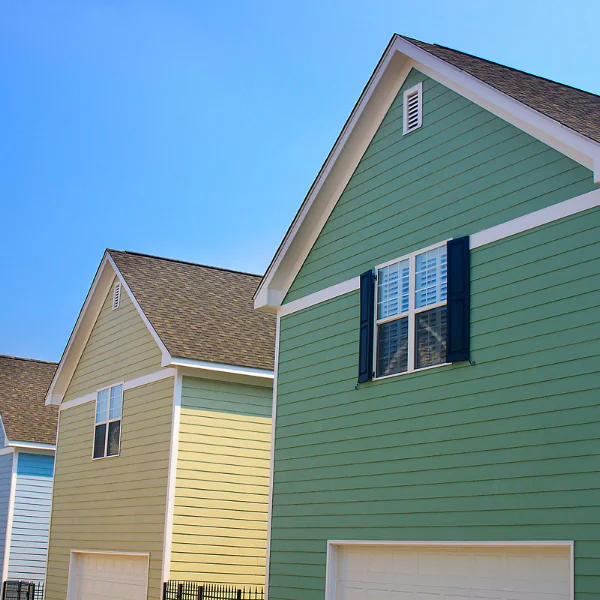
Vinyl is still the most commonly chosen siding material in Essex County, and it’s easy to see why — it’s durable enough for New England conditions, comes in a wide range of profiles and colors, and costs significantly less upfront than fiber cement or wood. Nationally, installed vinyl siding runs anywhere from $5 to $15 per square foot. In Essex County, expect the installed cost to land toward the higher end of that range once labor, removal, and permits are factored in.
For most homeowners in this area, a complete vinyl siding replacement on a mid-sized home falls somewhere between $10,000 and $24,000. The spread is wide because the variables are real — a straightforward two-story Colonial in North Andover with simple trim is a very different job than a three-story Victorian in Salem with dormers, decorative molding, and 80-year-old wood clapboards underneath.
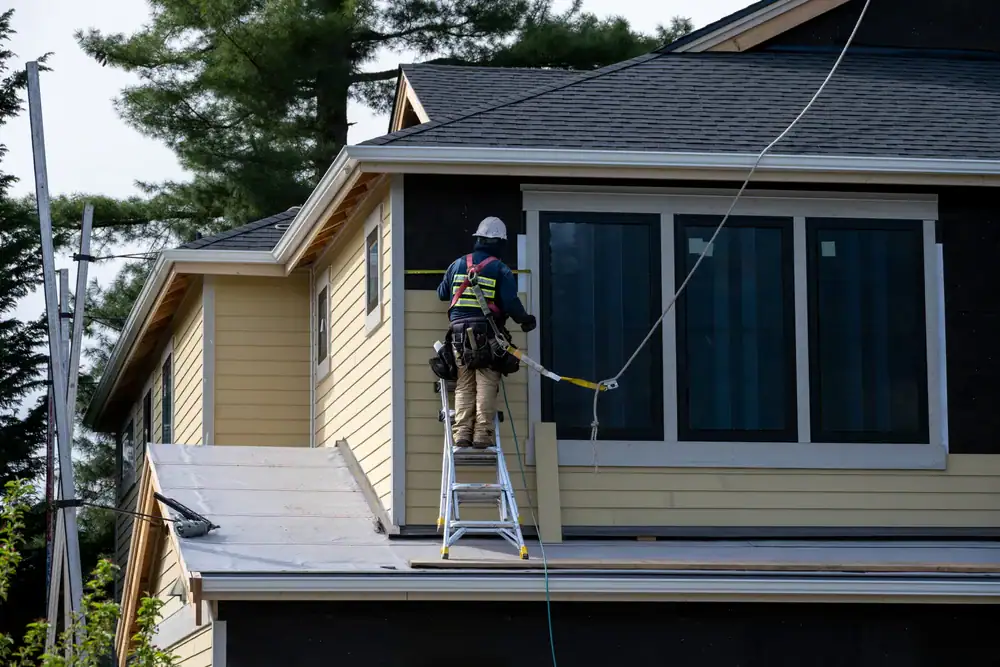
Labor rates in Essex County reflect a competitive skilled trades market — demand is high, experienced crews are in short supply, and that shows up in what contractors charge. That’s not padding; it’s the local market doing what markets do.
Then there’s the permit requirement. Massachusetts has required both a Home Improvement Contractor registration and a Construction Supervisor’s License for siding replacement since July 1, 2008. Every legitimate contractor in Essex County pulls permits for this work, and permit fees vary by municipality. That cost gets passed through to the homeowner, as it should — unpermitted siding work creates real liability problems at resale and can void manufacturer warranties.
The age of the housing stock is the other factor that rarely gets discussed in national guides. Roughly 34.6% of homes in Essex County were built before 1940. When a crew starts pulling off old siding on a pre-war home in Lawrence or Haverhill, they’re often working with sheathing that predates modern moisture barrier standards, and sometimes with asbestos cement shingles that require licensed abatement before new siding can go on. That’s not a contractor trying to upsell you — it’s a real condition that affects the scope and cost of the project.
A thorough pre-project assessment is what separates a quote that holds from one that balloons once work begins. The freeze-thaw cycle that Essex County experiences every winter — typically 30 to 60 cycles per year — accelerates moisture damage inside wall assemblies. Ice dam season regularly reveals rot and compromised sheathing that wasn’t visible from the outside. When that happens mid-project, the scope changes. Contractors who do a proper assessment upfront can identify most of this before demo begins, which is one of the clearest ways to tell a quality contractor from one who’s just trying to win the bid with a low number.
It does, and it’s worth understanding before you commit to a material. The eastern half of Essex County — Salem, Beverly, Gloucester, Marblehead, Newburyport, Rockport, Swampscott — faces Atlantic salt air and wind exposure that standard vinyl doesn’t handle as well over time. Salt air degrades paint adhesion on wood, accelerates corrosion of metal trim components, and causes lower-grade vinyl to fade and become brittle faster than it would in an inland location.
For coastal homeowners, that often means the conversation shifts toward premium vinyl with UV-resistant formulations, or toward fiber cement, which holds up significantly better in high-moisture, high-salt environments. The upfront cost is higher, but the cost-per-year calculation over a 30-year lifespan frequently favors the more durable material — especially when you factor in that you’re not repainting, re-caulking, or replacing panels every decade.
Inland towns like Andover, North Andover, Methuen, and Topsfield don’t face the same salt exposure, but the freeze-thaw and ice dam risk is still real. Insulated vinyl siding — which adds R-2 to R-4 of thermal resistance to the wall assembly — is worth considering in these locations, both for energy performance and because the rigid foam backing reduces the flexing that causes standard vinyl to crack over time. It costs more per square foot than standard vinyl, but it adds measurable insulation value that can show up in heating bills.
The right answer depends on where your home sits in Essex County, how old it is, and what condition the underlying wall assembly is in. That’s a conversation worth having with a contractor before you’re comparing quotes — because if two contractors are quoting different materials, the price comparison becomes meaningless.
Want live answers?
Connect with a Paradise Remodeling Inc. expert for fast, friendly support.
Fiber cement siding — James Hardie being the most recognized brand — costs roughly two to three times more upfront than standard vinyl. Nationally, installed fiber cement runs $5 to $14 per square foot, with a project average around $14,674. In Essex County, with regional labor rates and permit costs, expect to be at or above the higher end of that range for most projects.
The reason homeowners in Essex County still choose it regularly comes down to durability and resale. Fiber cement lasts 30 to 50 years or more, holds paint significantly better than wood, and is resistant to moisture, insects, and fire. According to the 2025 Cost vs. Value Report, fiber cement siding replacement returns approximately 114% of its cost at resale — meaning the full investment is recouped, and then some. That’s third-party data from the industry’s most cited annual study.
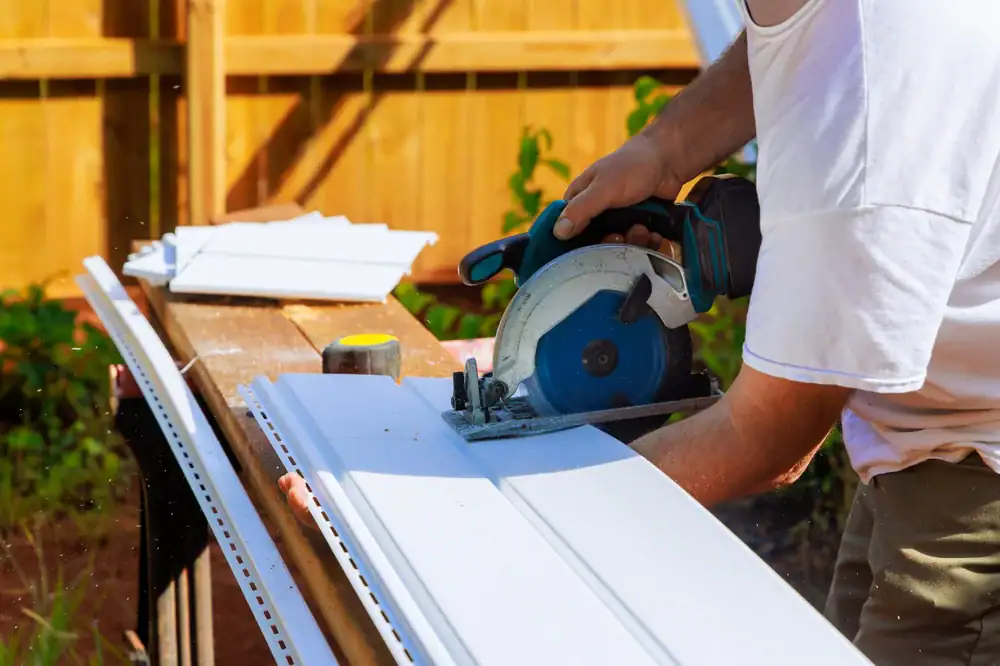
When we quote a full siding replacement, the number includes materials, labor, removal and disposal of the existing siding, house wrap or moisture barrier installation, trim work, and permit fees. Each of those line items carries real cost, and a quote that seems unusually low is almost always missing one or more of them.
Removal and disposal alone typically adds $1,000 to $3,000 for a mid-sized home. If the old siding contains asbestos — which is common in pre-1980 homes throughout Essex County — licensed abatement is required under Massachusetts law, and that cost is separate from and in addition to standard demo. Homes in Lawrence, Haverhill, and other parts of the county with significant pre-war housing stock are more likely to encounter this.
House wrap is the moisture barrier installed between the sheathing and the new siding. It’s not optional if you want the siding to perform correctly and the manufacturer’s warranty to hold. Some contractors skip it or use substandard material to cut costs — it’s a question worth asking directly when you’re reviewing a quote.
Trim work — around windows, doors, corners, and rooflines — adds labor time and material cost that varies significantly based on the complexity of the home’s exterior. A simple ranch-style home has straightforward trim. A three-story Colonial or a Victorian with ornate detail work in Salem or Newburyport is a different conversation entirely, and any quote that doesn’t account for that complexity should raise a question.
Permit fees vary by town across Essex County. They’re not a huge line item, but they’re real, and any contractor who tells you a permit isn’t needed for siding replacement in Massachusetts is either misinformed or working outside the law — neither of which is a situation you want to be in.
Labor is typically the largest single variable in a siding replacement quote, and it’s also the one that’s hardest to compare across contractors without knowing what’s behind the number. In Essex County — Haverhill, Lawrence, Methuen, Andover, North Andover — labor rates for siding installation reflect a competitive regional market where experienced crews are in demand and the cost of doing business is higher than the national average.
A few things drive labor cost variation from one project to the next. Stories matter a lot. A single-story ranch is straightforward; a three-story home requires staging, additional safety equipment, and more time per square foot. Complexity of the roofline and trim also matters — a home with multiple dormers, bay windows, or detailed cornice work takes longer to side correctly than a simple box profile. And the condition of what’s underneath the existing siding affects how much prep work is required before new material can go on.
What doesn’t justify a wide gap between quotes is the use of subcontracted labor. When a contractor brings in a subcontracted crew to do the actual installation, you lose visibility into who’s doing the work, what their experience level is, and who’s accountable if something is done incorrectly. We use the same crew from the estimate through the final cleanup — no subcontractors, no handoffs, no surprises about who showed up.
A dramatically lower quote almost always reflects something being cut: an unlicensed crew, skipped permits, no moisture barrier, or no workers’ compensation coverage. That last one matters more than most homeowners realize — if a worker is injured on your property and the contractor doesn’t carry workers’ comp, the liability can fall on you. It’s worth asking for proof of insurance before anyone sets foot on your property.
The reason siding replacement costs vary so much in Essex County isn’t that contractors are making up numbers. It’s that the real variables — home age, wall condition, material choice, coastal vs. inland location, permit requirements, and labor market — all move the number in ways that a national average simply can’t capture.
The most useful thing you can do before requesting quotes is understand those variables and ask the right questions when you get them. A quote built on a real assessment of your home, with materials and scope clearly specified, is worth more than a low number that hasn’t accounted for what’s actually there. That’s true whether you’re in Andover, Salem, Gloucester, or anywhere else in Essex County.
We’ve been working on homes throughout Essex County since 2006. If you’re trying to figure out what your project should actually cost, we offer free quotes — and we’ll walk you through exactly what’s included and why.
Summary:
Article details:
Share: