Most Essex County homeowners don't think about their siding until something goes wrong. By then, the damage is usually bigger — and more expensive — than it needed to be.
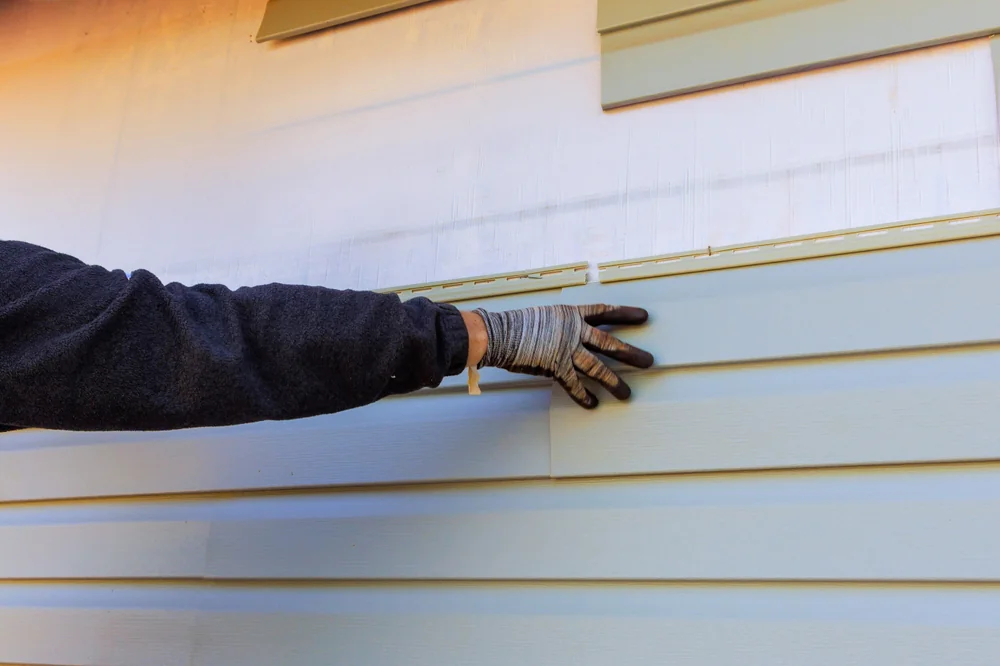
Most homeowners in Essex County don’t think about their siding until they spot something alarming — a wavy panel near the garage, a dark stain creeping up behind a downspout, or a draft in a room that never used to feel cold. By the time those signs show up, the damage has usually been building for months.
The good news is that a siding inspection doesn’t require a ladder or a contractor on day one. You can catch most of the early warning signs yourself, from the ground, in about 20 minutes. This guide will walk you through exactly what to look for — and explain why late summer is the most important window to do it.
Start from the street. Walk the full perimeter of your home slowly, looking at each wall straight on and at an angle. Flat panels should lie flat. If you’re seeing waves, ripples, or sections that bow outward, that’s not cosmetic — that’s a structural signal worth paying attention to.
Get closer to the areas that concern you. Run your hand along panel edges and press gently near seams and corners. Soft or spongy material where there should be firm resistance usually means moisture has gotten behind the surface. Check the caulk around every window, door frame, and exterior penetration. Caulk that’s cracked, shrunken, or pulling away from the surface is one of the most common ways water finds its way in.
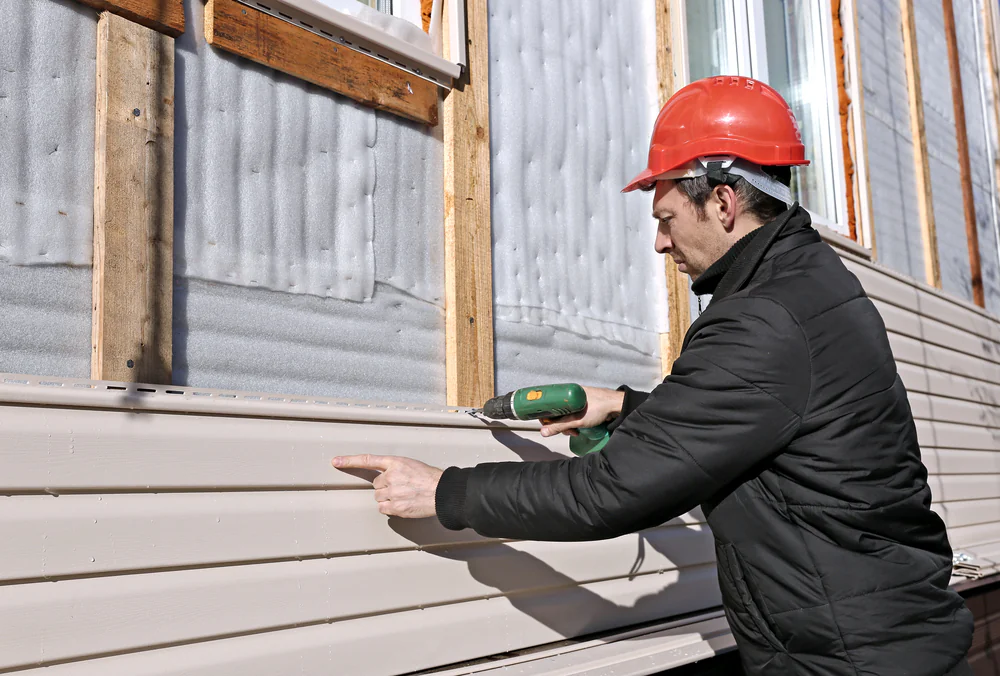
Warping and buckling are probably the most misunderstood siding problems homeowners encounter. It’s easy to assume they’re just an eyesore — the panels look a little off, but nothing is leaking, so what’s the rush? The problem is that warped or buckled panels almost always mean the siding can no longer expand and contract the way it’s supposed to. When that happens, seams pull apart. Gaps open up. And those gaps don’t stay harmless once October arrives.
Discoloration is another one worth taking seriously. Dark streaks running vertically down a wall often indicate water is tracking somewhere it shouldn’t be. Green or black patches — algae, mold, or moss — signal that moisture is sitting against the surface long enough to grow something. Neither of those things happens on siding that’s draining and drying the way it should.
Cracks and chips might look minor, but they’re open invitations. Even a hairline crack in a vinyl panel gives water a path behind the surface. Once moisture gets behind your siding, it doesn’t just sit there — it works its way into the sheathing, the framing, and eventually the interior of your walls. By the time you notice peeling paint inside, bubbling wallpaper, or a musty smell in a room that shares an exterior wall, you’re already dealing with damage that goes well beyond the siding itself.
One more thing to check: the gap between your siding and the ground. Siding that runs too close to grade — less than about six inches — will wick moisture up from the soil, especially during the wet falls and snowmelt seasons that are standard across Essex County. It’s an easy thing to miss and an easy thing to address early.
A ground-level walk-around will catch a lot. But there are failure points that a trained eye finds that a homeowner’s inspection typically misses — and they tend to be the expensive ones.
Flashing is the biggest one. The metal or rubber transitions where your siding meets your roofline, windows, and doors are where water most commonly enters a home’s wall system. Flashing that’s lifted, corroded, improperly lapped, or simply missing doesn’t announce itself from the curb. You won’t see it from the ground. But when a nor’easter drives rain sideways into that transition point, water will find every gap.
Soft spots behind panels are another example. We’ll press and probe along the wall in a way that identifies rot or moisture damage behind the surface — damage that looks fine on the outside but has already compromised the sheathing underneath. In some cases, a single panel can be temporarily removed to check what’s behind it without doing any real damage. That kind of targeted check can be the difference between catching a $400 problem and discovering a $12,000 one.
Installation deficiencies are also common in older homes. Vinyl siding needs to be hung in a way that lets each panel slide about half an inch horizontally to accommodate thermal expansion. When panels are nailed too tightly — which happens more often than it should — summer heat has nowhere to go, and the panel buckles. A contractor who knows what to look for can identify whether warping is a maintenance issue or an installation issue, and that distinction matters a lot when you’re deciding between repair and replacement.
Want live answers?
Connect with a Paradise Remodeling Inc. expert for fast, friendly support.
Essex County sits in a part of Massachusetts that gets hit from multiple directions. Coastal towns like Gloucester, Marblehead, and Newburyport deal with salt air that accelerates surface degradation and corrodes the fasteners holding siding in place. Inland communities along the Merrimack River corridor — Lawrence, Haverhill, Methuen — face humidity conditions that keep moisture against exterior surfaces longer than drier climates would.
And then there’s the heat. According to First Street climate data, 81% of homes in Essex County carry a Major Heat Factor rating, with the number of days above 95°F projected to increase by 114% over the next 30 years. That’s not abstract — it’s more thermal stress cycles on your siding every single summer.
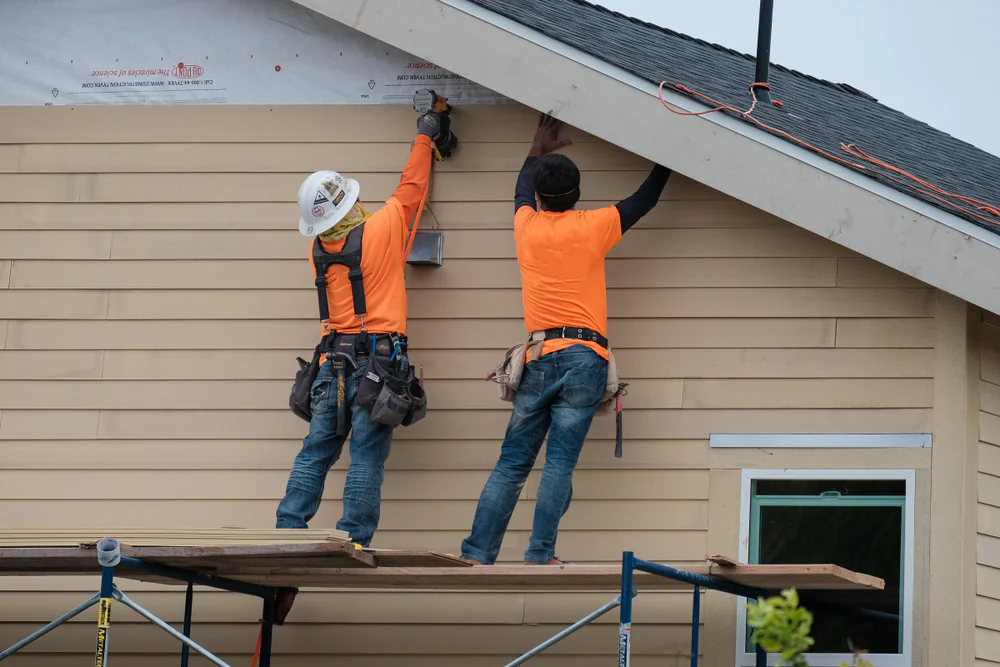
Vinyl expands in heat and contracts in cold. That’s not a defect — it’s just how the material works. The problem comes when the expansion has nowhere to go. During July and August, panels on south- and west-facing walls absorb the most solar heat. If they’re installed correctly, they slide slightly within their connections and return to position when temperatures drop. If they’re not — or if the connections have loosened over years of cycling — the panel buckles outward or the seam between panels pulls apart.
By late August, that stress damage is at its most visible. Panels that have been expanding and contracting through the summer show their wear in the form of rippling, separation at butt joints, and caulk that has cracked or pulled away from window frames. These are not problems that appeared overnight. They’ve been building since June.
The timing matters because of what comes next. Once the first nor’easter hits — and in Essex County, that can happen as early as October — any gap or separation in your siding becomes an active water intrusion point. Driving rain at 40 miles per hour doesn’t need much of an opening. Water that gets behind your panels in October can freeze in December. When water freezes, it expands. A small crack becomes a larger one. What was a siding repair in September becomes a sheathing repair in March, and the cost difference between those two outcomes is significant.
Darker vinyl colors are more vulnerable to this cycle because they absorb more heat than lighter shades. If your home has dark brown, forest green, or charcoal vinyl siding on south- or west-facing walls, those sections deserve extra attention during a late-summer inspection.
One of the things that keeps homeowners from calling a contractor is not knowing what they’re walking into financially. The range on siding work is genuinely wide, and understanding why helps you have a more productive conversation when you do get an estimate.
For repair work — patching damaged panels, replacing a section, resealing caulk and flashing — costs vary based on how far the damage has spread. Surface-level siding repairs are a very different conversation from repairs that have reached the wall sheathing or framing behind the panels. The earlier you catch it, the more likely you are to be dealing with the less expensive version of the problem.
For full replacement in Massachusetts, vinyl siding typically runs $6 to $9 per square foot installed. Fiber cement — James Hardie being the most recognized brand — runs $9 to $15 per square foot installed. For a typical single-family home in Essex County, full siding replacement generally falls in the $14,000 to $30,000 range depending on the size of the home, the material chosen, and the complexity of the job. Those numbers aren’t meant to alarm — they’re meant to give you a realistic frame of reference so that a free estimate actually means something when you get one.
It’s also worth knowing that damage caused by neglect is typically excluded from homeowners insurance coverage. Water damage that results from a slow leak behind failing siding — the kind that builds quietly over months — is often classified as a maintenance issue rather than a sudden event, which means the repair bill lands entirely on the homeowner. Catching siding failure early keeps that from becoming your situation.
We don’t push full replacements when a repair will do the job. If your siding can be fixed properly, we’ll tell you. If it can’t, we’ll explain why and show you what’s actually wrong. That’s how we’ve worked across Essex County since 2012, and it’s the only way we know how to operate.
August is the window. Contractor schedules in Essex County are still open in late summer, but they tighten fast once September arrives and fall demand picks up. By October, most reputable contractors are booked out — right when the first nor’easters start showing up on the forecast.
If your siding is showing any of the signs covered in this guide — warping, soft spots, caulk failure, discoloration, or panel separation — the time to address it is now, before the weather makes it worse and before your options narrow. A free on-site assessment takes the guesswork out of what you’re dealing with.
Paradise Remodeling Inc has been handling siding inspections, repairs, and full replacements across Essex County since 2012. Reach out to get a straight answer about what your siding actually needs — and what it will cost to fix it.
Summary:
Article details:
Share: