From nor'easter damage to slow ceiling stains, this guide covers what Essex County homeowners actually need to know about roof repair.
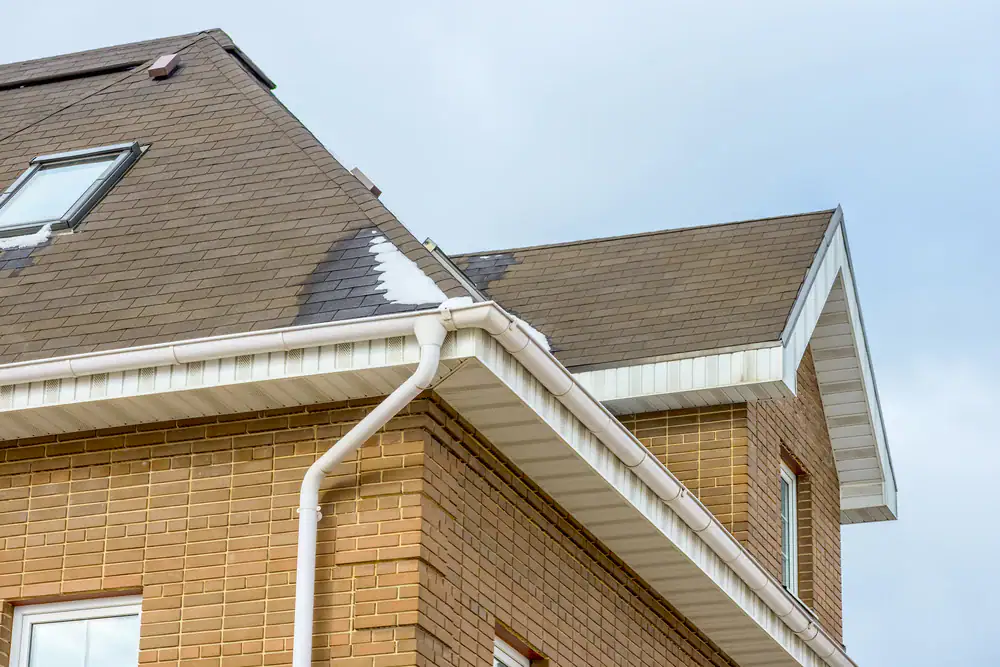
There are two kinds of roof problems in Essex County. The kind that finds you — water dripping through the ceiling during a January nor’easter while you’re scrambling for a bucket — and the kind you find yourself staring at on a Tuesday afternoon, wondering how long that stain on the ceiling has actually been there.
Both are real. Both are stressful. And both deserve a straight answer, not a sales pitch.
This guide covers the full spectrum: what different damage signals mean, how ice dams work in our climate, when to file an insurance claim, and how to tell a legitimate repair from a band-aid that fails by February. Let’s start where most Essex County homeowners actually start — with something they noticed and hoped would go away on its own.
A brown stain on the ceiling is one of the most common reasons homeowners in Lawrence, Haverhill, and Methuen pick up the phone in the spring. It showed up sometime in January or February, it hasn’t grown, and now you’re not sure if it’s a crisis or a coincidence.
Here’s the honest answer: a ceiling stain is almost always a sign that water got somewhere it shouldn’t have. The stain itself is dried mineral residue left behind after the water evaporated. The water is gone — but the path it took to get there isn’t.
The source could be a roof leak, but it could also be a plumbing line from an upstairs bathroom, HVAC condensation, or a bathroom exhaust fan venting into the attic instead of outside. Before anyone starts pulling shingles, the right move is a proper diagnosis — not an assumption.

This is a question worth asking before you call a roofer, because the answer changes everything about who you need and what the fix looks like.
A roof leak typically shows up on an exterior wall or directly below a penetration — a chimney, a skylight, a vent stack, or a valley where two roof planes meet. The stain often appears or worsens after rain or after heavy snow starts melting. If you had a bad nor’easter roll through Essex County and the stain appeared within a day or two, that timing is a strong indicator of a roof or flashing issue.
A plumbing leak from an upstairs bathroom tends to show up directly below the bathroom floor — under a toilet, a tub, or a vanity. It may appear after a shower, after heavy use, or gradually over time regardless of weather. The stain pattern is often more circular and localized.
A ceiling crack with water staining along it is a slightly different situation. Cracks can develop from settling, from freeze-thaw movement in the framing, or from water damage that’s been expanding the drywall over time. If you’re seeing both a crack and a stain, that’s usually a sign the moisture has been present long enough to affect the structure of the ceiling itself — which means the underlying problem has been active for a while.
The reason this distinction matters so much in Essex County specifically is the age of the housing stock. A significant portion of homes in the Merrimack Valley — particularly in Lawrence and Haverhill — were built before 1960. Older homes often have aging plumbing, deteriorated roof flashings, and attic insulation that hasn’t been updated in decades. Any of those factors can be the source. A contractor who jumps straight to “you need a new roof” without ruling out the other possibilities isn’t doing you any favors.
If the stain has a dark ring around it, a greenish or black discoloration, or a musty smell in the room, mold is a real possibility. And that changes the urgency of the situation considerably.
Roof leak black mold develops when moisture sits in an enclosed space — attic insulation, drywall, or ceiling framing — long enough for spores to colonize. In Essex County’s climate, where homes stay closed up from November through March and attic temperatures fluctuate dramatically with freeze-thaw cycles, the conditions for mold growth are present more often than most homeowners realize.
The ceiling leak mold situation is worth taking seriously for two reasons. First, black mold (Stachybotrys) can cause respiratory issues with prolonged exposure, particularly for children and elderly residents. Second, mold remediation is significantly more expensive than the original roof repair would have been. A leak that costs $400 to $800 to fix can turn into a $3,000 to $5,000 mold remediation project if it’s left unaddressed through a full winter.
Mold on ceiling from roof leak is also relevant to your insurance claim. Most standard homeowners policies cover sudden and accidental water damage, but they often exclude damage that results from “neglect” — meaning a leak you knew about and didn’t address. Documenting when you noticed the stain and when you called for an inspection protects you if the claim is questioned later.
A water bulge in the ceiling is a more immediate situation. That bulge is a pocket of water that has collected above the drywall and is being held in place by surface tension. If you see one, don’t poke it. The weight of the water can cause the ceiling to collapse suddenly. The right move is to put something below it to catch the water, take a photo, and call for emergency roof leak repair.
Want live answers?
Connect with a Paradise Remodeling Inc. expert for fast, friendly support.
If your roof leaks every winter, you probably don’t have a roofing problem. You have an attic problem.
Ice dams form when heat escaping from your living space warms the roof deck, melting snow from the underside. That meltwater runs down the roof and refreezes at the cold eaves — the part of the roof that extends past the exterior wall and doesn’t benefit from the indoor heat below. Over time, that ice builds into a dam that forces water back up under the shingles, past the underlayment, and into the home.
In Essex County, ice damming is one of the most common winter insurance claims. The northern-facing sections of roofs in communities like North Andover, Andover, and Methuen are especially vulnerable because they receive limited sun exposure during the short winter days, keeping the eaves colder for longer.

Ice dam removal is not a DIY job. Climbing onto a snow-covered, ice-glazed roof in January without proper safety equipment is genuinely dangerous, and improper removal techniques — chipping at the ice with a hammer or axe — can damage the shingles and flashing far more than the ice dam itself.
The professional approach to removing ice dams involves low-pressure steam or hot water to melt the ice without forcing it against the shingles. This creates channels for the trapped water to drain rather than continuing to back up under the roof. It’s a careful process, not a brute-force one.
What removal does not do is prevent the next ice dam from forming. If the attic conditions that caused the original dam — inadequate insulation, air leaks around recessed lights and plumbing penetrations, insufficient ventilation — aren’t addressed, the same homeowner will be calling for ice dam removal again next February. And the February after that.
The complete fix for a recurring ice dam problem involves three things working together: improving attic insulation so less heat escapes through the roof deck, sealing air leaks where conditioned air from the living space is getting into the attic, and ensuring the attic has adequate ventilation so that what little heat does enter can escape evenly. In some cases, heat tape along the eaves and in the gutters provides an additional layer of protection for homes where the roof geometry makes full remediation difficult.
Flat roof ice dam prevention is a slightly different challenge. Flat and low-slope roofs common on commercial buildings in Salem, Peabody, and Beverly don’t shed snow the way pitched roofs do, so water has fewer places to go. Proper drainage, adequate membrane thickness, and interior insulation are the primary defenses on flat commercial roofs.
Gutters play a role in ice dam formation that most homeowners don’t think about until they’re watching a solid wall of ice hanging off the eaves in February. Clogged gutters prevent meltwater from draining properly, which accelerates ice buildup at the roofline. Keeping gutters clear through the fall — especially in communities like Gloucester and Rockport where Atlantic storms deposit significant debris — is one of the simplest preventive steps available.
Gutter guards can help reduce the frequency of cleaning, but they’re not a complete solution. Water still needs a clear path to the downspout, and ice can form in gutters even when they’re clean if the underlying attic heat loss issue isn’t addressed.
Heat cables installed in a zigzag pattern along the eave and through the gutter create a channel for meltwater to drain even when temperatures are below freezing. They’re not a substitute for proper insulation and ventilation, but they’re a practical option for homeowners who want an added layer of protection while working on the longer-term fix.
The broader point is that ice dams in Essex County are a symptom, not a cause. Treating the symptom — removing the ice, patching the leak — without addressing the underlying attic conditions is like mopping the floor without turning off the faucet. We’ve seen this cycle play out for homeowners across the Merrimack Valley, and the ones who break it are the ones who invest in the root-cause fix rather than the annual band-aid.
Commercial metal roof repair related to ice and freeze-thaw damage is also worth addressing. Metal roofs expand and contract significantly with temperature swings, and the fasteners, seams, and penetrations are the first places to fail. In Essex County’s climate, where temperatures can swing 25 to 35 degrees within a single winter day, metal roof maintenance isn’t optional — it’s a regular part of protecting the building.
The difference between a good repair and a wasted repair usually comes down to who’s doing it. In Massachusetts, roofing repair contractors are required to hold a Home Improvement Contractor (HIC) registration for residential work and a Construction Supervisor License for any structural elements. Those aren’t formalities — they determine who carries liability if something goes wrong on your property. We hold active HIC License #195972, and we pull the permits. You don’t have to navigate the building department.
What to look for beyond licensing: a written estimate before any work starts, a contractor who can explain what’s wrong in plain language without pushing you toward a full replacement you may not need, and someone who will still answer the phone six months after the job is done. Most roof repair estimates in Essex County run between $400 and $1,500 depending on what needs fixing. If a contractor can’t give you a ballpark and a written scope, that’s a signal worth paying attention to.
If you’re dealing with storm damage roof insurance claims, the process matters as much as the repair itself. Wind damage and hail damage require documentation — photos, weather records, a written assessment from a licensed contractor — and the order in which you do things affects whether your claim gets approved. We can tarp the roof the same day and document everything for your insurer.
Whether you’re in active emergency mode or just finally deciding to deal with that stain you’ve been watching since February, Paradise Remodeling Inc is based right here in Methuen and serves homeowners and commercial property owners across Essex County. Reach out for a free roof repair estimate — no pressure, no obligation, just a straight answer about what’s going on with your roof.
Summary:
Article details:
Share: