Most Methuen homeowners don't know what their older home requires before remodeling starts. Here's what the rules actually say — and what the local climate adds to the equation.

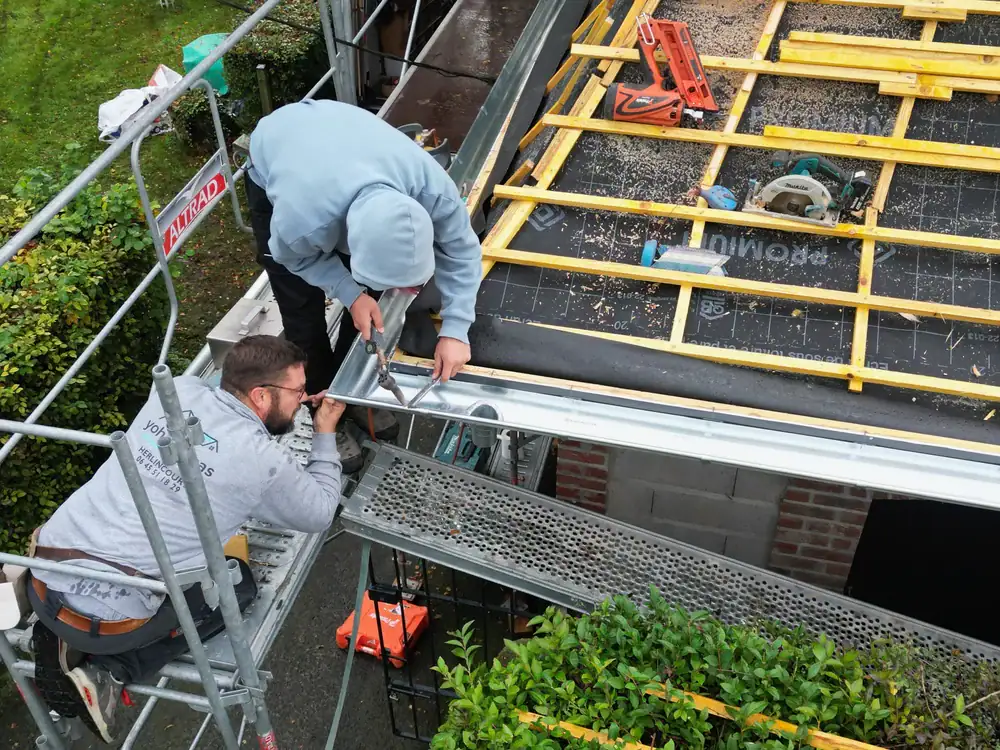
Most homeowners in Methuen start thinking about remodeling when something breaks, wears out, or finally becomes impossible to ignore. A roof that’s been leaking since February. Siding that’s cracked and pulling away from the house. Windows that stopped sealing years ago.
The project feels straightforward until you start asking questions and realize there’s more to it than you expected. Methuen has its own set of considerations — the age of the housing stock, the local climate, and a regulatory layer that most contractors never bring up. If you want to understand what your project actually requires before anyone shows up with a ladder, this is a good place to start.
The majority of homes in Methuen were built between the 1940s and 1980s. That matters because any home built before 1978 falls under the EPA’s Renovation, Repair and Painting rule — commonly called the RRP rule — which requires contractors to follow specific work practices and hold active certification before disturbing painted surfaces.
Massachusetts goes a step further. The state runs its own RRP program through the Department of Labor Standards, and it only recognizes Massachusetts-specific training. A contractor certified under the federal EPA program alone doesn’t meet the state requirement here. That’s a distinction most homeowners in Essex County never know to ask about — until something goes wrong.
The RRP rule applies to any paid work on a pre-1978 home that disturbs more than six square feet of painted surface indoors, or more than twenty square feet on the exterior. For most exterior remodeling projects — siding replacement, window replacement, door work — that threshold is crossed before the crew finishes unloading the truck.
What the rule requires in practice: the contractor’s firm must hold active RRP certification, workers must be trained in lead-safe work practices, and the homeowner must receive the EPA’s “Renovate Right” pamphlet before work begins. The contractor is also required to maintain records of the work for three years. These aren’t suggestions — they’re legal requirements. Contractors who skip them face EPA fines of up to $37,500 per infraction.
For Methuen homeowners, this is relevant because the city’s housing stock is predominantly mid-century construction. The 1960s ranch on a quiet side street, the 1950s cape on the west end of town, the 1970s colonial near the New Hampshire line — the odds are high that your home qualifies. That doesn’t mean the project can’t happen. It means the contractor you hire needs to be properly certified, and you’re entitled to ask for proof before signing anything.
We’ve been handling exterior remodeling in Methuen and across Essex County since 2006, and we hold the certifications required to work in pre-1978 homes under Massachusetts law. We also distribute the required pre-renovation materials before any work begins and keep the documentation on file. It’s not a complicated process when the contractor knows what they’re doing — but it’s one that gets skipped more often than it should.
One more thing worth knowing: Massachusetts also has a Guaranty Fund administered by the Office of Consumer Affairs and Business Regulation that can compensate eligible homeowners up to $25,000 for unpaid judgments against registered contractors. That protection only applies if you hire a contractor who holds a valid Massachusetts Home Improvement Contractor registration. Verifying that registration before you hire anyone takes about two minutes on the mass.gov website and is worth doing every time.
There are two separate things to verify when hiring a contractor for exterior work on a pre-1978 home in Methuen. The first is Massachusetts Home Improvement Contractor registration, which is required for any contractor doing more than $1,000 of work on a one-to-four family owner-occupied building. The second is RRP firm certification, which is required specifically for work that disturbs painted surfaces in pre-1978 housing. These are different credentials administered by different agencies, and a contractor can hold one without the other.
You can verify HIC registration through the OCABR lookup tool on mass.gov. RRP firm certification can be confirmed through the Massachusetts Department of Labor Standards. Neither check takes long, and both matter. A contractor who holds general liability insurance but lacks RRP certification is not legally permitted to perform exterior work on your 1965 colonial in Methuen — full stop.
The practical implication is this: when you’re getting quotes for siding, roofing, or window work on an older home, ask each contractor directly whether their firm holds active Massachusetts RRP certification. If they don’t know what you’re referring to, that’s your answer. If they say it doesn’t apply to exterior work, that’s also your answer — and it’s incorrect. The rule applies to exterior surfaces at the 20-square-foot threshold, which virtually every full replacement project exceeds.
We’re happy to provide documentation of our certifications before any project starts. That’s standard practice for us, and it should be standard practice for any contractor working in Essex County on homes of this age.
Want live answers?
Connect with a Paradise Remodeling Inc. expert for fast, friendly support.
Methuen sits in the Merrimack Valley, roughly 30 miles north of Boston and right on the New Hampshire state line. It’s an inland climate — colder and more temperature-volatile than the coastal towns of Essex County like Gloucester or Newburyport. That distinction matters for exterior remodeling because the Merrimack Valley experiences some of the most aggressive freeze-thaw cycling in the region, and older homes in Methuen weren’t built to handle it indefinitely.
Understanding what the climate does to the specific materials on your home helps explain why certain repairs keep coming back — and why the right fix isn’t always the obvious one.
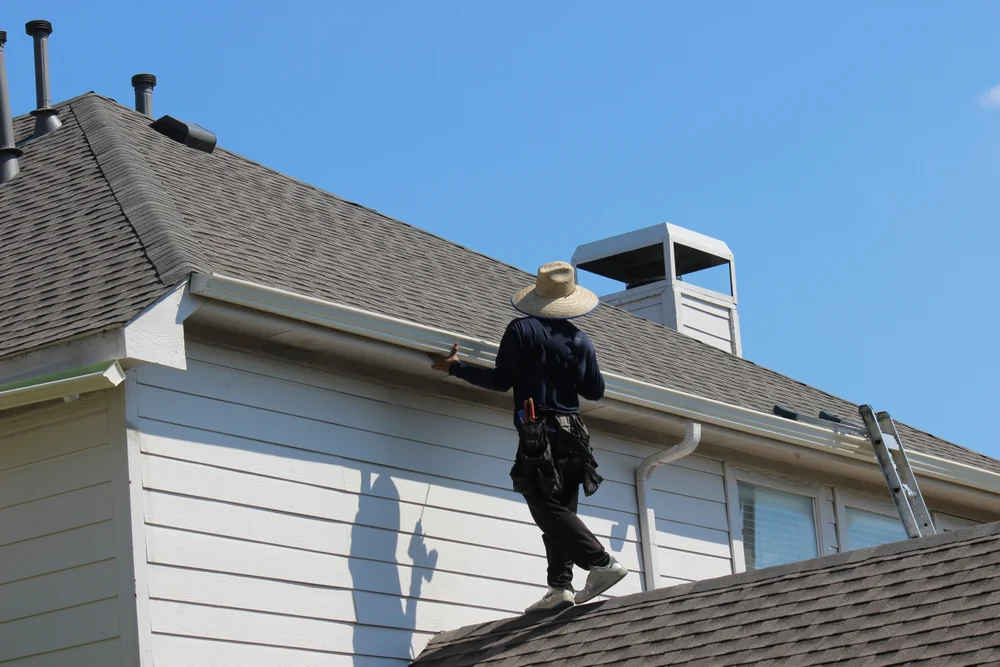
Ice dams form when heat escapes through a poorly insulated or inadequately ventilated roof, melts the snow sitting on top, and that meltwater refreezes at the cold eaves before it can drain. The ice backs up under the shingles, forces its way past the underlayment, and finds its way into the attic or the walls.
It’s a slow process until it isn’t — and by the time you see a water stain on the ceiling, the damage is already done. This is a recurring problem in Methuen specifically because of the housing stock. Homes built in the 1950s, 1960s, and 1970s were constructed under ventilation and insulation standards that look nothing like current code. Many have shallow roof pitches, minimal attic insulation, and original sheathing that has been through fifty-plus winters. That combination is exactly what creates ice dam conditions.
The cost side of this is worth understanding before it becomes your problem. Ice dam removal alone can run up to $4,000. If the dam has already caused a roof leak and water has infiltrated the structure, repair costs can reach $24,000 in serious cases. Those numbers aren’t worst-case outliers — they reflect what happens when ice dam damage goes unaddressed or gets treated symptomatically year after year without fixing the underlying ventilation issue.
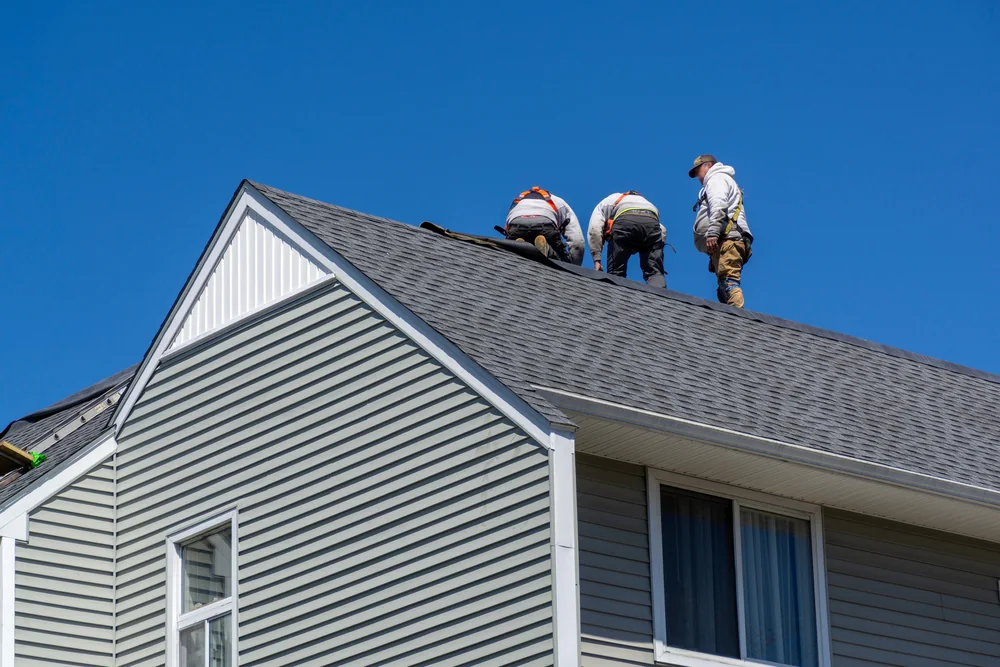
The right response to a chronic ice dam problem isn’t just removing the ice each February. It’s a roofing system that addresses attic ventilation and insulation so the heat doesn’t escape in the first place. We’ve been handling this specific issue on Methuen and Merrimack Valley homes for nearly two decades. The fix looks different depending on the roof design, but the diagnostic process is consistent — and it starts with understanding what’s actually happening in the attic, not just what’s visible from the street.
Massachusetts homeowners insurance premiums have increased significantly in recent years. A properly installed roofing system, documented and done to code, is one of the more direct ways to protect both the structure and the insurance coverage on it.
Vinyl siding installed in the 1970s and 1980s was designed for a different performance standard than what’s available today. It becomes brittle in sustained cold — below roughly -10°F, it can crack on impact — and it expands and contracts with every temperature swing. Over decades of Merrimack Valley winters, the seams gap, the panels warp, and the moisture barrier behind the siding starts to fail in ways that aren’t visible from the outside.
What looks like a cosmetic issue — faded, cracked, or slightly warped siding — is often a structural one. When the siding gaps at the seams or pulls away from the trim, water gets in behind it. If the house wrap underneath is original or was never installed properly, that water hits the sheathing directly. Wet sheathing rots. Rotted sheathing compromises the wall assembly. By the time you’re dealing with soft spots in the wall or mold in the interior, what started as a siding replacement has become a significantly larger project.
The way to avoid that sequence is to catch the siding failure before the sheathing is involved. On a Methuen home from this era, that usually means a proper inspection that looks at the condition of the house wrap and flashing — not just the siding panels themselves. When we install new siding, we include proper house wrapping as part of the process, not as an add-on. That moisture barrier is what makes the installation last.
It’s also worth noting that siding replacement on a pre-1978 home falls squarely within RRP territory if there’s painted surface being disturbed — which there almost always is. The two issues connect: the siding is failing because of age and climate, and the replacement requires a certified contractor because of the home’s age. Both factors point in the same direction.
We’re a James Hardie Certified Installer, which means we’re factory-trained on fiber cement siding installation and can deliver the full 30-year warranty on James Hardie products. Non-certified installers can’t offer that coverage. For a home in Methuen that’s already been through fifty winters, the warranty terms on the replacement materials aren’t a minor detail.
Most exterior remodeling projects in Methuen involve at least one of the factors covered here — an older home with lead paint considerations, a climate that puts real stress on roofing and siding systems, and a permit process that the right contractor handles on your behalf. None of it is insurmountable. But knowing what applies to your home before work starts puts you in a much better position than finding out mid-project.
The Methuen Inspectional Services Division handles building permits at 41 Pleasant Street in the Searles Building. For full replacements — roofing, siding, windows — permits are typically required, and we pull them for our clients as a standard part of the process.
If you’re trying to figure out where your project stands, Paradise Remodeling Inc. offers free quotes and has been working in Methuen and across Essex County since 2006. A conversation costs nothing, and it’s usually the fastest way to get a clear picture of what your specific home actually needs.
Summary:
Article details:
Share: