Buying or selling in Essex County? Here's what a home inspection actually covers, who to look for, and why findings often lead straight to a contractor.

When you’re buying a home in Essex County, you’re making one of the largest financial decisions of your life in one of the most competitive real estate markets in Massachusetts. The pressure to move fast is real. So is the pressure to waive contingencies. But here’s the thing — 86% of home inspections uncover at least one issue that needs attention. This guide walks you through what to look for in a home inspector, what makes Essex County’s housing stock uniquely complicated, and what typically happens after the inspector hands over the report.
Not all home inspectors are created equal, and in Essex County — with housing stock ranging from 17th-century Salem colonials to 1980s Andover subdivisions — local experience matters more than most buyers realize.
Massachusetts requires inspectors to carry a state license issued through the Board of Registration of Home Inspectors. That’s your baseline. Anyone you hire should provide their license number without hesitation.
Beyond the license, look for two certifications: InterNACHI and ASHI. Both require ongoing education, adherence to a professional code of ethics, and demonstrated field experience. InterNACHI has been approved by the Massachusetts Division of Professional Licensure as a training provider, and ASHI requires candidates to complete at least 100 supervised inspections before earning full certification. These aren’t just logos on a website — they represent a real floor of competence.
A thorough home inspection covers the systems and components that affect a home’s safety, structural integrity, and long-term cost of ownership: the roof, foundation, electrical system, plumbing, HVAC, attic insulation, windows, doors, siding, gutters, and any visible signs of water intrusion or structural movement. The goal isn’t a perfect score — it’s an accurate picture of what you’re buying.
In Essex County specifically, that picture gets complicated fast. The county’s housing stock includes some of the oldest residential construction in the United States. Haverhill, Lawrence, and Methuen contain significant mill-era housing — triple-deckers and older multi-family buildings that often haven’t been fully updated in decades. Salem and Gloucester are full of pre-WWI homes where you’re likely to encounter balloon framing, aging slate roofing, and fieldstone foundations. Knob-and-tube wiring shows up regularly in inspection reports across Methuen. These aren’t hypotheticals — they’re documented findings in homes throughout the county.
Coastal communities add another layer. Towns like Gloucester, Rockport, Marblehead, Swampscott, and Beverly face salt air corrosion, ice dam formation from winter storms, and wind-driven moisture exposure that accelerates deterioration of roofing materials, siding, and gutters. An inspector who has only worked in newer inland suburbs may not know what to look for on a 1920s Gloucester cape after a nor’easter. Local experience isn’t a bonus — it’s a meaningful differentiator.
Municipal construction inspectors, even on new builds, frequently miss issues. They’re managing large workloads across multiple projects and checking for code compliance — not condition. A private home inspector is focused entirely on your property, and their job is to catch what code inspections miss. That’s a different mandate, and it produces different results.
Ask for a sample report. This is the single most reliable way to evaluate an inspector’s thoroughness. A good report is detailed, photo-documented, and written in plain language — not a checklist of “satisfactory” and “unsatisfactory” with no explanation. If an inspector won’t share a sample, that tells you something.
Confirm that the inspector carries Errors and Omissions (E&O) insurance — professional liability coverage that protects you if a significant defect is missed. General liability insurance matters too, covering damage that might occur during the inspection itself. Both should be standard. If an inspector hesitates on either, keep looking.
Ask about turnaround time. In Essex County’s seller’s market, buyers often work with tight contingency windows. Inspectors who deliver reports within 24 hours — or same-day — are meaningfully more useful than those who take three to five days.
Pay attention to how the inspector communicates. The best inspectors walk you through findings in real time during the inspection, not just hand you a report afterward. You should leave the inspection with a clear understanding of what’s urgent, what’s manageable, and what can wait.
One final note: inspectors referred by a seller’s agent carry an inherent conflict of interest. That doesn’t mean every agent-referred inspector is compromised, but it does mean you should independently verify their credentials and reviews before booking. Massachusetts law protects your right to obtain an independent home inspection before purchase. You have that right — use it.
Want live answers?
Connect with a Paradise Remodeling Inc. expert for fast, friendly support.
Nearly half of buyers use inspection findings to negotiate price or repairs. That’s the part most people know. What gets less attention is what happens after the negotiation — specifically, when you close on a home with known issues and need to actually fix them.
Roofing deficiencies, damaged siding, failing gutters, and compromised exterior systems are among the most commonly flagged issues in Essex County inspections. These aren’t cosmetic problems. Left unaddressed, they lead to water intrusion, structural damage, mold, and significantly higher repair costs down the road. The inspector identifies the problem. A licensed exterior contractor is who you call to fix it.
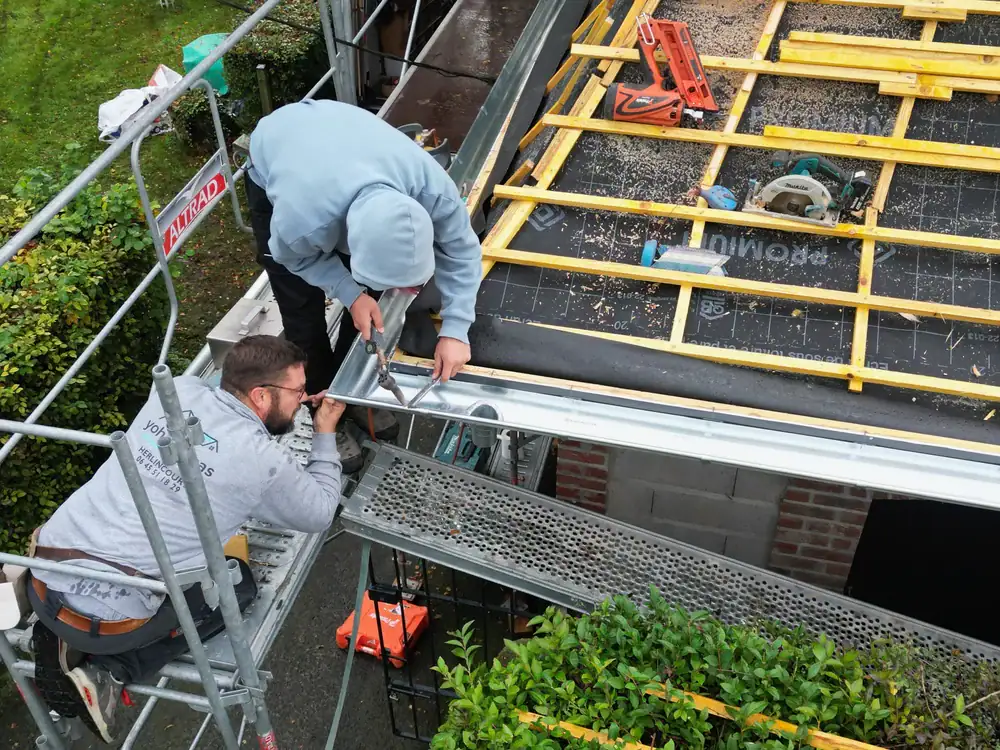
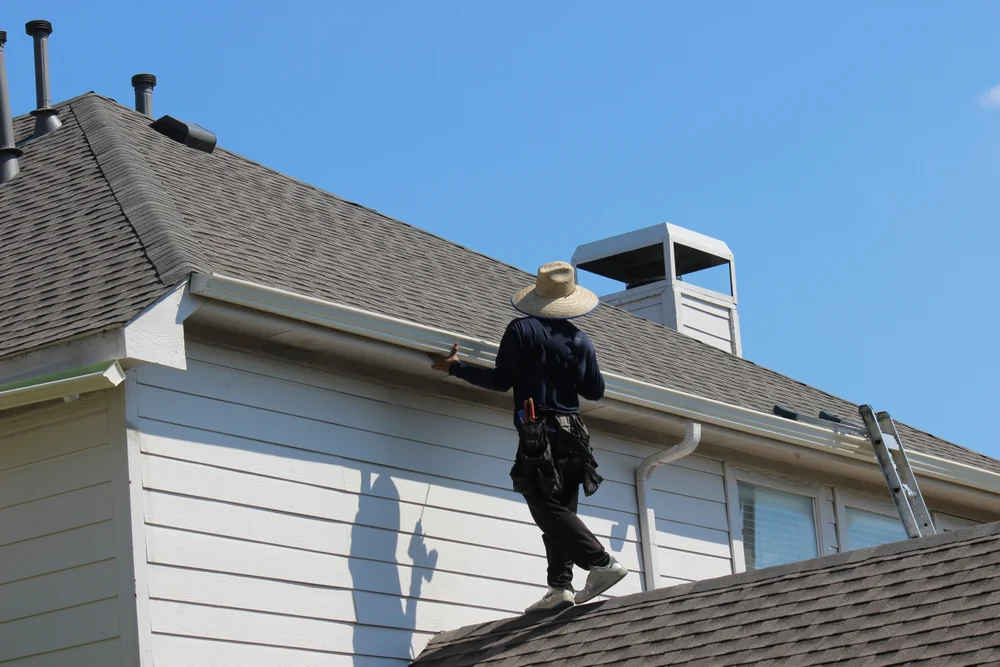
When an inspector flags roofing concerns — missing shingles, improper flashing, granule loss, ice dam damage, or an aging system approaching end of life — the next step is getting a qualified roofing contractor on-site for assessment. The same applies to siding that’s cracking, warping, or showing moisture infiltration, and gutters that are pulling away from the fascia, improperly sloped, or clogged with debris from Essex County’s tree canopy.
A general handyman can patch visible problems. A licensed exterior remodeling contractor can assess the full scope of damage, identify what caused it, and replace or repair systems to current code — which is especially important in a market where unpermitted work is a known issue. Massachusetts requires permits for most structural and exterior work, and inspectors regularly flag discrepancies between what was permitted and what was built. If you’re buying a home where a previous owner added a dormer, finished an attic, or re-roofed without pulling permits, that’s a remediation issue — not just a cosmetic one.
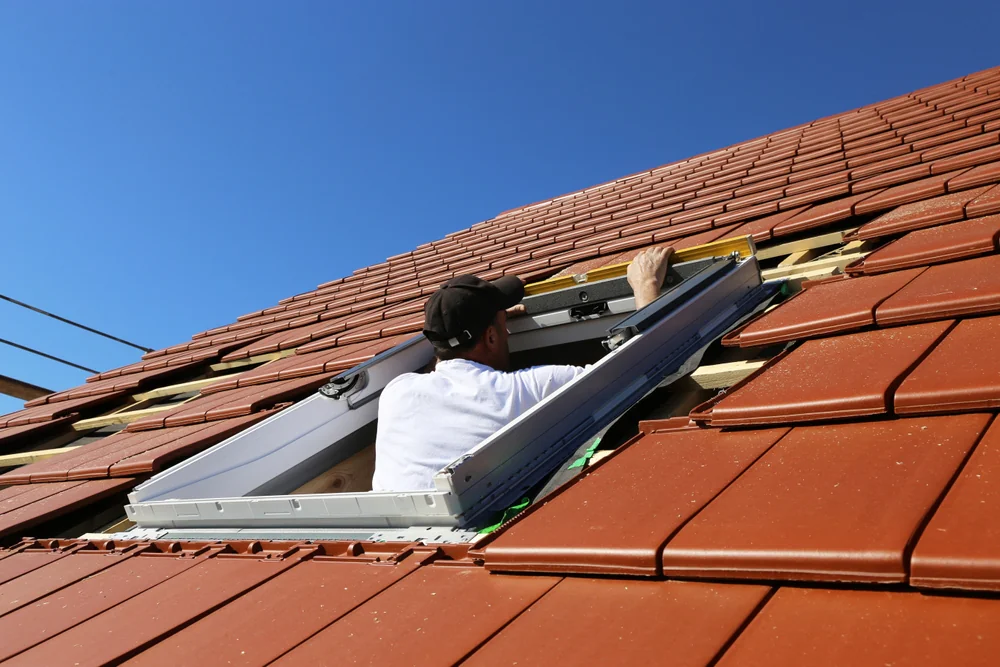
For homeowners in coastal communities like Marblehead or Beverly, post-storm inspections are a recurring reality. A nor’easter can strip flashing, crack siding, damage skylights, and compromise gutters in a single night. Getting an exterior contractor out quickly — before the next rain event — is the difference between a contained repair and a water damage claim.
Most people think of home inspections as something buyers do. But in a market like Essex County — where homes are selling near $675,000 and buyers are scrutinizing every detail — sellers are increasingly commissioning pre-listing inspections before putting their homes on the market.
The logic is straightforward: find the problems before a buyer’s inspector does, fix what you can, and remove the uncertainty that causes deals to fall apart or prices to get negotiated down at the last minute. A pre-listing inspection gives sellers control over the narrative. Instead of reacting to a buyer’s inspection report under contract pressure, you know what’s there, you’ve addressed it, and you can market the home with documented confidence.
The same logic applies to homeowners who aren’t selling but want to understand the condition of their property — particularly after a harsh winter or a significant storm. Essex County’s coastal exposure and its aging housing stock make periodic condition assessments genuinely useful, not just a real estate transaction formality. Knowing that your 1940s Newburyport colonial has an aging roof before it becomes an emergency is worth something. Knowing that the addition the previous owner built in the 1990s was never permitted is worth even more.
When a pre-listing or periodic inspection surfaces exterior issues — roofing that’s five years past its expected lifespan, siding that’s failing at the seams, gutters that haven’t drained properly in years — that’s when a conversation with a licensed exterior remodeling contractor becomes the logical next step. We offer free quotes across all exterior service lines, and we’ve been working in Essex County since 2012.
Verify the license. Check for InterNACHI or ASHI certification. Ask for a sample report. Confirm E&O and general liability insurance. Ask about turnaround time. Know that Massachusetts law protects your right to inspect — you don’t have to waive it to win a bid.
Essex County’s housing stock is older, more varied, and more exposed to coastal weather than most markets. That means the stakes on a thorough inspection are higher here, and the findings are more likely to involve exterior systems — roofing, siding, gutters, and structural components — that need licensed contractor attention after the report is delivered.
When that happens, Paradise Remodeling Inc is the call we’d recommend. We’ve been handling exterior remodeling across Essex County since 2012, and we offer free quotes on everything from roofing and siding to gutters, skylights, and windows. The inspector finds it. We fix it — the right way, the first time.
Summary:
Article details:
Share: