What North Andover and Andover homeowners need to know before hiring an exterior contractor — from HOA approval to material standards that match the neighborhood.
If you own a home in North Andover or Andover, you already know the neighborhood has standards. That’s part of why you’re there. But when it comes time to replace a roof, re-side the house, or update the exterior in any meaningful way, those standards stop being abstract — they become a checklist. Permits, HOA approval, material specifications, and contractor credentials all come into play before a single shingle gets lifted. Most contractors in this market don’t talk about any of that. They quote the job and show up. This page is for homeowners who want to understand the full picture before they make a call.
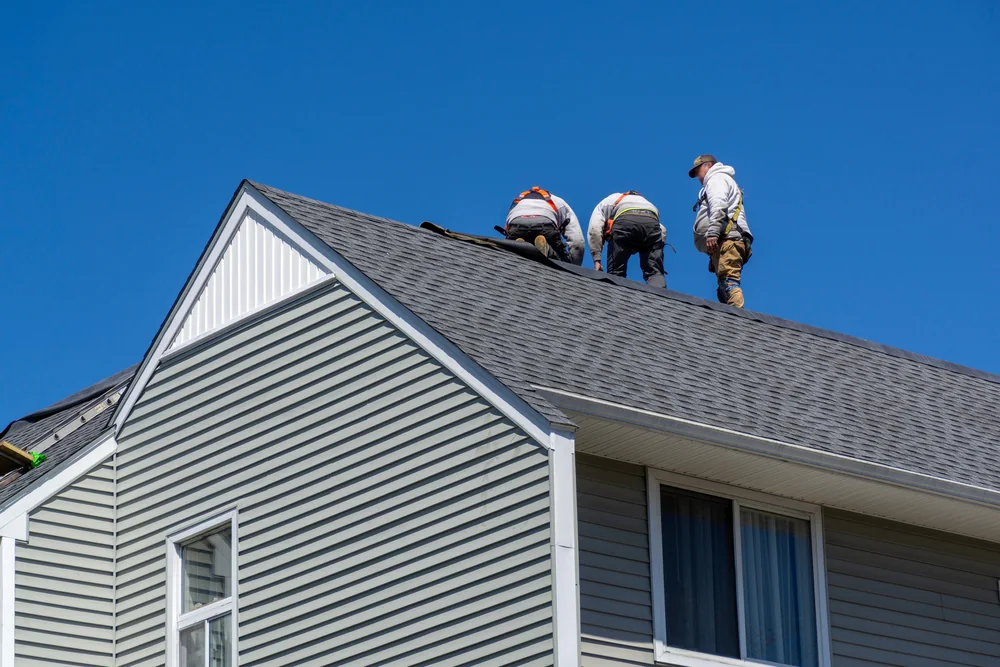
Replacing a roof in North Andover isn’t complicated, but it does involve more steps than most contractors will walk you through upfront. There’s a building permit to pull, an inspection to schedule, and — depending on your neighborhood — potentially an HOA submission before any work begins. A contractor who skips those steps isn’t saving you time. They’re creating problems you’ll deal with at resale.
The other piece most homeowners don’t think about until it’s too late is what’s underneath. We assess the decking, flashing, and ventilation before quoting the job — not halfway through it. If there’s rot in the sheathing or a ventilation problem that’s been cooking your insulation, you deserve to know that before you sign anything.
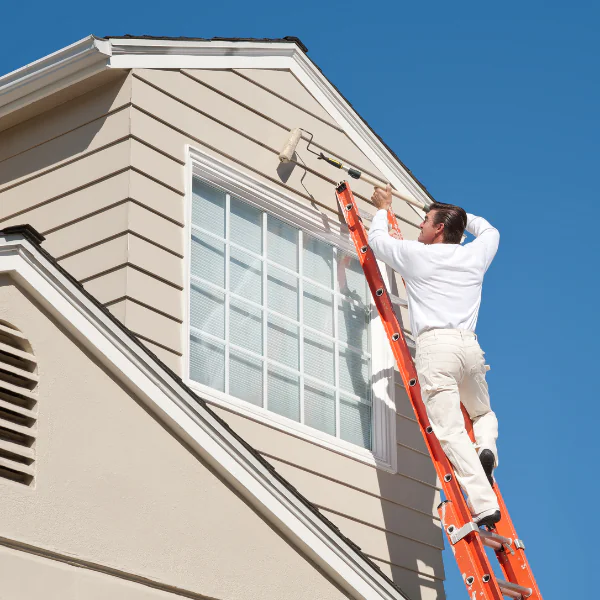
This is the part of the process that catches the most homeowners off guard. In planned communities and neighborhoods with active HOA governance — and there are plenty of both across Essex County — exterior changes typically require approval before work begins. That includes roofing, siding, windows, doors, and in some cases even gutters or trim color. It’s not bureaucratic overreach. The goal is to keep the community looking consistent and to protect property values across the board, including yours.
Every HOA operates on its own governing documents, and the scope of what requires approval varies. Some associations have a straightforward approval form. Others route requests through an Architectural Review Committee, or ARC, which evaluates material specifications, color choices, and design compatibility before signing off. North Andover’s own zoning regulations reinforce this — the code explicitly requires that exterior alterations achieve design compatibility with the architectural features and materials of surrounding structures. That’s not just an HOA rule; it’s baked into the town’s zoning framework.
What this means practically is that your contractor needs to be able to provide documentation. If you’re submitting a siding project to an ARC, you’ll likely need product spec sheets, color samples, and confirmation that the materials meet the community’s standards. We come prepared — with manufacturer documentation, clear material specs, and enough familiarity with premium product lines to answer the ARC’s questions accurately.
If you’re not sure whether your project requires HOA approval, the safest assumption is that it does. Check your governing documents, reach out to your board or property manager, and make sure your contractor is ready to support the submission — not just the installation.
Yes, in most cases. Massachusetts requires a building permit for roofing and siding replacement on residential properties, and both North Andover and Andover enforce this through their local building departments. The permit exists to ensure the work meets current building code — and the inspection that follows confirms it was done correctly. Skipping this step is one of the more common shortcuts taken by unlicensed or low-cost operators, and it’s a shortcut that surfaces at the worst possible time: when you’re trying to sell.
Unpermitted exterior work creates disclosure obligations and can complicate or kill a real estate transaction. In a market where the median home value in North Andover sits near $893,000, that’s not a risk worth taking to save a few days on the schedule.
The permit process for exterior work in Andover requires that approved plans and permit cards be on site and accessible during inspections. That means your contractor needs to pull the permit before work starts — not after, not retroactively. We pull permits before work begins as part of every job in Essex County.
Massachusetts also requires contractors performing residential exterior work to hold a Home Improvement Contractor registration. For structural work — decks, additions, or anything touching load-bearing elements — a Construction Supervisor License is also required. These aren’t technicalities. They’re the state’s mechanism for ensuring the person working on your home carries proper insurance, knows current building codes, and has some accountability if something goes wrong.
When you’re vetting a contractor for a North Andover or Andover project, ask for their HIC registration number. It’s publicly verifiable through the state. Paradise Remodeling Inc holds HIC License #195972, and we pull permits and manage inspections as part of every job — it’s not an add-on.
Want live answers?
Connect with a Paradise Remodeling Inc. expert for fast, friendly support.
Andover is a community with real architectural character — historic homes near Phillips Academy, established neighborhoods off Route 125, newer construction that still holds to a certain aesthetic standard. When you’re choosing exterior materials here, the question isn’t just what performs well. It’s what looks right for the street and holds its value in a market where buyers have high expectations.
That’s a different conversation than the one most siding contractors are prepared to have. Many will default to standard vinyl because it’s easy to install and easy to quote. But in a community like Andover — or North Andover, where home values run similarly high — the material choice matters in ways that go beyond personal preference.
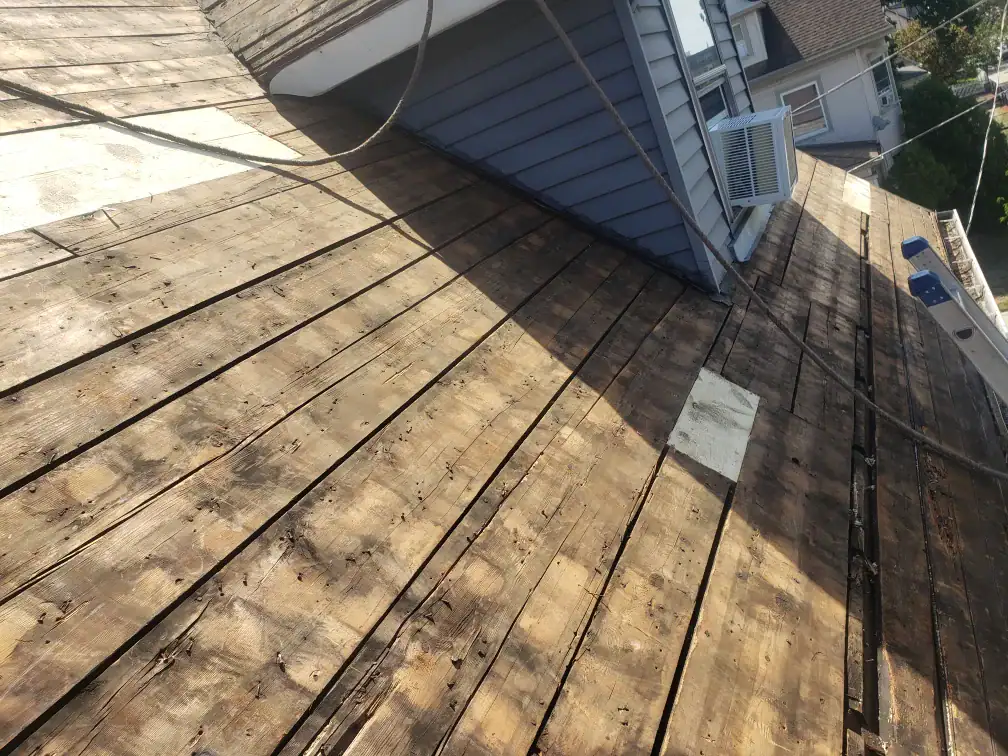
Vinyl siding is a reasonable product. It’s low maintenance, it comes in a wide range of profiles and colors, and it handles moisture reasonably well. But Essex County isn’t every market.
Fiber cement siding — James Hardie being the most recognized brand in the category — was specifically engineered for climates like ours. It’s non-combustible, it doesn’t attract insects or rot the way wood can, and it holds paint significantly longer than vinyl, which can fade, warp, or crack under the freeze-thaw cycles that hit this region every winter. The performance gap between vinyl and fiber cement becomes more visible the longer you own the house.
There’s also a resale angle. The 2024 Cost vs. Value Report found that siding replacement can recoup up to 80.2% of the project cost when selling. Fiber cement specifically tends to recover more of its cost in resale value than vinyl — a meaningful difference when you’re working with a home worth $700,000 or more and buyers in your price range are paying attention to exterior finishes.
The installation piece matters here too. James Hardie’s full warranty — which covers the product for the long term — requires installation by a Preferred Installer. That’s not a marketing distinction; it’s a warranty condition. We’re a James Hardie Preferred Installer, which means when we install fiber cement siding on your home, the warranty is intact and the documentation is there if you ever need it.
For HOA submissions, fiber cement also tends to be easier to get approved. The product profiles closely mimic traditional wood clapboard and shingle siding — the aesthetic that most New England HOAs are trying to preserve — while delivering the performance and longevity that modern materials offer.
The same logic applies to roofing. Basic 3-tab shingles — the flat, uniform-looking shingles that were standard on most homes built through the 1990s — have a typical lifespan of 15 to 20 years and a wind resistance rating that wasn’t designed for nor’easter conditions. In North Andover and Andover, where a significant portion of the housing stock is now at or past that age, a lot of homeowners are facing replacement decisions right now.
Architectural shingles, also called dimensional shingles, are the appropriate standard for this market. They have a layered profile that gives the roof visual depth, they carry wind resistance ratings better suited to New England’s weather patterns, and they typically last 25 to 30 years or more with proper installation and ventilation. The difference in installed cost is real, but so is the difference in how the roof looks and performs over time.
We’re an Owens Corning Preferred Contractor, which matters for a specific reason: Preferred Contractor status unlocks enhanced warranty tiers that aren’t available through non-certified installers. If you’re investing in a full roof replacement on a home in North Andover, the warranty terms available through a Preferred Contractor are meaningfully better than what a standard installer can offer — longer coverage periods, wind and workmanship guarantees, and the documentation to back it up.
Essex County’s climate is worth taking seriously here. The combination of heavy snow loads, ice dam formation along roof edges in January and February, and the wind exposure that comes with nor’easters creates real stress on roofing systems that aren’t installed with these conditions in mind. Proper ventilation, correct flashing at valleys and penetrations, and ice and water shield at the eaves aren’t optional details — they’re what separates a roof that lasts from one that starts causing problems in year five.
We’ve been handling exterior work in the Merrimack Valley and across Essex County since 2012, and we’ve seen what happens when those details get skipped. BuildZoom ranks us in the top 8% of licensed contractors in Massachusetts — a third-party ranking based on permit history, license status, and verified reviews. That ranking reflects consistent work across a lot of projects in a lot of communities, including the ones in North Andover and Andover where the standards are highest.
In a community like North Andover or Andover, the contractor you hire needs to understand more than how to install a roof or hang siding. They need to know the permit process, be prepared to support an HOA submission, work with premium materials at a certified level, and be honest with you about what they find before the job starts — not after.
We’re based in Methuen, directly adjacent to North Andover, and we’ve been working in Essex County long enough to know how these communities operate. One crew, one contractor, every exterior trade handled without subcontractors showing up unannounced or trades pointing fingers at each other when something doesn’t line up.
If you’re planning an exterior project in North Andover, Andover, or anywhere in Essex County, Paradise Remodeling Inc offers free quotes and a straightforward assessment of what your home actually needs. Reach out and we’ll take it from there.
Summary:
Article details:
Share: