Before Essex County winters set in, there's a narrow window to get your exterior in order. Here's what actually matters — and why timing is everything.
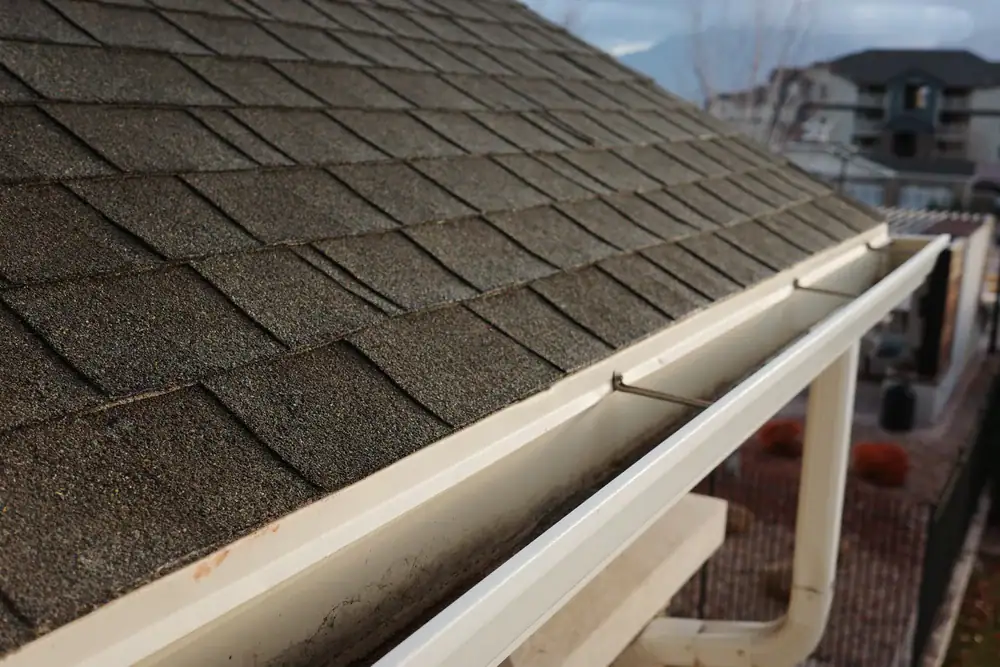
October feels like you still have time. You probably don’t — not as much as you think. In Essex County, the practical window for exterior work closes faster than most homeowners expect, and the cost of missing it isn’t just inconvenience. It’s ice dam damage, water intrusion, and repair bills that can reach into the tens of thousands of dollars. This checklist is built for Essex County specifically — not a generic template that works just as well in Atlanta or Phoenix. The conditions here are different, the stakes are higher, and the calendar is less forgiving. Here’s what to look at, what to fix, and why it matters.
Essex County gets roughly 48 inches of rain per year — about 26% more than the national average. Add 44 inches of annual snowfall (nearly 57% above the U.S. average), and you have a drainage system that works harder than almost anywhere else in the country. When gutters are clogged, that system fails exactly when it matters most.
Most homeowners understand that clogged gutters are a problem. Fewer understand how fast the damage compounds. A blocked gutter in October becomes a launching pad for ice dam formation by December — and once an ice dam takes hold, you’re no longer dealing with a gutter issue. You’re dealing with a roofing issue, a fascia issue, and potentially a water intrusion issue that reaches your interior walls and ceilings.
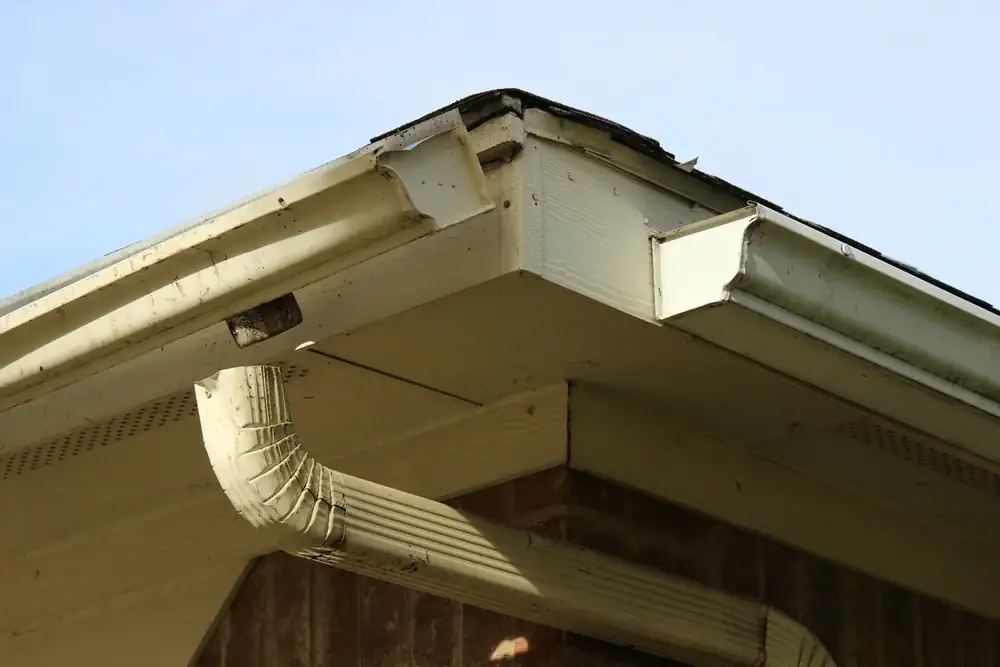
Here’s the chain of events that plays out on homes across Essex County every winter, and it starts with a clogged downspout.
When gutters can’t drain, water pools at the eave. As temperatures drop below freezing — which in Essex County starts happening in earnest by late November — that pooled water freezes. Heat escaping through the roof deck (from inadequate attic insulation or ventilation) melts the snow above, and that meltwater travels down toward the cold eave, where it refreezes against the ice that’s already there. The ridge builds. Water backs up behind it. And then it finds its way under your shingles.
Ice dam removal alone can cost up to $4,000. Shingle repairs that follow run anywhere from $130 to $9,000 depending on the extent of the damage. If water has worked its way into the wall cavity or ceiling, interior remediation can reach $24,000 in serious cases. That’s a steep price for a task that, handled in October, costs a fraction of any of those numbers.
In towns like Andover, North Andover, Topsfield, and Ipswich, the October leaf drop from mature oaks and maples is aggressive. Gutters that look fine in September can be completely packed by the first week of November. The timing matters — you want gutters cleaned after the main leaf fall but before the first hard freeze, which in Essex County typically means mid-October through late November depending on the year.
On the North Shore — in Gloucester, Rockport, Beverly, Salem, and Marblehead — there’s an added layer. Salt air accelerates corrosion on metal gutter components, hangers, and flashing. Homeowners in coastal Essex County communities are often dealing with hardware that degrades faster than it would ten miles inland, which makes the fall inspection more important, not less.
Clean gutters are necessary but not sufficient. If your home is forming ice dams despite clean gutters, the real problem is likely attic insulation or ventilation — heat escaping through the roof deck is the root cause, and no amount of gutter cleaning fixes that. It’s worth knowing the difference before winter arrives.
The National Roofing Contractors Association recommends inspecting your roof at least twice a year — spring and fall. In Essex County, the fall inspection is the more consequential of the two, because anything you find in October can still be addressed before winter. Anything you find in April has already survived a winter in its damaged state.
You don’t need to get on the roof to do a meaningful assessment. From the ground, look for shingles that are visibly curling, cracked, or missing entirely. Check the gutters themselves for an accumulation of granules — those small, sand-like particles that wash off aging shingles are one of the clearest early indicators that a roof is approaching the end of its service life.
Look at the flashing around your chimney, skylights, and any roof penetrations. Lifted or separated flashing is one of the most common entry points for water, and it’s often invisible until it’s caused a problem.
Inside the attic, look for daylight coming through the roof deck, water stains on the rafters or sheathing, or any soft spots in the decking. These are signs that water has already found its way in — and in Essex County’s freeze-thaw climate, a small intrusion in November becomes a significantly larger one by March.
For older homes — and Essex County has a lot of them, particularly in Lynn, Salem, Lawrence, and Haverhill — the baseline risk is higher. Roofing systems on mid-century or older homes may have layers of repairs over original materials, and it’s not always obvious what’s original and what’s been patched. If you’re unsure what you’re looking at, a professional inspection before winter is the most cost-effective thing you can do.
Emergency roof repair in the middle of a Massachusetts winter averages close to $1,800 — nearly double standard rates — because urgency and limited contractor availability drive the price up when the weather turns. Massachusetts also requires roofing contractors to hold two separate credentials: a Home Improvement Contractor (HIC) Registration and a Construction Supervisor License. Hiring someone who only has one — or neither — removes your access to the state’s HIC Guaranty Fund, which exists specifically to protect homeowners from contractor misconduct. It’s worth verifying credentials before anyone gets on your roof.
Want live answers?
Connect with a Paradise Remodeling Inc. expert for fast, friendly support.
Gutters and the roof are the highest-stakes items on a fall checklist, but they’re not the whole picture. The exterior of a home is a system — siding, windows, doors, decking, and chimneys all have their own failure points, and all of them are easier and cheaper to address in October than in February.
The practical constraint most homeowners don’t account for is temperature. Roofing adhesives, exterior caulks, and siding sealants lose their bonding effectiveness below roughly 40°F. In Essex County, temperatures regularly drop below that threshold by mid-to-late November. Work that starts in October gets done properly. Work deferred to December may not bond correctly and will need to be redone in spring — if it holds at all.
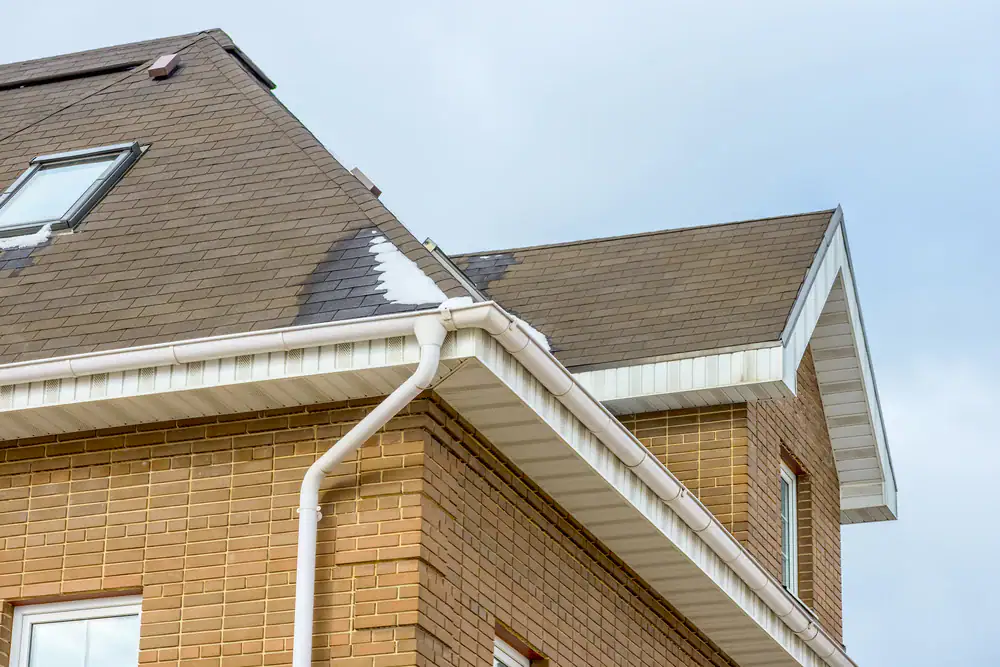
Siding is easy to overlook because damage is often gradual and not immediately obvious. What you’re looking for in the fall is any cracking, warping, or separation at the seams — places where water can get behind the material and sit against the sheathing through a freeze-thaw cycle. Even a small gap that lets moisture in during a November rain can expand significantly by January when that moisture freezes.
Windows and doors are where energy loss shows up first. Run your hand around the interior frame of your windows on a cold day — if you feel a draft, the weatherstripping or caulking has failed. Properly sealed windows and doors can reduce heating costs by up to 15% in Massachusetts winter conditions. That’s not a trivial number over a full heating season.
Re-caulking around window and door frames on the exterior is a straightforward fall task, but it has to be done while temperatures are still above 40°F for the caulk to cure correctly. For homes in Newburyport and Marblehead with historic district designations, exterior material choices for repairs and replacements may be subject to local guidelines — worth confirming before starting any work that changes visible materials or profiles.
Decks deserve a look before winter, especially in Essex County where precipitation is heavy and freeze-thaw cycles are frequent. Look for soft spots, loose fasteners, and any boards that have started to separate or cup. A deck that’s structurally sound in October is a much simpler repair than one that’s been through another Massachusetts winter without attention.
Chimneys are one of the most commonly deferred items on a fall checklist, and one of the more consequential. Flashing where the chimney meets the roof is a primary water entry point. Cracked mortar joints allow water to penetrate masonry, and when that water freezes, it accelerates the deterioration significantly. A visual check from the ground can catch obvious separation at the flashing — anything more requires a closer look.
Here’s a problem that doesn’t get talked about enough: the fall maintenance window in Essex County is short, and trying to schedule four or five different contractors during the same six-week window — a gutter cleaner, a roofer, a siding company, a window contractor — means you’re competing with every other homeowner in the county for the same limited availability. Some of those calls get returned quickly. Some don’t. And by the time you’ve lined up all four, it’s mid-November and the temperatures are already dropping.
The more efficient approach — and the one that’s increasingly common among homeowners who’ve been through a bad winter — is a single contractor who can assess and address the full exterior in one visit. Roof, gutters, siding, windows, doors, decking, and chimney flashing all looked at together, by the same crew, with one point of contact.
That’s the model we operate on at Paradise Remodeling Inc. We’re based in Methuen and work throughout Essex County — from Haverhill and Lawrence in the north to Salem and Beverly on the coast. We hold an Owens Corning Preferred Contractor designation, which requires meeting manufacturer standards for quality and customer service — it’s not a credential every contractor qualifies for. We’re also fully registered as a Home Improvement Contractor with the Commonwealth of Massachusetts, which means your project is covered under the protections Chapter 142A provides.
We offer free quotes, and there’s no obligation. For homeowners who aren’t sure whether they have a real problem or a minor issue, a professional assessment before winter is simply better information than guessing. We can tell you what needs to be addressed now, what can wait until spring, and what’s in good shape — and you can make the call from there.
The goal isn’t to sell you a project. It’s to make sure your home gets through winter without a problem that costs ten times more to fix in January than it would have in October.
The short version: gutters cleaned after the leaf drop, roof inspected for missing shingles and lifted flashing, siding and windows re-caulked while temperatures are still above 40°F, decking checked for soft spots, chimney flashing confirmed sealed. All of it done before mid-November, when the practical window for exterior work in Essex County effectively closes.
The longer version is that deferred maintenance in this climate compounds fast. A clogged gutter doesn’t stay a clogged gutter. A lifted shingle doesn’t stay a lifted shingle. The freeze-thaw cycle that defines Essex County winters is relentless, and it finds every gap you leave it.
If you’d rather have someone walk through the full picture with you before winter arrives, we at Paradise Remodeling Inc offer free quotes and handle the complete exterior — one call, one crew, one less thing to coordinate before the weather turns.
Summary:
Article details:
Share: