Not every contractor who shows up after a storm is the right one. Here's how to spot the patterns that cost Essex County homeowners thousands.
Essex County has declared 27 weather disasters since 1972. Every major nor’easter that rolls through — and there are plenty — leaves behind damaged shingles, ice dam leaks, and a predictable wave of contractors showing up at your door before the storm debris has even cleared. Some of them are legitimate. Many are not. The problem isn’t that bad roofing contractors are hard to identify in hindsight. The problem is that they’re designed to look trustworthy upfront. This post walks through five patterns we see repeatedly — patterns that cost Essex County homeowners thousands and leave them with no recourse. Knowing what to look for changes everything.
The most dangerous moment in any roofing job isn’t during installation — it’s the 48 hours after a storm, when you’re stressed, your roof is compromised, and someone is standing at your door with a clipboard and a sense of urgency. Storm chasers — contractors who follow weather events from market to market — are extraordinarily good at that window. They know you’re anxious. They know you want it handled fast. And they know that if they can get a signature before you’ve had a chance to think, they’ve already won.
The red flags at this stage are specific. No physical business address. A personal cell number with no company name attached. An unmarked truck with out-of-state plates, or a magnetic sign that looks like it was put on that morning. A quote that’s vague enough to be meaningless — no shingle brand, no underlayment spec, no tearoff scope. And the classic closer: “this price is only good today.”
Legitimate contractors don’t disappear if you ask for 24 hours to review a written estimate. We won’t. If we’re the right fit for your roof, we’ll still be here tomorrow.
The BBB receives more than 15,000 roofing complaints every year. About 60% of them come in the wake of severe weather events — which tells you something about when and why homeowners in Essex County get burned. Checking a contractor’s BBB profile is a reasonable starting point, but it’s not a finish line. A clean BBB record doesn’t mean a contractor is licensed, insured, or capable of doing quality work in Massachusetts. It just means they haven’t generated enough formal complaints to show up in the database yet.
In Massachusetts, the verification tools that actually matter are the ones the state provides. Every legitimate roofing contractor is required to hold two separate credentials: a Construction Supervisor License (CSL) with a Roof Covering specialty, and a Home Improvement Contractor (HIC) registration. Both are searchable on mass.gov. The CSL covers technical competency — it requires at least three years of full-time roofing experience and a 100-question exam covering construction law, OSHA safety, and building code. The HIC registration covers the business side: ethical conduct, financial accountability, and access to the Massachusetts Home Improvement Contractor Guaranty Fund, which exists specifically to protect homeowners when a contractor fails to deliver.
When you ask a contractor for their license number and they can’t give you one — or they give you a number that doesn’t match their name in the state database — that’s not a paperwork issue. That’s an unlicensed operator. In Massachusetts, unpermitted roofing work can void homeowner’s insurance claims, fail resale inspections, and transfer the liability for code violations directly to you as the homeowner. The contractor saves time. You inherit the risk.
A useful cross-check: look for the contractor’s HIC number on their estimate, their contract, and their advertisements. Massachusetts law requires it to be displayed on all of those. If it’s missing, ask why. A contractor who’s properly registered knows that number by heart.
This is one of the most common complaints we hear from homeowners who did everything right — checked reviews, verified a license, got multiple quotes — and still ended up with a bad experience. They hired a named company. A crew in an unmarked white van showed up on install day. Nobody introduced themselves. Nobody explained who they were or who they worked for. And when something went wrong, the company they originally hired pointed at the subcontractors, and the subcontractors were unreachable.
The subcontractor bait-and-switch is one of the oldest patterns in the trades. A company wins the job, then hands it off to a cheaper crew they don’t directly employ. The homeowner never agreed to that arrangement. The warranty — if there is one — may not even apply to work done by an unlicensed or uninsured subcontractor.
Before you sign a contract, ask directly: will your employees be doing this work, or will it be subcontracted? Get the answer in writing. Ask for the name and license number of whoever will be on-site. A contractor who’s proud of their crew will answer that question without hesitation. A contractor who gets defensive or vague is telling you something.
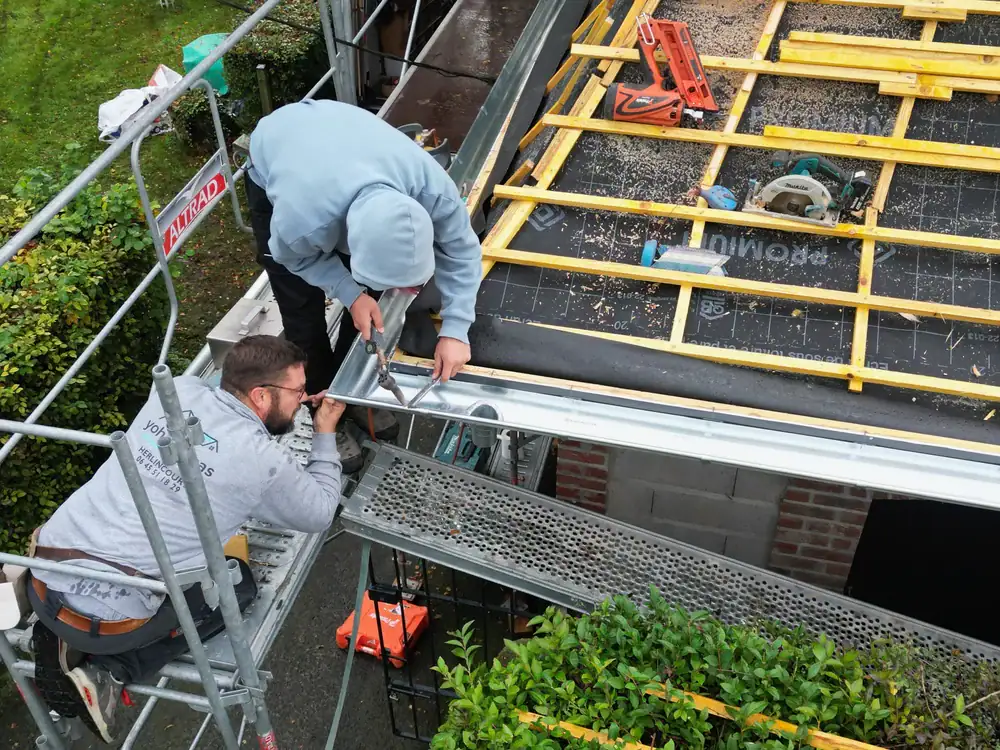
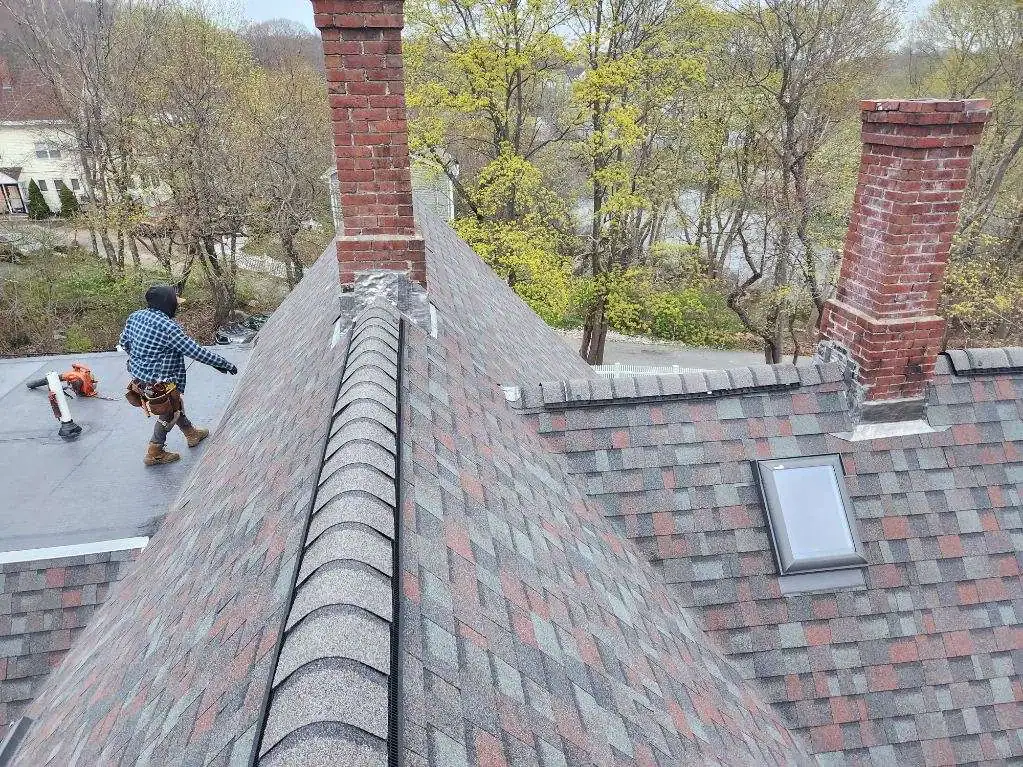
This matters especially in Essex County, where older homes in Salem, Gloucester, and Newburyport have complex roof geometries — multiple dormers, steep pitches, historic flashing systems around chimneys and skylights — that require experienced hands. An unfamiliar subcontracted crew working off a vague scope is exactly how flashing gets skipped, valleys get cut wrong, and leaks show up six months later when the original contractor is three states away.
We’re owner-operated. When you hire Paradise Remodeling Inc., Feliciano — the owner — oversees every project personally. The crew that shows up is the crew we stand behind. That’s not a standard arrangement in this industry. It should be.
Want live answers?
Connect with a Paradise Remodeling Inc. expert for fast, friendly support.
Most homeowners evaluate roofing contractors the same way: read a few reviews, get a couple of quotes, go with the one that feels right. That process works reasonably well in normal conditions. It breaks down after a storm, when the pressure is on, the choices feel urgent, and the contractors who are best at selling themselves are not always the ones who do the best work.
Accountability is the quality that matters most — and it’s the one that’s hardest to assess from a quote. The question isn’t just “can they do the job?” It’s “will they still be reachable in six months if something goes wrong?”
The right questions sort out legitimate contractors from the rest faster than any review platform. Start with the basics: Can you provide your Massachusetts CSL number and your HIC registration number? Can I verify both on mass.gov before we proceed? A contractor who’s properly licensed will hand you those numbers without hesitation. One who isn’t will find a reason to change the subject.
From there, ask about permits. In Massachusetts, all roofing work on residential structures requires a permit. Ask whether they’ll be pulling one before work begins, and whether you’ll be able to see it posted at the job site. If a contractor offers to skip the permit “to save time,” understand what that actually means: they’re asking you to assume the legal and financial liability for any code violations, failed inspections at resale, or insurance claim denials that result from unpermitted work.
Ask about materials by name. What shingle brand? What model? What underlayment? What flashing specification? A contractor who can’t answer those questions specifically either doesn’t know what they’re installing or is leaving room to substitute cheaper materials once the contract is signed. Named materials — Owens Corning, CertainTeed, Mule Hide, GenFlex — are traceable. They come with manufacturer accountability. Generic “quality materials” don’t.
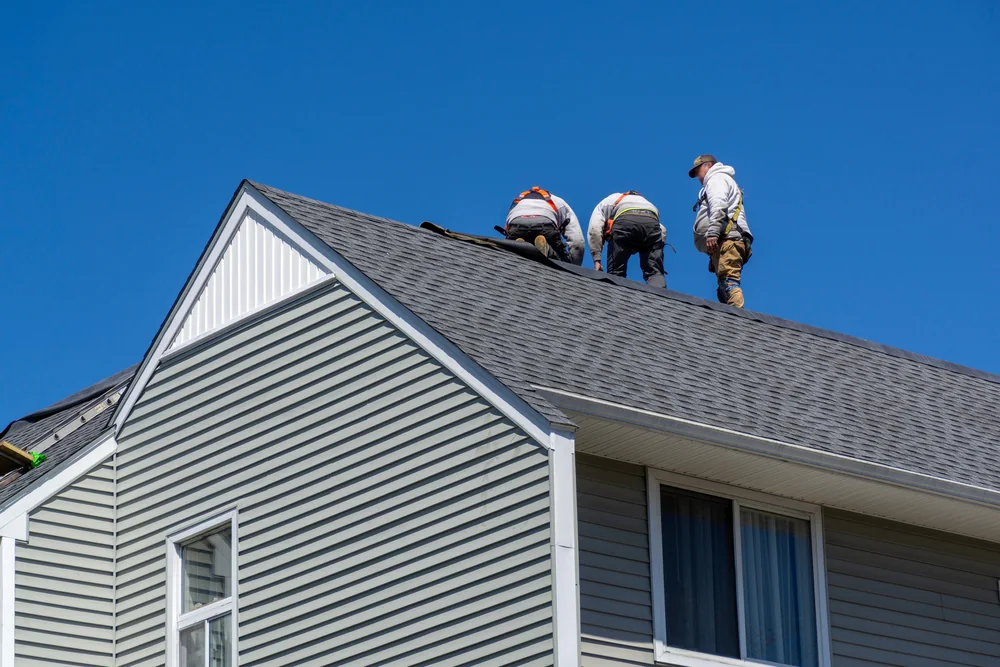
Ask who will actually be doing the work, and whether they’re direct employees or subcontractors. Ask what the cleanup process looks like, and whether they run a magnetic sweep for nails afterward. Ask what happens if they find rotted decking or damaged sheathing mid-job — is that covered in the scope, or will you get a change order?
And ask about the warranty — specifically, what manufacturer warranty applies, for how long, and whether it covers workmanship in addition to materials. That last question leads to something most homeowners don’t know until it’s too late.
Here’s something most roofing contractors won’t tell you, because it’s not in their interest to: the extended manufacturer warranties — the 50-year non-prorated products from Owens Corning, GAF, CertainTeed — are only available when the roof installation is done by a certified contractor. Not just any contractor who buys the same shingles. A certified contractor. One who has been vetted, trained, and authorized by the manufacturer to offer that warranty tier.
If a non-certified contractor installs Owens Corning shingles on your home, you get the standard limited warranty. That covers manufacturing defects in the material itself — not workmanship, not installation errors, and not the kind of failure that shows up when ice dam water forces its way under improperly seated shingles during a February freeze-thaw cycle in Newburyport, MA. The extended warranty — the one that actually protects your home’s resale value for decades — requires the certified installer.
This is why the “lower bid” calculation is often an illusion. A homeowner in Haverhill, Beverly, Lawrence, Methuen, or Gloucester who saves a few hundred dollars by going with an uncertified contractor may be forfeiting decades of warranty coverage without ever knowing it. The shingles look identical. The invoice looks similar. The gap only becomes visible when a claim is filed and the manufacturer asks who installed it.
We hold Owens Corning Preferred Contractor status. That’s not a self-declared credential — Owens Corning vets and certifies contractors based on demonstrated quality standards and ongoing performance. It’s what enables us to offer the extended warranty products that non-certified installers simply cannot. When we spec Owens Corning materials for a roof in Essex County, the warranty that comes with it is the real one — the kind that follows the home through resale, not just through the first winter.
If a contractor can’t tell you what certification level they hold with their material manufacturer, or can’t point you to a verification tool to confirm it, that’s worth understanding before you sign.
The five patterns covered here — storm chasers who vanish after payment, vague estimates with no named materials, unlicensed operators, the subcontractor bait-and-switch, and the warranty trap — aren’t hypothetical. They show up repeatedly across Essex County after every major nor’easter, every ice dam season, every stretch of coastal weather that leaves homeowners scrambling for help.
The good news is that all of them are avoidable with the right questions asked at the right time. Verify the license on mass.gov. Ask who’s doing the work. Get the material specs in writing. Confirm the permit before work starts. And understand what warranty you’re actually getting — not just what the brochure says.
If you’re in Essex County and want a straight answer about your roof without the pressure, Paradise Remodeling Inc. offers free quotes and is happy to walk through any of this with you before you commit to anything.
Summary:
Article details:
Share: