Not all gutters handle New England winters the same way. Here's what Essex County homeowners need to know before choosing between seamless and sectional.
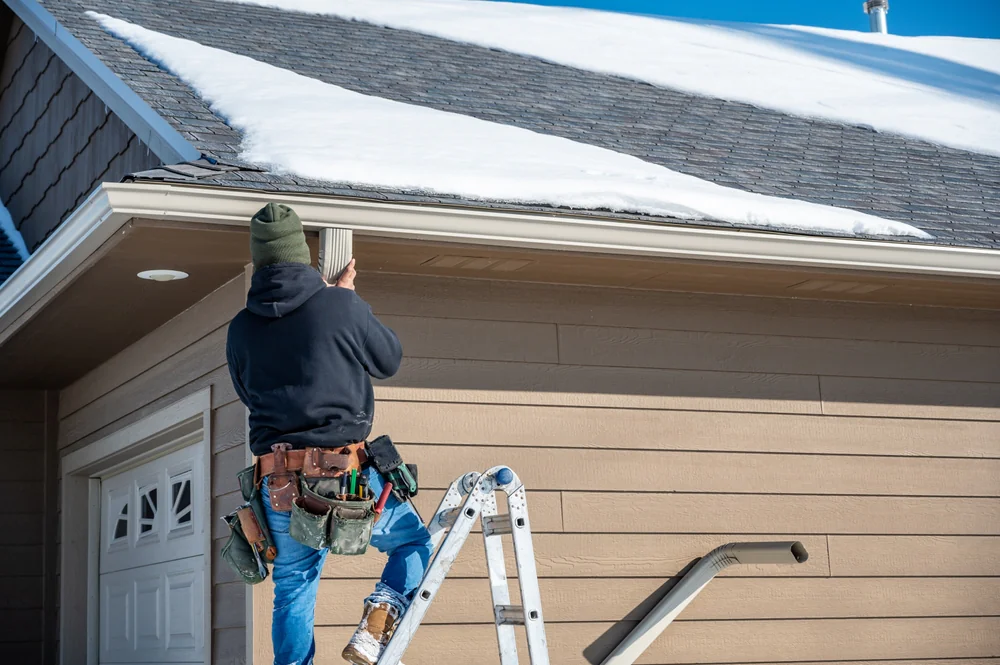
If you’re looking at new gutters, you’ve probably already heard that seamless is better. But nobody’s told you why — or whether that’s actually true for your specific situation. The honest answer is that seamless gutters are the right call for most Essex County homeowners, but not for reasons most comparison pages bother to explain. This isn’t about aesthetics or what looks cleaner from the street. It’s about what happens to a gutter system after ten winters in a climate that gets 48 inches of rain and 49 inches of snow per year. Let’s get into it.
Sectional gutters come in pre-cut lengths — typically 10 feet — that are joined together on-site with sealant at every connection point. For a standard home, that means 15 to 20 joints running along your roofline. Every one of those joints is held together by sealant. Seamless gutters, by contrast, are fabricated on-site from a continuous roll of aluminum, cut to the exact length of each run. The only connection points are at corners and downspouts — usually 4 to 6 for a typical home.
That difference in joint count is what everything else flows from. Fewer joints means fewer places for water to work its way through, fewer spots for debris to catch, and fewer maintenance tasks down the road.
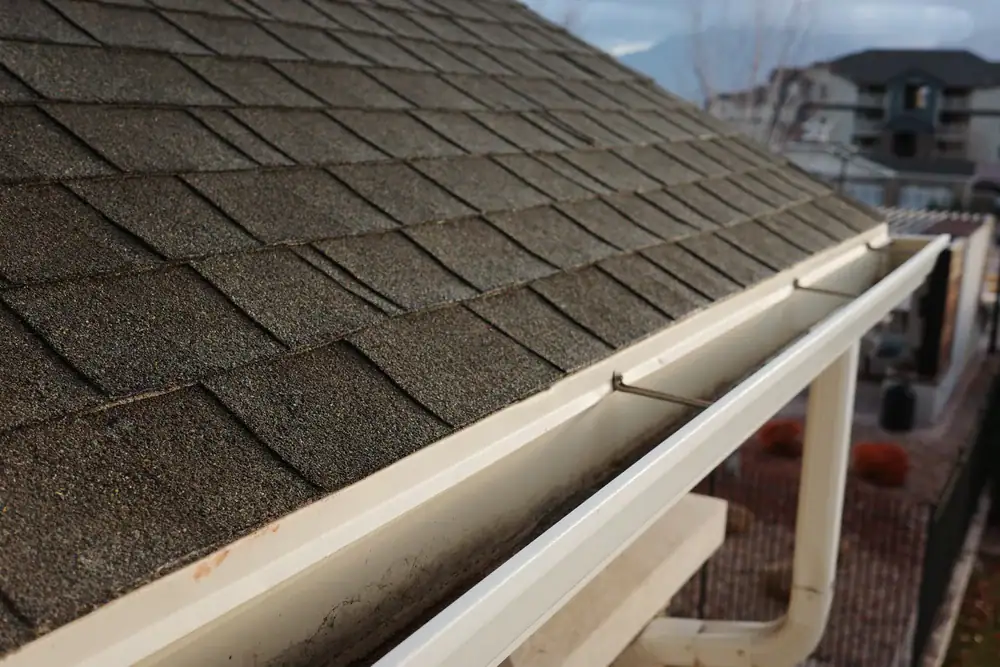
Here’s the part that most comparison pages skip over: the sealant at sectional gutter joints doesn’t fail because it’s cheap or because it was applied wrong. It fails because sealant degrades faster under repeated UV exposure and temperature cycling than the gutter material itself does. In other words, the gutter may still be structurally sound while the joints are already leaking.
In Essex County, that process is accelerated. From December through March, the region goes through repeated freeze-thaw cycles — temperatures dropping below freezing at night, climbing above it during the day, then dropping again. Each cycle puts stress on those sealant points. Over time, the joint opens just enough to let water in. That water gets behind the fascia board. The fascia starts to rot. Then the soffit. Then you’re looking at a repair bill that has nothing to do with the gutters themselves.
This is the failure chain that seamless design interrupts. It’s not that seamless gutters are magic — it’s that they eliminate the specific weak point that Essex County’s climate attacks most aggressively. A seamless aluminum system has 80 to 90 percent fewer leak points than a sectional installation. That’s not a marketing number; it’s a direct function of joint count.
And this matters more here than it would in, say, central Virginia. Essex County’s climate is harder on sealant than most of the country’s. The Merrimack Valley towns — Lawrence, Haverhill, Methuen, Andover — see the full force of inland New England winters without the moderating effect of the coast. Coastal towns like Gloucester, Rockport, Beverly, and Marblehead have their own challenge: salt air that accelerates corrosion in lower-grade metals. Aluminum handles both conditions better than the alternatives.
Most homeowners don’t know that seamless gutters aren’t manufactured in a factory and shipped to their house. They’re made on-site, the morning of installation, using a roll-forming machine that travels with the crew. The aluminum is fed through the machine and extruded to the exact length of each gutter run — not cut from a pre-made section, not approximated. Your home’s specific measurements determine the final product.
When we install seamless gutters, we show up in the morning, fabricate the gutters on-site, install them, test the drainage, and clean up before we leave. The gutter that goes on your house was made for your house. That’s what “custom-fit” actually means in practice — not a sales phrase, but a description of the process.
This also has a practical implication for quality: a contractor who shows up with pre-cut sections in a van is not installing true seamless gutters, regardless of what they call them. If you’re getting quotes, it’s worth asking whether they fabricate on-site. The answer tells you a lot about what you’re actually buying.
Beyond fabrication, installation quality comes down to a few specifics that are easy to overlook. Hangers should be spaced no more than every two feet — any wider and the gutter will sag under snow load, which causes pooling, which freezes, which adds more weight in a cycle that ends badly. Pitch matters too: the gutter needs a calibrated slope toward the downspout so water drains rather than sits. And downspouts should discharge water at least six feet from the foundation. These aren’t details that vary by contractor preference — they’re the difference between a gutter system that protects your home and one that just moves the problem a few inches.
Want live answers?
Connect with a Paradise Remodeling Inc. expert for fast, friendly support.
Seamless gutters are the right choice for most homeowners in Essex County, but that doesn’t mean they’re perfect for every situation. Here’s a straightforward breakdown of both sides, because you deserve an honest answer, not a pitch.
The case for seamless is strong: fewer leak points, longer lifespan, lower long-term maintenance, a cleaner look, and a custom fit that sectional systems can’t match. Aluminum seamless gutters last 20 to 30 years with proper maintenance. Sectional systems typically last 10 to 15. Over the life of a home, that difference adds up — in cost, in hassle, and in the damage that leaking joints can cause if they go unnoticed.
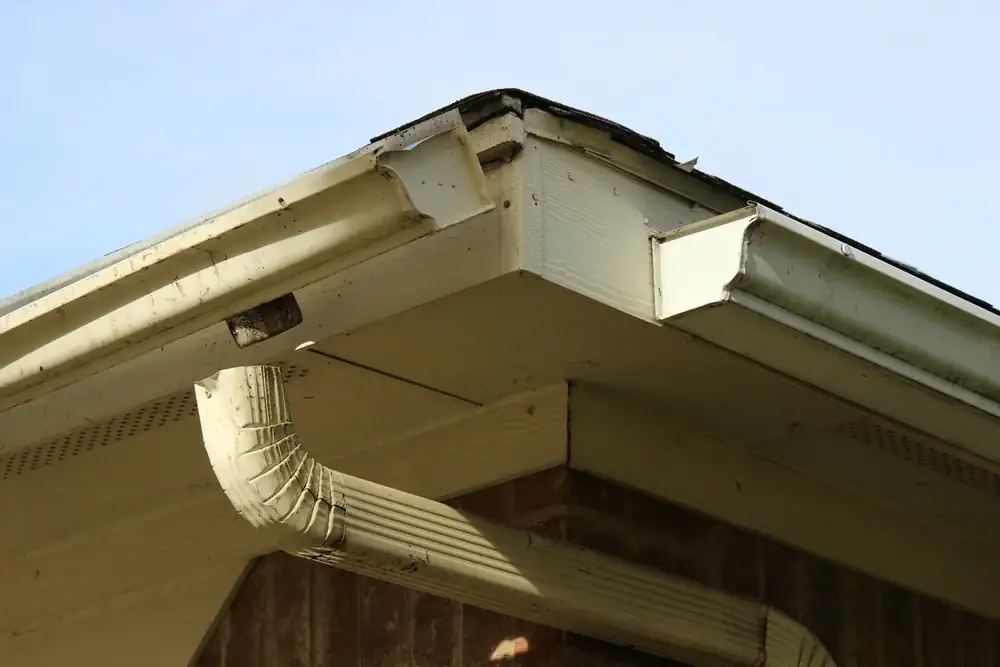
The seamless vs. sectional conversation often runs parallel to another question: aluminum or vinyl? They’re related decisions, and in Essex County, one answer is clearly better.
Vinyl gutters are cheap upfront and widely available at hardware stores. They’re also the dominant material in the sectional gutter category, which is part of why sectional systems have the reputation they do. But vinyl becomes brittle below freezing. It cracks under ice weight. In a climate that cycles through freeze-thaw conditions from December through March, a vinyl gutter system is working against its own material limits every single winter. Most vinyl installations in New England need replacement within 10 to 15 years — sometimes less.
Aluminum doesn’t have that problem. It handles cold without becoming brittle, resists rust, and holds up under the snow loads that Essex County rooflines regularly see. A properly installed aluminum seamless system can last 20 to 30 years. That’s not a stretch — it’s a realistic expectation when the material is right and the installation is done correctly.
For homes in coastal Essex County towns like Gloucester, Rockport, Beverly, and Marblehead, aluminum’s rust resistance is especially relevant. Salt air accelerates corrosion in galvanized steel and degrades vinyl faster than inland conditions would. Aluminum holds up without the same vulnerability.
If you’re replacing gutters and someone is quoting you vinyl — whether sectional or otherwise — it’s worth asking why. In this climate, aluminum is the correct material. The upfront cost difference is real, but it’s measured in hundreds of dollars, not thousands. The lifespan difference is measured in decades.
This question comes up a lot, especially from homeowners in Essex County towns like Andover, Lynnfield, and Boxford — areas with dense hardwood canopy that dumps leaves heavily in October and seed pods in spring. If you’re already replacing gutters, the question of whether to add guards at the same time is worth thinking through carefully.
The honest answer: gutter guards are worth it for the right home, and they’re not magic for any home. A good micro-mesh guard system will keep out most leaves and let water through, which cuts your cleaning frequency significantly — from two to four times a year down to roughly once every three to five years. That’s a meaningful reduction in maintenance time and cost over the life of the system.
What guards don’t do is eliminate maintenance entirely. Biofilm can build up on the mesh surface over time. Fine debris like pine needles and seed pods can still find their way in, depending on the guard type. The better framing is that a quality guard system dramatically reduces how often you need to deal with your gutters — not that it removes the need entirely.
The timing question matters too. Adding guards during a seamless installation is more efficient than adding them later. We’re already on-site, the gutters are clean and new, and the installation is straightforward. Coming back to retrofit guards onto an existing system is more involved and typically costs more than doing it in one visit.
If you have mature trees close to your house — particularly oaks and maples, which are common throughout Essex County — guards are worth serious consideration. If your property is relatively open, they may not be necessary. It depends on your specific situation, and we’ll tell you honestly which way that goes for your home.
For most homeowners in Essex County, the answer is seamless aluminum. The climate here — 48 inches of rain per year, 49 inches of snow, and months of freeze-thaw cycling — puts more stress on gutter systems than most of the country deals with. Sectional systems with their 15 to 20 sealant joints are working against those conditions from day one. Seamless aluminum, installed correctly with proper hanger spacing and pitch, is built for exactly this environment.
Sectional gutters make sense in one scenario: if you’re planning to install them yourself and you’re comfortable with periodic maintenance and resealing. That’s a legitimate choice. But if you’re hiring a contractor, the case for seamless is hard to argue against.
If you’re weighing your options and want a straight answer about what your home actually needs, we’re happy to take a look. Paradise Remodeling Inc offers free estimates, and we’ll tell you exactly what the job will cost before we start — no surprises, no pressure. Reach out when you’re ready.
Summary:
Article details:
Share: