Storm damage is stressful enough. Here's what Essex County homeowners need to know before filing a roof insurance claim — and what most people get wrong.
Essex County has seen 27 declared weather disasters since 1972. Nor’easters, blizzards, coastal wind events — the region gets hit hard, and roofs take the brunt of it. Most homeowners assume that when storm damage happens, the insurance process is simple: call the insurer, get the check, fix the roof. But roughly 37% of property insurance claims are denied nationwide, and with insurers paying out over $30 billion in roof-related claims in 2024 alone, they’re scrutinizing every submission more carefully than ever. Knowing how the process actually works — before you make a move — is the difference between a full payout and a frustrating fight.
The first thing most homeowners want to do after a storm is get up on the roof, clear debris, and start calling contractors. That instinct is understandable, but it can seriously hurt your claim. Before you touch anything, document everything.
Walk the perimeter and photograph every visible sign of damage — missing or lifted shingles, damaged flashing, dented gutters, cracked soffits, water stains on interior ceilings. Note the date and time on each photo. If you have photos of the roof from before the storm, pull those too. Insurers look for proof that the damage was sudden and caused by a specific event, not gradual deterioration.
If water is actively entering the home, you can and should take temporary protective measures — a tarp over the damaged area, for example. Just photograph the damage thoroughly before you cover it, and keep receipts for anything you spend. Most policies reimburse reasonable emergency repairs, but only if you document them properly.
Ice dams are one of the most misunderstood sources of roof damage in Massachusetts, and they’re especially common on the flat-roofed triple-deckers and older commercial buildings concentrated in Essex County cities like Lawrence, Haverhill, and Lynn. Here’s how it happens: heat escapes through the attic or ceiling into the roof deck, melting the snow on top. That meltwater runs toward the eaves, where the roof is colder, and refreezes. Over time, that ice dam grows and forces water back up under the roofing membrane or shingles — into the building.
On flat roofs, the problem compounds quickly. Without a steep pitch to encourage drainage, pooling water has nowhere to go once a dam blocks the scuppers or drains. The weight alone can stress the structure, and the sustained moisture contact with EPDM rubber or built-up roofing systems accelerates membrane failure in ways that aren’t always visible until significant interior damage has already occurred.
The good news is that ice dam damage is a covered peril under most Massachusetts homeowners insurance policies. The challenge is proving causation — showing the insurer that the damage resulted from an ice dam event rather than long-term neglect or deferred maintenance. That’s where documentation and a qualified contractor’s assessment become critical.
Massachusetts building code requires ice and water shield to extend at least 24 inches inside the heated wall line, and a licensed contractor can confirm whether your roof meets that standard — which matters both for the current claim and for any future ones. We can verify compliance during an inspection and document it in a way that strengthens your position with the insurer.
Prevention matters too. The combination of proper attic air sealing, adequate insulation (Massachusetts recommends R-49 for most homes), and functional roof ventilation dramatically reduces ice dam formation. If your building has had recurring ice dam issues, addressing those root causes before the next winter isn’t just smart maintenance — it’s documentation that you’ve taken reasonable steps to protect the property, which can support your position if a future claim is questioned.
This is the part most homeowners don’t hear until it’s too late. If a previous roofing repair or replacement was done without the required permits, that history can come back to hurt you — not just at resale, but when you file an insurance claim.
In Massachusetts, roofing work that involves structural elements like roof deck replacement requires a permit under the state building code (780 CMR). Home Improvement Contractor registration is mandatory for any contractor doing repairs or replacements on owner-occupied residential properties. These aren’t bureaucratic formalities — they’re the mechanism by which the work gets inspected and recorded.
When a licensed contractor pulls a permit, every phase of the job creates a paper trail in the municipal building department record. That documentation is nearly impossible for an insurer to dispute. When a contractor skips permits, there’s no record. If a future claim touches the same section of roof, the insurer may investigate the repair history. Unpermitted work discovered during that investigation can give the insurer grounds to deny the claim — the argument being that the previous work wasn’t code-compliant and may have contributed to the current damage.
The same issue surfaces at resale. Home inspectors flag unpermitted work, and buyers’ attorneys routinely check permit histories. Unpermitted roofing work can delay closings, reduce sale prices, or require costly remediation before the transaction can proceed.
Working with a contractor who pulls permits isn’t just about compliance — it’s about protecting the value of your home and the integrity of every claim you might file in the future. We pull permits on every qualifying job, and we can verify our work history through BuildZoom, where our score of 105 places us in the top 8% of licensed contractors in Massachusetts.
Want live answers?
Connect with a Paradise Remodeling Inc. expert for fast, friendly support.
Once you’ve filed your claim, the insurer will send an adjuster to inspect the damage. This is the most important moment in the entire process, and it’s also where many homeowners lose ground without realizing it. The adjuster works for the insurance company. Their job is to assess the damage accurately, but their assessment is also the basis for what the insurer offers to pay — and they’re not always on the roof long enough to catch everything.
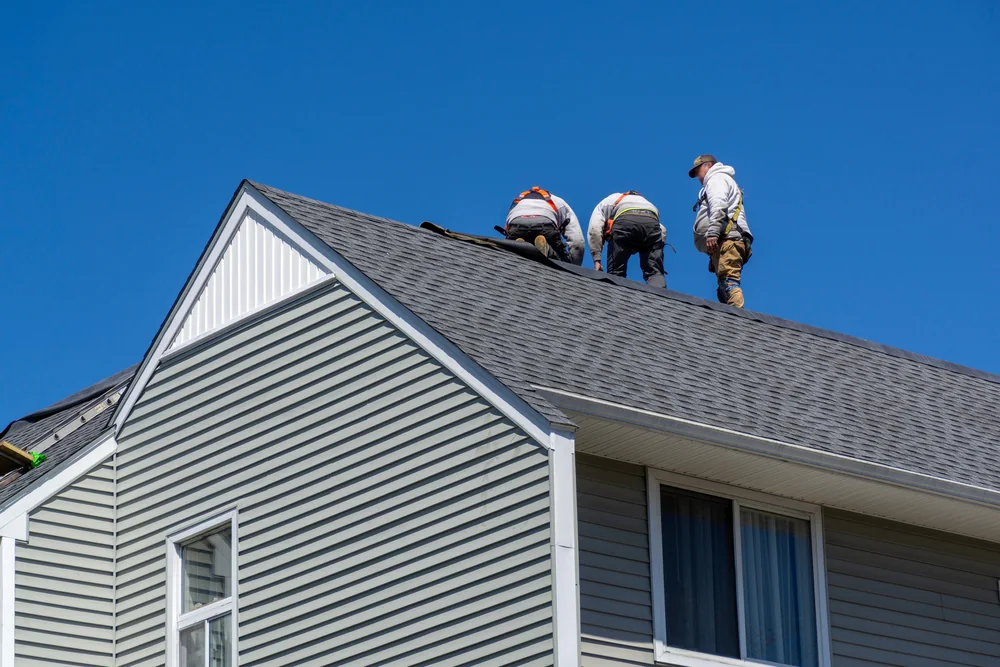
Having your contractor present during the adjuster inspection changes the dynamic entirely. A contractor who knows what to look for — lifted flashing, granule loss, compromised decking beneath the shingles, damaged ridge caps — can walk the roof alongside the adjuster, point out damage that might otherwise be missed, and make sure the scope of work in the final report reflects what actually needs to be fixed.
This gap is more common than most homeowners expect, and it’s not always a sign of bad faith on the insurer’s part. Adjusters work from standardized pricing databases that don’t always reflect current material costs, local labor rates, or the specific requirements of Massachusetts building code. The code-upgrade costs alone — like the ice and water shield requirement — can add meaningful expense to a repair that the adjuster’s initial estimate doesn’t capture.
When the numbers don’t align, you have options. The most straightforward is to get a detailed written estimate from your contractor and submit it to the claims adjuster as a formal supplement to the claim. A well-documented estimate from a licensed, Owens Corning Preferred Contractor carries weight — it’s not just a number on a page, it’s a scope of work tied to specific materials and installation standards that the insurer can verify.
If the insurer still won’t budge after a supplemental submission, you can request a re-inspection, escalate within the insurer’s claims department, or bring in a public adjuster — an independent professional who conducts their own assessment and negotiates on your behalf. Public adjusters typically work on a percentage of the final settlement, so there’s no upfront cost.
What you shouldn’t do is accept the first offer and assume it’s final. The initial estimate is a starting point, not a ceiling. Homeowners who push back with proper documentation — contractor estimates, permit records, photographs, and a clear account of the damage event — routinely receive higher settlements than those who accept the first number.
About 37% of property insurance claims are denied nationally, and the reasons are often preventable. Understanding them ahead of time is the best protection you have.
The most common denial reason is wear and tear. Insurers distinguish between damage caused by a specific covered event — a nor’easter, a hail storm, a fallen tree — and damage that resulted from the roof simply aging out. If your roof is old and showing signs of deferred maintenance, the insurer may argue that the storm didn’t cause the damage, it just revealed pre-existing deterioration. Massachusetts has among the highest percentages of roofs with less than four years of remaining useful life in the country, and those roofs experience 50% more damage in severe weather — which means Essex County homeowners with aging roofs are disproportionately exposed to this denial argument.
Filing too late is another common problem. Most policies have strict deadlines — sometimes as short as 12 months from the date of the damage event — and missing that window can forfeit coverage entirely. If you noticed damage after last winter’s storms and haven’t filed yet, check your policy’s timeline provisions now.
A third issue is insufficient documentation. Claims that arrive with a handful of blurry phone photos and no contractor assessment are easy to dispute. The claims that hold up are the ones with clear photographs taken immediately after the event, a professional damage assessment from a licensed contractor, a detailed repair estimate with specific materials and scope, and — critically — a permit history showing that all previous work on the roof was done correctly.
We’ve worked across Essex County for years, from Methuen to Salem to Beverly to Topsfield. We know what these roofs look like after a bad nor’easter, and we know how to document damage in a way that gives your claim the strongest possible foundation. If you’re not sure whether what you’re seeing warrants a claim, a free inspection is the right first step — before you file anything.
The insurance claims process isn’t designed to be easy, and it’s not getting easier — premiums in Massachusetts rose nearly 16% in 2023 alone, and insurers are under real financial pressure to scrutinize every submission. But homeowners who go into the process prepared, with solid documentation and a licensed contractor who pulls permits and attends the adjuster inspection, consistently come out better than those who wing it.
The most important decision you make isn’t which insurer you call first. It’s which contractor you bring in before the claim is settled. A contractor who understands the process, documents damage thoroughly, and has a verifiable permit history on file isn’t just fixing your roof — they’re strengthening your claim from the ground up.
If you’ve got storm damage and you’re not sure where to start, reach out to Paradise Remodeling Inc. We offer free inspections, we pull permits on every qualifying job, and we’ve been working on Essex County roofs long enough to know exactly what your insurer is going to look for.
Summary:
Article details:
Share: