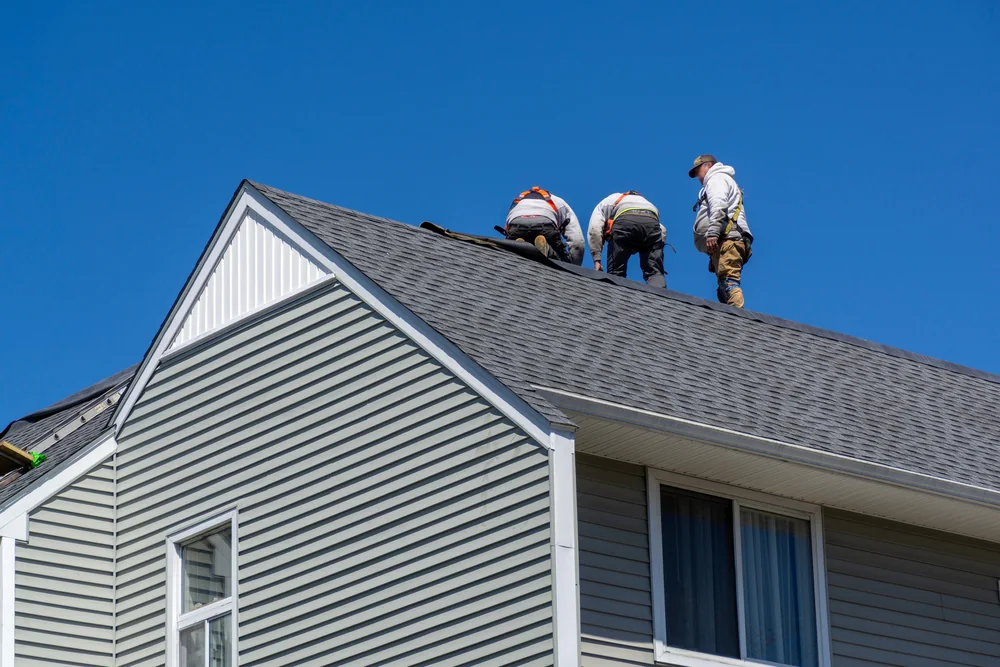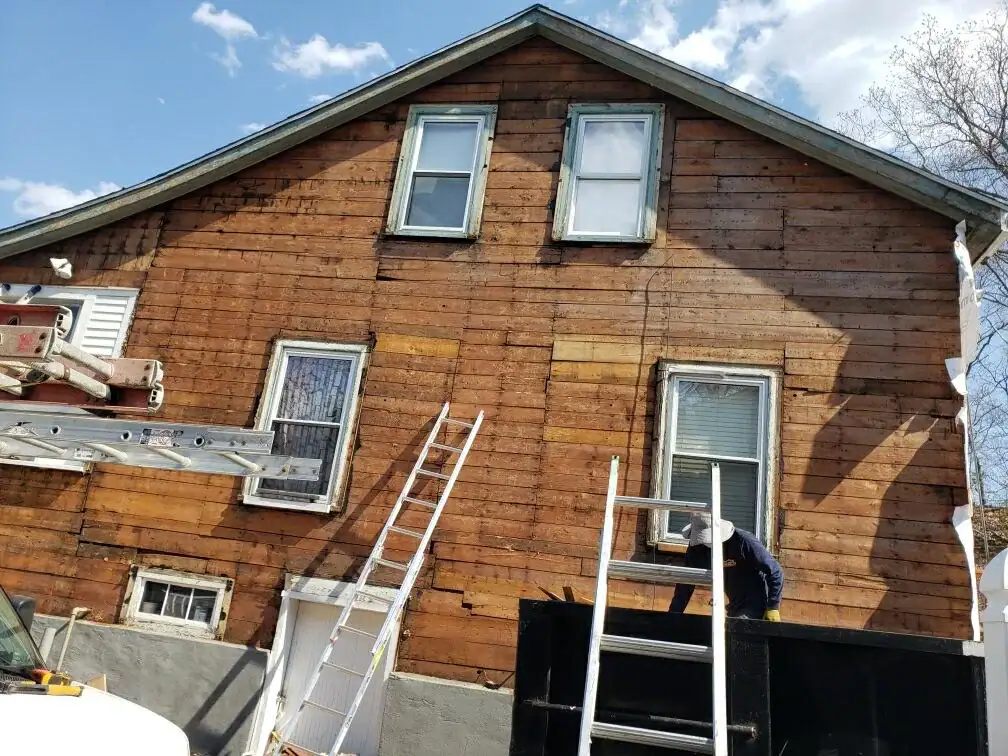
Salem, NH sits right on the Massachusetts line — and that border creates real complications when you're hiring a contractor. Here's what you need to know before signing anything.
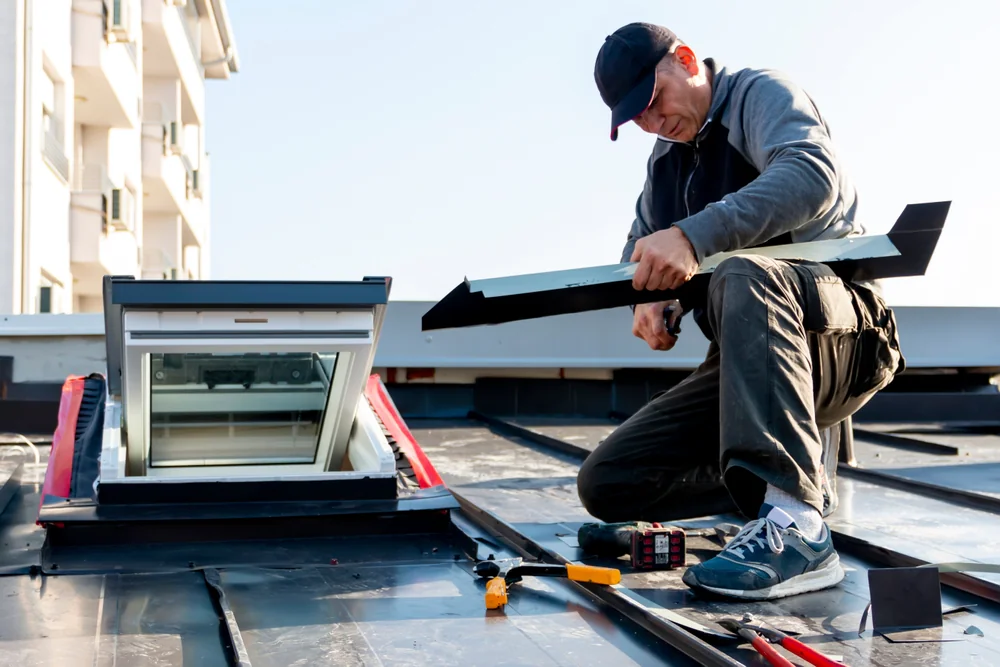
Salem, NH is about as close to Massachusetts as you can get without actually being in it. The town shares a direct border with Methuen and Lawrence — both in Essex County — and I-93 runs straight through the middle of the whole corridor. Contractors work both sides of that line constantly. But “working both sides” and being properly credentialed to do it are two different things. If you’re planning a roofing, siding, or exterior project in Salem, NH, and you’re considering a contractor from Essex County or the Massachusetts side — or you’re a northern Essex County homeowner whose project bleeds into NH — there are real compliance questions worth understanding before anyone picks up a nail gun.
New Hampshire and Massachusetts handle contractor licensing completely differently, and that gap catches homeowners off guard more often than it should. In Essex County, Massachusetts, roofing and home improvement contractors must hold active Home Improvement Contractor (HIC) and Construction Supervisor License (CSL) credentials — and those licenses have no reciprocity with New Hampshire. Being licensed in Massachusetts does not mean a contractor is automatically cleared to work in NH.
On the New Hampshire side, there’s no statewide general contractor license at all. The state licenses specific trades — electrical, plumbing, gas fitting — through the Office of Professional Licensure and Certification, but general building contractors are regulated at the local level. That means the rules in Salem, NH specifically are the ones that matter, not some statewide standard you can look up in one place.
Here’s the part that surprises most people: if you ask a contractor whether they’re “licensed in New Hampshire,” a technically honest answer could be “yes” even if they’ve never pulled a permit in the state. That’s because NH doesn’t issue a general contractor license the way Massachusetts does. There’s no single credential you can look up to confirm a contractor is legally operating in Rockingham County.
What New Hampshire does require for home improvement work is registration through the OPLC — and that registration comes with a meaningful condition. Under RSA 310-A:196, registered home improvement contractors must carry at least $1,000,000 per occurrence in general liability insurance. That’s a real threshold, and it’s worth asking any contractor you’re considering to confirm their coverage meets it.
Beyond registration and insurance, out-of-state contractors working in New Hampshire are required to register with the NH Secretary of State, meet the state’s tax registration obligations with the Department of Revenue Administration, and pull project-specific permits from the municipality where the work is happening. In Salem, NH, that means going through the town’s own permitting process — and work cannot legally begin until a permit has been approved and signed by both the contractor and the town.
The practical implication: a Massachusetts-based contractor who does great work in Methuen or Lawrence isn’t automatically ready to start a project on the Salem, NH side of the border. They need to have their NH-side compliance in order — registration, insurance documentation, and a local permit in hand — before a single shingle comes off your roof. If they can’t confirm those things, that’s not a technicality. That’s a real problem for you. Unpermitted work can void homeowners insurance claims and create serious complications when you go to sell the property.
We’ve been working in Rockingham County since 2012. The permit process in Salem, NH is not new to us, and we don’t treat it as an afterthought.
The questions worth asking aren’t complicated, but most homeowners never ask them — especially after a storm, when urgency takes over and the instinct is to say yes to whoever shows up first.
Start with insurance. Ask for a certificate of general liability insurance and confirm that coverage meets the $1,000,000 per occurrence minimum required for NH home improvement work. Then ask specifically whether the contractor has registered with the NH Secretary of State to work in the state — this is a separate step from holding a Massachusetts license, and it matters.
Ask about permits. We pull permits as standard practice, not as a favor to you. If a contractor suggests skipping the permit to save time or money, that’s a significant red flag. In Salem, NH, the permit must be approved before work begins — full stop. If something goes wrong on a project that was never permitted, your insurance company may deny the claim entirely.
After storm events, this becomes even more urgent. When a nor’easter moves through the Salem, NH and Essex County corridor, out-of-area contractors flood the market. Some are legitimate. Many are not. The ones offering the fastest turnaround and the lowest price are often the ones least likely to have their NH compliance in order. One in four new homeowners replaces the roof within four years — often because they discover hidden damage or deferred problems from a previous owner. Rushing into a repair with an unverified contractor can turn a manageable problem into a much more expensive one.
One more thing worth knowing: never sign an Assignment of Benefits before a contractor starts work. An AOB hands over your insurance claim rights to the contractor, and if the project goes sideways, you’ve already given up your ability to dispute it. Any contractor pushing you to sign one before work begins is waving a red flag.
Want live answers?
Connect with a Paradise Remodeling Inc. expert for fast, friendly support.
Windham, NH sits directly north of Salem along Route 28, still in Rockingham County, and it’s a market that most contractor pages don’t bother addressing specifically. That’s a gap, because Windham’s housing stock tells a particular story. Nearly 45% of homes there were built since 2000 — which means a lot of homeowners are working with exterior materials that are now hitting the 20-to-25-year mark, right around when roofing and siding systems start showing real wear.
The same cross-border licensing considerations that apply in Salem apply in Windham. And the same logic holds: a contractor who’s credentialed on both sides of the line, familiar with Rockingham County’s municipal permit process, and already working in this corridor is a different category of hire than someone coming in from outside the area.
Because so much of Windham’s housing was built in the late 1990s and early 2000s, a lot of what we see there is original vinyl siding and roofing that’s reached the end of its useful life — not dramatically failed, but quietly degrading. Vinyl becomes brittle in New England winters. Temperature swings cause it to crack and split, and those small openings let water behind the panels where you can’t see it doing damage until it’s become a structural issue.
Roofing follows a similar pattern. Homes with roofs over 20 years old are three times more likely to file a wind or hail claim — and Windham gets the same Rockingham County weather that Salem does, which means nor’easters, ice storms, and the freeze-thaw cycles that accelerate wear on any exterior surface.
An exterior project in Windham — whether it’s a roof replacement, new siding, or both — follows the same permitting and compliance framework as Salem. The contractor needs to be registered to work in NH, carry the right insurance, and pull a local permit before starting. What we offer in Windham is the same thing we offer in Salem and across the Salem-to-Essex County corridor: a single contractor who handles roofing, siding, gutters, windows, and doors without handing you off between crews. We’ve been doing this in southern New Hampshire since 2012, and the permit process in Rockingham County is routine for us — not something we’re figuring out as we go.
Here’s something the licensing complexity tends to obscure: when you hire a contractor who’s already credentialed and operating on both sides of the border, the compliance burden shifts off your plate entirely. You don’t have to become an expert in NH registration requirements or track down the Salem permitting office yourself. We handle what’s required and manage it as routine.
That matters more than it might seem at first. Homeowners in Methuen and Lawrence — both in Essex County — frequently have projects that touch the NH side, or they know someone in Salem or Windham who needs work done. When you’re dealing with a contractor who operates across that corridor routinely, you’re not their first cross-border project. The permit is expected. The insurance documentation is already in order. The compliance questions have already been answered.
Beyond the licensing piece, there’s a practical advantage to the single-contractor model in this market. Roofing and siding often go together — especially on homes where both systems are aging at the same rate. When one contractor handles both, there’s no question about who’s responsible if something goes wrong at the seam between the two scopes. No finger-pointing between a roofer and a siding crew. No scheduling gaps while you wait for one trade to clear before another can start.
We’re an Owens Corning Preferred Contractor, which means our installation standards are verified by the manufacturer — not just claimed. BuildZoom ranks us in the top 8% of 139,240 Massachusetts licensed contractors. We carry general liability insurance that meets the requirements for home improvement work on both sides of the border. If a project in Salem or Windham involves an insurance claim, we work directly with your insurance company to document the damage and support the process.
The border between Essex County and Rockingham County is easy to drive across. The compliance gap between the two states is less obvious — and that’s exactly what makes it worth understanding before you hire anyone.
New Hampshire has no statewide general contractor license, but it does have real requirements: insurance minimums, out-of-state registration, and municipal permits that must be approved before work begins. A Massachusetts contractor who skips those steps isn’t saving you time. They’re creating liability that lands on you.
If you’re planning a roofing, siding, or exterior project in Salem, NH, Windham, or anywhere in the corridor between Rockingham County and northern Essex County, the right move is a contractor who already operates on both sides — one who knows the permit process, carries the right coverage, and doesn’t treat compliance as optional. Paradise Remodeling Inc has been working in this market for over 13 years. Reach out for a free quote and we’ll tell you exactly what your project requires.
Summary:
Article details:
Share: