Hear from Our Customers
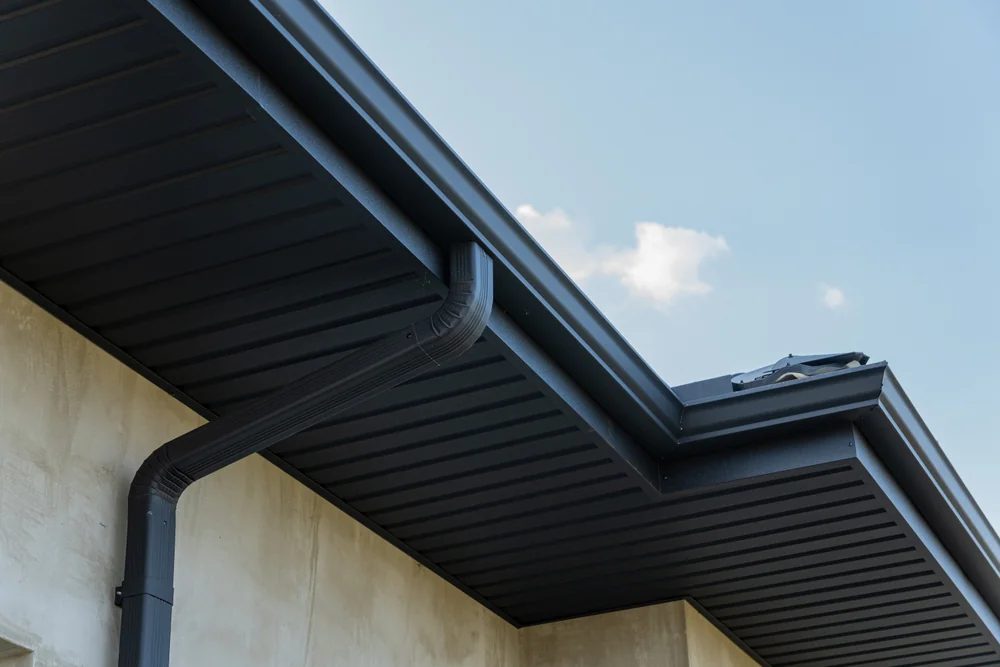
When your gutters fail in Weare, you’re not just dealing with overflow. You’re looking at foundation cracks from saturated soil that expands and contracts. You’re dealing with ice dams that trap water on your roof, leading to leaks that show up in your ceiling months later.
A single cubic foot of snow weighs up to 20 pounds. When that melts and refreezes in clogged or poorly installed gutters, you get burst downspouts and cracked seams. The water has to go somewhere, and it usually ends up against your foundation or seeping into your basement.
Professional rain gutter installation means water gets directed away from your home before it becomes a problem. It means your foundation stays dry, your landscaping doesn’t erode, and you’re not climbing a ladder every few weeks to clear out debris. The right seamless gutter system handles what New Hampshire throws at it without constant maintenance or emergency repairs.
We’ve been handling gutter installation across New Hampshire for years, and we’ve seen what happens when systems aren’t built for this climate. Weare homes deal with some of the heaviest snow loads in the region, and older sectional gutters just pull apart under that pressure.
We’re licensed, insured, and an Owens Corning Preferred Contractor, which means we meet strict standards for installation quality. But what matters more is that we fabricate seamless gutters on-site, custom-fit to your home’s exact measurements. No leaky seams, no gaps where ice can build up.
You’re not getting a crew that installs gutters the same way in every state. You’re getting installers who understand that Weare’s freeze-thaw cycles require different materials, different pitch calculations, and different attachment methods than homes in milder climates.
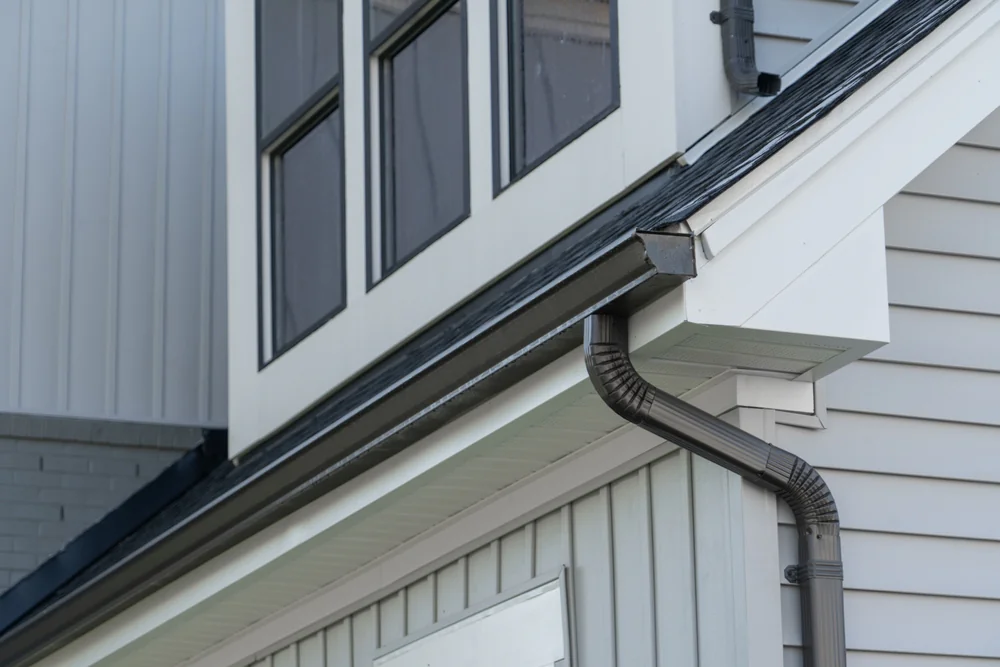
First, we assess your home’s current drainage situation. We look at roof pitch, snow load exposure, where water currently pools, and whether your foundation shows any signs of water damage. This tells us what size gutters you need and where downspouts should go.
Next, we take exact measurements and fabricate your seamless gutters on-site using weather-resistant materials. Seamless means no joints except at corners and downspouts, which eliminates the most common failure points. We’re not piecing together sections that will separate when ice builds up.
Installation involves securely mounting the gutter system with proper slope for drainage, even during heavy rain. We make sure downspouts direct water at least six feet away from your foundation. If you’re adding gutter guards, we install those at the same time so you’re not dealing with leaf buildup or climbing ladders to clear debris.
After installation, we test the system with water to confirm proper flow and check that all connections are sealed. You get a walkthrough of how the system works and what minimal maintenance it needs. Most seamless gutter installations come with a 20-year manufacturer warranty and a 5-year installation warranty.
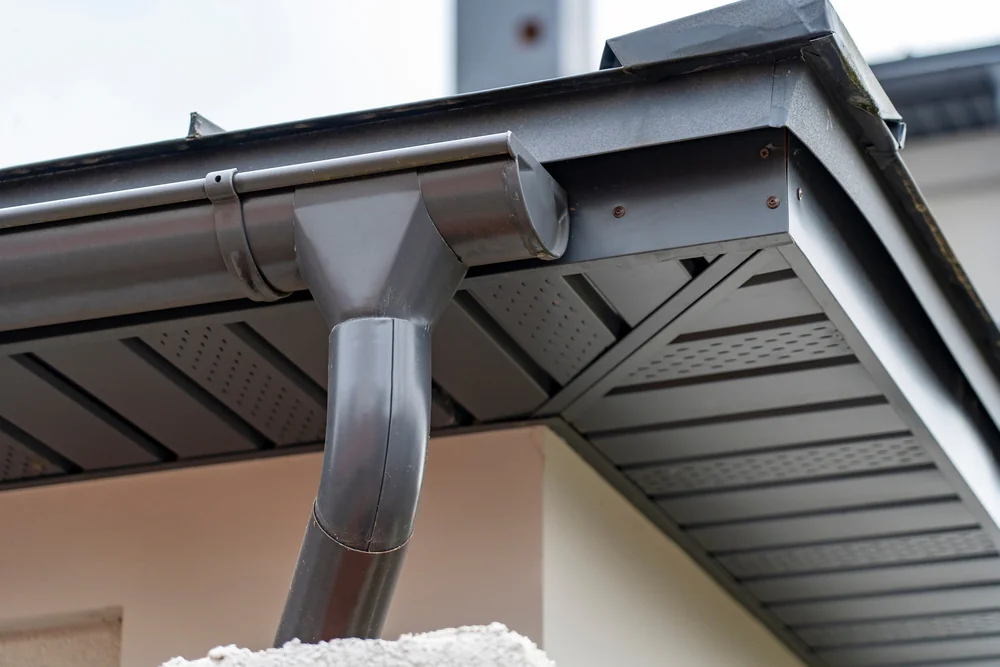
Ready to get started?
Your gutter installation includes custom-fabricated seamless gutters sized for New Hampshire’s weather conditions. We’re not using standard residential gutters if your home has a steep roof pitch or gets hit with heavy snow runoff. You get the capacity you actually need.
Downspouts are positioned based on your property’s drainage patterns, not just wherever’s convenient. If your yard slopes toward your foundation or you have landscaping that’s taking a beating from runoff, we account for that. Extensions and splash blocks get added where necessary to move water away from problem areas.
Weare homes built before 2000 often have undersized gutters that can’t handle today’s heavier rainfall events, which have increased by 30% over recent decades. If that’s your situation, we’ll recommend the right upgrade. Same goes for homes with older aluminum gutters that are pulling away from fascia boards under snow weight.
Gutter guard installation is available if you want to eliminate the maintenance cycle. These aren’t the cheap screens that clog up with pine needles. We install systems that handle New Hampshire’s leaf load and prevent ice dams from forming at the roofline. You’re looking at significantly less maintenance and fewer service calls over the system’s lifetime.
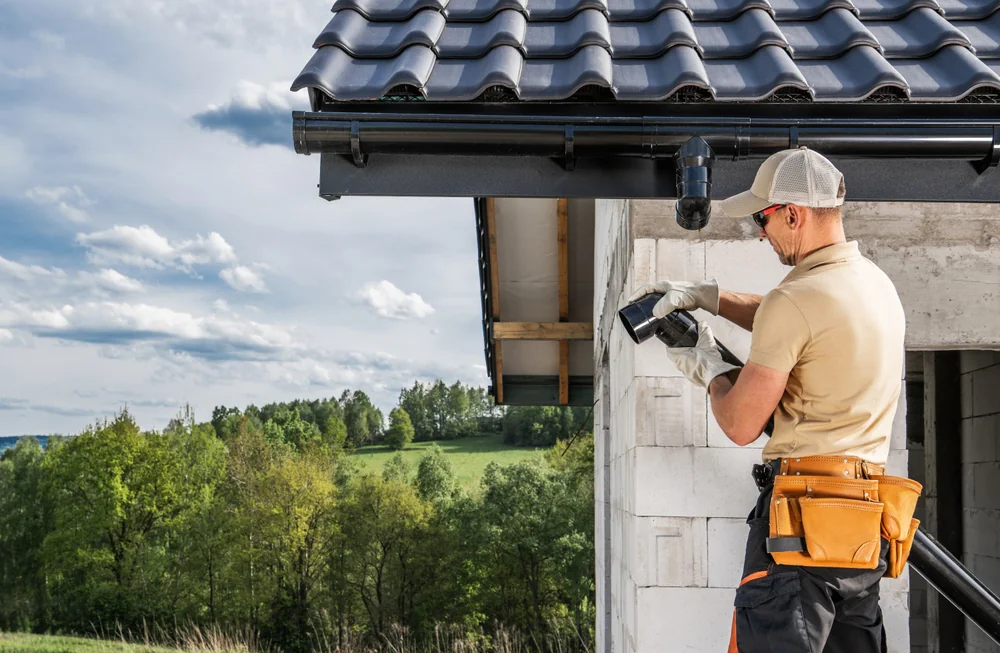
Most residential gutter installations in Weare take one to two days, depending on your home’s size and complexity. A standard single-story ranch might be done in a day. A two-story colonial with multiple roof lines and valleys takes longer.
Weather plays a role too. We don’t install gutters in freezing temperatures or during rain because the sealants and mounting materials won’t set properly. If we’re replacing old gutters, we factor in removal time and any fascia board repairs that might be needed once the old system comes down.
The actual installation moves quickly because we fabricate seamless gutters on-site. There’s no waiting for custom orders or dealing with shipping delays. We measure, cut, and install in the same visit. What takes time is making sure everything’s level, properly pitched, and securely mounted to handle snow loads without sagging or pulling away from your roofline.
Most Weare homes need 5-inch or 6-inch gutters, but it depends on your roof’s square footage, pitch, and how much snow load you typically get. Steeper roofs shed water faster, which means you need larger gutters and downspouts to handle the volume during heavy rain or snowmelt.
If your home has multiple stories or a roof with valleys that concentrate water flow, standard 5-inch gutters might not cut it. Same if you’re in an area that gets hit hard during nor’easters. Undersized gutters overflow during peak flow, which defeats the entire purpose of having a gutter system.
We calculate capacity based on your specific situation, not just what’s standard for residential homes. A ranch with a low-pitch roof has different needs than a colonial with dormers and multiple roof planes. The goal is gutters that handle New Hampshire’s worst weather without overflowing, sagging, or requiring constant attention. Getting the size right the first time means you’re not dealing with water damage or paying for an upgrade two years later.
Quality gutter guards work, but cheap screens and foam inserts don’t hold up to New Hampshire conditions. You need guards designed to handle freeze-thaw cycles, prevent ice dam formation, and shed leaves without clogging. Most big-box store options fail within a few seasons.
The right gutter guard system keeps debris out while allowing water and melting snow to flow through. They’re especially useful if you have pine trees or maples dropping needles and seeds that turn into sludge in your gutters. Without guards, you’re cleaning gutters multiple times per year, which means climbing ladders in conditions that send people to the ER.
That said, gutter guards aren’t maintenance-free. You’ll still need occasional inspections to make sure nothing’s blocking the system and that ice isn’t building up at the roofline. But you’re looking at annual checks instead of monthly cleanings. For most Weare homeowners, that’s worth the upfront investment, especially if your home has multiple stories or a roof that’s difficult to access safely.
Look for water pooling within six feet of your foundation after rain or snowmelt. Check your basement for moisture, efflorescence (white chalky deposits on concrete), or cracks that seem to be getting worse. If your gutters are overflowing or downspouts are dumping water right next to your foundation, you’ve got a problem.
Saturated soil around your foundation expands when it freezes, putting pressure on foundation walls. When it thaws, the soil contracts, creating gaps where water can seep in. Over time, this cycle causes cracks, bowing walls, and basement leaks that cost tens of thousands to repair. Gutters are supposed to prevent this by directing water away before it saturates the soil.
Other signs include eroded landscaping near your foundation, gutters pulling away from fascia boards, or visible sagging in the gutter line. If your gutters are more than 20 years old and you’re seeing any foundation issues, there’s a good chance the two are connected. Fixing the gutters won’t repair existing foundation damage, but it will stop the problem from getting worse and prevent new damage from occurring.
Sectional gutters are pre-cut pieces joined together with connectors and sealant. Every joint is a potential leak point, especially when ice expands in the seams or the sealant degrades from UV exposure and temperature swings. They’re cheaper upfront but require ongoing maintenance and resealing.
Seamless gutters are fabricated on-site from a single piece of material, cut to your home’s exact measurements. The only seams are at corners and downspout connections, which dramatically reduces leak risk. They handle New Hampshire’s freeze-thaw cycles better because there aren’t multiple joints that can separate under stress from ice and snow weight.
For Weare homes, seamless is the better choice. You’re not resealing joints every few years or dealing with sections that pull apart during heavy snow. The upfront cost is higher, but you’re looking at a 20 to 30-year lifespan with minimal maintenance versus sectional gutters that need attention every few years. When you factor in the cost of repairs and the risk of water damage from failed seams, seamless pays for itself.
Gutter installation is possible in winter, but there are temperature limitations. Most sealants and mounting adhesives require temperatures above 40°F to cure properly. If we install in freezing conditions, the seals won’t hold and you’ll have leaks as soon as the snow melts.
That said, if you’re dealing with emergency damage from ice dams or a gutter system that’s failing and causing immediate water problems, we can often find a warm enough day to get the work done. New Hampshire winters have plenty of stretches where temperatures climb into the 40s and 50s, especially in late winter.
The ideal time for gutter installation in Weare is late spring through fall when temperatures are consistently above 50°F and we’re not dealing with snow on the roof. But if your gutters are causing active damage to your foundation or you’re seeing water in your basement, don’t wait until spring. Call us and we’ll figure out the soonest safe installation date. Sometimes a temporary fix can hold you over until conditions are right for a full installation.