Hear from Our Customers

Your siding isn’t just curb appeal. It’s the barrier between your insulation and everything New Hampshire throws at it—snow, ice, humidity, and those brutal temperature swings that make vinyl brittle and wood rot from the inside out.
When you replace failing siding, you’re not just covering up cracks. You’re stopping air leaks that force your furnace to run longer. You’re eliminating the moisture entry points that lead to mold remediation bills. You’re done with the constant maintenance cycle of scraping, caulking, and repainting every few years.
Fiber cement siding in Weare, NH handles freeze-thaw cycles without expanding or contracting. It won’t ignite if a fire starts. It doesn’t appeal to woodpeckers or termites. And if you choose James Hardie with ColorPlus technology, the color stays put—no fading, no peeling, no repainting for decades.
That’s what new siding benefits actually look like: lower heating costs, zero rot, and a home that holds its value.
We’ve been serving Weare, NH and the surrounding area for years, and we’re not the cheapest option you’ll find. We’re the one that doesn’t cut corners when your home’s protection is on the line.
We’re licensed, insured, and ranked in the top 8% of Massachusetts contractors. We’re an Owens Corning Preferred Contractor, which means we meet requirements most companies don’t bother with. Our crews show up on time, work clean, and install house wrapping and siding the way it’s supposed to be done—so it actually performs when winter hits.
You’re not hiring a crew that disappears after the deposit clears. You’re hiring people who’ve seen what happens when siding is installed wrong in this climate, and who know how to do it right.
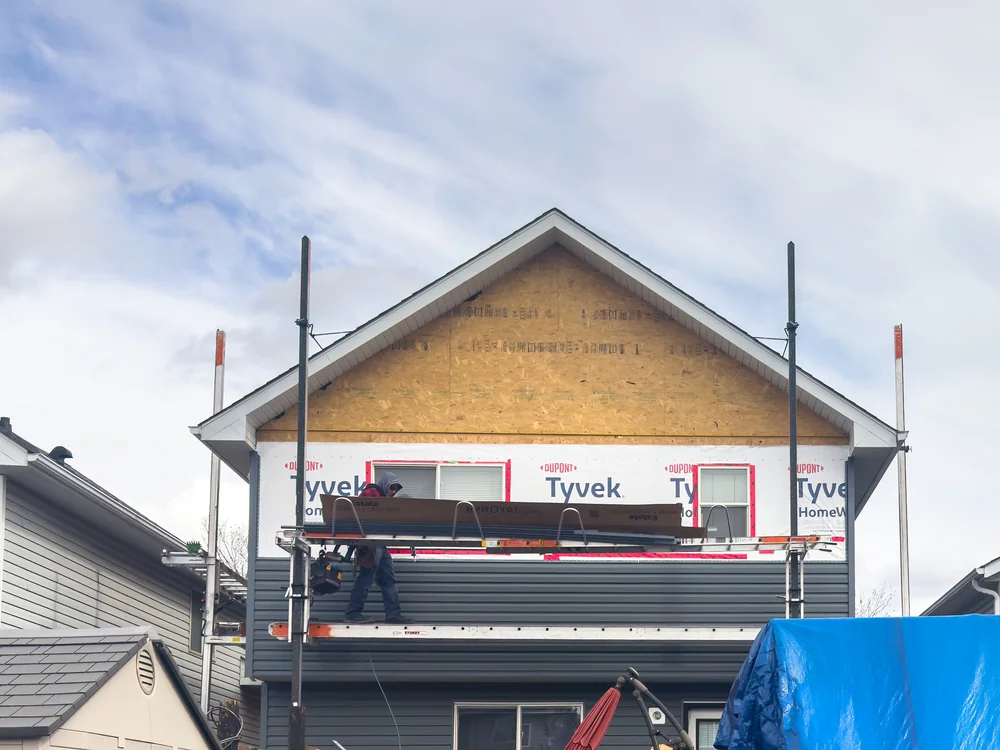
First, we come out and look at what you’re dealing with. We check for water damage, rot, and structural issues that need fixing before new siding goes up. If your sheathing is compromised, we tell you—because covering up problems doesn’t make them go away.
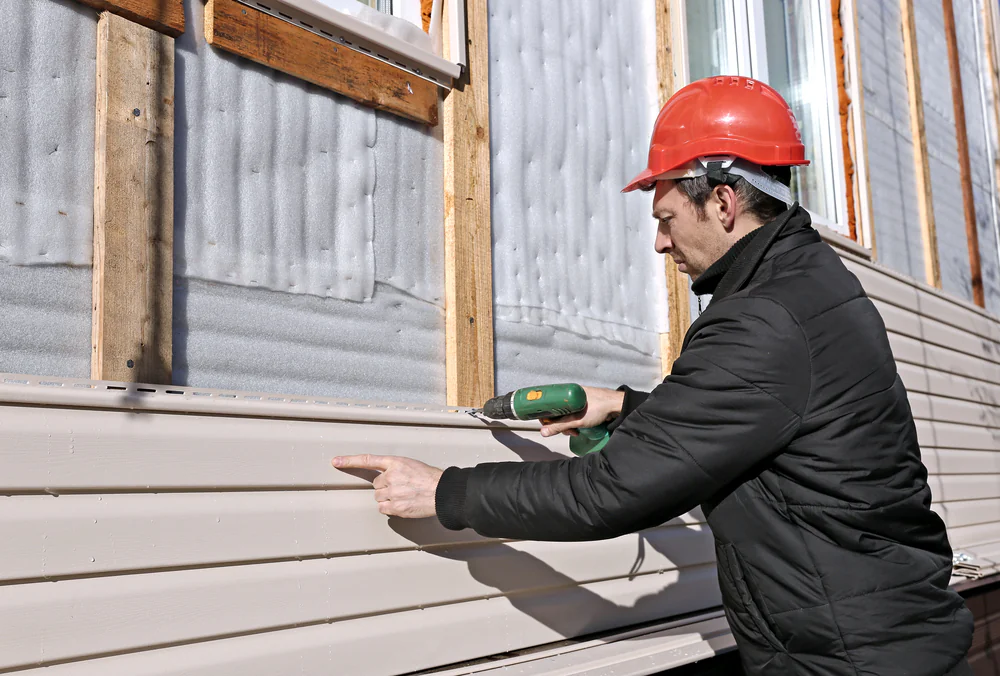
Next, we remove the old siding and inspect the underlayment. We install proper house wrapping in Weare, NH to create a weather-resistant barrier. This step matters more than most homeowners realize. It’s what keeps moisture from getting trapped behind your siding and rotting out your walls.
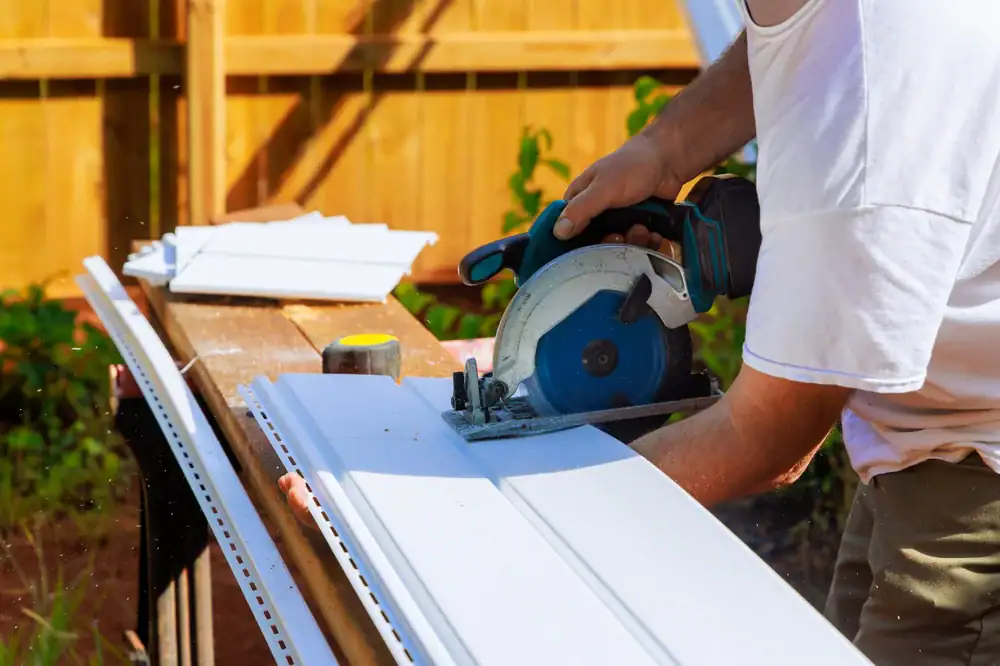
Then we install your siding—whether that’s James Hardie fiber cement, insulated vinyl, or another material that makes sense for your home and budget. We make sure every panel is level, every seam is tight, and every trim piece is sealed correctly. We don’t rush. We don’t leave gaps. We don’t assume “close enough” will hold up.
When we’re done, you get a home that looks sharp and actually performs in New England weather. And you get a warranty that backs it up.
Ready to get started?
Vinyl siding installation in Weare, NH typically runs $8 to $10 per square foot. For an average home, that’s around $14,000 to $18,000. Fiber cement siding costs more—$11 to $13 per square foot, or roughly $19,800 to $23,400 for the same size home.
The difference isn’t just the material. Fiber cement won’t crack in subzero temps. It won’t melt if a grill gets too close. It resists fire, water, pests, and the kind of weather damage that sends homeowners scrambling for repairs every few years. And it can recoup up to 68% of your investment when you sell, according to Remodeling magazine’s Cost vs. Value Report.
If you go with insulated siding, you’re looking at energy savings around 10 to 15% on heating and cooling. That’s real money back in your account every year, not just a marketing claim. In Weare’s climate, where your furnace runs hard from November through March, that adds up.
When you work with us as your James Hardie installers in Weare, NH, you also get access to the HardieZone system—siding that’s engineered specifically for freeze-thaw cycles and extreme seasonal swings. It’s not one-size-fits-all. It’s built for here.
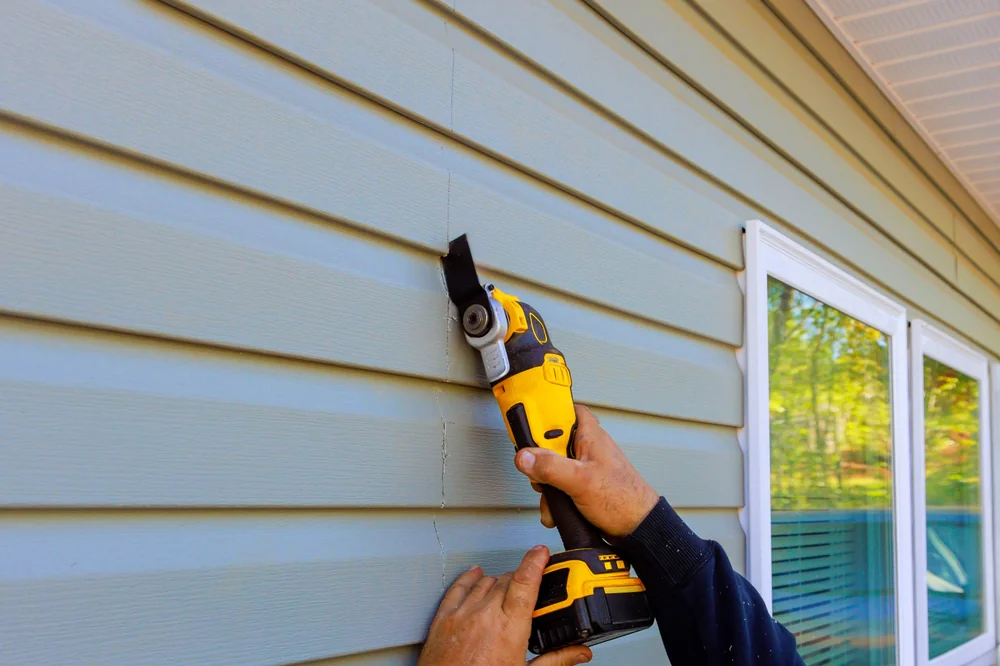
Fiber cement siding lasts 30 to 50 years in New Hampshire if it’s installed correctly. That’s significantly longer than vinyl, which can crack in cold weather, and wood, which rots when moisture gets in.
The key is proper installation. If the house wrapping isn’t done right, or if the siding isn’t sealed correctly, moisture gets trapped behind the panels. That leads to mold, rot, and early failure—even with premium materials.
James Hardie fiber cement comes with a 30-year non-prorated warranty, which is one of the strongest in the industry. But the warranty only matters if the installation is done right. That’s why hiring experienced siding contractors in Weare, NH matters more than just picking the right product.
Yes, but only if you’re replacing siding that’s leaking air or if you’re adding insulated siding. If your current siding is in good shape and your home is already well-insulated, new siding won’t make a huge difference.
Insulated vinyl siding can cut heating and cooling costs by 10 to 15%, sometimes more depending on your home’s construction and how drafty it was before. That’s because it adds an extra layer of thermal protection and reduces air infiltration around seams and joints.
Fiber cement itself doesn’t add insulation value, but it creates a tighter seal than old, warped, or cracked siding. And when paired with proper house wrapping in Weare, NH, it stops the air leaks that make your furnace work overtime. If energy efficiency is a priority, we can walk you through which materials and installation methods will give you the best return.
Vinyl is lighter, less expensive, and easier to install. Fiber cement is heavier, more durable, and handles extreme weather better. Both can look good. Both can last. But they perform differently in New England’s climate.
Vinyl becomes brittle in subzero temperatures and can crack during freeze-thaw cycles. It melts if exposed to high heat, and it doesn’t hold up well against impact. Fiber cement won’t crack in the cold, won’t ignite in a fire, and resists damage from hail, wind, and pests.
The cost difference is real—fiber cement runs about $3 to $5 more per square foot than vinyl. But you’re also getting a product that requires almost no maintenance, doesn’t fade, and adds more resale value. If you’re planning to stay in your home long-term, fiber cement usually makes more sense. If you’re on a tighter budget or planning to sell soon, vinyl can still be a solid choice if it’s installed correctly.
Look for cracks, warping, rot, or pieces that are loose or missing. If you’re seeing any of those, your siding isn’t protecting your home the way it should.
Other signs include peeling paint that keeps coming back no matter how often you repaint, higher energy bills without an obvious cause, or moisture and mold inside your walls. Those are all indicators that your siding is failing and letting water or air through.
You might also notice fading, especially on the south-facing side of your home. That’s not just cosmetic—it means the material is breaking down. If your siding is more than 20 years old and showing any of these signs, it’s time to get it looked at. Waiting too long can lead to structural damage that costs a lot more to fix than just replacing the siding.
Yes, but it depends on the material and the temperature. Vinyl siding shouldn’t be installed when it’s below 40 degrees because it becomes too brittle and can crack during installation. Fiber cement can be installed in colder weather, but there are still limits.
Most siding manufacturers have temperature guidelines that need to be followed, or the warranty won’t be valid. We don’t install siding in conditions that compromise the quality of the work, even if it means waiting for better weather.
If you need siding replaced in the winter, fiber cement is usually the safer option. But the best time for any siding installation in Weare, NH is late spring through early fall, when temperatures are stable and materials perform the way they’re supposed to. If you’re planning a project, reaching out in the spring gives you the most flexibility with scheduling and weather.
Not always, but often. If your house wrap is torn, deteriorated, or wasn’t installed correctly in the first place, it needs to be replaced. House wrapping is what keeps moisture from getting into your walls, and it’s just as important as the siding itself.
When we remove old siding, we inspect the wrap. If it’s in good condition and still doing its job, we leave it. If it’s compromised, we replace it. Skipping this step to save money is a mistake—it’s like putting a new roof on rotted decking. It might look fine for a while, but it won’t last.
Proper house wrapping in Weare, NH is critical in this climate. Freeze-thaw cycles, wind-driven rain, and snow buildup all put pressure on your home’s exterior. If the wrap isn’t doing its job, moisture gets in, insulation gets soaked, and you end up with mold and rot. Replacing it when you replace your siding is the smart move.