Hear from Our Customers
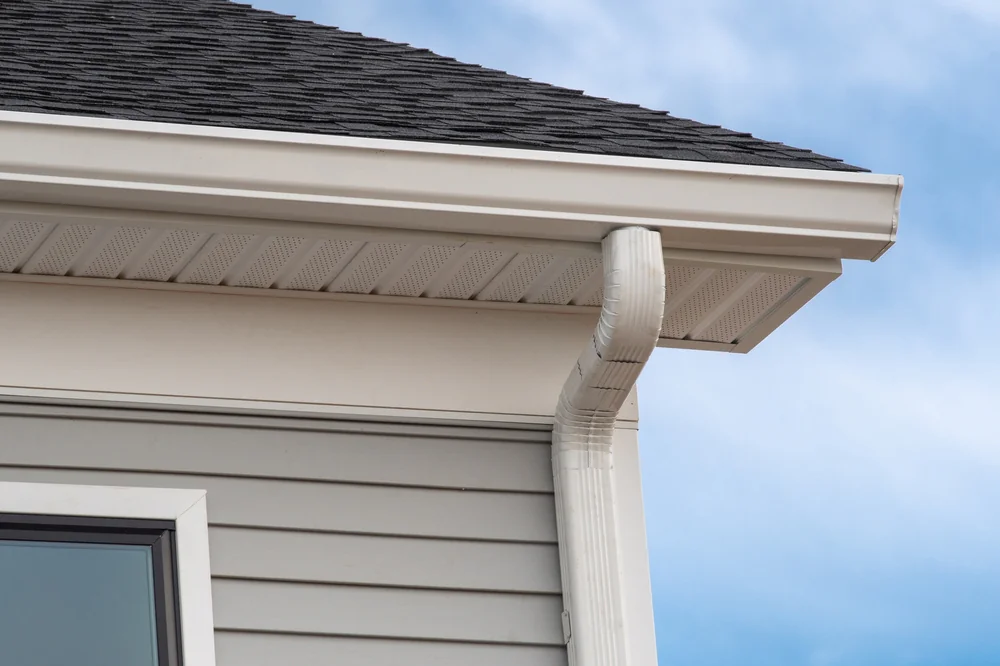
Your gutters aren’t there to look pretty. They’re preventing thousands of dollars in foundation damage, basement flooding, and rotted siding every time it rains or snow melts.
In Stratham, where the median home value sits around $600,000, you’re protecting a serious investment. Homes here deal with heavy fall leaf coverage, brutal winter ice, and spring pollen that clogs standard gutters within weeks. When gutters fail, water finds its way into your foundation, under your siding, and into your basement.
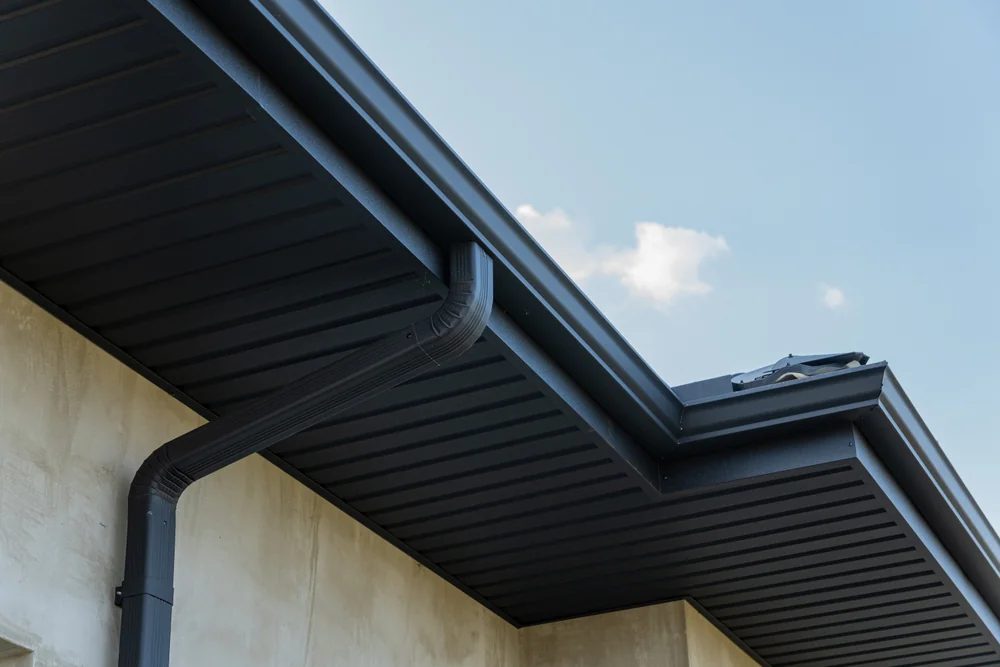
Seamless gutters eliminate the weak points. No joints means no separation, no leaks at the seams, and no spots where debris piles up and creates blockages. You get a custom-fit system that moves water exactly where it needs to go—away from your home’s structure.
Most installations wrap up in a day. You’re left with a system that handles New Hampshire weather without constant maintenance, emergency repairs, or that nagging worry every time a storm rolls through.
Paradise Remodeling Inc has spent nearly three decades installing gutters and protecting homes across New Hampshire. We’re an Owens Corning Preferred Contractor, which means we’ve met strict requirements for quality work and customer service—not just once, but consistently.
Stratham homeowners know what matters: work done right, crews that show up on time, and results that last through multiple New Hampshire winters. We fabricate your gutters on-site from continuous aluminum coils, custom-cut to your home’s exact measurements. No pre-made sections. No guesswork.
You’re working with manufacturer-trained installers who understand how ice dams form, why proper pitch matters, and what it takes to keep water moving when temperatures drop below freezing. We’re fully insured, and we clean up completely when the job’s done—old gutters hauled away, debris removed, your property left better than we found it.
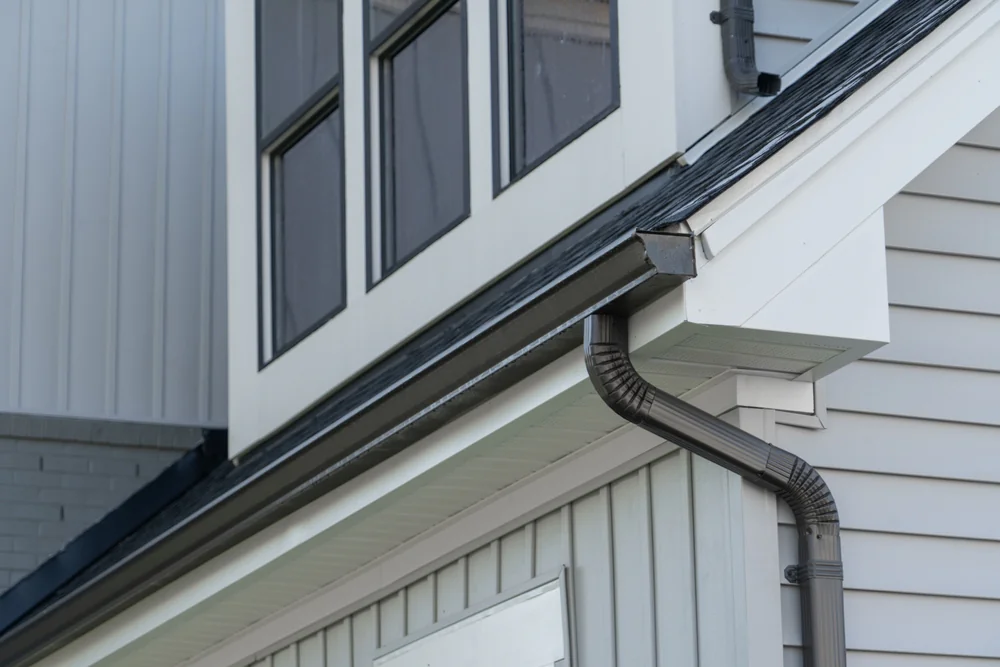
First, we come out to measure your roofline and assess what you’re dealing with. We’re looking at pitch, fascia condition, downspout placement, and where water needs to drain. This isn’t a quick glance—it’s a proper evaluation.
Once you approve the estimate, we schedule your installation. Our crew arrives with everything needed, including the equipment to fabricate your seamless gutters right in your driveway. We’re cutting aluminum to your home’s exact specifications, ensuring perfect fit along every edge.
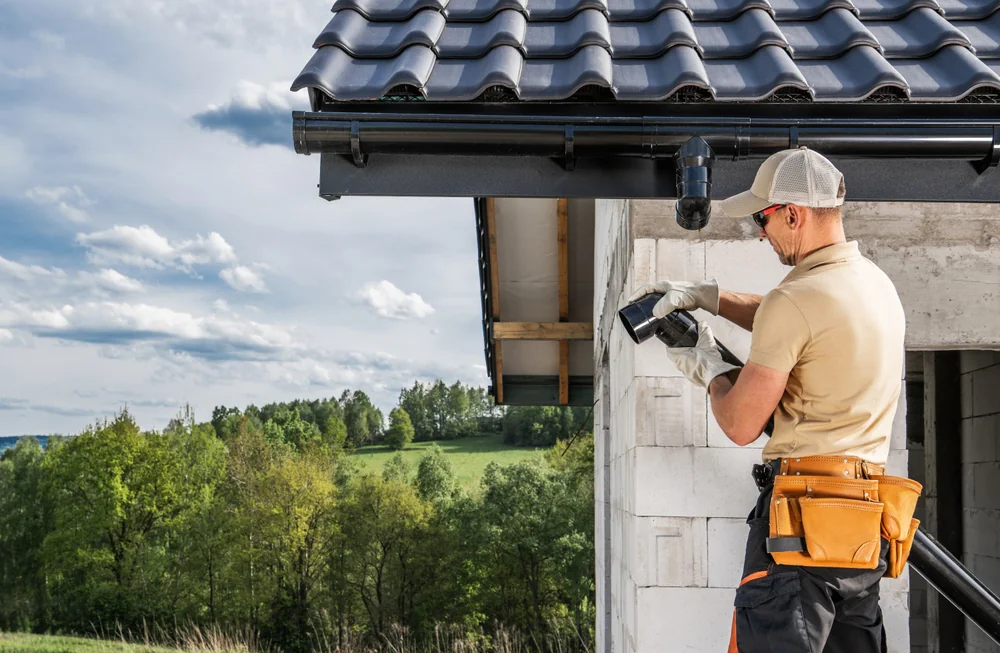
Installation starts with removing your old gutters if you have them. We inspect the fascia for any rot or damage—if there’s an issue, you’ll know before we hang new gutters over a problem. Then we install the internal hanging system that secures your gutters properly, followed by the seamless gutter sections and downspouts.
We test water flow, make sure everything drains correctly, and verify that your new system is ready for whatever weather comes next. Before we leave, we haul away your old gutters and clean up completely. Most jobs finish in one day, and you’re covered by our no-leak guarantee.
Ready to get started?
You’re getting heavy-gauge aluminum gutters, not the thin material that dents when a ladder leans against it. These are built to handle New Hampshire’s freeze-thaw cycles, heavy snow loads, and the occasional falling branch without buckling.
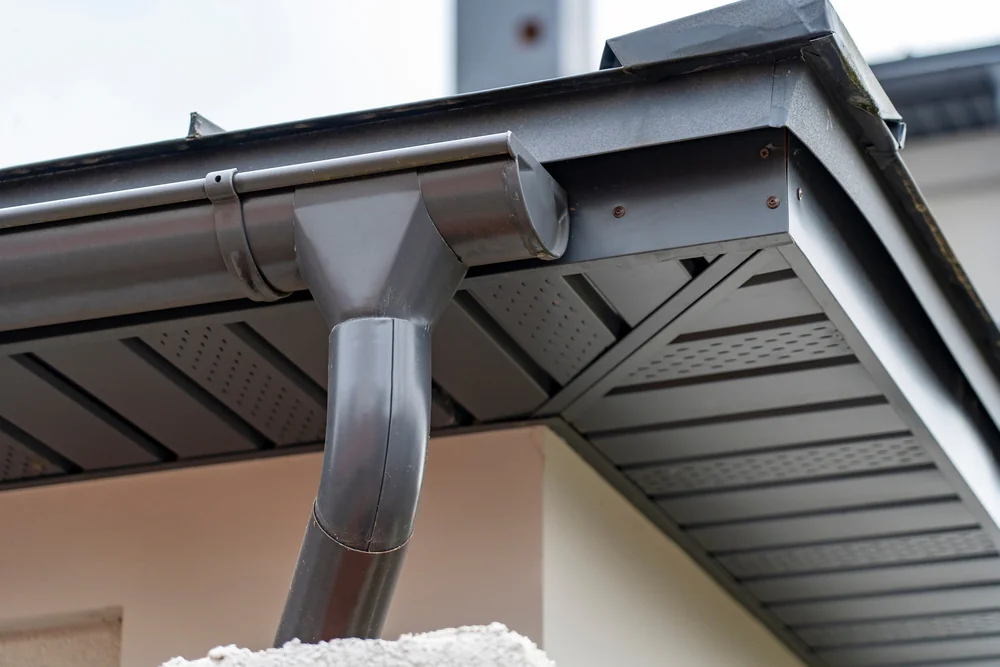
Seamless construction means your gutters are fabricated as single continuous pieces for each roofline section. The only joints are at corners and downspouts—everywhere else, it’s one solid piece of formed aluminum. This matters in Stratham, where ice dams are a real threat and any seam becomes a potential failure point when temperatures swing from 15 degrees to 45 degrees in a day.
We include properly sized downspouts positioned to move water away from your foundation. In areas with higher soil moisture—common around here—foundation protection isn’t optional. We’re making sure runoff goes where it should, not into your basement or under your slab.
Gutter guard installation is available if you’re tired of cleaning leaves and pine needles three times a year. The guards we install reduce debris accumulation significantly and help prevent ice buildup in winter. For homes surrounded by trees, this upgrade pays for itself in eliminated maintenance.
You’re also getting a lifetime labor warranty. If something fails because of how we installed it, we’re coming back to fix it. No charge.
Gutter installation in New Hampshire typically runs between $5 and $11 per linear foot, depending on your home’s specifics. Most Stratham homes need 150 to 200 linear feet of guttering, putting total costs somewhere between $900 and $2,200 for a complete system.
That range accounts for variables like roof height, number of corners, downspout placement, and fascia condition. A single-story ranch costs less than a two-story colonial with multiple roof valleys. Homes that need fascia repair before installation will see higher totals.
We provide free estimates with exact pricing based on your home’s measurements. You’ll know the full cost before any work starts—no surprises, no “unforeseen circumstances” that magically appear halfway through the job. The estimate includes materials, labor, removal of old gutters, and complete cleanup.
Properly installed seamless aluminum gutters last 20 to 30 years in New Hampshire’s climate. That lifespan assumes correct installation, appropriate pitch for drainage, and basic maintenance like occasional cleaning.
The seamless design is what extends longevity here. Traditional sectional gutters fail at the seams—joints separate when ice expands, screws work loose during freeze-thaw cycles, and sealant breaks down after a few harsh winters. You’re looking at repairs every few years with sectional systems.
Seamless gutters eliminate those failure points. The aluminum we use resists corrosion, handles temperature swings without becoming brittle, and maintains its shape under snow loads that would bend lighter materials. Homes where we installed gutters 15 years ago are still running the same systems without issues.
Your actual lifespan depends partly on maintenance. Gutters that never get cleaned will eventually fail from standing water and debris weight. But compared to sectional gutters that need attention every 10 to 15 years, seamless systems are the clear choice for durability.
If your property has mature trees—especially oaks, maples, or pines—gutter guards will save you significant time and reduce risk. Stratham’s tree coverage means most homes deal with heavy leaf fall in autumn and pine needles year-round.
Without guards, you’re cleaning gutters at least twice a year, possibly three or four times if you’re surrounded by trees. That’s ladder work, which sends thousands of homeowners to emergency rooms annually. Beyond the safety issue, clogged gutters cause ice dams in winter when trapped water freezes and expands.
Quality gutter guards block leaves and large debris while allowing water to flow through. They’re not maintenance-free—you’ll still need occasional cleaning—but you’re looking at every few years instead of multiple times annually. For two-story homes where gutter access requires extension ladders, guards make even more sense.
The upfront cost adds roughly 30% to 50% to your gutter installation, but most homeowners in tree-heavy areas consider it worthwhile. We install guards that actually work, not the cheap mesh that clogs with pollen or the solid covers that overshoot in heavy rain.
Seamless gutters are fabricated on-site as continuous pieces cut to your exact roofline measurements. Regular sectional gutters come in pre-cut 10-foot lengths that get joined together with connectors and sealed at the seams.
The difference shows up in performance. Every seam in a sectional gutter system is a potential leak point. Sealant degrades, screws loosen, and sections separate—especially during New Hampshire winters when ice expansion puts stress on every joint. You’ll spend time and money on repairs.
Seamless gutters only have joints at inside and outside corners and at downspout connections. Everything else is one continuous piece of formed aluminum. Fewer joints means fewer leaks, less maintenance, and better performance when ice and snow are involved.
There’s also an appearance difference. Seamless gutters look cleaner because you’re not seeing connector seams every 10 feet along your roofline. For homes where curb appeal matters—which in Stratham’s market is most of them—the streamlined look is noticeably better.
Cost is slightly higher for seamless installation because it requires specialized equipment and on-site fabrication. But the difference is minor compared to what you save in avoided repairs and longer system life.
Properly installed gutters have consistent pitch toward downspouts—usually about a quarter inch of slope per 10 feet of gutter. You shouldn’t see standing water after rain. If puddles sit in your gutters hours after a storm, the pitch is wrong.
Check how gutters attach to your fascia. Quality installation uses an internal hanging system with brackets spaced every 24 inches or less. Gutters that sag between attachment points or pull away from the fascia aren’t secured properly. This matters in New Hampshire where snow and ice loads test every attachment point.
Downspouts should extend at least 4 to 6 feet from your foundation, directing water away from the structure. Downspouts that dump right at the foundation line defeat the entire purpose of the gutter system. You want water moving away from your home, not pooling next to your basement walls.
Look at the seams and corners. Even on seamless systems, corner joints should be clean, sealed, and secure. You shouldn’t see gaps, separated sections, or sealant oozing out. Professional installation means tight joints that don’t leak.
Finally, test the system. Run water through with a hose and watch how it flows. Water should move smoothly toward downspouts without overflowing or backing up. If you see problems during testing, you’ll definitely see problems during the first real rainstorm.
Gutter installation is possible during New Hampshire winters, but there are limitations. We can work in cold temperatures as long as conditions are safe—no ice on the roof, no active snowfall, and temperatures above 20 degrees.
The bigger issue is your roof and fascia condition. We need to assess the fascia for rot or damage before installing gutters, and that’s difficult when everything’s covered in snow and ice. If repairs are needed, some materials don’t install properly in freezing temperatures.
Most homeowners schedule gutter installation in spring, summer, or fall when weather cooperates and we can complete the job efficiently. That said, if you’re dealing with gutter failure that’s causing active damage—water pouring into your basement, ice dams forming, foundation issues—we’ll work with you to find a solution even in winter.
The ideal timing is late spring or early fall. You’re past the worst winter weather, but you’re getting the system in place before the next heavy season hits. Spring installation means your gutters are ready for summer storms. Fall installation means you’re protected before snow and ice arrive.
If you’re planning installation, don’t wait until you’re in crisis mode. Schedule during reasonable weather, and you’ll get better results, faster completion, and fewer complications. Emergency winter installations are possible, but they’re not ideal for anyone involved.