Hear from Our Customers

You stop worrying every time the temperature drops below freezing. No more wondering if moisture is getting behind cracked panels or if that last storm created new damage you haven’t found yet.
Your heating bills drop because the exterior envelope actually insulates instead of letting cold air seep through gaps and worn-out material. You’re not cranking the thermostat to compensate for drafts anymore.
The house looks updated without that faded, weathered appearance that screams “deferred maintenance.” If you’re planning to sell in the next few years, quality siding pays back up to 68% of the investment according to recent remodeling cost-versus-value data. If you’re staying put, you get decades of protection without scraping, painting, or patching every few seasons.
We hold Elite Preferred status with James Hardie, which means we’ve met their installation standards, completed their training requirements, and proven our experience with actual project invoices. That’s not something they hand out freely.
We’re licensed in Massachusetts and serve Stratham and the surrounding New Hampshire Seacoast because the climate here demands contractors who understand what happens when humidity hits fiber cement in July and what freeze-thaw cycles do to improperly installed vinyl in January. We’ve seen what shortcuts look like five years later, and we don’t take them.
Our focus stays on getting the install right so the material performs how it’s supposed to. That means proper house wrapping in Stratham, NH, correct fastening schedules, and paying attention to flashing details that prevent water intrusion down the road.
We start with an on-site evaluation of your existing siding and sheathing. You’ll know upfront if there’s rot, water damage, or structural issues that need addressing before new material goes up. No surprises halfway through the job.
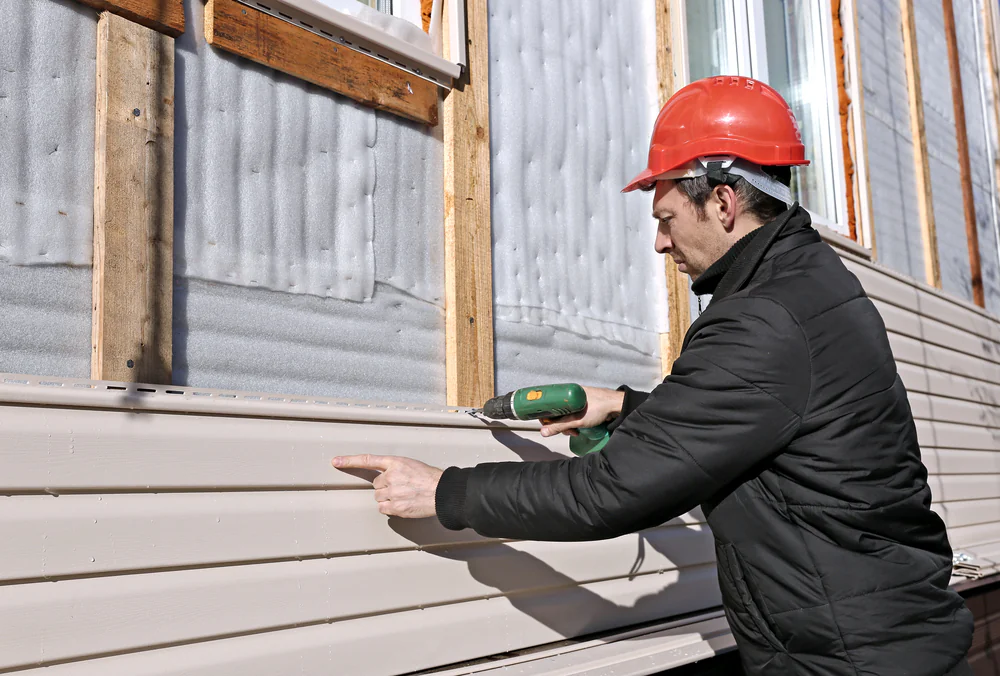
Once we agree on material—whether that’s vinyl siding installation in Stratham, NH or fiber cement—we pull permits and order everything so it’s on-site when the crew arrives. We remove old siding carefully to protect your windows, trim, and landscaping.
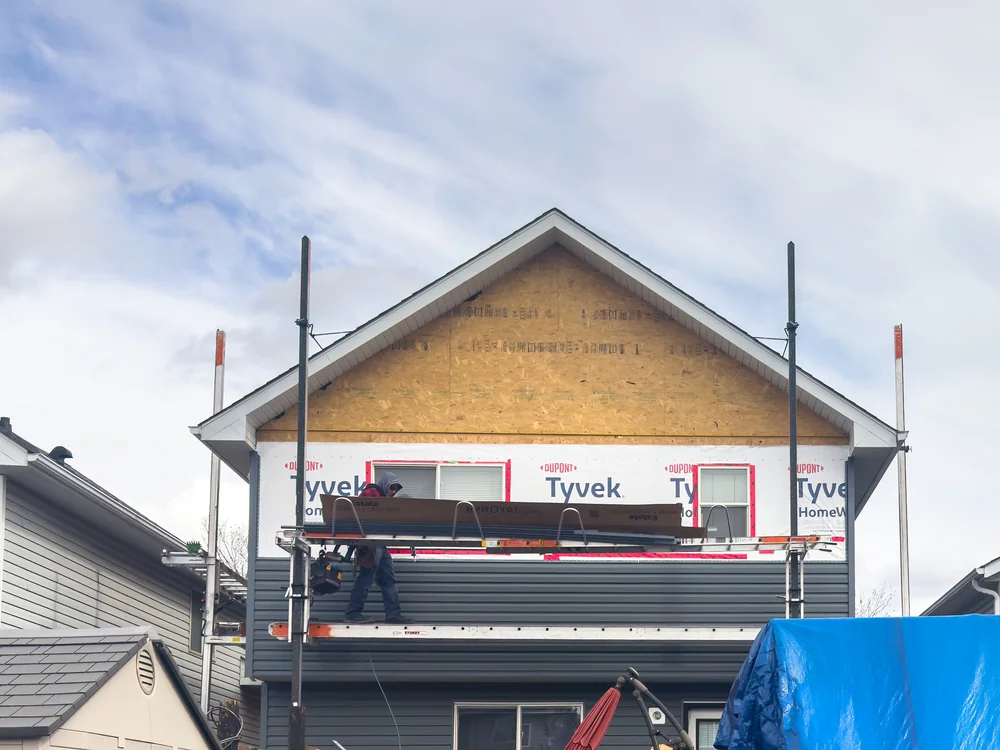
House wrapping goes up next as a weather-resistant barrier. This step matters more than most people realize because it’s your primary defense against moisture getting into the wall cavity. Then we install the siding according to manufacturer specs, not shortcuts that save us time but cost you performance.
Cleanup happens daily, and a final walkthrough ensures you’re clear on warranty coverage and maintenance requirements. You get documentation for the product warranty and our workmanship guarantee before we consider the job complete.
Ready to get started?
Fiber cement siding cost in Stratham, NH runs higher than vinyl upfront, but you’re looking at 30 to 50 years of performance versus 20 to 40 with vinyl. James Hardie installers in Stratham, NH who are properly certified install material that’s engineered specifically for New England’s climate through their HardieZone system.
That means the product accounts for humidity levels, temperature swings, and precipitation patterns we actually experience here. It won’t warp in summer heat or crack when January temperatures drop into the single digits. The ColorPlus finish holds up without the fading you see with standard vinyl after a few coastal summers.
Vinyl remains a solid choice if your priority is lower upfront cost and you’re okay with a shorter lifespan. Insulated vinyl has grown in popularity because it addresses the thermal performance gap, cutting heat loss where it typically escapes at the studs. Both options beat wood for maintenance requirements.
Stratham homes face salt air, heavy snow loads, and rapid weather changes that move from 70 degrees to freezing in the same week during spring and fall. Your siding needs to handle that without failing, and the material choice plus installation quality determine whether it does.
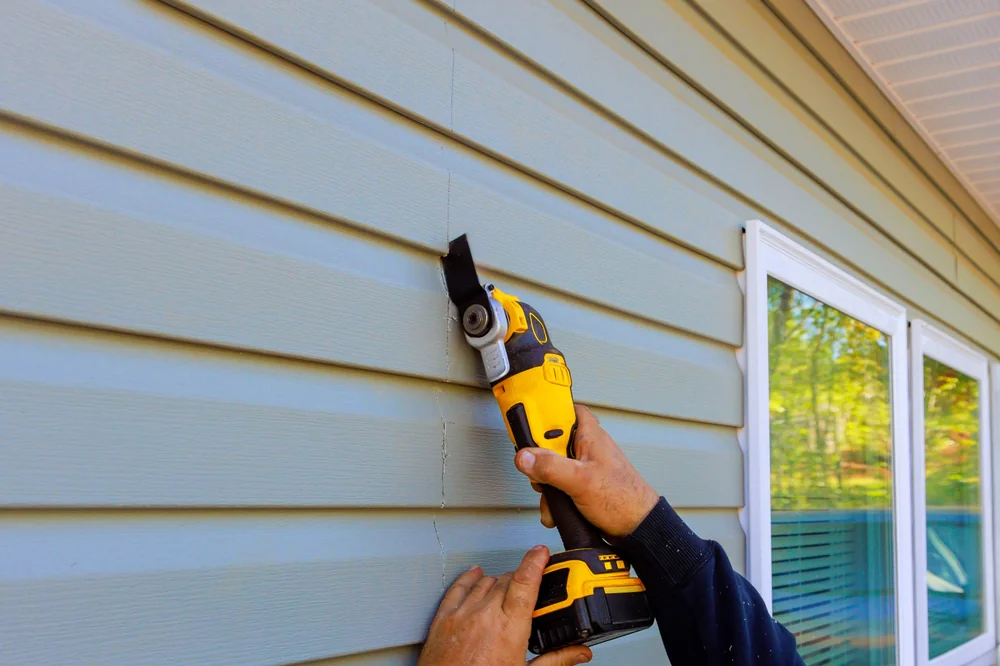
Most single-family homes in Stratham take between five and ten days for complete siding installation, depending on size, material choice, and how much trim work is involved. A straightforward ranch with minimal architectural detail moves faster than a two-story colonial with multiple gables, bay windows, and decorative trim.
Weather delays happen, especially during spring when rain comes through unpredictably. We don’t install siding in wet conditions because moisture trapped behind new material causes problems you won’t see until it’s too late. If we’re mid-project and rain’s forecasted, we make sure everything is weathertight before we leave the site.
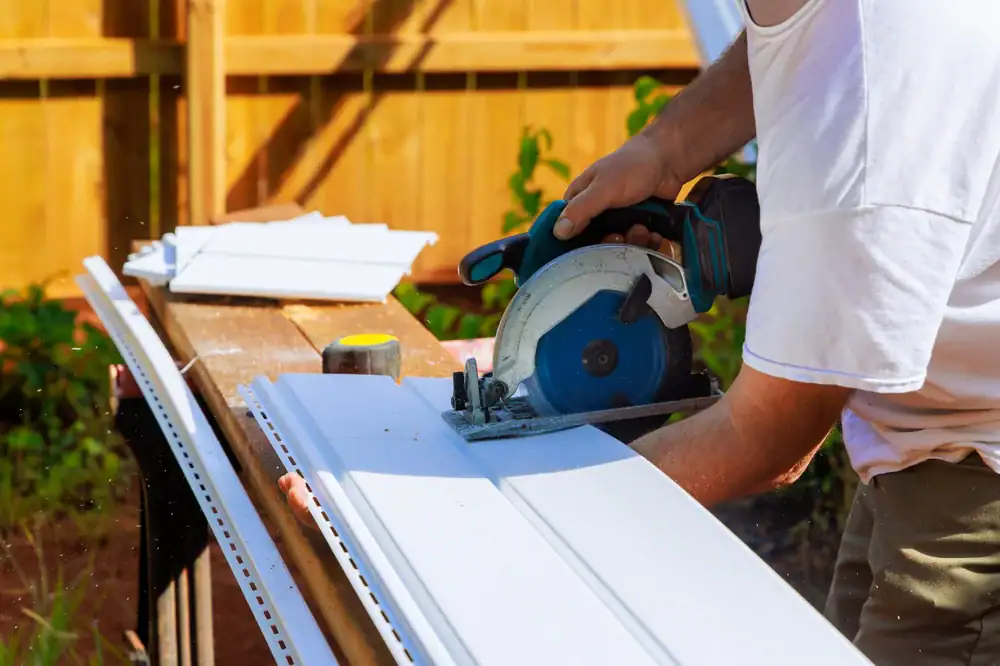
Fiber cement takes slightly longer than vinyl because it requires more precise cutting and fastening. But we’re talking about a difference of a day or two on an average project, not weeks. The timeline we give you during the estimate accounts for the actual scope of your specific house, not a generic average.
Vinyl expands and contracts more noticeably with temperature changes, which is why proper installation with correct fastening matters so much. If it’s nailed too tight, it can’t move and you get buckling. If it’s too loose, you get rattling and potential wind damage. It’s lighter, easier to work with, and costs less, but it can crack in extreme cold and fade faster in direct sun.
Fiber cement stays dimensionally stable through temperature swings. It’s heavier, more impact-resistant, and holds paint or factory finish longer without noticeable fading. James Hardie’s product comes with a 30-year material warranty and 15-year finish warranty, which tells you something about expected performance.
Both handle moisture well if installed correctly with proper flashing and drainage. The difference shows up in longevity and maintenance. Vinyl might need replacement in 20 to 25 years in our climate. Fiber cement often lasts 40 to 50 years. Your budget and how long you plan to stay in the house usually determine which makes more sense.
If your existing house wrap is torn, deteriorated, or wasn’t installed properly in the first place, yes. We evaluate it when we remove the old siding. Sometimes it’s in acceptable condition and we can work with it. Often, especially on homes built before modern building science caught up, it’s either absent or ineffective.
House wrapping in Stratham, NH serves as your weather-resistant barrier and drainage plane. It sheds water that gets behind the siding and allows the wall assembly to dry if moisture does get in. Without it, or with damaged wrap, you’re inviting rot and mold into your sheathing and framing.
New construction codes require it for good reason, and we recommend it even when it’s technically optional on a re-side. The cost is minimal compared to the protection it provides, and it’s far cheaper to install it now than to deal with structural repairs five years from now because water found its way into the wall cavity.
Vinyl siding installation in Stratham, NH typically runs between $8,000 and $15,000 for an average-sized home, depending on product grade and project complexity. That includes removal of old siding, house wrap, trim, and installation. Insulated vinyl adds roughly 20% to 30% to that cost but improves thermal performance noticeably.
Fiber cement siding cost in Stratham, NH ranges from $15,000 to $28,000 for the same scope because the material costs more and installation is more labor-intensive. You’re paying for longer lifespan and better durability. When you factor in that it lasts twice as long as vinyl, the annual cost evens out.
Wood siding runs similar to fiber cement but requires ongoing maintenance—painting or staining every five to seven years. That maintenance cost adds up over the life of the product. Engineered wood falls somewhere between vinyl and fiber cement on price but doesn’t hold up as well in high-moisture climates like ours. These are ballpark ranges. Your actual cost depends on your specific house, material selection, and current condition of the underlying structure.
We find it during tear-off and let you know immediately. Rot usually shows up around windows, doors, and anywhere flashing was missing or installed incorrectly. Sometimes it’s isolated to a few boards. Sometimes it’s more extensive if water’s been getting in for years.
You have to fix it before new siding goes up. There’s no way around that. Installing over rotted sheathing or framing just hides the problem temporarily and makes it worse. We can handle the repairs as part of the project—replace damaged sheathing, sister in new framing if needed, and make sure everything is solid before we proceed.
The cost depends on how much damage we find. Minor repairs might add a few hundred dollars. Extensive rot can add a couple thousand. We give you a clear assessment and price before moving forward so you can decide how to proceed. Most homeowners appreciate finding out now rather than discovering it during the next project or, worse, during a home inspection when they’re trying to sell.
If you’re choosing fiber cement, using certified James Hardie installers in Stratham, NH protects your warranty and ensures the product performs as designed. James Hardie’s warranties require installation by trained contractors who follow their specifications. If someone who isn’t certified installs it and something fails, you’re on your own.
The certification means we’ve completed their installation training and proven our experience with their product line. It’s not a weekend seminar—it covers fastening schedules, flashing details, proper clearances, and climate-specific requirements through their HardieZone system. Stratham falls into a specific zone with installation requirements that account for our freeze-thaw cycles and humidity.
The premium you pay for certified installation is smaller than most people assume, often just a few percentage points over a general contractor who hasn’t been through the training. But the difference in long-term performance and warranty protection is significant. You’re making a 30- to 50-year investment. Having it installed correctly the first time matters more than saving a few hundred dollars upfront.