Hear from Our Customers

You stop worrying about what’s happening behind the paint. When your siding is doing its job, moisture stays outside where it belongs. Your heating bills drop because air isn’t leaking through cracks and gaps that developed over years of freeze-thaw cycles.
The maintenance cycle ends. No more scraping, priming, and repainting every few years only to discover rot underneath. Modern vinyl siding installation in Auburn, NH or fiber cement siding options resist the weather that destroys wood—the ice, the humidity, the temperature swings that make New Hampshire tough on homes.
Your home looks updated, sure. But more importantly, it’s protected. The right siding installation creates a barrier that handles what Auburn’s climate throws at it—heavy snow, summer storms, and everything between. You’re not just covering up problems. You’re solving them.
We work throughout Auburn, NH as an Owens Corning Preferred Contractor and James Hardie Elite Preferred installer. That’s not marketing language—it means we meet manufacturer standards that most contractors don’t qualify for.
We’ve seen what happens when siding fails in this climate. The rot that spreads when moisture gets behind inadequate house wrapping. The energy waste from poor installation. The callbacks from contractors who didn’t understand how New England weather works.
Auburn homeowners are dealing with a median home value around $759,000. That’s not a market where you cut corners on exterior protection. We install siding that matches the investment you’ve made in your property.
We start with an assessment of what’s actually happening with your current siding. Not just what it looks like, but whether moisture is getting in, where your insulation is failing, and what needs to be addressed before new material goes up.
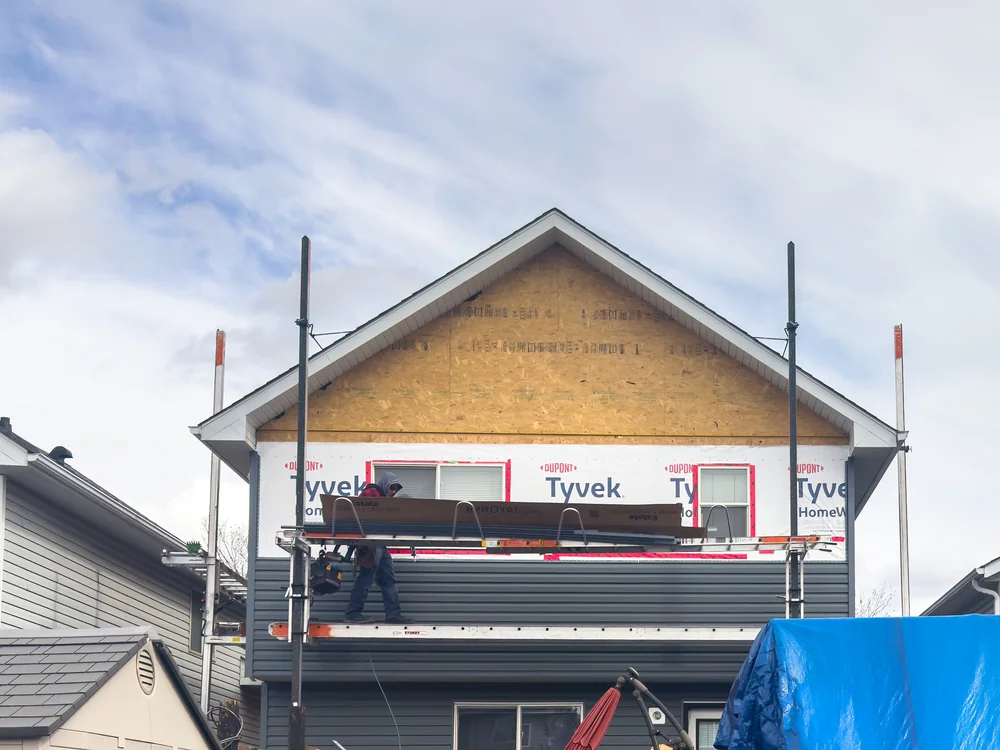
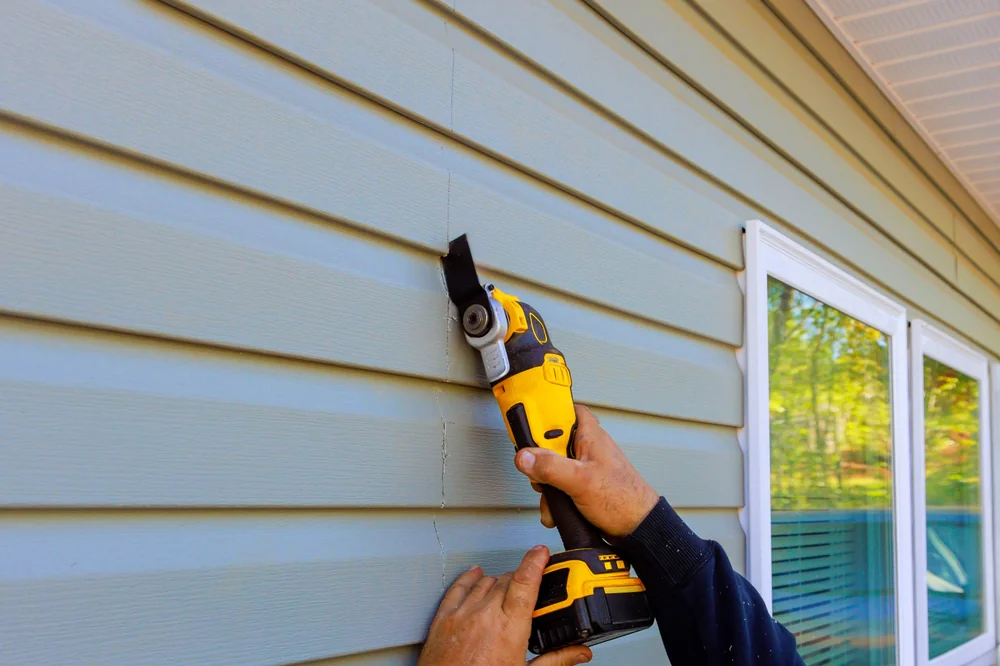
The old siding comes off carefully. We’re looking at your sheathing and structure to catch problems before they’re covered up. Proper house wrapping goes on—this is where most energy efficiency actually comes from. It’s the weather barrier that keeps wind and moisture out while letting your walls breathe.
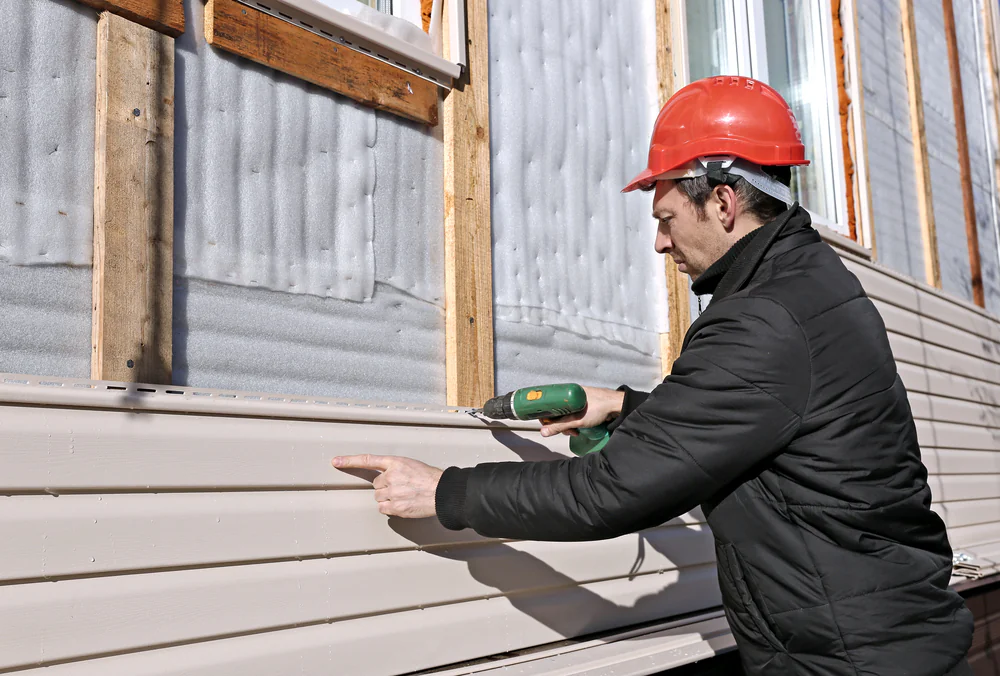
Then the new siding installation happens with attention to expansion gaps, proper fastening, and correct overlap. These details matter in Auburn, NH because temperature swings are significant. Materials expand and contract. If it’s installed wrong, you’ll see buckling or gaps within a year.
We clean up completely. The job site looks like we were never there, except your home now has siding that’ll handle the next fifteen years without the maintenance headaches you’ve been dealing with.
Ready to get started?
You get options that make sense for Auburn’s climate. Vinyl siding installation offers low maintenance and variety—it’s what most homeowners choose when they want to stop painting. Fiber cement siding, particularly James Hardie, gives you the look of wood with none of the rot problems. It’s why we’re certified James Hardie installers in Auburn, NH.
The installation includes proper house wrapping and moisture barriers. This isn’t optional. New Hampshire’s freeze-thaw cycles will find every weakness in your building envelope. We seal it right the first time.
You’re getting a 30-year warranty on James Hardie products with 15-year finish coverage, or lifetime warranties on quality vinyl products. But more than that, you’re getting installation from contractors who’ve been doing this since 2012 and understand what fails in this area. We’ve seen the mistakes other contractors make. We don’t repeat them.
Auburn homeowners are investing in properties that sell for $759,400 on average. Your siding installation should reflect that value—not with premium pricing, but with work that actually protects what you’ve built.
Fiber cement siding runs $6-12 per square foot installed in Auburn, NH, while vinyl siding installation typically costs $4-8 per square foot. For an average Auburn home, you’re looking at $18,000-28,000 for fiber cement versus $13,000-20,000 for quality vinyl.
The difference isn’t just upfront cost. Fiber cement, especially James Hardie, can save you around $5,000 over 15 years because it holds paint longer—you’re looking at 15-year paint cycles instead of 5-7 years with wood. Some insurance companies offer up to 14% lower premiums for fiber cement because it’s non-combustible.
Vinyl costs less and needs zero painting, ever. It’s the practical choice if you want to eliminate maintenance. Fiber cement is the choice if you want the look of wood siding without the rot problems. Both handle Auburn’s weather better than wood. The right answer depends on your budget and how long you plan to stay in the home.
The biggest benefit is stopping moisture intrusion before it causes structural damage. Old or failing siding lets water behind your walls where it rots sheathing, ruins insulation, and creates mold. New siding installation in Auburn, NH with proper house wrapping creates a weather barrier that keeps your walls dry.
Energy efficiency improves noticeably. Gaps and cracks in old siding let conditioned air escape. Homeowners typically see heating and cooling costs drop after installation because their HVAC system isn’t working against air leaks. Insulated siding options add R-value that makes an even bigger difference.
Maintenance ends. You’re done scraping and painting. Modern materials resist the pests, rot, and weather damage that made old wood siding a constant project. Your weekends are yours again. Property value holds better too—homes with updated, low-maintenance exteriors sell faster and for more in Auburn’s competitive market.
If your home was built before 2000 or you’re seeing moisture problems inside, your house wrapping probably isn’t doing its job. Older homes often have tar paper or inadequate weather barriers that break down over time. When we remove old siding, we frequently find deteriorated or improperly installed wrapping.
Signs you need new house wrapping include paint or wallpaper bubbling on interior walls, musty smells, higher than normal energy bills, or visible water stains on interior walls. These indicate moisture is getting past your exterior barrier. In Auburn, NH, where freeze-thaw cycles are harsh, compromised house wrapping leads to serious problems fast.
Any siding installation should include inspection and replacement of house wrapping. It’s the actual weather barrier—the siding is just the first line of defense. Proper installation means overlapping seams correctly, sealing around windows and doors, and using materials rated for New England climate. Skipping this step to save money costs more when moisture damage shows up later.
James Hardie owns about 90% of the fiber cement market because their product is engineered specifically for climate zones. Their ColorPlus finish is baked on in a controlled environment, not painted on-site, which means it lasts significantly longer. You’re looking at 15-year finish warranties versus 5-7 years for field-painted fiber cement.
The product itself resists cracking and damage better than alternatives. As James Hardie installers in Auburn, NH, we use their proprietary installation methods that account for expansion and contraction in New England’s temperature swings. Other fiber cement products can crack or show fastener problems if installed incorrectly.
As an Elite Preferred contractor, we’ve installed enough James Hardie to see how it performs long-term. It delivers the best ROI of any remodeling project according to industry data. Insurance companies recognize it too—many offer premium discounts because it’s non-combustible and highly durable. Other fiber cement brands work, but James Hardie has the track record and warranty backing that matters when you’re investing $20,000-plus in your home’s exterior.
Most siding installations in Auburn, NH take 5-10 days depending on home size and complexity. A straightforward ranch might be done in a week. A two-story colonial with detailed trim work and multiple dormers takes closer to two weeks. Weather delays happen—we don’t install in rain or when temperatures drop too low for proper material handling.
The timeline includes removal of old siding, inspection and repair of any sheathing issues, installation of house wrapping, and then the new siding installation itself. Trim work, corner posts, and finish details take time if they’re done right. Rushing this part is where you see gaps and poor-fitting joints that cause problems later.
We’ll give you a specific timeline during the estimate based on your home’s specifics. Most homeowners are surprised the job moves faster than expected because we’re on-site consistently once we start. You’re not waiting days between phases. The crew shows up, does the work properly, and moves through the project without dragging it out.
Fiber cement and quality vinyl both handle New Hampshire winters well, but for different reasons. Fiber cement doesn’t absorb moisture, so freeze-thaw cycles can’t damage it the way they destroy wood. It won’t crack, rot, or warp. James Hardie is specifically engineered for cold climates with products rated for our temperature extremes.
Vinyl siding installation works in Auburn, NH because modern vinyl is formulated to stay flexible in cold temperatures. Cheap vinyl gets brittle and cracks. Quality vinyl from manufacturers like Owens Corning remains impact-resistant even when it’s below zero. It expands and contracts with temperature changes, which is why proper installation with correct fastening and expansion gaps matters.
Wood siding fails in New Hampshire winters. Moisture gets in, freezes, expands, and cracks the wood. Then rot starts. Metal siding dents and shows every impact. For Auburn’s climate—heavy snow loads, ice, significant temperature swings, and high humidity—fiber cement or quality vinyl are the only choices that make sense long-term. Both will outlast wood by decades with a fraction of the maintenance.