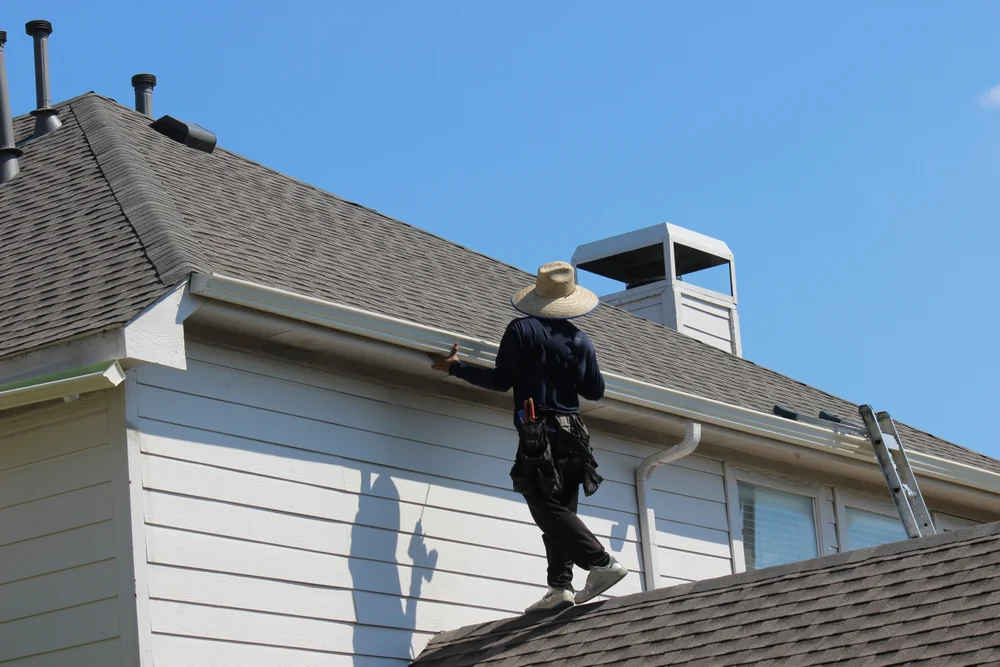
Your gutters do more than catch rainwater—they're your home's first defense against foundation damage and basement flooding.
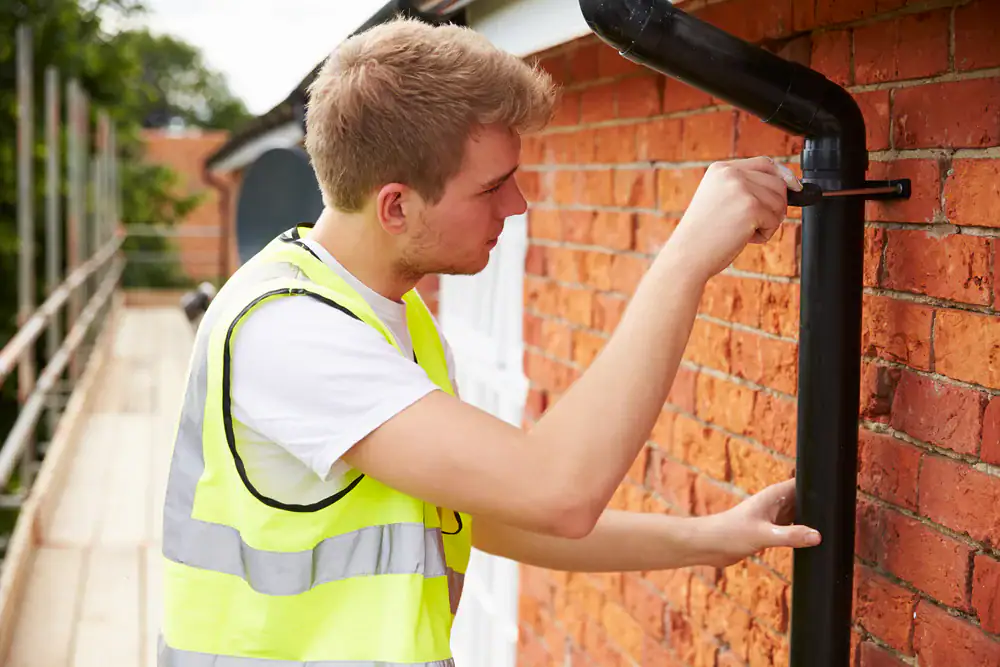
Your gutters have one job: move water away from your house. It’s a simple task, yet many systems fail with the dramatic flair of a Shakespearean actor. When they quit, that water doesn’t just disappear; it finds a new home in your foundation, your flower beds, or your finished basement—basically anywhere it can do the most damage to your resale value.
Clogged gutters are the undisputed heavyweight champions of failure. Leaves, twigs, and the occasional brave tennis ball pile up to create a miniature beaver dam on your roofline. Instead of a smooth exit, the water does a graceful swan dive over the edge, turning your meticulously manicured mulch into a muddy moat that would make a medieval castle jealous.
In Massachusetts and New Hampshire, we aren’t just dealing with “a little rain”; we’re dealing with nearly 50 inches of liquid and 50 inches of frozen misery every year. That is an astronomical amount of weight for a few aluminum brackets to hold. If you miss a cleaning, you aren’t just risking a wet lawn; you’re inviting structural issues that can cost more than a mid-sized sedan to fix.
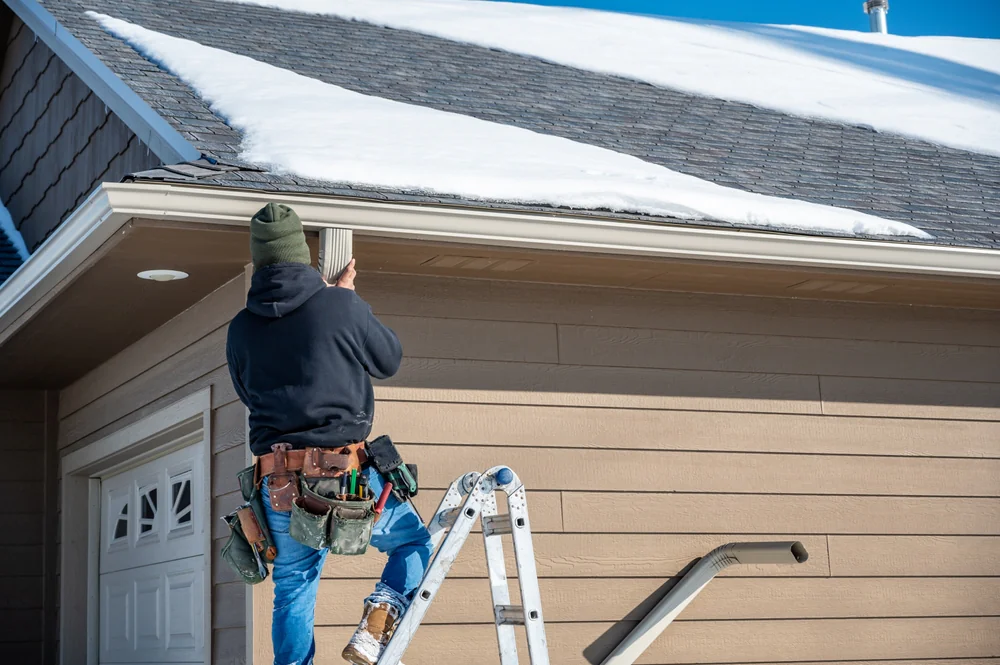
Here’s the physics lesson nobody asked for but everyone needs: when your gutters fail, water dumps right next to your foundation like it’s trying to dig a hole to China. This turns the soil around your home into a giant, heavy sponge. That sponge then applies “hydrostatic pressure,” which is just a fancy way of saying the water is trying to bully its way through your basement walls.
The water is persistent; it finds every hairline crack, every tiny gap, and every “oops” the builder made thirty years ago. First comes the dampness, then the mildew, and eventually, your basement becomes an unintentional indoor pool. Unless you were planning on starting a koi pond in your laundry room, this is generally considered a “bad thing.”
The most annoying part is that this is entirely preventable. A properly installed system directs water at least 10 feet away, guaranteeing your basement stays as dry as a boring textbook. Most homeowners wait until they need a life raft to check their downspouts, but by then, you’re paying for mold remediation on top of the gutter work—a “two-for-one” special that nobody wants.
Your foundation was designed to hold up your house, not to go for a swim. When water pools at the base because your gutters are on an unannounced vacation, the soil expands and starts pushing. This isn’t a gentle nudge; it’s a slow-motion car crash that ends with your foundation walls bowing or cracking under the pressure.
You might ignore the tiny cracks at first, but your home is a tattle-tale. Eventually, doors start sticking, windows refuse to open, and cracks appear in your drywall like an unwanted spiderweb. These aren’t “house charms”; they are signs that your foundation is literally moving. If you’ve ever seen a quote for foundation piering, you know it’s enough to make a grown homeowner weep.
Foundation repairs in New England can easily run $10,000 to $30,000, which is a lot of money to spend on something you can’t even see from the curb. Compare that to a $4,000 gutter job, and the math becomes so obvious even a toddler could figure it out. Plus, the freeze-thaw cycles in Essex and Middlesex counties turn that water into ice, which expands with enough force to make those cracks even wider.
Want live answers?
Connect with a Paradise Remodeling Inc. expert for fast, friendly support.
If you head to a big-box store, you’ll see “sectional” gutters that look like a fun DIY weekend project. They’re the “Lego” version of home repair—they snap together, and you feel like a hero for about twenty minutes. The problem is that every single snap-point is a future leak waiting for its moment to shine, and in New England, that moment usually happens during a blizzard.
Sectional gutters have seams every 10 feet, and those seams are basically magnets for debris. A single twig gets caught on a joint, starts a collection of leaves, and suddenly you have a clog in a place you can’t even reach with a ladder. In a climate where the weather changes faster than a teenager’s mood, those weak points are the first things to fail when the ice gets heavy.
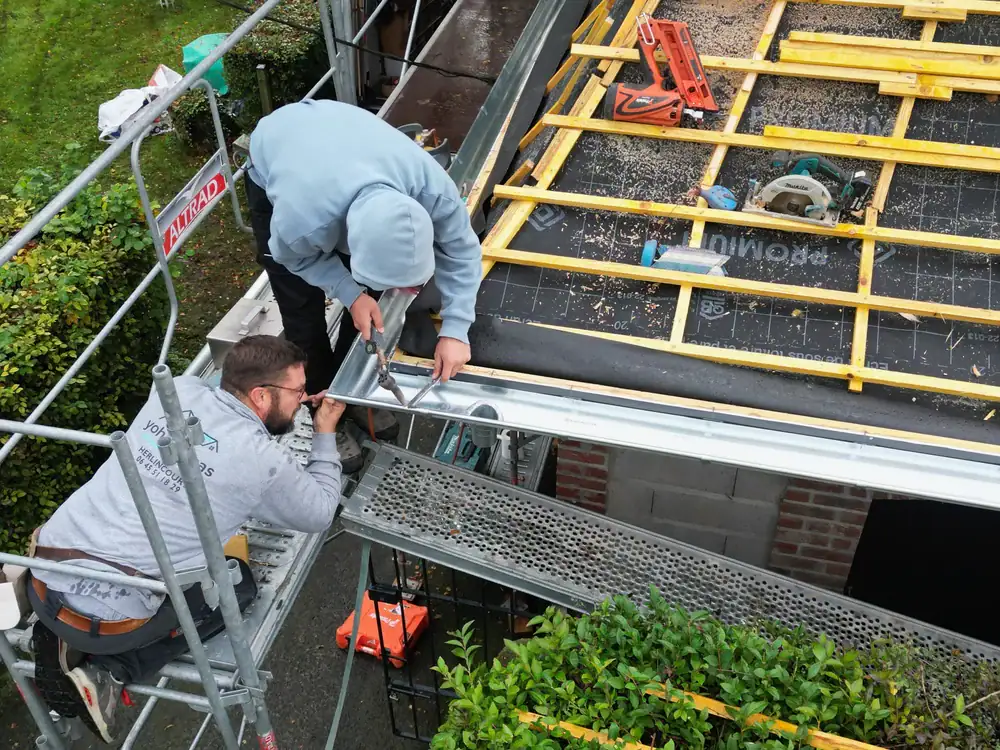
Seamless gutters, on the other hand, are the “custom-tailored suit” of the roofing world. We bring a machine to your driveway and extrude one continuous piece of aluminum that fits your house perfectly. No seams, no leaks, and no weekend-long battles with tubes of sealant that inevitably ends up in your hair. It’s a “one and done” solution for people who actually value their free time.
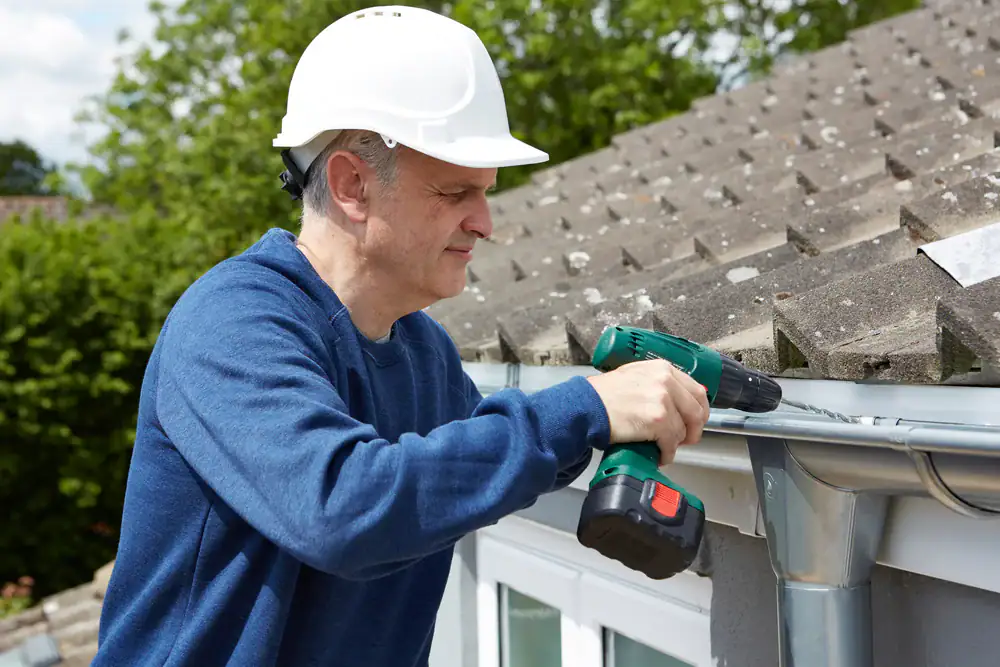
The secret to longevity is avoiding joints. Sectional gutters rely on “hope and caulk” at every connection. Over time, New England’s temperature swings make that metal expand and contract until the sealant gives up and goes home. Once the seal is broken, you have a leak that dumps hundreds of gallons of water directly onto your siding—which is a great way to start a rot problem.
Seamless gutters eliminate those 10-foot weak points entirely. You still have corners and downspouts, of course, but the long straightaways are one solid piece of metal. It’s much harder for a continuous piece of aluminum to fail than a series of segments held together by a prayer and some hardware store glue.
Because there are no ridges or seams on the inside, water and debris move through a seamless system like it’s on a waterslide. You’ll still need to clean them occasionally—unless you’re a fan of growing a vertical garden—but the maintenance is significantly less soul-crushing. It’s an investment that pays you back in fewer Saturday mornings spent on a ladder.
Let’s talk turkey: most homeowners in MA and NH are looking at a bill between $3,000 and $5,000 for a standard home. That might seem steep until you realize that you’re paying for a custom-manufactured product and someone else to risk their neck on a two-story ladder. Aluminum is the crowd favorite because it doesn’t rust and comes in more colors than a box of crayons.
The price isn’t just for the metal; it’s for the “art” of the pitch. If your gutters aren’t sloped at exactly the right angle, they’re just expensive birdbaths. A pro makes sure that the water moves toward the downspouts with the efficiency of a commute at 3 AM, rather than pooling in the middle and weighing down your roofline like a wet noodle.
Some bargain-bin contractors will try to save money by using fewer hangers or skipping the drip edge. They’ll give you a “great deal” that sags the first time it snows, leaving you with a twisted mess and no warranty. When you pay for a professional gutter installation, you’re paying for the assurance that your gutters won’t end up on the lawn after the first “nor’easter” of the season.
At the end of the day, your gutters are the unglamorous bodyguards of your foundation. They don’t look as cool as a new kitchen or a fancy deck, but they are the only thing standing between your basement and a very expensive swimming lesson. Investing in a quality, seamless system is the most “adult” decision you can make for your home’s longevity.
To recap the “CliffNotes”: go seamless to avoid leaks, trust a pro to get the pitch right, and don’t wait for a flood to realize your drainage is a disaster. It’s much cheaper to manage the water on your roof than it is to manage the water in your basement. Your future self—and your dry socks—will thank you for taking action now.
We’ve been armoring homes across Essex, Middlesex, and the New Hampshire border for years, and we’ve seen enough flooded basements to know that a good gutter is worth its weight in gold.
Summary:
Article details:
Share: