The shingles you buy don't determine your warranty. Your contractor's certification does — and most homeowners don't find that out until it's too late.
You’ve done your research. You’ve picked a reputable shingle brand, gotten a few quotes, and you’re ready to move forward. But here’s something most contractors won’t tell you upfront: the brand name on the shingle package has almost nothing to do with the warranty protection you’ll actually receive. That part is determined by whether your contractor is certified by the manufacturer — and most aren’t.
Understanding roofing contractor certification before you sign anything could be the difference between full coverage for decades and a warranty that quietly falls apart the moment you need it.
Manufacturer certification isn’t a marketing badge a contractor prints on their own website. It’s a designation issued directly by companies like GAF, Owens Corning, and CertainTeed after vetting a contractor’s license, insurance, roof installation quality, and customer satisfaction record. It can be revoked. It has to be maintained. And critically, it’s independently verifiable — you can look up any certified roofing contractor by name on the manufacturer’s website before you hire anyone.
The reason it matters so much is that manufacturers tie their strongest warranty products directly to contractor certification status. A certified contractor can offer coverage that a non-certified contractor simply cannot — not because the non-certified contractor does worse work necessarily, but because the manufacturer’s enhanced warranty products aren’t available to them. It’s a structural limitation, not a judgment call.
All three major manufacturers operate tiered certification programs, and the warranty a homeowner receives corresponds directly to the tier their contractor has reached. At the entry level, you get a basic material warranty that prorates after year ten. That means by year fifteen of a thirty-year shingle’s life, the manufacturer may only cover a fraction of the material cost — and covers zero labor.
If your roof fails due to an installation defect at year twelve, you’re largely on your own.
Move up to a certified contractor, and the picture changes substantially. GAF’s top-tier designation — Master Elite — unlocks the Golden Pledge warranty: fifty years of non-prorated material coverage plus twenty-five years of workmanship coverage that includes labor. Owens Corning’s Platinum Preferred tier unlocks the Platinum Protection warranty, which covers lifetime materials, twenty-five years of workmanship, and labor costs for qualifying claims. CertainTeed’s SELECT ShingleMaster designation unlocks SureStart PLUS coverage with similar depth.
These aren’t minor upgrades. The financial gap between a prorated material-only warranty and a full system warranty that includes labor can be significant when a real claim is on the table.
Here’s the part that catches most people off guard: the majority of roof failures in the first ten years aren’t caused by defective shingles. They’re caused by installation errors — high nailing, improper underlayment, inadequate ventilation, flashing that wasn’t seated correctly. Material warranties don’t cover those failures. Workmanship warranties do. And workmanship warranties, in their strongest form, are only available through certified contractors.
So the coverage gap isn’t theoretical. It’s the exact gap that opens up when the most likely type of failure occurs.
There’s also a list of things that can void a warranty entirely — regardless of who installed the roof. Pressure washing, painting the shingles, mixing ventilation types like ridge vents and powered fans on the same system, and having repairs done by an uncertified contractor after the original certified installation are all common voiders buried in the fine print. Most homeowners don’t read that fine print until they’re already filing a claim.
This is simpler than most people expect. GAF, Owens Corning, and CertainTeed all maintain publicly searchable contractor databases on their websites. You can search by zip code or contractor name and see exactly what certification tier a contractor holds. If a contractor tells you they’re certified but doesn’t appear in the manufacturer’s database, that’s a problem worth addressing before you sign anything.
In Massachusetts, there’s an additional layer of verification that matters. Roofing contractors working on residential properties are required to hold a Home Improvement Contractor registration — the HIC — through the Massachusetts Office of Consumer Affairs and Business Regulation. This registration requires proof of liability insurance and workers’ compensation coverage, and it gives homeowners access to the Massachusetts Home Improvement Contractor Guaranty Fund if something goes wrong. Contractors doing structural work also need a Construction Supervisor License with a Specialty Roof Covering designation.
Both are publicly verifiable. Any contractor who hesitates when you ask for their license number is telling you something.
We hold Massachusetts HIC License #195872 and carry the required insurance. Our Owens Corning Preferred Contractor status is listed directly on the Owens Corning website — you don’t have to take our word for it. We mention this not to run down the competition, but because the whole point of contractor verification is that it matters. A contractor who encourages you to check their credentials independently is a different kind of contractor than one who just asks you to trust them.
Want live answers?
Connect with a Paradise Remodeling Inc. expert for fast, friendly support.
Essex County isn’t a mild-climate market. The combination of nor’easters, freeze-thaw cycling through winter and early spring, and coastal salt air exposure in towns like Gloucester, Rockport, and Newburyport creates conditions that stress every component of a roofing system harder than most of the country. Installation errors that might go unnoticed for years in a temperate climate show up here within a season or two.
That context matters when you’re evaluating contractor certification because the installation techniques that certified contractors are trained on — ice and water shield placement, ventilation requirements, flashing methods — are precisely the techniques that determine how a roof holds up under these specific conditions. Certification isn’t just a paperwork exercise. It’s training that maps directly onto the failure modes that Essex County homeowners actually encounter.
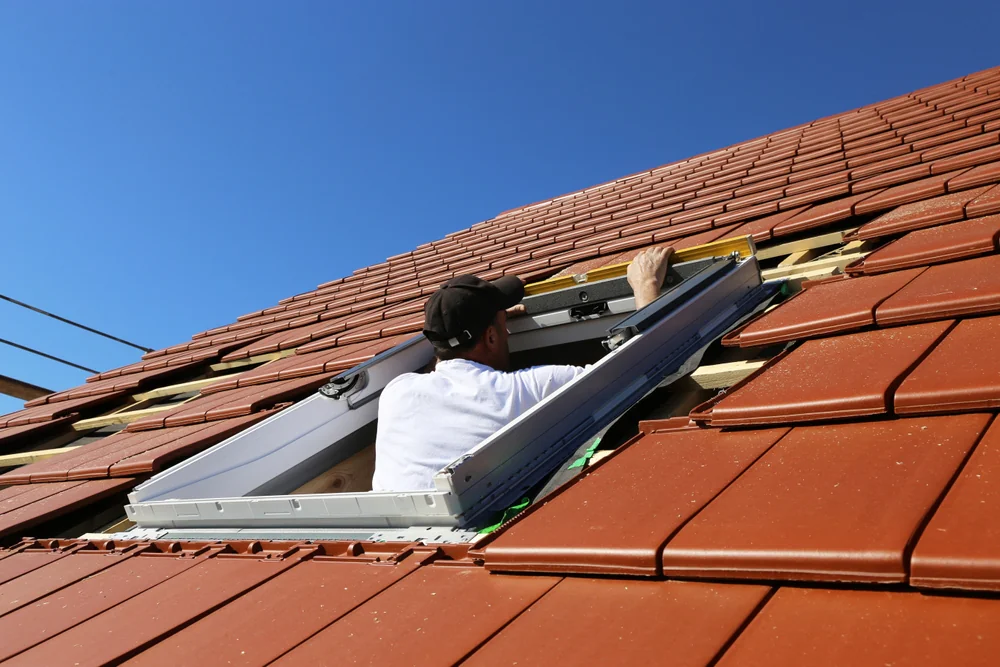
A significant portion of homes across Essex County were built before 1980. In communities like Salem, Amesbury, Beverly, and Lawrence, you’ll find original wood sheathing, non-standard roof geometries, and ventilation systems that were never designed to work with modern asphalt shingle installations. These conditions require an installer who understands how to bring a system up to manufacturer warranty standards on a substrate that wasn’t built with those standards in mind.
This is where the gap between a certified and uncertified professional roofing installation becomes most visible. Manufacturer certification programs require contractors to demonstrate competency with complete system installations — not just shingle placement, but starter strips, underlayment, ridge cap, ventilation, and all qualifying accessories. That matters because manufacturers often require a complete system installation for the warranty to be valid at all.
A contractor who installs shingles without completing the system isn’t just cutting corners — they may be voiding the warranty eligibility entirely, even if the shingles themselves are a premium product.
We’ve been doing this work in Essex County since 2006. In that time, we’ve seen what happens to roofs on older colonials and garrison colonials in North Andover, on coastal properties in Amesbury, on commercial buildings in Lawrence that take the full force of a Merrimack Valley winter. The climate here is not forgiving of installation shortcuts. That’s part of why manufacturer certification programs exist — they create accountability for the installation quality that local conditions demand.
Essex County has an active real estate market, and a lot of the housing stock turns over regularly. If there’s any chance you’ll sell your home in the next decade or two, the transferability of your roofing warranty is worth thinking about now — not when you’re three days from closing.
All three major manufacturers allow their top-tier warranties to transfer to a new homeowner. GAF’s Golden Pledge transfers with the first change of ownership. Owens Corning’s Platinum Protection transfers within sixty days of a home sale. CertainTeed’s SureStart PLUS has similar provisions. A home with a documented, transferable fifty-year non-prorated warranty on a ten-year-old roof is a meaningfully different proposition to a buyer than one with no warranty documentation at all.
Buyers and their inspectors are increasingly asking for this paperwork. In a competitive market, having it is an advantage.
The flip side is also true. A homeowner who believed they had a strong warranty — because they bought a premium shingle brand from a contractor who never mentioned certification — may discover at the point of sale that no transferable warranty exists. The documentation simply isn’t there because the contractor was never enrolled in the manufacturer’s program.
We provide warranty documentation before work begins, not after. If you’re replacing a roof on a property you plan to sell eventually, understanding what warranty you’re actually purchasing — and ensuring it’s transferable — is part of making a sound investment in that property.
The short version: ask for the contractor’s manufacturer certification tier, verify it on the manufacturer’s website, check their Massachusetts HIC registration, and get the warranty documentation in writing before any work starts. If a contractor can’t answer those questions clearly and quickly, that tells you something.
Professional roofing isn’t just about putting shingles on a roof. It’s about making sure the coverage you think you’re purchasing is the coverage you’ll actually have when you need it — whether that’s five years from now after a bad nor’easter, or fifteen years from now when you’re selling the house. The certification your contractor holds determines which of those outcomes is available to you.
We’ve been working in Essex County long enough to understand what this climate demands and what homeowners here deserve to know before they commit. If you have questions about certification, warranty tiers, or what a professional roofing installation should include, we’re happy to walk you through it — no pressure, no obligation, just a straight answer.
Summary:
Article details:
Share: