Most homeowners have no idea how roofing materials get to their house. That gap can cost you — here's what the supply chain actually looks like in Essex County.
Most homeowners assume their roofer picks up shingles somewhere and gets to work. That assumption is understandable — and it’s also the reason so many people end up with warranties that don’t cover what they thought they would.
The roofing supply chain in Essex County is more layered than it looks, and where your contractor sources materials has a direct effect on product quality, availability, and the strength of the warranty you receive. If you’re in Andover, Salem, Beverly, Gloucester, or anywhere else across the North Shore, this is worth understanding before you hire anyone.
Your contractor didn’t buy your shingles at Home Depot. Professional roofing contractors purchase materials through wholesale distributors — companies that buy directly from manufacturers like GAF, Owens Corning, and CertainTeed, then sell to licensed contractors with established accounts.
This two-step model — manufacturer to distributor to contractor to your roof — is how the professional roofing industry works. That distinction matters because wholesale distributors carry manufacturer-certified product lines that big-box stores don’t stock. They also offer job-site delivery, technical support, and access to warranty programs that require a credentialed contractor to unlock.
What your contractor can offer you in terms of warranty coverage often depends directly on which distributors they work with and what certifications they hold.
The Greater Boston area and its northern suburbs are served by a mix of national distributors with local branches and regional independents. Here’s a look at the major players serving Essex County and southern New Hampshire.
**ABC Supply Co. — Danvers, MA.** ABC Supply is the largest wholesale distributor of roofing, siding, and exterior building products in North America, with nearly 900 locations nationwide. Their Danvers branch at 20 Archmeadow Dr puts them squarely in Essex County, making them one of the most accessible distributor options for North Shore contractors. They carry roofing, siding, windows, doors, and related exterior products, and they serve professional contractors exclusively — this is not a retail location open to homeowners.
**QXO (formerly Beacon Building Products) — Malden, MA.** QXO operates as a local exterior building supply store with delivery throughout the greater Boston area, including the North Shore. Their Malden location is a practical option for contractors working across Essex County and into Middlesex County. Like ABC Supply, they focus on professional accounts rather than walk-in retail customers.
**SRS Distribution.** SRS is the fastest-growing distributor of building products in the United States, with a specific focus on professional roofing contractors. Their model emphasizes technology — real-time delivery updates, aerial measurements, and digital tools for contractors — alongside traditional product distribution. They serve Massachusetts contractors and are particularly well-regarded in the professional roofing community.
**New England Building Supply.** More consumer-facing than the wholesale distributors above, New England Building Supply operates a design center off I-93 in Boston carrying windows, doors, siding, roofing displays, and related products. It’s a useful resource for homeowners who want to see material options in person, though purchasing typically still flows through a contractor.
Beyond these, there are regional independents and specialty suppliers serving specific pockets of Essex County — from Haverhill and Lawrence near the New Hampshire border down through Peabody, Danvers, and the coastal communities of Gloucester and Rockport. The right distributor for a given project depends on the scope of work, the materials specified, and the contractor’s existing account relationships.
One thing worth knowing: the distributor a contractor uses isn’t just a logistics detail. It affects which manufacturer product lines they can access, whether they qualify for enhanced warranty programs, and how quickly materials can be on-site when your project starts.
It’s easy to lump these together, but they serve different purposes. A building supply store — think a retail showroom or home improvement center — is designed for general consumers. You can walk in, browse, and purchase materials without a contractor’s license or a trade account. The tradeoff is that retail stores typically carry standard product lines, not the manufacturer-certified materials required for premium warranty programs.
A wholesale roofing distributor operates differently. Access is generally limited to licensed contractors with established accounts. In exchange, those contractors get manufacturer-certified product lines, professional pricing, job-site delivery, and the ability to offer homeowners warranty programs that retail purchases simply can’t unlock.
This is where the warranty story gets interesting — and where most homeowners are left in the dark. When a manufacturer like GAF or Owens Corning offers an extended system warranty, it’s not just about the shingles. It’s about the full roofing system: underlayment, ridge cap, starter strips, ice and water shield, ventilation, and proper flashing. Critically, it requires that the installing contractor hold a recognized manufacturer certification. Without that certification, the contractor can’t access the materials required for the premium warranty tier — and you, as the homeowner, can’t receive it.
Standard warranties have real limits that most homeowners don’t discover until they need to file a claim. They typically don’t cover labor costs, don’t cover damage from improper installation, and don’t cover failing components like flashing or underlayment. The gap between a basic 10-year limited warranty and a 30- to 50-year system warranty with workmanship coverage isn’t just a number — it’s the difference between a warranty that protects your investment and one that mostly protects the manufacturer.
Want live answers?
Connect with a Paradise Remodeling Inc. expert for fast, friendly support.
GAF, Owens Corning, and CertainTeed don’t just sell shingles. Each manufacturer runs a contractor certification program that determines which contractors can offer their strongest warranty products. These certifications aren’t handed out freely — they require a demonstrated track record, proper licensing, and in some cases, ongoing crew training and quality verification.
GAF’s Master Elite designation, for example, is held by roughly 2% of roofing contractors nationwide. It unlocks the Golden Pledge Limited Warranty, which extends workmanship coverage and includes misapplication protection for up to 30 years. Owens Corning’s Preferred Contractor program similarly requires proven installation quality and business stability, and it provides access to OC’s most comprehensive warranty programs.
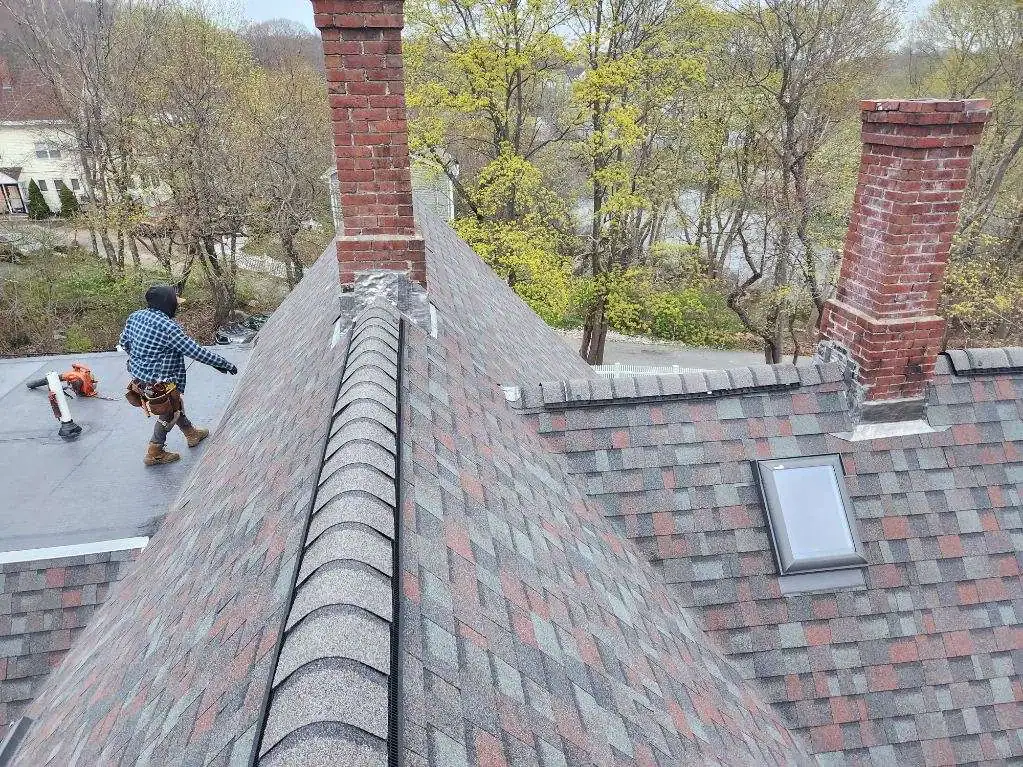
Yes — and the difference is significant. Two contractors can bid the same job using the same brand of shingles, and only one of them may be able to offer you the warranty that actually covers what you need covered. The certified contractor has access to manufacturer warranty tiers that the uncertified contractor simply cannot offer, regardless of how good their work is.
This matters especially in Essex County’s climate. Homes in Salem, Gloucester, Marblehead, and the other coastal communities along the North Shore take a beating from nor’easters, wind-driven rain, and salt air. Inland towns like Andover, North Andover, and Haverhill deal with heavy snow loads and freeze-thaw cycles that accelerate shingle degradation and flashing failure.
A roof that performs well in a mild climate may fail early here — which is exactly why the scope of your warranty matters more than it might in other parts of the country. When a manufacturer warranty covers only defective materials but not the labor to fix them, not the underlayment that failed, and not the flashing that let water in — you’re absorbing costs that a stronger warranty would have covered.
The right contractor certification is often the difference between a 10-year limited warranty and 50-year coverage that includes workmanship. That’s not a minor distinction on a $15,000 to $25,000 investment.
We hold Owens Corning Preferred Contractor status, which means we’ve met OC’s standards for installation quality and customer service — and it gives our customers access to Owens Corning’s most comprehensive warranty programs. We’re currently pursuing additional manufacturer certifications from GAF and CertainTeed to expand the warranty options we can offer our customers. As we add credentials, those options will grow.
Most homeowners get two or three bids and compare the bottom line. That’s a reasonable starting point, but it leaves out the questions that actually determine whether you’re getting a good deal or just a low number.
Ask your contractor which distributors they work with and whether they have active accounts with wholesale roofing suppliers. A contractor buying materials through a professional distributor — rather than a retail chain — is accessing manufacturer-certified product lines and maintaining the kind of business relationships that support warranty claims if something goes wrong down the road.
Ask about certifications. Which manufacturer programs do they participate in? What warranty tiers can they actually offer — not just what’s printed on the shingle packaging, but what the contractor’s credentials unlock? In Essex County, where housing values run high and weather stress is real, this question separates contractors who understand the full picture from those who are simply quoting shingles.
Ask about the full roofing system. A quality installation isn’t just shingles — it includes underlayment, ice and water shield (especially important given how aggressively ice dams form on North Shore homes in a hard winter), ridge cap, starter strips, proper ventilation, and flashing at every penetration and transition. If a bid doesn’t account for all of these components, it’s not a complete comparison.
Ask whether they pull permits. In Massachusetts, roofing work on occupied residential structures typically requires a permit. A contractor who skips this step is creating a liability for you as the homeowner — and potentially voiding your warranty in the process.
Finally, ask for references from recent work in your area. A contractor who has worked extensively in Andover, Peabody, Beverly, or Newburyport will understand the local building stock, the permit offices, and the specific performance demands that North Shore weather places on a roof. That local familiarity shows up in the quality of the finished job.
The roofing supply chain isn’t something most homeowners think about — until something goes wrong and they’re trying to figure out why their warranty doesn’t cover it. Understanding how materials move from manufacturer to distributor to contractor to your roof gives you a clearer picture of what you’re actually buying when you hire a roofer.
In Essex County, that picture matters more than in most markets. The combination of high property values, an older housing stock, and genuinely demanding weather means the stakes on a roofing decision are real. The right contractor — one with professional distributor relationships, active manufacturer certifications, and a track record in your specific corner of the North Shore — is worth finding before you need a repair.
If you’re ready to talk through your roof and what it actually needs, we at Paradise Remodeling Inc serve homeowners throughout Essex County and southern New Hampshire. Reach out for a free quote and we’ll give you a straight answer.
Summary:
Article details:
Share: