A storm just hit your roof and you don't know what to do first. Here's a clear, calm plan for the next 30 minutes.
The storm has passed — or maybe it hasn’t quite yet — and you’ve just noticed water coming through your ceiling, heard something hit the roof, or spotted shingles on the lawn. Your stomach drops. You grab your phone and start searching.
That moment, right there, is exactly when the decisions you make start to matter. Not because the damage is going to get dramatically worse in the next hour, but because the next 30 minutes will set the tone for everything that follows — who you call, what you document, and whether you end up with a solid repair or a headache that drags on for months.
Here’s what you actually need to do.
The first thing to know: do not get on your roof. Not during the storm, not right after it, and not to “take a quick look.” A roof that’s just been hit by wind or hail may have compromised decking, slippery surfaces, or structural damage you can’t see from above. The risk isn’t worth it.
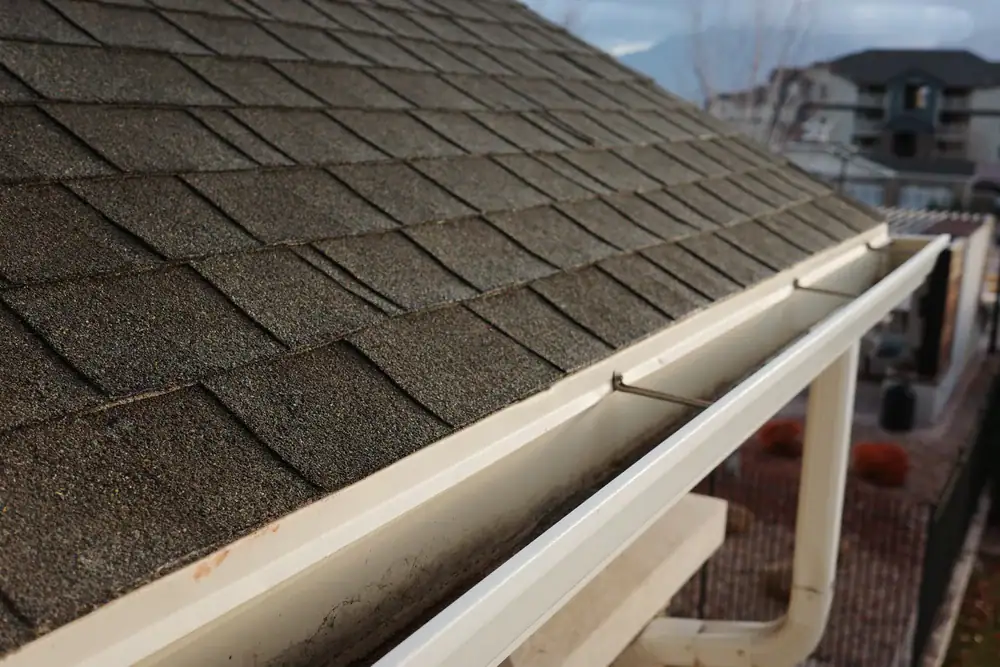
What you can do is assess from the ground and from inside. Walk the perimeter of your house and look for missing or displaced shingles, exposed dark underlayment, damaged ridge caps, or debris that’s landed on the roof. Check your gutters — a heavy deposit of granules is a reliable sign of hail impact.
Inside, head to your attic with a flashlight and look for daylight coming through, wet insulation, or water stains on the decking. This ground-level and attic assessment tells you most of what you need to know for the next decision: does this need someone out today, or can it wait until tomorrow morning?
Most homeowners assume storm damage is storm damage. But wind damage to a roof and hail damage present differently, get repaired differently, and often have different implications for your insurance claim. Knowing which one you’re dealing with helps you describe the situation accurately when you call a contractor or your insurer.
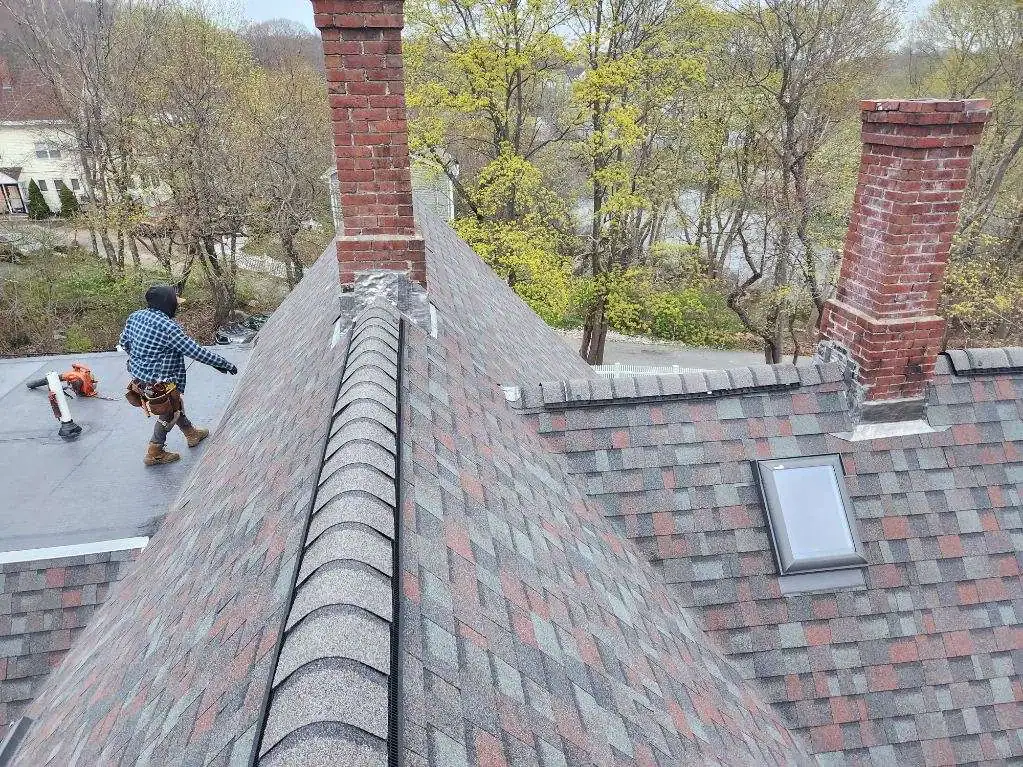
Wind damage tends to show up at the edges and high points of the roof first. Look for lifted, creased, or missing shingles — especially at corners, along the ridge, and near the eaves where wind uplift is strongest. Flashing around chimneys and skylights is also a common failure point after a strong nor’easter. Essex County, MA gets sustained winds exceeding 50 mph multiple times a year during nor’easter season, and that kind of pressure doesn’t just blow shingles off — it works them loose over multiple storms until one finally finishes the job.
Hail damage looks different. Instead of missing material, you’re looking for circular bruising or soft spots in shingles, a dimpled or dented appearance, and granule loss concentrated in specific impact zones. Check your gutters and downspout splash guards — if there’s a heavy accumulation of granules after a storm, that’s a strong indicator hail has been stripping the protective coating off your shingles. Metal components like flashing, vents, and gutters will often show visible dents from hail that shingles might not make as obvious.
Why does the distinction matter? Because wind damage and hail damage are handled differently by insurers, and a contractor who doesn’t document them separately may leave money on the table for you — or create confusion during the claims process. Massachusetts homeowners dealing with storm damage should expect their insurer to send an adjuster, and having clear photos and notes that distinguish between impact damage and wind displacement makes that process go more smoothly.
Nearly half of all home insurance property damage claims between 2018 and 2022 were due to wind and hail, with the average claim coming in around $13,511. Getting the documentation right from the start protects your ability to recover what you’re owed.
If your assessment reveals exposed decking, a hole, missing shingles over a large area, or active water intrusion into the living space, you’re looking at a situation that warrants an emergency roof tarp before permanent repairs can be scheduled.
A proper emergency tarp isn’t just throwing a blue sheet over the problem. When installed correctly — extending at least three feet past the visible damage on all sides, secured with battens or planks rather than just staples, and weighted or fastened to prevent wind from getting underneath — a professional tarp can protect an exposed roof section for up to 90 days. That’s enough time to get through the immediate emergency, let the adjuster do their inspection, and schedule the permanent repair properly.
What a tarp does not do is fix the underlying problem. It’s a temporary measure, and it’s meant to be. The goal is to stop water from getting in while you arrange for real repairs — not to delay those repairs indefinitely.
Here’s the other thing about tarps: improperly installed ones can cause additional damage. A tarp that’s too small, not secured adequately, or installed over debris can trap moisture, shift in wind, and create new leak points. This is one of those situations where doing it right the first time matters, which is why calling a contractor who offers emergency tarping as part of their storm response — rather than a temporary patch job — is worth the call.
We handle emergency tarping as a first step when a roof needs immediate protection. The goal is to seal the problem area and prevent further water damage while we get permanent repairs scheduled as quickly as weather and materials allow.
Want live answers?
Connect with a Paradise Remodeling Inc. expert for fast, friendly support.
Here’s something that doesn’t get talked about enough in the roofing industry: the contractor who shows up at your door within 24 hours of a storm is often the last one you should hire.
Storm chasers — out-of-state contractors who follow major weather events from market to market — descend on areas like Essex County, MA within one to three days of a significant storm. They go door to door, sometimes claiming they were “just working on your neighbor’s roof” and noticed yours has damage. They move fast, they push for a same-day signature, and they’re gone long before any warranty claim would ever come up.
Essex County is a prime target. With 27 declared weather disasters since 1972 and a coastline that takes the full force of Atlantic nor’easters, this county sees storm damage regularly — and that makes it attractive to contractors whose business model depends on volume, not reputation.
The pressure tactics storm chasers use are consistent enough that once you know what to look for, they’re not hard to spot. The challenge is that they show up when you’re stressed, your ceiling is dripping, and you just want someone to fix it. That’s exactly the moment to slow down.
A contractor who shows up uninvited and pushes you to sign a contract before they’ve done a proper inspection is a red flag. So is anyone who demands a large cash payment upfront, offers to waive your insurance deductible (which is often illegal in Massachusetts), or tells you the deal is only valid “today.” Legitimate contractors don’t work that way.
They inspect, they document, they provide a written scope of work, and they give you time to review it. Check for a local address — not a P.O. box, but an actual physical location. Massachusetts requires roofing contractors to hold both a Home Improvement Contractor (HIC) registration and a Construction Supervisor License (CSL) with a Roof Covering specialty. There is no reciprocity with other states, meaning an out-of-state contractor cannot legally transfer their license to work in Massachusetts. You can verify a contractor’s HIC registration through the state’s Office of Consumer Affairs and Business Regulation. If they can’t give you a license number, that’s your answer.
Some unscrupulous contractors will actually cause damage during an inspection — bruising shingles, cracking caulk — to manufacture evidence of a claim. If a contractor you’ve never met before is suddenly finding extensive damage that wasn’t visible from the ground, ask for a second opinion before signing anything.
The contractors who earn long-term business in Essex County are the ones with a real local presence, verifiable credentials, and reviews from actual homeowners in the area — not the ones who showed up the morning after a storm with an unmarked truck.
When you call a contractor you can actually trust after storm damage, the experience feels different from the moment you reach someone. There’s no pressure. There’s a clear explanation of what happens next. And before any work starts, everything is in writing.
A legitimate storm damage response starts with a thorough inspection — not a quick walk around the yard, but a real assessment that documents what’s damaged, what caused it, and what needs to happen to fix it properly. Photos are taken. The scope of work is written down. You know what’s covered, what it involves, and what the timeline looks like before a single nail goes in.
If the damage is severe enough to warrant immediate protection, emergency tarping happens first — properly installed, with the right materials, and with documentation that satisfies your insurer’s requirement to mitigate further damage. Then permanent repairs are scheduled based on material availability and weather. You’re not left waiting with a tarp on your roof for months while the contractor moves on to the next storm-hit neighborhood.
For Essex County homeowners specifically, working with a contractor who’s already familiar with the region’s housing stock matters more than it might seem. The older colonials and garrison colonials common in towns like North Andover, Andover, and Boxford have specific vulnerabilities — flashing failure around chimneys and valleys, ridge cap displacement from wind uplift, ice dam damage along eaves — that a contractor who’s never worked on a 1960s New England cape is going to miss. The same goes for the coastal homes in Beverly, Marblehead, and Gloucester, where salt air and direct Atlantic exposure accelerate roofing wear in ways that aren’t always obvious until a storm makes them impossible to ignore.
We’re based in Methuen, which puts us inside Essex County — not commuting in from somewhere else after a storm. Feliciano personally oversees every project, which means you’re not handed off to a different crew halfway through and left without a clear point of contact. We hold an active Massachusetts HIC license and Owens Corning Preferred Contractor certification, both of which are independently verifiable. We use roofing materials from manufacturers like CertainTeed, Mule Hide, and GenFlex that are specifically engineered for New England weather — freeze-thaw cycles, moisture, and the kind of wind loads Essex County sees every winter.
Stay off the roof. Assess from the ground and the attic. Protect the interior — move valuables, put down towels, document everything with photos and timestamps before you touch anything. If there’s active water intrusion or exposed decking, call for emergency tarping. Then vet the contractor before you sign anything.
Essex County gets hit by storms more than most people expect. That’s not bad luck — it’s geography. A county with 27 declared weather disasters since 1972, a long Atlantic coastline, and a housing stock full of older homes isn’t going to go decades without a roofing emergency. Being ready for that moment, and knowing who to call when it happens, is what keeps a manageable repair from turning into a much larger problem.
If you’re dealing with storm damage right now — or you want a free assessment before the next nor’easter season — reach out to Paradise Remodeling Inc. We’ll tell you exactly what you’re looking at and what it takes to fix it right.
Summary:
Article details:
Share: