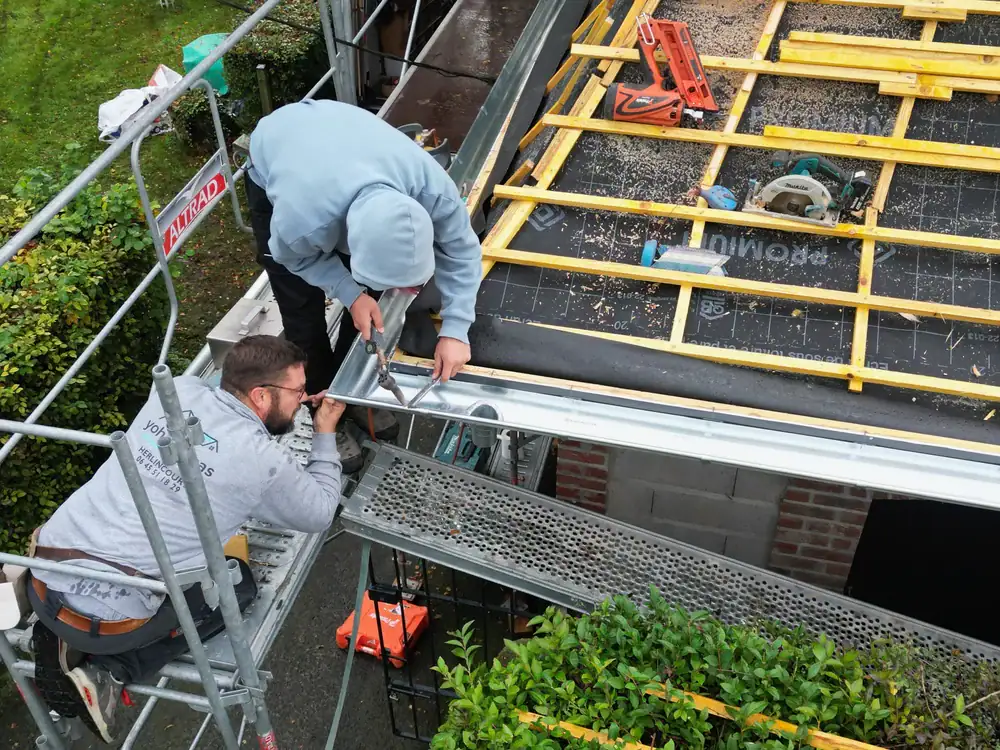
Modern skylights block up to 95% of heat while flooding your home with natural light. No more greenhouse effect—just beautiful, comfortable spaces.
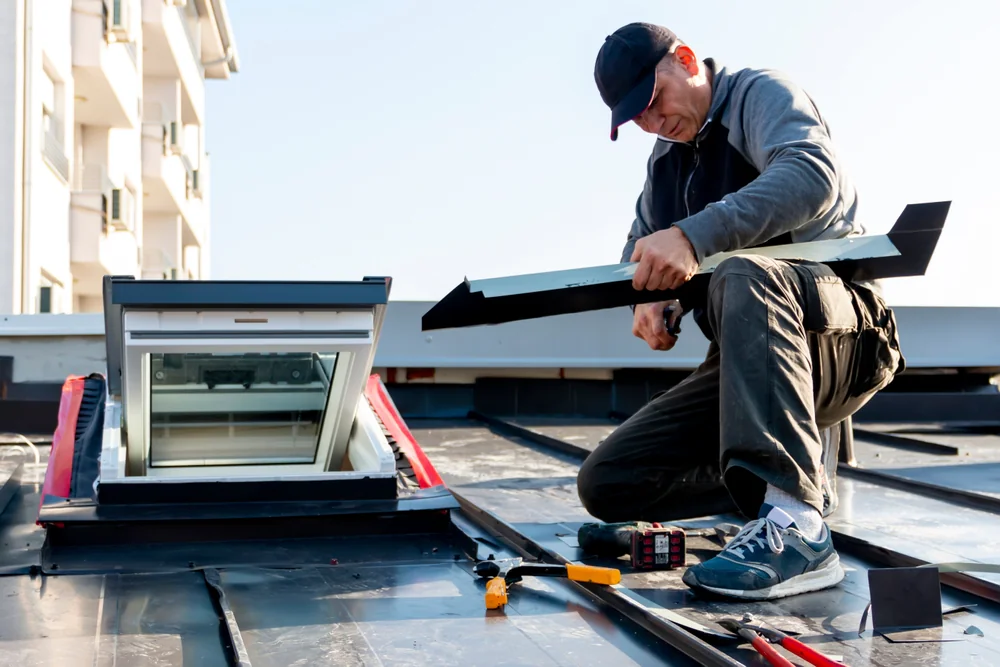
You want more natural light in your home. Maybe it’s that dark hallway, the kitchen that always needs the lights on, or the bathroom with zero privacy options for windows. A skylight sounds perfect—until you remember your friend’s house that turned into a sauna every summer because of theirs.
Here’s what’s changed: modern skylight installation isn’t the same technology your friend dealt with. Today’s skylights use heat-blocking glass and advanced coatings that let in light while rejecting the heat that used to come with it. You’re not choosing between a dark room and an overheated one anymore.
This post walks through how modern skylights actually work, what separates good installations from problems, and what you need to know before adding one to your Essex County, MA or Hillsborough County, NH home.
The greenhouse effect isn’t a myth. Older skylights did exactly what you’re worried about—they let sunlight in, that light converted to heat, and your room got uncomfortably hot. Basic physics.
What changed is the glass technology. Modern skylights use Low-E (low-emissivity) glass with microscopic metallic coatings that work like a filter. Visible light passes through easily. Infrared heat radiation gets reflected back outside. You see the brightness, but you don’t feel the heat.
Most quality skylights now come with dual-pane glass filled with argon gas between the layers. That combination creates an insulation barrier that works both ways—keeping summer heat out and winter warmth in. The result is a skylight that actually improves your home’s energy efficiency instead of working against it.
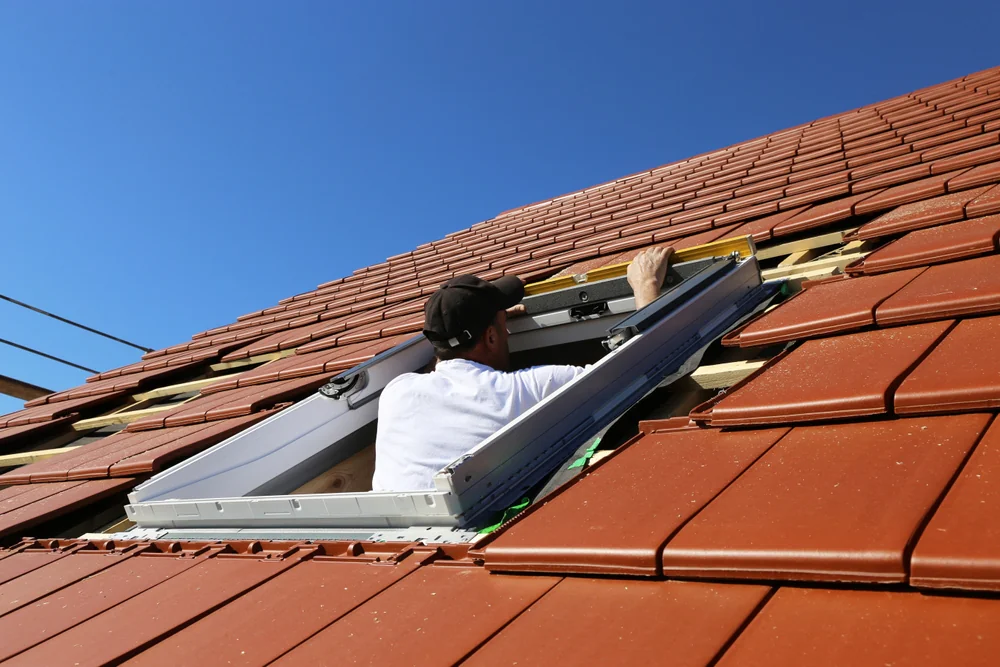
Low-E glass has a coating you can’t see with your naked eye. It’s a thin metallic oxide layer—thinner than a human hair—bonded directly to the glass surface during manufacturing. This coating does something specific: it blocks infrared radiation while allowing visible light to pass through.
Think of it this way. Sunlight contains both visible light (what you want) and infrared radiation (what heats things up). Regular glass lets both through equally. Low-E glass is selective—it blocks up to 75% of that infrared heat while still transmitting most of the visible light.
The technical measurement here is called the Solar Heat Gain Coefficient, or SHGC. It’s a number between 0 and 1. Lower is better for blocking heat. A skylight with an SHGC of 0.25 blocks 75% of the sun’s heating energy. For comparison, older acrylic skylights often had SHGC ratings above 0.70, meaning they let in most of the heat.
Here’s where it matters for your home. A south-facing skylight without Low-E glass can add significant heat load to your air conditioning system during summer months in Middlesex County, MA or Rockingham County, NH. That same skylight with proper Low-E glass and argon fill will bring in natural light without forcing your AC to work overtime. The difference shows up in your utility bills and in how comfortable that room feels on a July afternoon.
The coating also blocks up to 95% of UV radiation. That’s the wavelength that fades your furniture, carpets, and artwork. You get the light benefits without the damage that used to come with it.
Most reputable skylight manufacturers now include Low-E glass as standard equipment, not an upgrade. If someone’s offering you a skylight without it, that’s a red flag. The technology has been around long enough that there’s no good reason to skip it.
The space between the two panes of glass in a modern skylight isn’t empty air. It’s filled with argon gas, and that matters more than you might think for temperature control.
Argon is denser than regular air. That density makes it a better insulator because it slows down heat transfer through convection. When hot air outside tries to heat up the glass, or when your heated indoor air tries to escape through the skylight in winter, that argon layer acts as a thermal barrier.
The practical effect is measurable. A dual-pane skylight with argon fill typically has a U-factor around 0.30, which measures heat loss. The same skylight with regular air between the panes might have a U-factor of 0.45 or higher. Lower U-factors mean better insulation and less energy loss.
This becomes especially important in New England’s climate. Winters in Essex County, MA and Hillsborough County, NH get cold. You’re running your heating system for months. A skylight without proper insulation becomes a weak point in your home’s thermal envelope—heat rises, hits that cold glass, and you’re essentially heating the outdoors.
With argon-filled dual panes and Low-E coatings, that heat loss drops significantly. Some homeowners actually see their skylights contribute to passive solar heating in winter—the Low-E coating is designed to let winter sun’s warmth in while preventing your heated air from escaping back out.
The argon doesn’t last forever. Over 20-30 years, some will slowly leak out through the seals. That’s one reason why skylight quality matters during installation. Better seals mean the argon stays put longer, and your energy performance doesn’t degrade as quickly. When you’re comparing options for skylight repair or replacement, ask about the seal warranty and what happens if the argon escapes. A quality manufacturer stands behind their product.
One more thing argon does: it reduces condensation. When warm, humid indoor air hits cold glass, you get moisture buildup. That argon barrier keeps the interior pane warmer, which means less condensation and fewer problems with water damage or mold around your skylight shaft.
Want live answers?
Connect with a Paradise Remodeling Inc. expert for fast, friendly support.
Not all skylights are built the same, and what works in Seattle won’t necessarily be the best choice for Middlesex County, MA. Your climate, the room’s purpose, and where the skylight sits on your roof all factor into which type makes sense.
Fixed skylights don’t open. They’re sealed units designed purely for light. They’re simpler, less expensive, and have fewer potential leak points. If you’re lighting a hallway, stairwell, or room where you don’t need ventilation, fixed makes sense.
Venting skylights open and close, either manually or with electric motors. They let hot air escape in summer and bring fresh air in when you want it. For kitchens and bathrooms—anywhere moisture and heat build up—venting skylights solve problems that fixed units can’t touch.
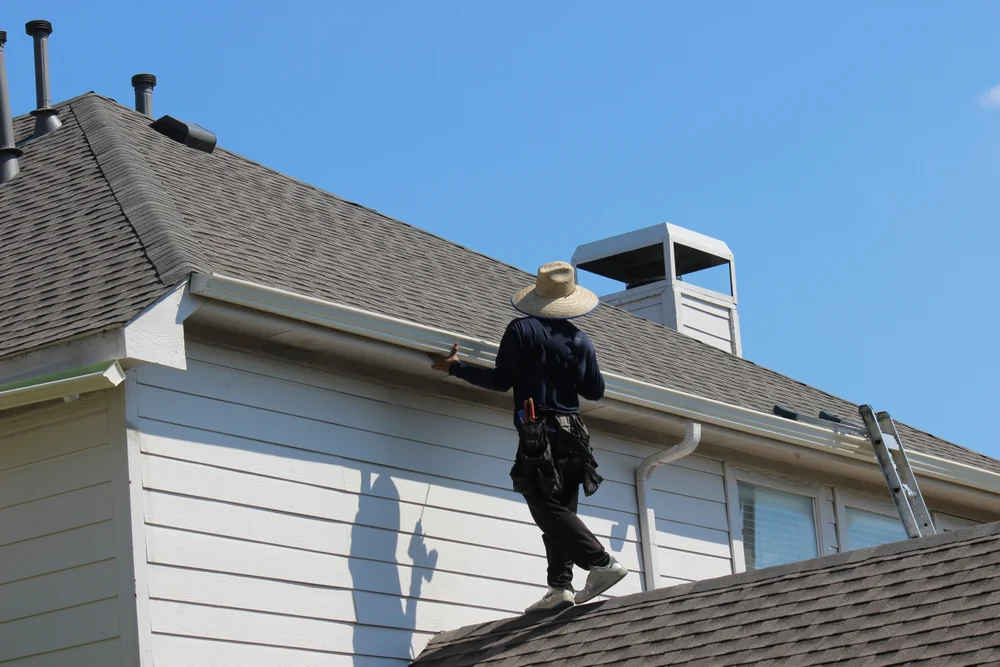
The choice between fixed and venting isn’t about which is “better.” It’s about what problem you’re solving and where the skylight’s going.
Fixed skylights are workhorses for bringing light into dark spaces. They’re ideal for rooms where you don’t need airflow—think hallways, living rooms with existing windows, or anywhere you just want to eliminate the need for daytime artificial lighting. Because they don’t have moving parts or opening mechanisms, there are fewer components that can fail or leak over time. Installation is straightforward, and they typically cost less than venting models.
Venting skylights solve different problems. They’re particularly valuable in bathrooms, where moisture from showers creates humidity that needs somewhere to go. Opening the skylight lets that humid air escape naturally instead of condensing on walls and creating mold problems. Same logic applies to kitchens—cooking generates heat and steam, and a venting skylight provides an escape route that reduces the load on your exhaust fan.
The ventilation benefit extends beyond moisture control. In summer, hot air rises and accumulates near your ceiling. A venting skylight positioned strategically can release that hot air, which pulls cooler air in through your windows or doors. It’s passive cooling that doesn’t require running your AC as hard. Some homeowners in Rockingham County, NH report being able to set their thermostat a few degrees higher on mild summer days just by opening their skylights.
Modern venting skylights come with options that make them practical. Electric models open with a wall switch or remote control—no need to grab a pole and manually crank them. Solar-powered versions have built-in panels that charge a battery, so you’re not running electrical wiring through your attic. Many include rain sensors that automatically close the skylight if it starts raining while you’re away from home.
The downside to venting skylights is complexity. More moving parts mean more potential maintenance down the road. The seals around the opening mechanism need to stay intact to prevent leaks. And they cost more upfront—sometimes 40-50% more than a comparable fixed skylight.
Here’s a practical way to decide: if the room has adequate windows and ventilation already, fixed is probably fine. If you’re dealing with moisture issues, cooking odors, or rooms that get stuffy, venting makes sense despite the higher cost. And if you’re installing multiple skylights, you might use a mix—venting in the bathroom and kitchen, fixed in the hallway and bedroom.
The mounting method determines how your skylight integrates with your roof, and it affects both appearance and performance. Deck mount and curb mount are the two main options, and each works better in specific situations.
Deck mount skylights attach directly to your roof deck with a low-profile flashing system. The skylight sits nearly flush with your roofline, creating a sleek, modern look. They work on sloped roofs with pitches between 14 and 85 degrees, which covers most residential applications. The roof installation requires cutting an opening in your roof deck, fitting the skylight into that opening, and sealing it with integrated flashing that goes under your shingles.
The advantage of deck mount is energy efficiency and aesthetics. Because they sit flush, there’s less exposed surface area for heat transfer. The seal is typically tighter, which means better insulation and less risk of air leakage. Visually, they look more integrated—the skylight becomes part of your roofline rather than sitting on top of it.
Curb mount skylights sit on a raised wooden frame (the curb) that’s built around the roof opening. The skylight mounts on top of that curb, creating a more elevated profile. This method works on flat roofs or low-slope applications where deck mounting isn’t practical. It’s also the standard approach for replacing older skylights, especially if you’re swapping out an old acrylic bubble skylight.
Curb mount installations are often easier to waterproof on flat or nearly flat roofs because the raised curb helps water drain away from the skylight. The curb also creates space for extra insulation around the skylight shaft, which can improve thermal performance if it’s done correctly. The downside is that curb mount units typically have slightly higher U-factors (meaning more heat loss) than comparable deck mount skylights because of the additional exposed surface area.
For most homeowners in Rockingham County, NH or Essex County, MA with standard sloped roofs, deck mount is the default choice. It performs better, looks cleaner, and integrates more seamlessly with your existing roof structure. Curb mount makes sense if you’re replacing an existing curb-mounted skylight (because the curb is already there) or if your roof pitch is too low for deck mounting.
The installation method also affects flashing requirements. Deck mount skylights need flashing that integrates with your specific roof material—asphalt shingles, metal roofing, slate, or tile all require different flashing kits. A professional general contractor will use the manufacturer-specified flashing for your roof type. Curb mount uses different flashing that attaches to the curb itself. Either way, proper flashing is what prevents leaks during skylight maintenance over the years, and it’s not something you want to improvise or skip to save money.
One more consideration: if you’re planning to install the skylight yourself, curb mount is generally more forgiving for DIYers because you’re working with a framed opening rather than cutting directly into your roof deck. That said, skylight installation isn’t a great DIY project for most homeowners. The waterproofing details matter too much, and the consequences of getting it wrong are expensive. Professional installation typically includes warranties that cover both the product and the labor.
The fear that skylights will overheat your home made sense when acrylic bubble skylights were the standard. Those old units let in light and heat equally, and homeowners paid for it with higher cooling bills and uncomfortable rooms. That technology is outdated.
Modern skylights with Low-E glass, argon fill, and proper installation give you natural light without the thermal penalty. You’re not making a tradeoff anymore between brightness and comfort. The right skylight, installed correctly, actually improves your home’s energy efficiency while eliminating the need for daytime artificial lighting.
The key is working with someone who understands both the products and the installation details that prevent problems. We’ve been installing skylights and providing home restoration services throughout Massachusetts and New Hampshire since 2012, using quality materials and proven methods that keep homes bright and comfortable year-round.
Summary:
Article details:
Share: