Two quotes, same roof, thousands apart. Here's how to tell which estimate is actually protecting you — and which one is leaving things out.
You asked three contractors to quote your roof. One came in at $11,000. One came in at $16,500. The third handed you a two-page breakdown and a number somewhere in the middle. Now you’re staring at three completely different documents — or in one case, just a number scrawled on a business card — trying to figure out which one is actually the right call.
This is where most homeowners get stuck. And it’s also where most of the mistakes happen. Our goal with this page is simple: give you a clear framework for what a real roofing estimate looks like, so you can compare what you’ve received with confidence — and know exactly what to ask for if something’s missing.
A roofing estimate is not a standardized document. There’s no legal requirement that says a contractor must give you a certain number of line items or explain their pricing in any particular format. That means what you receive can range from a thorough, itemized breakdown to a single total with almost no explanation — and both technically count as “an estimate.”
The difference matters enormously. A quote that lists only a final number tells you almost nothing about what’s actually being done to your roof. It doesn’t tell you what materials are being used, how many layers of old roofing are being removed, whether flashing is being replaced or just patched, or what kind of warranty you’re actually getting. Without those details, you’re not comparing prices — you’re comparing guesses.
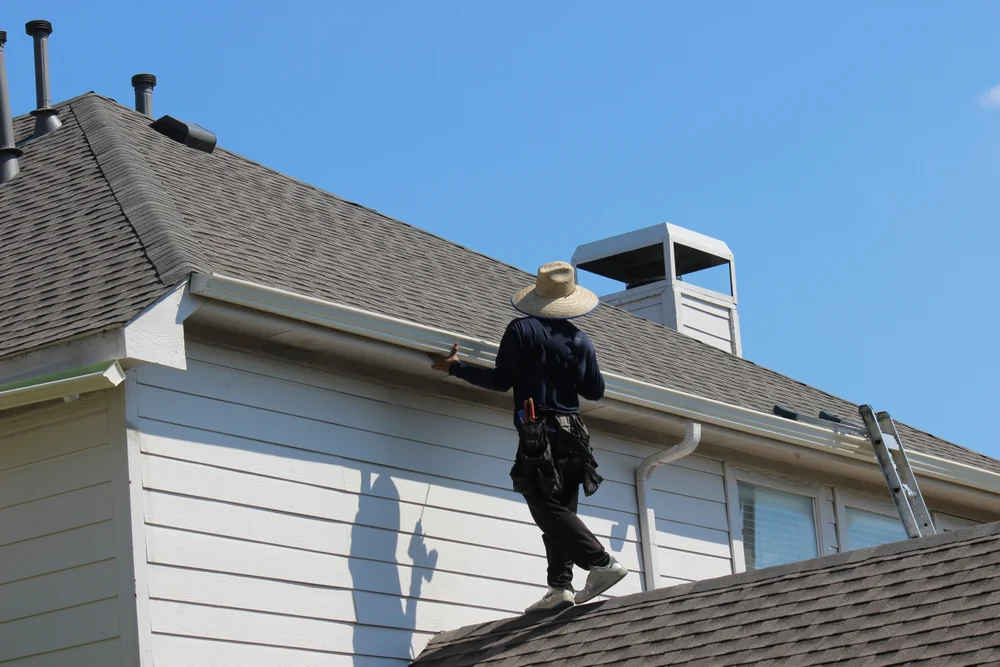
A legitimate roofing estimate should read almost like a recipe. Every ingredient matters, and leaving one out changes the whole result. Here’s what that looks like in practice.
The scope of tear-off needs to be spelled out clearly — specifically, how many layers of existing roofing are being removed and how disposal is being handled. In older Essex County homes, particularly the colonials and cape cods common in North Andover, Beverly, and Andover, it’s not unusual to find two or even three layers of shingles already on the roof. Removing two layers costs more than removing one, and that cost should be visible in the estimate, not buried or assumed.
Underlayment type and grade should be named explicitly. Synthetic underlayment and traditional felt behave differently, last differently, and cost differently. An estimate that just says “underlayment” without specifying which kind is leaving you in the dark on a material that sits directly between your shingles and your roof deck.
Flashing — the metal that seals around chimneys, skylights, pipe boots, and wall transitions — needs to be addressed. The estimate should state whether existing flashing is being replaced entirely or just resealed. Resealing is cheaper upfront and often a source of future leaks. Full replacement is the right call in most cases, especially on older roofs.
Ice and water shield coverage is non-negotiable in Massachusetts, and the estimate should specify how many feet from the eave it extends and whether it covers valleys. Essex County winters are hard on roofs. The freeze-thaw cycle that drives ice dam formation in Gloucester, Haverhill, and Newburyport is exactly why this detail matters — and why an estimate that glosses over it should raise a flag.
Ventilation, drip edge, shingle brand and product line, permit fees, payment schedule, project timeline, and both the manufacturer’s material warranty and our workmanship warranty should all appear in writing. If any of these are missing, ask for them before you sign.
Vague language in an estimate isn’t just unhelpful — it’s a liability for you as the homeowner. Phrases like “flashing repaired where needed” or “decking replaced as required” sound reasonable on the surface, but they give the contractor enormous latitude to decide what counts as “needed” once the job is underway, often without any agreed-upon pricing for that additional work.
The deck issue is particularly common. When a contractor tears off your old roof, they may find soft spots, rot, or water-damaged sheathing underneath. A legitimate estimate will either include a per-sheet allowance for deck repair — stating a clear price per sheet of plywood if damage is found — or it will explicitly describe how additional damage will be identified, communicated to you, and priced before any extra work begins. What it should never do is leave that question completely open-ended.
The same logic applies to flashing. “Resealing existing flashing where needed” is not the same as “replacing all step flashing, chimney flashing, and pipe boots with new material.” One is a patch. The other is a fix. Both can appear in an estimate under nearly identical language, so the specifics matter.
One more thing worth knowing: a legitimate contractor will include their HIC registration number and CSL number in or alongside their estimate. Massachusetts requires Home Improvement Contractor registration for any residential roofing work on one-to-four-family homes, and a Construction Supervisor License when structural components are involved. These aren’t bureaucratic formalities — they’re verifiable credentials that protect you if something goes wrong. If a contractor can’t or won’t provide them, that’s a meaningful signal.
Want live answers?
Connect with a Paradise Remodeling Inc. expert for fast, friendly support.
When one contractor quotes $11,000 and another quotes $17,000 for what appears to be the same roof, the instinct is to wonder if someone is overcharging. Sometimes that’s true. More often, the quotes simply aren’t covering the same work.
Legitimate price variation comes from real differences in scope and materials. The cheaper quote may assume single-layer tear-off when there are actually two layers. It may spec a lower-grade shingle line, skip full flashing replacement, omit ice and water shield beyond the minimum, or exclude permit fees. Each of those differences has a dollar value — and when you add them up, a quote that looks like a bargain can easily become the more expensive option once change orders start arriving.
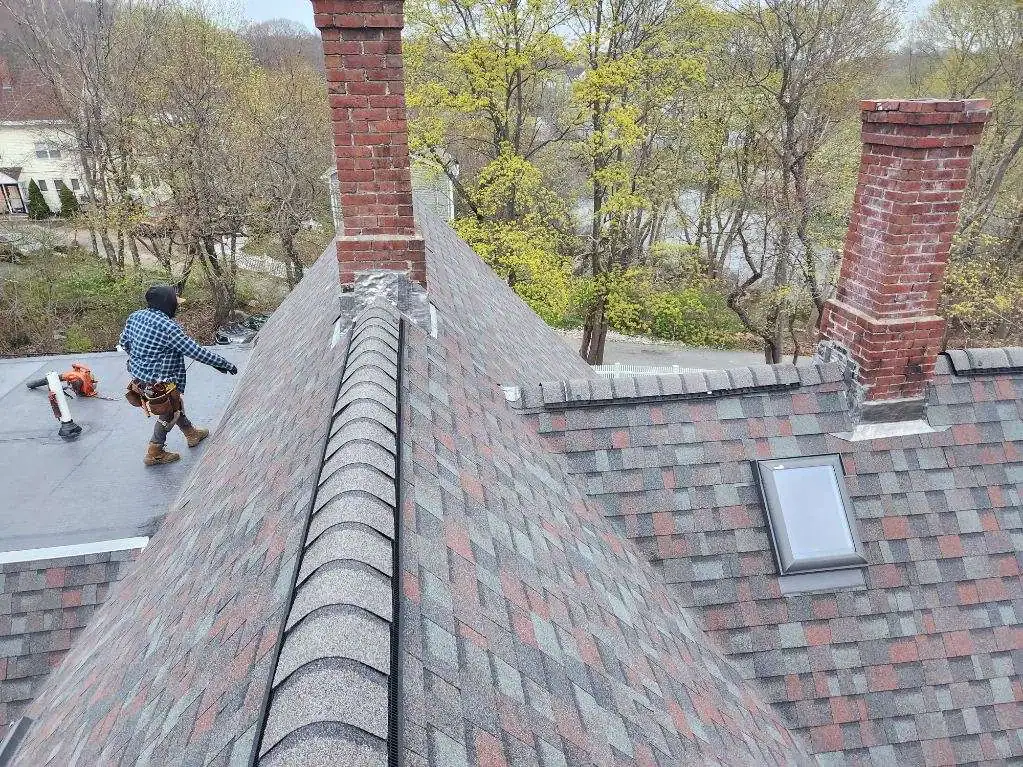
The most practical thing you can do when you have multiple quotes in hand is build a simple comparison based on the line items that actually drive cost. Don’t start with the total. Start with the scope.
Are all three contractors tearing off the same number of layers? Are they using the same underlayment type? Are they all replacing the flashing, or is one of them resealing it? Are the shingles the same product line and wind rating, or is one contractor spec’ing a 110 mph shingle while another is spec’ing a 130 mph shingle? Are permit fees included, or will those be billed separately? Once you’ve gone through those questions, the price differences will either make sense or they won’t — and that tells you something important.
A price that’s significantly lower than the others — industry sources consistently flag anything more than 10% below the average of comparable bids as a red flag — usually means something is missing from the scope, not that you’ve found a better deal. A contractor who is genuinely competitive on price will be able to show you, line by line, where their efficiency comes from. One who can’t explain the gap probably can’t close it either.
It’s also worth paying attention to how the payment schedule is structured. A legitimate estimate will tie payments to project milestones — a reasonable deposit to secure your date and order materials, a progress payment when the tear-off is complete, and a final payment once the job is finished and you’re satisfied. A contractor who asks for a large portion of the total before work begins is asking you to take on significant risk. That’s not a standard industry practice; it’s a warning sign.
Roofing in Essex County isn’t the same as roofing in a market with newer housing stock and milder winters. The combination of older homes, harsh seasonal weather, and coastal exposure creates conditions that a legitimate local estimate should directly account for.
If your home is along the coast — in Gloucester, Rockport, Marblehead, or Newburyport — salt air accelerates corrosion on flashing and fasteners. Your estimate should specify corrosion-resistant flashing materials. If it doesn’t, ask why. A contractor who’s actually worked on North Shore properties knows this without being prompted.
Ice dam protection deserves its own line item in any Essex County estimate. Massachusetts building code requires ice and water shield at the eaves, but the code minimum isn’t always enough for a home that’s been dealing with chronic ice dam damage. An estimate that specifies how far the ice and water shield extends — and whether it covers valleys as well as eaves — is giving you real information. One that just says “ice and water shield per code” is giving you the minimum and nothing more.
Post-storm timing is also worth understanding. After a major Nor’easter hits the North Shore, out-of-state contractors often show up in Essex County neighborhoods within days, offering fast verbal quotes and asking for deposits. These storm chasers are a documented problem in this market, and the homeowners who are most vulnerable are the ones who don’t know what a legitimate estimate looks like. A written, itemized estimate from a licensed, locally established contractor isn’t just good practice — in the weeks after a storm, it’s your primary protection against being taken advantage of.
We’ve been doing this work in Essex County since 2006. We know what Nor’easters do to older roofs in Lawrence and what coastal salt air does to flashing in Beverly. When we put together an estimate, everything that matters to your specific roof shows up in writing — not because we have to, but because that’s the only way to do this honestly.
A good roofing estimate isn’t just a number. It’s a document that tells you exactly what’s being done, with what materials, under what warranty, and for what payment terms — so that if anything changes once the work starts, you have something to refer back to.
If you’ve received estimates that don’t include those details, you’re not in a position to make a fully informed decision yet. Ask for the missing line items. Ask for the HIC registration number. Ask how deck damage is handled if it’s found. A contractor who’s doing this the right way won’t hesitate to answer.
When you’re ready to get a written estimate from a contractor who’s been working in Essex County for nearly two decades, Paradise Remodeling Inc is here. Reach out and we’ll take a look at what you’re working with.
Summary:
Article details:
Share: