Hiring a roofer in Essex County? Here's what Massachusetts actually requires — and what happens when a contractor skips the rules.
You’ve got quotes in hand. Maybe one came in noticeably lower than the others. Maybe a contractor told you the permit isn’t necessary for a re-roof. Maybe you just want to make sure you’re not handing over a deposit to someone who disappears after day one.
These are the right instincts. Massachusetts has specific licensing requirements for roofing contractors — and they exist specifically to protect you, not the contractor. This guide walks through what those requirements actually are, why the permit question is the one most homeowners in Essex County get wrong, and what you can do right now to verify any contractor before a single shingle gets touched.
In Massachusetts, “licensed” means two separate things — and a contractor needs both to be fully compliant on most residential roofing jobs. The first is a Home Improvement Contractor (HIC) registration, issued by the Office of Consumer Affairs and Business Regulation. The second is a Construction Supervisor License (CSL), issued by the Office of Public Safety and Inspections. These come from different state agencies, cover different things, and are verified separately.
The HIC registration is the one that matters most to you as a homeowner. It’s what governs whether you’re protected by the state’s Guaranty Fund if a project goes sideways. The CSL covers the technical side — it’s the credential that authorizes a contractor to supervise structural work and, when structural decking is involved, requires a specific CSL-RC (Roofing Contractor) specialty designation.
A contractor who only has one of these is not fully compliant. That distinction matters more than most homeowners realize before they’ve already signed a contract.
The HIC Guaranty Fund is one of the most valuable consumer protections in Massachusetts that almost no one knows about until they need it. Under Massachusetts General Laws Chapter 142A, if a registered contractor fails to complete a project or performs work so poorly that you’re left with a legitimate unpaid judgment against them, the state can compensate you up to $25,000 from this fund.
That protection only exists if your contractor holds a valid, active HIC registration. Hire someone without one — even if they seem professional, have a website, and show up on time — and you have no access to that fund if things fall apart. You’re left pursuing the contractor directly, which is a much harder road.
Verifying a contractor’s HIC number takes about two minutes. The Massachusetts OCABR maintains a public lookup tool at services.oca.state.ma.us/hic/licenseelist.aspx. You type in the contractor’s name or registration number and you can confirm their status, coverage, and whether their registration is active. A legitimate contractor won’t flinch when you ask for their number. If they do, that tells you something.
The HIC registration also requires contractors to participate in the state’s arbitration program for dispute resolution and mandates a written contract for any project over $1,000 — which is essentially every roofing job. That written contract must include the scope of work, material specifications, payment schedule, and warranty terms. Under Massachusetts law, a contractor also cannot demand more than one-third of the total contract price as a deposit. These aren’t suggestions. They’re legal requirements that only apply when the contractor is properly registered.
In Essex County, where the median property value sits at $619,100, the cost of hiring an unlicensed contractor and losing your legal protections can far outweigh whatever you saved on a cheaper bid. The Guaranty Fund exists because the legislature understood that roofing fraud is real, deposit theft happens, and homeowners need a backstop.
This is one of the most common misconceptions we hear. A contractor can be licensed without carrying adequate insurance, and a contractor can carry insurance without being properly licensed. Both need to be verified independently — and both matter for different reasons.
On the insurance side, there are two types you should ask about before any work begins. General liability insurance covers property damage and third-party bodily injury during the project — if a crew member accidentally damages your neighbor’s fence or a tool falls through a window, general liability is what covers it. The standard minimum in the roofing industry is $1 million per occurrence. Workers’ compensation is the other one, and it’s the one most homeowners don’t think about until it’s too late.
Here’s the part that surprises people: if a roofing contractor does not carry valid workers’ compensation insurance and one of their workers is injured on your property, you as the homeowner can be held financially responsible for that worker’s medical bills, lost wages, and legal costs. Massachusetts law does not automatically shield homeowners from this exposure. The contractor’s workers’ comp policy is what stands between you and that liability.
Don’t accept verbal confirmation on either policy. Ask for an actual Certificate of Insurance — a document that lists the carrier, the policy number, the coverage amounts, and the expiration dates. You can call the carrier directly to confirm the policy is active. This is standard practice, not an insult to the contractor. Any professional will hand it over without hesitation.
One more thing worth knowing: if a contractor uses subcontractors, those subcontractors need to be covered too. An uninsured subcontractor creates the same liability exposure as an uninsured primary contractor. It’s worth asking directly whether any subcontractors will be on your project and whether they carry their own coverage.
Want live answers?
Connect with a Paradise Remodeling Inc. expert for fast, friendly support.
This is the question no competitor in this space is answering clearly, so let’s settle it. In Massachusetts, a building permit is required for virtually all roofing work — including re-shingling a roof, even when the scope seems minor. This is mandated under Section R105.1 of 780 CMR, the Massachusetts State Building Code. There is no carve-out for “just replacing shingles.”
The contractor is responsible for pulling the permit. Not you. When a licensed contractor pulls a permit, they take legal responsibility for the work meeting code — and they schedule the required inspection with the local building department. In Essex County, that means the building department in your specific municipality: Salem, Lynn, Peabody, Gloucester, Newburyport, Haverhill, Beverly, or wherever the work is being done. Each city and town runs its own permitting process. There is no county-level permit authority.
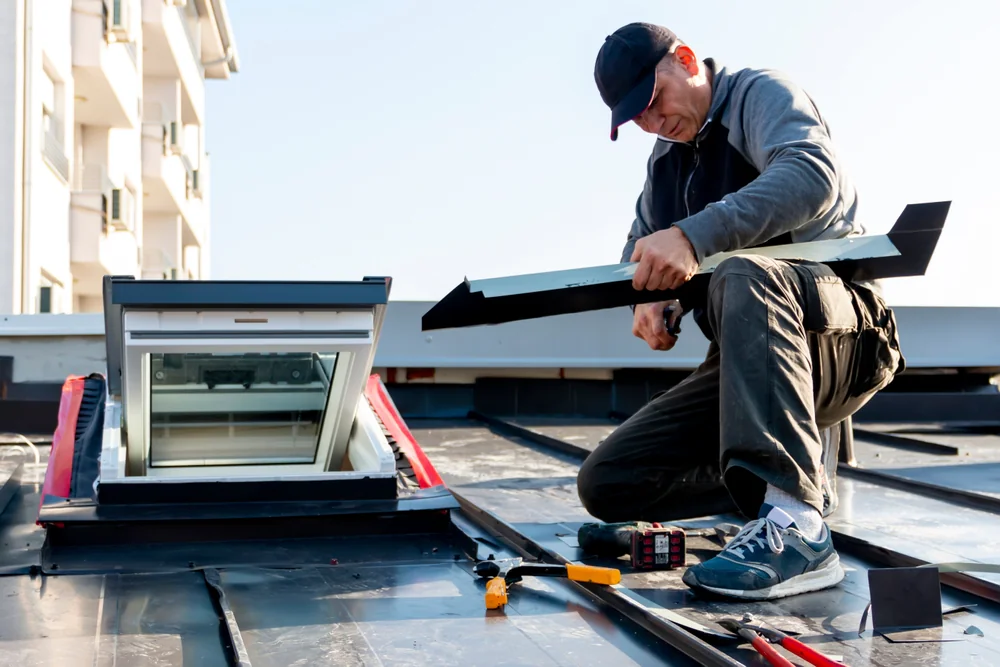
A lot of homeowners hear “I don’t think we need a permit for this” from a contractor and take it at face value. It’s a mistake that can cost significantly more to fix than the permit ever would have.
The most immediate risk is a stop-work order. If a building inspector spots unpermitted work in progress — or a neighbor reports it — the municipality can halt the job entirely until the proper permits are obtained. That can mean delays, additional inspections, and in some cases, having to expose or redo completed work so an inspector can verify what’s underneath.
The longer-term risk is what happens when you try to sell your home or file an insurance claim. Home sales in Massachusetts routinely involve permit history checks during the closing process. Unpermitted roofing work can delay or kill a sale, require costly remediation, or force a price reduction. More immediately, your homeowner’s insurance carrier may deny a claim — say, for a roof leak or storm damage — if they discover the underlying work was done without a permit. That denial can happen years after the job was completed, long after the contractor is gone.
In Essex County’s older housing stock — the triple-deckers in Lynn, the Federal-era homes in Newburyport, the Victorian-era houses in Salem — roofing projects frequently uncover structural surprises: rotted decking, improper previous layering, inadequate ventilation. When that happens mid-project, a licensed Construction Supervisor is legally required to manage those structural decisions. An unlicensed contractor who skipped the permit has no legal authority to make those calls, and no inspection process to catch problems before they’re covered back up.
The permit is not the contractor’s problem. It becomes your problem the moment something goes wrong. The fastest way to know whether a contractor is the type who pulls permits is to verify their HIC registration — contractors who are properly registered have a track record of permit activity that’s reflected in independent rankings like BuildZoom. A contractor in the top 8% statewide on BuildZoom, for example, got there partly because of a consistent permit-pulling history.
There’s a specific scenario that catches Essex County homeowners off guard more often than it should, and it’s worth walking through directly. A nor’easter comes through — the kind of heavy, wet storm that the North Shore gets every few winters — and your roof takes damage. You file a claim. Your insurance company sends an adjuster. The adjuster starts asking questions about when the roof was last replaced and whether permits were pulled. You realize you don’t know, because you weren’t the one who hired the contractor who did the previous roof.
This is not a hypothetical. It happens in communities like Gloucester, Marblehead, and Swampscott — coastal towns with older homes and a long history of roofing work that predates the current owners. If the prior work was unpermitted, the insurance company may use that as grounds to reduce or deny the claim, arguing that the roof was not installed to code and therefore the damage is partly attributable to improper installation.
The connection between licensing, permits, and insurance is tighter than most people realize. A licensed contractor who pulls permits and passes inspections creates a documented paper trail that protects the homeowner for years after the job is done. That documentation is what an insurance adjuster is looking for when they investigate a claim. It’s also what a buyer’s attorney is looking for during a home sale closing.
For homeowners along the North Shore — where salt air accelerates corrosion on metal flashing and fasteners, where freeze-thaw cycles stress shingle adhesion through the winter, and where ice dams form at the eaves of homes that haven’t been properly ventilated — the quality of roof installation matters as much as the quality of materials. Both are verified through the permit and inspection process. Skipping the permit doesn’t just create a legal gap. It removes the independent check that catches installation problems before they become expensive claims.
When you hire a contractor who is licensed, insured, and pulls permits as a matter of standard practice, you’re not paying extra for paperwork. You’re paying for a layer of protection that follows the home — not just the contractor.
The checklist is simpler than it sounds. Verify the HIC registration on the OCABR website before you sign anything. Ask for a Certificate of Insurance — not a verbal confirmation — and check that it covers both general liability and workers’ compensation. Confirm that the contractor will pull the permit and schedule the inspection. Ask about the workmanship warranty, and find out whether their manufacturer certifications enable enhanced warranty products beyond the standard coverage.
A contractor who meets all of those standards won’t be bothered by the questions. They’ll answer them without hesitation, because they’ve already done the work to be compliant.
We’ve been working in Essex County since 2006. We carry active Owens Corning Preferred Contractor certification, rank in the top 8% of contractors statewide on BuildZoom, and back our workmanship with a five-year warranty — five times the industry standard. If you’re ready to get a straight answer on your roof, reach out to us for a free quote.
Summary:
Article details:
Share: