Most homeowners only worry about roofs during winter storms. But summer heat, UV rays, and trapped attic air can age your roof by years.
You check your roof after blizzards. You inspect it when high winds blow through. But when’s the last time you thought about what summer is doing to it?
Most people don’t. They assume heat is harmless compared to ice dams and heavy snow. But here’s what’s actually happening: intense UV rays are breaking down your shingles’ protective coating. Your attic is trapping heat that’s cooking your roof from underneath. Humidity is creating conditions for mold and deterioration you can’t see from the ground.
And all of it is driving up your AC bills while shortening your roof’s lifespan. Let’s talk about what summer weather really does to your roof—and what you can do about it.
UV radiation doesn’t just fade your patio furniture. It’s actively breaking down the materials protecting your home.
When UV rays hit your asphalt shingles, they penetrate the surface and attack the protective coating. The asphalt underneath becomes dry and brittle. The granules that shield your roof start loosening and washing away. What you’re left with is a more porous surface that’s vulnerable to moisture and impact damage.
Heat makes it worse. On a typical summer day in Massachusetts or New Hampshire, your roof can reach 150 to 160 degrees—even when the air temperature is only in the 80s or 90s. Dark-colored shingles absorb even more heat. That constant exposure accelerates the chemical breakdown of your roofing materials, making everything age faster than it should.
Your roof expands when it heats up during the day. Then it contracts when temperatures drop at night. This happens every single day all summer long.
That cycle is called thermal shock, and it’s harder on your roof than you’d think. The constant expansion and contraction stress the materials. Shingles start to warp. Small cracks form and widen. The adhesive that bonds shingles to the underlayment weakens. Fasteners loosen.
None of this happens overnight. It’s cumulative. A single heat wave can age your roof by three years if your attic isn’t properly ventilated. Over the course of several summers, thermal shock breaks down structural integrity in ways that aren’t obvious until you’re dealing with leaks or missing shingles.
The issue gets worse in areas where day-to-night temperature swings are significant. Essex County and Middlesex County see plenty of those swings, especially in late summer. Your roof is expanding and contracting through that entire range, and the materials can only handle so much before they start failing.
You might notice the effects first as curling at the edges of shingles. Or you’ll see shingles that look cupped or buckled. Those are signs that thermal movement has already compromised the material. By the time you spot it from the ground, the damage has been building for a while.
The good news is that proper attic ventilation reduces how much heat your roof absorbs from below. When hot air can escape instead of getting trapped under your roof deck, the temperature difference between day and night becomes less extreme. That means less expansion, less contraction, and less stress on the materials that keep water out of your home.
Those little granules on your asphalt shingles aren’t just for looks. They’re your roof’s first line of defense against UV radiation and weather damage.
When granules start coming off, your shingles lose their ability to reflect sunlight and resist moisture. The asphalt underneath gets exposed to direct UV rays, which speeds up deterioration. Water has an easier time penetrating the surface. The whole system becomes more vulnerable.
You’ll usually notice granule loss in your gutters first. After a rainstorm, check your downspouts. If you’re seeing a lot of dark, sand-like material collecting there, your shingles are shedding their protective layer. Some granule loss is normal as a roof ages, but heavy shedding—especially on a roof that’s not that old—is a red flag.
Granule loss accelerates once it starts. UV exposure dries out the asphalt, which makes it even more brittle. That brittleness causes more granules to break free. Before long, you’ve got bare spots on your roof where there’s almost no protection left.
Here’s what makes it worse: those bare spots create pockets where water and debris collect. Moisture sits on the surface longer than it should. In humid summer conditions, that creates an environment for algae and mold growth. The organic material holds even more moisture against your roof, which leads to rot and further breakdown of the shingles.
If you’re seeing significant granule loss, it’s worth having a roofing contractor take a look. Sometimes it’s isolated to a specific area that can be repaired. Other times, it’s a sign that your roof is approaching the end of its useful life and you need to start planning for a replacement. Either way, catching it early gives you more options and helps you avoid emergency repairs when a leak finally shows up.
Want live answers?
Connect with a Paradise Remodeling Inc. expert for fast, friendly support.
Your attic should never feel like an oven. If it does, you’ve got a ventilation problem—and it’s costing you.
When hot air gets trapped in your attic, it has nowhere to go. The temperature climbs. That heat radiates down into your living spaces, making your air conditioner work harder to keep things comfortable. Your energy bills go up. Your HVAC system wears out faster.
At the same time, that trapped heat is baking your roof from the inside. It’s cooking the plywood decking, drying out sealants, and accelerating the aging of your shingles. The roof you thought would last 25 years might only make it to 15 because the materials are breaking down under constant heat exposure.
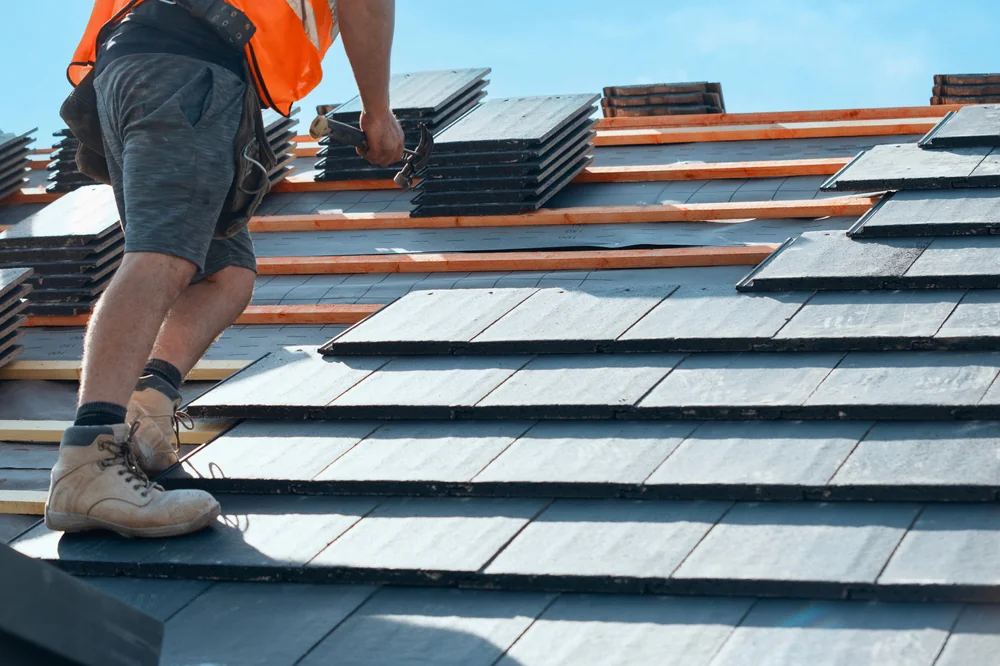
Here’s how it works: your roof absorbs heat from the sun. That heat transfers into your attic. Without proper ventilation, the attic temperature can reach 140 to 160 degrees on a summer day.
All that heat doesn’t just stay in the attic. It pushes down through your insulation into the rooms below. Your second floor gets uncomfortably warm. Your AC kicks on more frequently and runs longer trying to compensate. You’re paying to cool air that’s being heated from above, which is about as inefficient as it gets.
The ideal attic temperature should only be 10 to 15 degrees warmer than the outside air. If you’ve got proper ventilation—intake vents at the soffits and exhaust vents at the ridge—hot air rises and escapes naturally. Cooler air gets pulled in from below. The cycle keeps your attic temperature reasonable, which means your roof isn’t absorbing as much heat and your living spaces stay cooler.
When ventilation fails, you’ll notice it in your energy bills first. If your cooling costs spike during summer months and you can’t figure out why, poor attic ventilation is often the culprit. Your AC is working overtime to fight heat that shouldn’t be there in the first place.
You might also notice that your upstairs rooms never quite get as cool as the downstairs, no matter how long the AC runs. That’s a sign that heat is radiating down from an overheated attic. It’s not just uncomfortable—it’s expensive. You’re paying more every month for less comfort, and your HVAC system is taking on extra wear that shortens its lifespan.
Fixing ventilation issues isn’t always complicated. Sometimes it’s as simple as making sure existing vents aren’t blocked by insulation or debris. Other times, you need to add more intake or exhaust capacity to balance the airflow. We can assess what you’ve got and recommend improvements that’ll lower your energy costs and protect your roof at the same time.
Summer heat isn’t just about temperature. It’s about humidity too—and that’s where things get tricky.
When your attic heats up during the day, any moisture in the air becomes more concentrated. If humidity levels rise above 50 percent, you’re creating ideal conditions for mold growth, wood rot, and insulation damage. All of that can happen silently, out of sight, while you’re focused on keeping your living spaces cool.
Moisture doesn’t just come from outside. It also rises from your home—from showers, cooking, laundry, even just breathing. In a poorly ventilated attic, that moisture has nowhere to go. It condenses on cooler surfaces like roof decking and rafters. Over time, that condensation soaks into the wood, causing it to warp and rot.
You might not notice the problem until you see water stains on your ceiling or smell something musty upstairs. By then, the damage has been building for months. Mold spreads. Wooden beams weaken. Insulation loses its effectiveness, which makes your energy bills climb even higher.
Proper ventilation solves this by moving humid air out before it can condense. Ridge vents and soffit vents create airflow that carries moisture away naturally. The attic stays drier, which protects your roof structure and keeps your insulation working the way it should.
If you’re in a humid area—like parts of New Hampshire and Massachusetts during summer—this is especially important. High outdoor humidity combined with poor attic ventilation is a recipe for moisture problems that compromise your roof’s integrity and cost you money in repairs down the road.
Check your attic periodically, especially after humid stretches. Look for water stains, discolored wood, or any signs of mold growth. Feel the insulation—if it’s damp, you’ve got a moisture issue. Catching it early means you can fix the ventilation before the damage gets expensive.
Summer weather hits your roof harder than most people realize. UV rays break down shingles. Heat causes thermal stress. Poor ventilation bakes materials from the inside while driving up your energy bills. Humidity creates conditions for mold and rot.
None of it happens overnight, which is why it’s easy to miss. But over time, the cumulative effect shortens your roof’s lifespan and costs you money in higher cooling bills and eventual repairs.
The good news is that roof maintenance and proper ventilation can protect your investment. Regular inspections catch problems early. Improving attic airflow reduces heat buildup and moisture damage. Addressing small issues now prevents expensive emergencies later.
If you’re noticing higher energy bills, hot upstairs rooms, or signs of shingle deterioration, it’s worth having a professional take a look. We’ve been helping homeowners in Essex County, Middlesex County, Hillsborough County, and Rockingham County protect their roofs since 2012. Sometimes a small fix makes a big difference. Other times, you’re better off planning for a replacement before you’re dealing with leaks and water damage. Either way, you’ll know where you stand—and what your roof needs to make it through many more summers.
Summary:
Article details:
Share: