You’ve been putting it off. Those windows are drafty, the siding’s showing its age, and your energy bills keep climbing. You know both need attention, but the price tags make you want to tackle one now and deal with the other in a few years.
Here’s what most homeowners don’t realize until it’s too late: doing these projects separately actually costs you more. Not just in money, but in hassle, potential damage, and missed energy savings. When you pair window installation with siding replacement, you’re not doubling your headache—you’re cutting it in half while protecting your investment.
Let’s talk about why timing matters, what actually happens during installation, and how to make the decision that saves you the most money and stress in the long run.
Think about how your home’s exterior actually works. Your windows aren’t just sitting in holes in the wall. They’re surrounded by moisture barriers, capping, flashing, and trim—all of which connect directly to your siding system.
When we install windows, we need to extend moisture barriers behind where your siding sits. If your siding is already new, we’ll have to cut into it, remove sections, install the barrier, then patch everything back together. That means paying for extra labor and risking damage to materials you just invested in.
The same issue happens with window capping. This protective aluminum or vinyl layer wraps around your window frames to direct water away from your home’s interior. During siding removal, this capping often gets damaged. If you replace siding first, you’ll need to recap your windows during the window project—essentially paying for the same work twice.
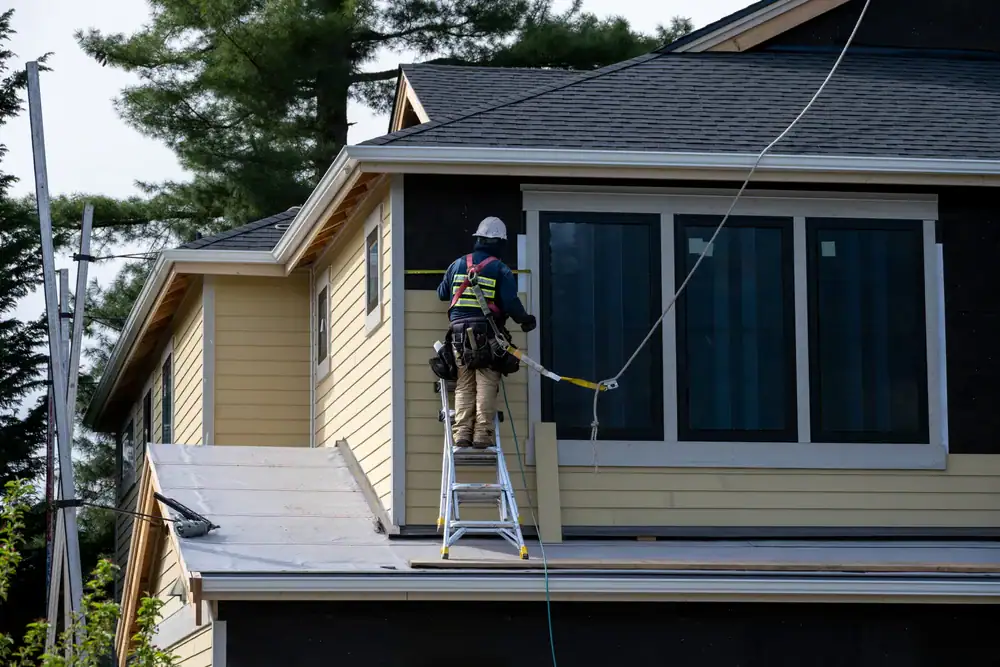
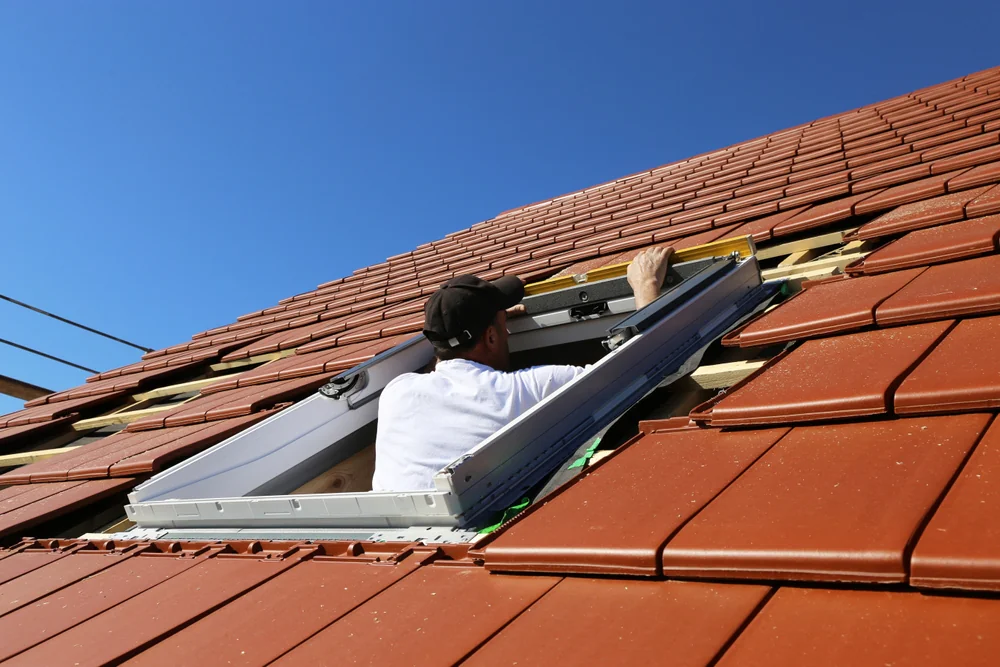
Here’s what happens when we tackle both projects together. We start with your windows because that’s the foundation everything else builds on. The old windows come out, and before the new ones go in, our team installs fresh moisture barriers that extend from the window frame back under where your siding will sit.
Next comes the window capping. This protective layer gets installed around the exterior window frames, creating a weather-tight seal. Because your old siding is already off at this point, there’s nothing in the way. The capping goes on clean, gets sealed properly, and creates the drainage plane that keeps water from sneaking behind your new siding.
Then the siding installation begins. We can cut and fit each piece precisely around your new windows, knowing exactly where everything sits. The siding tucks behind the window capping, creating that overlapping protection that actually keeps water out. Everything integrates the way it’s supposed to, with each component supporting the others.
Compare that to the alternative. If you install siding first, contractors have to work around your old windows, making educated guesses about where new ones might sit someday. When you finally get around to the window project, those installers need to carefully remove sections of your siding without cracking it, install barriers and capping, then reinstall the siding and hope it still looks right. You’re paying for removal and reinstallation labor that could have been avoided entirely.
The difference isn’t just about convenience. It’s about whether your home’s weather protection actually works. Those moisture barriers and drainage planes need to be continuous and properly overlapped. When you’re patching things together across two separate projects, gaps and mistakes are almost inevitable. Water finds those gaps. Once it’s in your walls in Essex County MA or Hillsborough County NH, you’re looking at rot, mold, and structural repairs that cost exponentially more than doing the exterior right the first time.
Let’s talk numbers because that’s what actually matters when you’re making this decision. A typical window replacement for a whole home in Essex County MA or Rockingham County NH runs between $3,000 and $7,000 depending on how many windows you have and what quality you choose. Vinyl siding installation for an average home costs $8,000 to $10,000. Do them separately, and you’re looking at two mobilizations, two sets of permits, two rounds of site prep and cleanup.
Now add the hidden costs. When you do siding first and windows later, contractors charge extra to remove and reinstall siding sections around each window. That’s typically $200 to $400 per window in additional labor. For a home with 10 windows, you just added $2,000 to $4,000 to your window project. Then there’s the window capping that got damaged during siding removal and needs replacement. Another $100 to $150 per window.
When you coordinate both projects with us, one crew handles everything in a single timeline. You pay for site setup once. Permits get pulled once. Our crew is already there with scaffolding and equipment, so the marginal cost of adding the second project is significantly less than doing it standalone later. We offer bundling advantages when you combine projects, helping you maximize your investment.
But the biggest savings come from energy efficiency. Old windows account for 25 to 30 percent of energy loss in the average home. Aging siding with gaps and poor insulation accounts for even more. When you replace just one, you’re still hemorrhaging energy through the other. Replace both at once, and you create what’s called a complete thermal envelope. Your HVAC system doesn’t have to work as hard. Homeowners in Massachusetts who upgrade to ENERGY STAR Most Efficient windows save between $101 and $583 annually on energy bills. Add properly installed insulated siding, and those savings increase further.
Over a 10-year period, that’s $1,000 to $5,000+ in energy savings you wouldn’t see if you left one component outdated. The payback period on your investment shrinks dramatically when you’re actually capturing those efficiency gains instead of letting them leak away through whichever component you haven’t replaced yet.
Want live answers?
Connect with a Paradise Remodeling Inc. expert for fast, friendly support.
The timeline matters because you need to know what you’re committing to. Window installation typically takes one to three days depending on how many windows you’re replacing and whether there are any complications with rot or structural issues. Siding replacement takes one to two weeks for most homes, though that varies based on your home’s size, architectural complexity, and what we find when we remove the old siding.
When you combine both projects, expect the full process to take about two to three weeks from start to finish. We’ll walk you through the schedule beforehand so you know when your home will be exposed, when you’ll need to keep pets inside, and when you should plan to be available for walkthroughs and approvals.
Here’s something most contractors won’t tell you upfront: weather delays happen. In Essex County MA, Middlesex County MA, Hillsborough County NH, and Rockingham County NH, you’re dealing with temperature swings from below zero in January to 95 degrees in July. You’ve got nor’easters, ice storms, humidity that won’t quit, and freeze-thaw cycles that wreak havoc on exterior materials.
Fall is actually the ideal time for combined window and siding projects in New England. Temperatures are moderate, which matters more than you might think. Vinyl siding contracts when it’s cold and expands when it’s hot. Install it during a freeze, and when summer comes, those panels can buckle and warp because they weren’t spaced properly for expansion. Install during a heat wave, and winter contraction can create gaps.
Moderate fall temperatures let us space everything correctly. The materials are at their mid-range size, so there’s room for both expansion and contraction throughout the year. Plus, you’re getting everything sealed up before winter hits. That matters when you’re facing months of snow, ice, and those brutal wind chills that find every tiny gap in your home’s envelope.
We have contingency plans for weather delays. Our crews can work in light rain if we’re at certain stages of the project, but heavy precipitation or high winds mean stopping work to protect your home. We make sure your contract includes clear language about weather delays and how they affect your timeline and payment schedule. We have tarping systems and temporary protection measures ready to deploy if a storm rolls in unexpectedly.
The other consideration is interior protection. During window replacement, your home is briefly exposed to the outside. We work quickly, replacing one window at a time to minimize exposure, but you still need to plan for it. Move furniture away from windows, take down curtains and blinds, and plan for some dust and debris. If you have exterior outlets, let us know so we can use those instead of running cords through your house.
Not all windows and siding are created equal, especially when you’re dealing with New England’s demanding climate. For windows, you want ENERGY STAR certified models rated for the Northern Zone. That means low-E coatings that reflect heat back into your home during winter and block it during summer. Look for U-factors of 0.30 or lower and argon or krypton gas fills between panes.
Vinyl windows are the most popular choice in this region because they don’t conduct heat like aluminum frames, they never need painting, and they hold up well against moisture. Wood frames offer better insulation but require more maintenance. Fiberglass is the premium option—strongest, most energy efficient, but also the most expensive. For most homeowners in Middlesex County MA and Rockingham County NH focused on ROI, quality vinyl windows hit the sweet spot between performance and cost.
For siding, vinyl remains the dominant choice in Massachusetts and New Hampshire for good reason. It’s affordable, low maintenance, and when properly installed, it lasts 20 to 40 years. Modern vinyl siding comes in dozens of colors and textures, many mimicking wood grain so convincingly you can’t tell the difference from 10 feet away. Insulated vinyl siding adds an extra layer of rigid foam backing that boosts your wall’s R-value and helps with energy efficiency.
Fiber cement siding is the other option worth considering. Brands like James Hardie engineered these products specifically to handle harsh climates. Fiber cement resists rot, doesn’t attract pests, won’t burn, and handles freeze-thaw cycles better than almost anything else. It costs more upfront—typically 50 to 75 percent more than vinyl—but it lasts longer and holds paint better if you want to change colors down the road.
The ROI on these materials is well documented. According to industry data, vinyl siding replacement delivers about 80 percent ROI at resale. Window replacement delivers 85 percent ROI. But here’s what those numbers don’t capture: the ongoing savings from lower energy bills, the avoided costs of emergency repairs when your old materials finally fail, and the simple quality of life improvement from living in a more comfortable, better-looking home.
When you’re choosing materials, don’t just go with the cheapest option. We’ll talk with you about what actually makes sense for your home’s age, architectural style, and your long-term plans. If you’re planning to sell in the next few years, focus on broad appeal and solid mid-range materials. If you’re staying put for the next decade or more, investing in higher-end products that require less maintenance and deliver better performance makes more sense.
Here’s what it comes down to. You can split these projects apart, save some money in the short term, and deal with higher costs and potential problems down the road. Or you can do it right the first time, coordinate everything, and actually get the full benefit of your investment.
The homeowners who are happiest with their exterior renovations are the ones who treated their home as a complete system instead of a collection of separate parts. When your windows and siding work together the way they’re designed to, you get better weather protection, lower energy bills, and an exterior that actually looks like it belongs together.
If you’re ready to stop putting off these projects and start seeing real results, we can help you figure out the right approach for your home and budget in Essex County MA, Middlesex County MA, Hillsborough County NH, and Rockingham County NH.
Summary:
Article details:
Share: