Hear from Our Customers

Your energy bills drop. That’s the first thing most Wilmington homeowners notice after a proper siding installation—consistent indoor temperatures and lower monthly costs, especially during those brutal February cold snaps.
Your home stops looking tired. Peeling paint, cracked panels, and that overall weathered look disappear. You get curb appeal that actually makes you proud when you pull into the driveway.
But here’s what matters more: your home is protected. New siding with proper house wrapping stops water from sneaking behind your walls. No more mold concerns, no more rot creeping into your framing, no more wondering if the next storm is going to cause real damage. In Wilmington’s climate—with freezing temps, ice, and those surprise nor’easters—that protection isn’t optional.
And if you’re thinking about selling eventually, the numbers back this up. Homes in Massachusetts with updated siding command up to 7% higher sale prices than comparable properties without it. Vinyl siding installation alone delivers 116% ROI in this region, well above the national average.
We’ve been serving Wilmington and the Greater Boston area since 2012, but our owner has been doing this work since 2006. That’s nearly two decades of dealing with New England weather, old New England homes, and the specific challenges that come with both.
We’re licensed in Massachusetts, Owens Corning certified, and we rank in the top 8% of over 139,000 licensed contractors in the state according to BuildZoom. Those credentials matter because siding installation done wrong creates problems you won’t see for months—until water damage shows up or panels start buckling.
Wilmington has roughly 7,000 households, and we’ve worked on enough of them to know what holds up here and what doesn’t. We’re not the cheapest option, and that’s intentional. You’re paying for installation that lasts 30+ years, not work that needs fixing in five.
First, we assess your current siding and what’s underneath. If there’s rot or water damage in your sheathing, we need to address that before new siding goes up. Skipping this step is how contractors create bigger problems down the road.
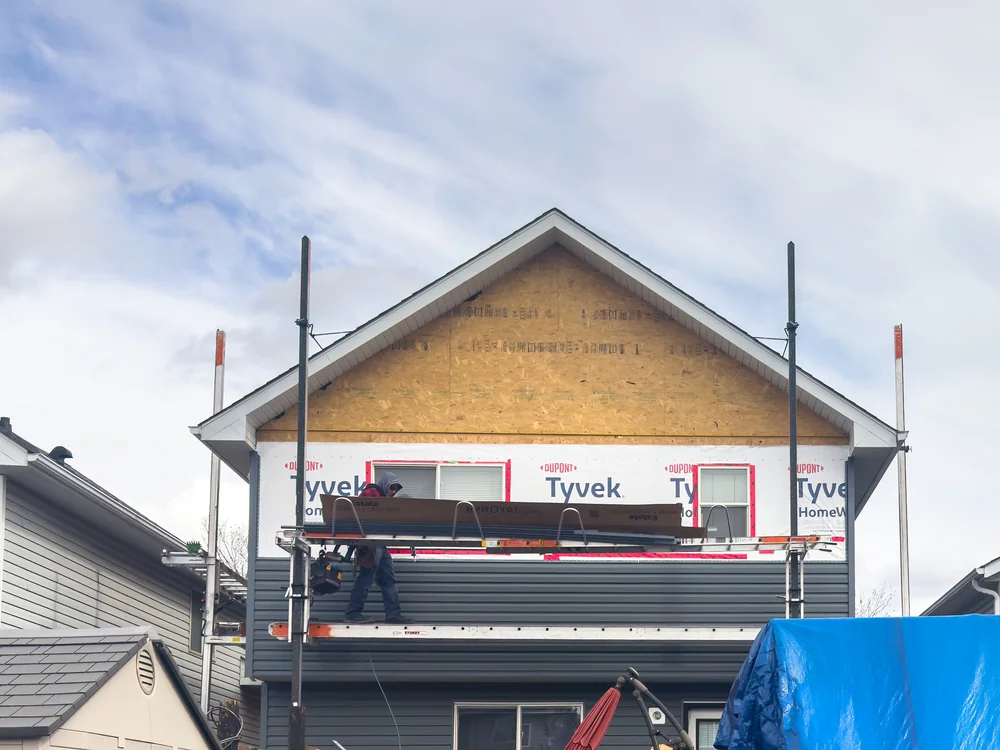
Next comes house wrapping. We use breathable wrap with properly taped seams and window wrap—this is your waterproofing layer. It’s not glamorous, but it’s the difference between siding that protects your home and siding that just covers it.
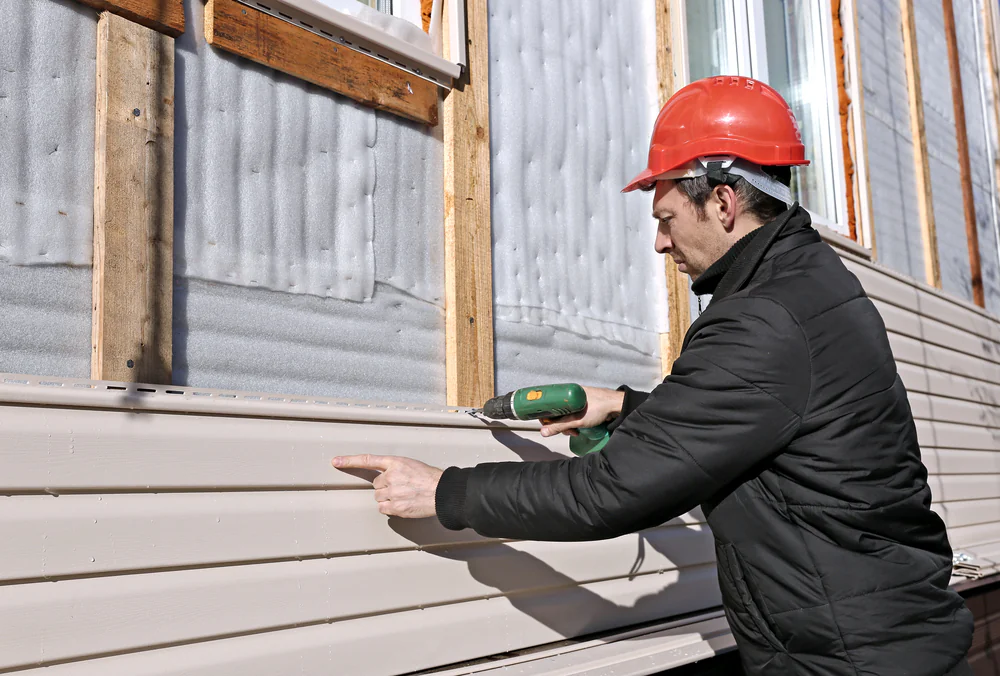
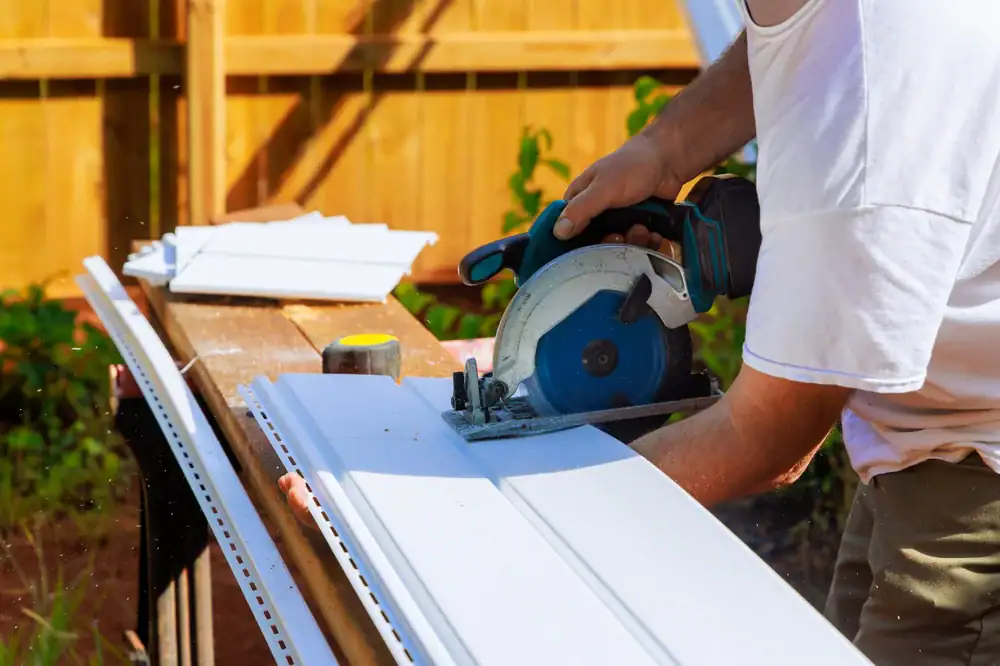
Then we install your chosen material. Whether you’re going with vinyl siding installation for its low maintenance and energy efficiency, or James Hardie fiber cement for its durability against Wilmington’s freeze-thaw cycles, the installation process matters as much as the material itself. Panels need proper spacing for expansion, fasteners need correct placement, and corners need flashing that actually keeps water out.
The whole process typically takes several days to a couple weeks depending on your home’s size. You’ll see progress daily, and we clean up at the end of each day because we’re working at your home, not a job site.
Ready to get started?
You get complete removal of old siding and inspection of what’s underneath. Any damaged sheathing gets replaced—not covered up. You get professional house wrapping with sealed seams and proper flashing around every window and door.
The siding itself comes with options. Vinyl siding is lighter, more breathable, and significantly more energy efficient when installed with insulation backing. Annual maintenance costs run about $50-100, usually just hosing it down. It’s the practical choice for most Wilmington homeowners, and it’s why vinyl remains popular in this area.
Fiber cement siding costs more upfront but offers different advantages. We use James Hardie’s HZ5 product line—engineered for climates with freezing temperatures and extreme seasonal swings. It’s five times thicker than vinyl, won’t ignite if exposed to flames (which can lower your insurance rates), and pests won’t touch it. It handles 140mph winds and won’t warp during summer heat.
Most Wilmington siding installation projects run between $5,000 and $13,000 depending on your home’s size and material choice. That’s based on actual completed projects in this area, not national averages that don’t account for New England labor rates or our specific climate requirements. James Hardie comes with a 30-year transferable warranty. Vinyl typically lasts 15-25 years with minimal maintenance.
Most homeowners in Wilmington spend between $5,000 and $13,000 for complete siding installation. The average falls around $5,278 to $6,147 based on actual local project data.
Your specific cost depends on your home’s square footage, the material you choose, and what we find when we remove your old siding. If there’s rot or water damage in the sheathing underneath, that adds to the project cost because it needs fixing before new siding goes up.
Vinyl siding installation sits at the lower end of that range. Fiber cement costs more—sometimes significantly more—but delivers different benefits like fire resistance and superior durability against Wilmington’s freeze-thaw cycles. Wood siding costs the most upfront and requires $300-600 annually in maintenance, so most homeowners skip it unless they’re matching historical home requirements.
Vinyl makes sense if you want low maintenance, good energy efficiency, and the best ROI. It delivers 116% return on investment in Massachusetts—higher than the national average. It’s lighter, more breathable, and costs less upfront and long-term.
James Hardie fiber cement makes sense if durability matters most. It’s five times thicker than vinyl, handles extreme weather better, and offers fire resistance that can lower your insurance rates. It won’t warp in summer heat or crack during winter freezes, and the HZ5 product line is specifically engineered for Wilmington’s climate.
The tradeoff is cost. Fiber cement runs higher for materials and installation, and while it’s low maintenance, it’s not as low as vinyl. Most Wilmington homeowners choose vinyl for its practicality and cost-effectiveness. But if you’re planning to stay in your home for decades and want the most durable option available, James Hardie is hard to beat.
Most residential siding installations take one to three weeks depending on your home’s size and complexity. A typical single-family home in Wilmington usually takes about a week to ten days.
Weather affects the timeline. We can’t install siding in heavy rain or extreme cold because adhesives and sealants won’t cure properly. Wilmington’s weather can be unpredictable, especially during spring and fall, so some flexibility helps.
If we find rot or water damage when we remove your old siding, that adds time. We’re not covering up problems—we’re fixing them so your new siding actually protects your home. That might add a few days to the project, but it prevents much bigger problems later. You’ll see daily progress, and we’ll keep you updated if anything changes the timeline.
House wrapping is your waterproofing layer—it goes on after old siding comes off and before new siding goes up. We use breathable wrap that lets moisture escape from inside your walls while blocking water from outside.
Every seam gets taped with waterproof tape. Every window and door gets wrapped separately with proper flashing. This isn’t optional or corner-cutting territory—it’s how you prevent water from getting behind your siding and into your wall cavities.
In Wilmington’s climate, with freeze-thaw cycles and nor’easters dumping rain sideways, proper house wrapping is the difference between siding that lasts 30 years and siding that creates mold problems in five. Most homeowners never see this layer once siding covers it, but it’s doing the actual work of protecting your home. We don’t skip steps here.
Yes, but how much depends on your current situation and what you install. If your existing siding is old, damaged, or installed without proper insulation backing, you’re losing conditioned air through your walls.
Insulated vinyl siding installation creates a thermal barrier that helps maintain consistent indoor temperatures. You’ll notice it most during Wilmington’s winter months—your furnace won’t cycle as often, and rooms that used to feel drafty stay comfortable. Most homeowners see the difference in their first heating bill after installation.
The energy efficiency benefit compounds over time. Lower monthly utility bills add up over the 15-25 year lifespan of vinyl siding. That’s part of why vinyl delivers such strong ROI in Massachusetts—you’re not just improving appearance and protection, you’re reducing operating costs for decades. Fiber cement with proper installation offers similar benefits, though vinyl’s lighter weight and breathability give it a slight edge for energy efficiency specifically.
If you’re seeing widespread issues—fading across multiple walls, cracking in several areas, or visible warping—replacement makes more sense than patching. Repairs work for isolated damage, but when problems are spread across your home, you’re better off replacing everything.
Check for water damage signs inside your home. Peeling paint on interior walls near exterior walls, moisture stains, or musty smells suggest water is getting behind your siding. At that point, you need to remove the siding to assess what’s happening underneath anyway, so replacement becomes the logical choice.
Age matters too. Most siding materials last 15-25 years depending on type and maintenance. If your siding is approaching that range and showing wear, replacement gives you another 20-30 years of protection plus updated energy efficiency. In Wilmington’s climate, where your exterior takes constant weather abuse, trying to squeeze extra years out of failing siding usually costs more in energy bills and eventual water damage than just replacing it properly.