Hear from Our Customers

Your siding takes a beating in South Hampton, NH. Freeze-thaw cycles crack it. Ice dams tear it loose. Summer humidity creeps behind it and starts rotting your sheathing before you even notice.
New siding installation stops that cycle. You get a weather barrier that actually works—one that keeps moisture out, holds heat in, and doesn’t need scraping or painting every few years. Your heating bills drop because cold air stops sneaking through gaps. Your home looks better, sure, but more importantly, it performs better.
Vinyl siding installation in South Hampton, NH gives you decades of protection without the upkeep. Fiber cement siding gives you that plus fire resistance and the look of real wood. Either way, you’re done dealing with peeling paint and water stains.
We’ve been handling siding installation in South Hampton, NH and surrounding areas for over a decade. We’re an Owens Corning Preferred Contractor, which means we meet their standards for installation quality and customer service—not just once, but consistently.
South Hampton homes deal with specific challenges. The rural setting means more exposure to wind and temperature swings. Homes built in the late ’80s and early ’90s often have siding that’s reached the end of its lifespan. We know what holds up here and what doesn’t.
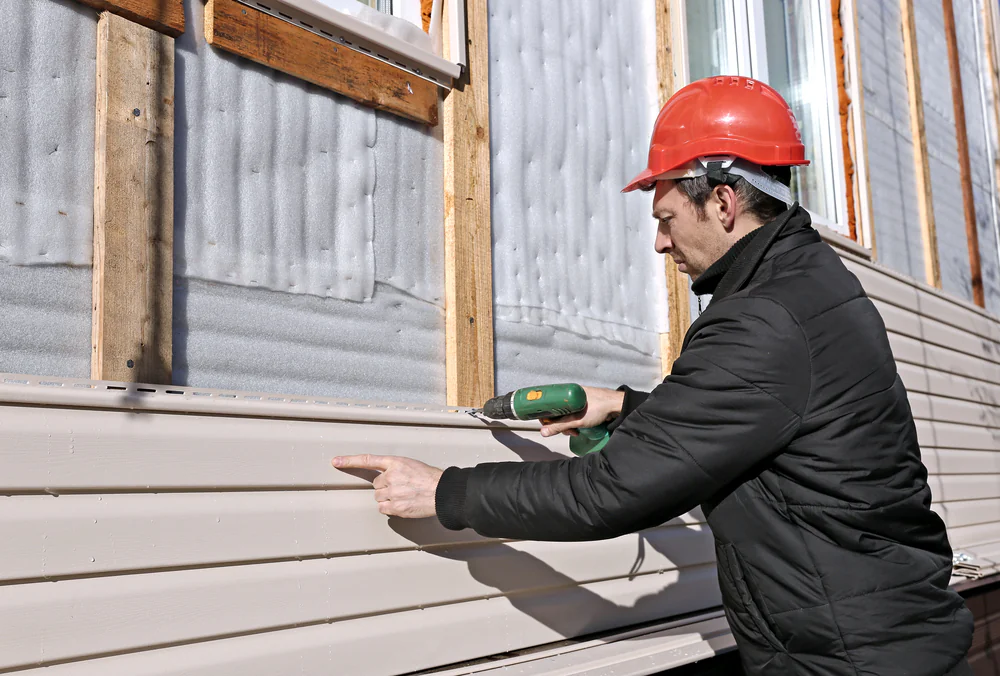
You’re not getting a crew that learned siding installation last month. You’re getting experienced installers who understand house wrapping, proper flashing, and why shortcuts cost you more later.
First, we come out and look at what you’re dealing with. We check for moisture damage, measure everything, and talk through your options—vinyl, fiber cement, James Hardie, whatever makes sense for your home and budget.
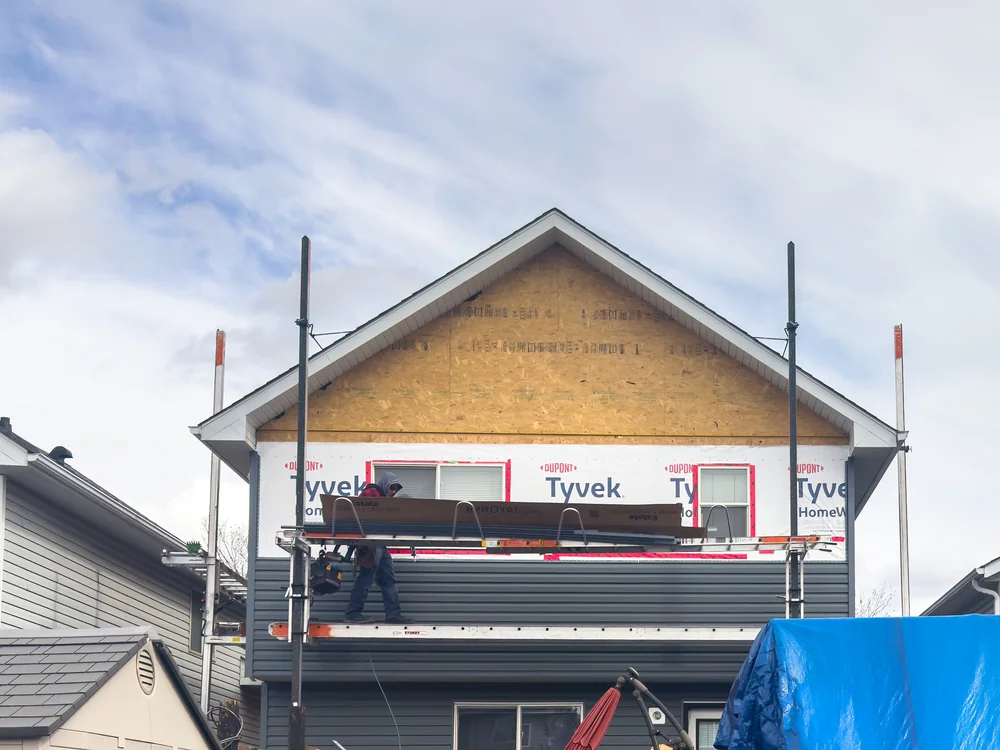
Once you decide to move forward, we pull permits if needed and order materials. Then we strip off your old siding and inspect the sheathing underneath. If there’s rot or damage, we fix it before anything new goes up. We install house wrapping as a moisture barrier—not optional, standard. This step matters more than most contractors admit.
Then we install the new siding, making sure every piece is level, properly fastened, and sealed at the seams. We flash around windows and doors correctly so water can’t sneak behind. We clean up completely when we’re done. The whole process usually takes a week to ten days depending on your home’s size, and you’ll know the timeline before we start.
Ready to get started?
You get protection from New England weather that actually lasts. South Hampton sits in HardieZone 5, which means your siding needs to handle freezing temps, snow load, and rapid temperature changes. The right siding installation handles all of that without cracking or warping.
You get lower energy bills. Foam-backed vinyl siding or properly installed fiber cement siding adds insulation value to your walls. Less heat escapes in winter. Less cool air leaks out in summer. The difference shows up in your utility costs within the first year.
You get options that fit what South Hampton homeowners actually want. James Hardie fiber cement gives you the wood look without wood’s maintenance problems—no painting every few years, no rot, Class A fire resistance. Vinyl siding installation costs less upfront and still gives you decades of performance. Both handle moisture better than what’s probably on your house right now.
And you stop dealing with constant maintenance. No more scraping. No more caulking every spring. No more repainting. Your home looks good and stays protected without you having to think about it.
Vinyl siding installation in South Hampton, NH typically runs $8 to $10 per square foot installed, so you’re looking at roughly $14,400 to $18,000 for an average-sized home. Fiber cement siding costs more—usually $11 to $13 per square foot, which brings the total to around $19,800 to $23,400 for the same house.
That’s a significant gap upfront, but fiber cement lasts longer and holds up better against impact and fire. It also looks more like real wood, which matters if you care about resale value. Vinyl requires less maintenance overall and costs less to repair if something does get damaged.
The right choice depends on how long you plan to stay in your home and what matters more to you—lower initial cost or maximum durability. Both options will outlast what’s on your house now if they’re installed correctly with proper house wrapping underneath.
You need it. House wrapping creates a moisture barrier between your sheathing and your siding. Without it, water that gets behind your siding—and water always finds a way—sits against your wood sheathing and starts rotting it.
Some contractors skip house wrapping to save time or cut costs. That’s a mistake that costs you thousands later when moisture damage spreads. In South Hampton, NH, where you get freeze-thaw cycles, heavy snow, and humid summers, that moisture barrier isn’t optional—it’s the difference between siding that protects your home and siding that just covers it.
Proper house wrapping also improves your home’s energy efficiency by reducing air infiltration. It’s not expensive to add during siding installation, but it’s extremely expensive to fix the damage later if you skip it. Any siding contractor who tells you it’s not necessary is either uninformed or trying to lowball the job.
James Hardie fiber cement siding is engineered specifically for climate zones like ours. South Hampton sits in HardieZone 5, and the product is manufactured to handle the freeze-thaw cycles, temperature extremes, and moisture levels we get here. With proper installation, you’re looking at 30-plus years of performance.
The ColorPlus finish that comes on James Hardie products is baked on in a factory-controlled process, which means it resists fading far better than field-applied paint. You won’t need to repaint. The material itself won’t rot, crack from cold, or provide food for insects. It’s also Class A fire rated, which matters more than most people think.
The key phrase is “with proper installation.” James Hardie requires specific installation methods to maintain the warranty. That means correct fastening, proper clearances, and appropriate flashing. If it’s installed wrong, you lose the warranty protection and the siding won’t perform as designed. That’s why working with James Hardie installers who know the requirements matters.
Yes, but how much depends on what you’re replacing and what you’re installing. If your current siding is old, damaged, or poorly installed, you’re losing conditioned air through gaps and cracks. New siding installation with proper house wrapping seals those leaks.
Foam-backed vinyl siding adds insulation value directly to your walls. It increases your home’s R-value, which means better heat retention in winter and better cooling efficiency in summer. Fiber cement siding doesn’t insulate as much by itself, but when installed over house wrap with proper air sealing, it still improves your home’s thermal envelope significantly.
Most South Hampton homeowners see a noticeable difference in their energy bills within the first year. The exact savings depend on your home’s size, how much siding you’re replacing, and how bad the air leakage was before. But if you’re currently dealing with drafts or rooms that are hard to heat, new siding installation will help. It’s not magic, but it’s one of the most effective upgrades you can make for energy efficiency.
We find out during the tear-off and we fix it before installing anything new. Moisture damage, rot, and insect damage are common behind old siding, especially if the previous installation didn’t include proper flashing or house wrapping. You can’t see it until the old siding comes off.
When we find damage, we remove the affected sheathing and framing, replace it with new material, and make sure the underlying structure is solid before we continue. This adds to the project cost and timeline, but there’s no way around it. Installing new siding over rotted sheathing is like putting a bandage on an infection—it doesn’t fix anything and makes the problem worse.
The good news is that once we address any structural issues and install your new siding correctly with house wrapping and proper flashing, you won’t deal with that kind of hidden damage again. The new installation prevents moisture from getting behind the siding in the first place, which is how it should work. Most South Hampton homes built in the ’80s and ’90s are reaching the point where this kind of repair is common, so you’re not alone if we find issues.
Start with your budget and your timeline. Vinyl siding installation costs less—sometimes $5,000 to $8,000 less for a typical home. If that difference matters to you right now, vinyl is a solid choice that still gives you decades of protection and virtually no maintenance.
James Hardie fiber cement costs more upfront but gives you better fire resistance, more authentic wood appearance, and longer warranty coverage. It also tends to increase resale value more than vinyl, which matters if you’re planning to sell within the next ten years. In South Hampton, NH, where home values are high, that resale consideration carries more weight.
Think about what bothers you most about your current siding. If it’s constant painting and maintenance, both options solve that. If it’s worried about fire risk or impact damage, fiber cement is stronger. If it’s just that your siding looks tired and isn’t protecting your home anymore, vinyl handles that at a lower cost. There’s no wrong answer—just the right fit for what you need and what you want to spend.
Other Services we provide in South Hampton