Hear from Our Customers

Your heating costs drop when cold air stops sneaking through cracked, warped siding. Properly installed insulated vinyl siding can cut your energy bills by up to 20%, which means the investment pays itself back within 7-10 years just from what you save each winter.
You’re not repainting every few years. You’re not scraping, priming, or dealing with rot. Fiber cement and vinyl options give you decades of protection without the upkeep that wood siding demands.
And when it’s time to sell, you’re looking at recouping 80-88% of your siding investment in increased home value. That’s one of the highest returns you’ll find in exterior remodeling, and it’s because buyers in Peterborough, NH know what New England weather does to a house. They’ll pay more for a home that’s already protected.
We’ve been handling exterior projects across New Hampshire for years, and we’ve built our reputation on one thing: doing the job right. That means proper house wrapping, correct flashing around windows and doors, and installation that follows manufacturer specs to the letter.
Feliciano and our team respond fast when storms damage your home, and we communicate clearly through every step. We’re an Owens Corning Preferred Contractor, which means we’ve met strict standards for quality and service—not just once, but consistently.
Peterborough homeowners care about their properties. The homes here range from classic New England styles near the village to newer builds on the outskirts, and each one deserves attention to detail. We’re not the cheapest option, and that’s intentional. You’re paying for work that lasts and a team that shows up when they say they will.
First, we come out to assess your home. We’re looking at the current siding condition, checking for underlying damage, and measuring everything accurately. You’ll get a detailed quote that breaks down materials and labor—no surprises later.
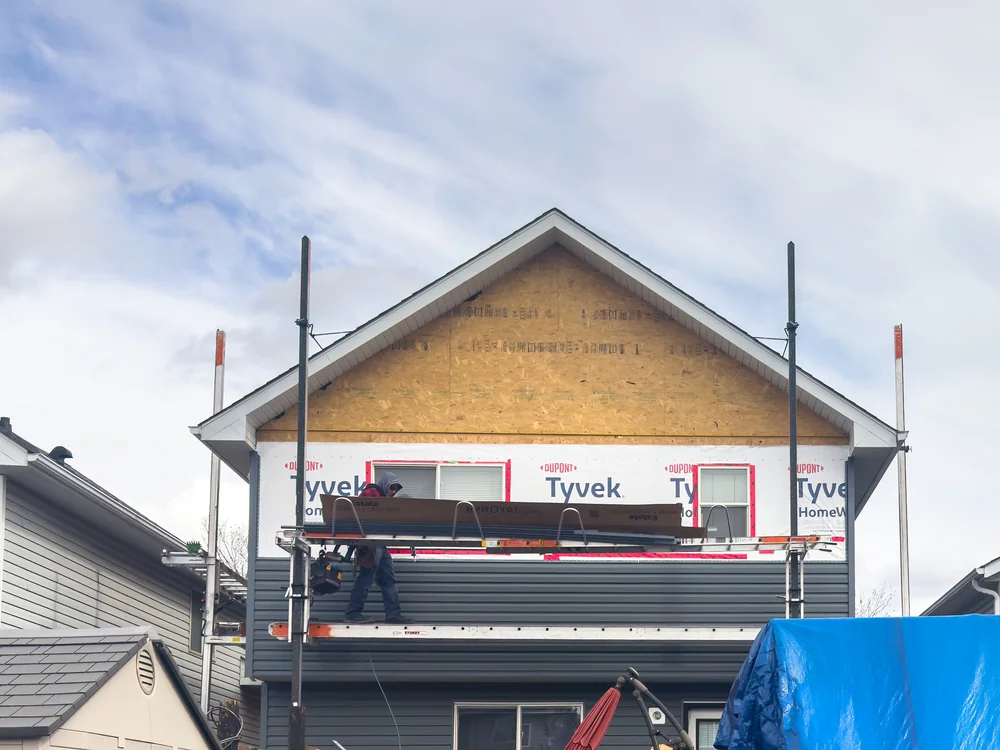
Once you approve, we schedule the work around your timeline. We start by removing old siding carefully, inspecting the sheathing and framing for any rot or structural issues that need addressing. Then comes house wrapping and moisture barrier installation, which is critical in New Hampshire’s climate. This step protects your home from water infiltration during freeze-thaw cycles.
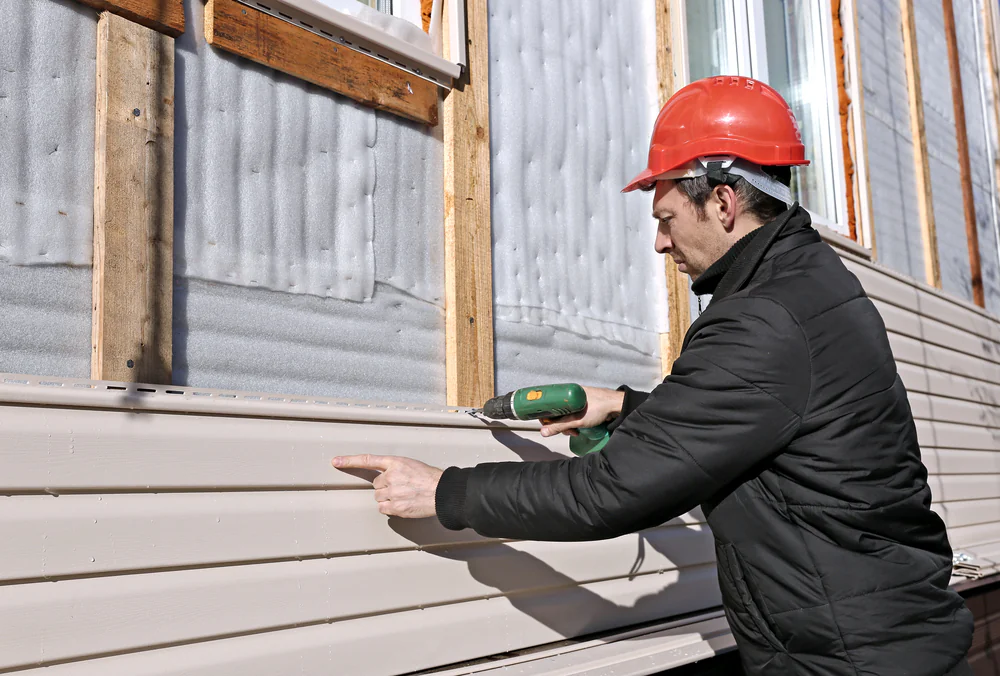
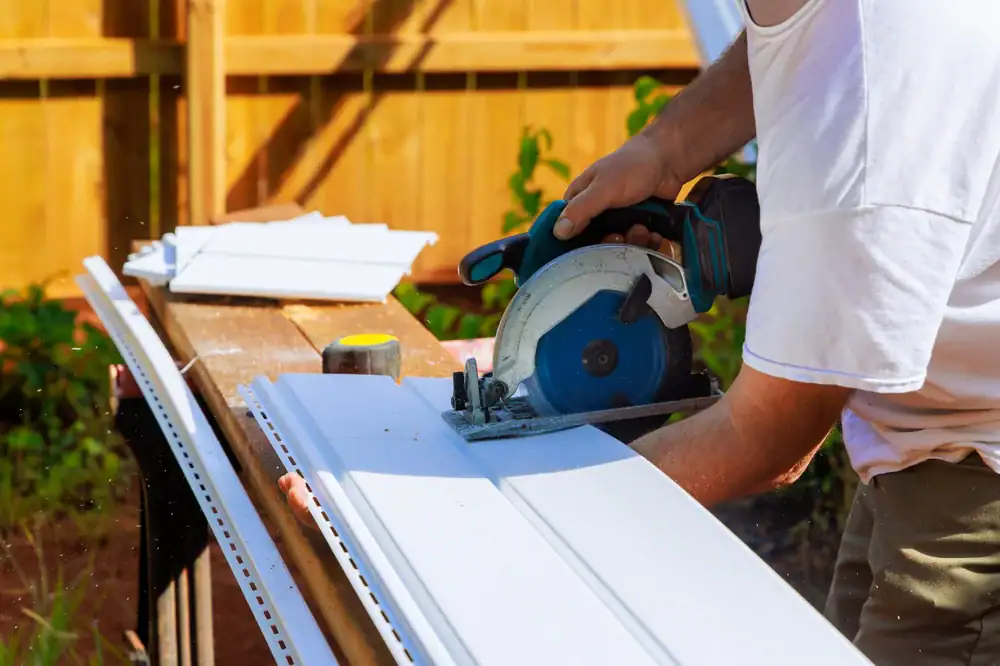
Next, we install the siding itself—whether that’s vinyl, James Hardie fiber cement, or another material you’ve chosen. Every piece gets fastened correctly, with proper spacing for expansion and contraction. We pay close attention to corners, seams, and transitions around windows and doors because that’s where most water problems start.
Finally, we install trim, clean up completely, and walk you through the finished work. You’ll know how to maintain it (which is minimal) and what to watch for over the years.
Ready to get started?
You have options. Vinyl siding runs about $8-10 per square foot installed, which puts a typical Peterborough home around $14,400-18,000. It’s low-maintenance, available in dozens of colors, and holds up well against weather when installed correctly.
James Hardie fiber cement costs more—$11-13 per square foot, or roughly $19,800-23,400 for an average home. But it won’t ignite if exposed to flame, it doesn’t fade, and many insurance companies offer discounts because it’s non-combustible. That matters in a region where wood stoves and fireplaces are common.
Both options handle New Hampshire’s humidity, snow load, and temperature swings better than wood. You’re not dealing with rot, you’re not repainting, and you’re not replacing boards every few years. The upfront cost is higher than a patch job, but the lifespan and performance make it worth it.
We also handle all the details most homeowners don’t think about: proper ventilation behind the siding, correct nailing patterns, and flashing that actually directs water away from vulnerable spots. Those details are what separate a 15-year installation from a 40-year one.
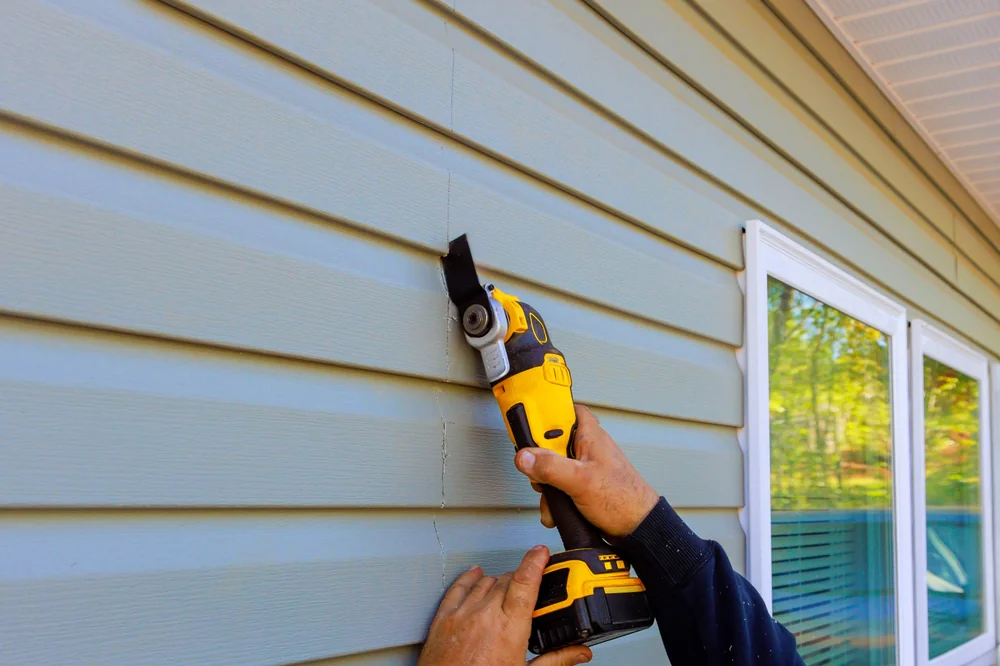
Most homes take 5-10 days depending on size, complexity, and weather. A straightforward ranch with minimal trim work might be done in under a week. A two-story colonial with lots of corners, dormers, and custom trim details will take longer.
We don’t rush. If we hit unexpected rot or structural issues when we remove old siding, we address those properly before moving forward. That might add a day or two, but it prevents bigger problems down the road.
Weather plays a role too. We can install vinyl siding year-round as long as temperatures stay above freezing, but we won’t work in heavy rain or high winds. We’d rather pause for a day than compromise the installation quality.
Both handle cold, snow, and humidity well, but they do it differently. Vinyl expands and contracts with temperature changes, which is why proper installation with the right nailing technique matters so much. When done correctly, it flexes without cracking and lasts 30-40 years with zero maintenance.
Fiber cement like James Hardie doesn’t expand as much. It’s denser, heavier, and more impact-resistant. It won’t dent if hail hits it, and it’s completely fireproof. The colors are baked in, so they don’t fade the way some vinyl can over decades.
The tradeoff is cost and weight. Fiber cement requires more labor to install because it’s heavier and needs to be cut on-site. But if you’re in a high-wind area or near wooded areas where fire risk is a concern, it’s worth considering. We’ll walk you through both options based on your home’s specific situation and your budget.
Usually, yes. If your home is more than 15-20 years old, the existing house wrap has likely degraded or was never installed correctly in the first place. Older homes sometimes have tar paper instead of modern synthetic wraps, and that breaks down over time.
House wrapping is your home’s real weather barrier. Siding is the first line of defense, but wind-driven rain will get behind it. Proper wrapping stops that moisture from reaching your sheathing and framing. In Peterborough’s climate, where you get freeze-thaw cycles all winter, any trapped moisture turns into ice and causes serious damage.
We inspect the existing wrap when we remove old siding. If it’s intact and properly installed, we might be able to work with it. But in most cases, installing fresh house wrap adds maybe $1,000-1,500 to the project and gives you decades of protection. It’s not where you want to cut costs.
Yes, but how much depends on what you’re replacing and what you’re installing. If you’re going from old, cracked wood siding with no insulation underneath to insulated vinyl, you’ll notice a difference within the first winter. Most homeowners see 15-20% reductions in heating costs.
The savings come from eliminating air infiltration. Old siding develops gaps, cracks, and loose joints that let cold air in and warm air out. New siding with proper house wrapping and insulated backing creates a continuous thermal barrier.
That said, siding alone won’t fix a poorly insulated attic or leaky windows. It’s one piece of your home’s overall energy performance. But it’s a significant piece, especially in a climate where you’re heating your home six months a year. The energy savings are real, and they add up over the 30-40 year lifespan of the siding.
Call us right away. Storm damage needs quick attention because even small breaches let water into your wall cavity. We’ve responded to wind damage, falling tree limbs, and ice-related issues all over Peterborough, NH.
Most quality siding can be repaired without replacing entire sections. If a few pieces get torn off or cracked, we can match the material and color, remove the damaged sections, and install new pieces. With vinyl, the interlocking design makes this relatively straightforward. With fiber cement, we’re cutting and fitting individual boards.
Your homeowner’s insurance often covers storm damage, and we can work with your adjuster to document everything properly. We’ve done this enough times to know what insurance companies need to see. The key is addressing it fast—before that small damaged area turns into a major water intrusion problem that affects your sheathing, insulation, and interior walls.
If the damage is localized to one area—maybe from a specific impact or a small section of rot—repairs make sense. But if you’re seeing widespread issues like cracking across multiple walls, fading, warping, or rot in several spots, replacement is usually the better move.
Here’s why: piecemeal repairs on failing siding turn into an endless cycle. You fix one section, then another fails six months later. You’re spending money repeatedly and never actually solving the underlying problem. Plus, if your siding is 25-30 years old, the rest of it will start failing soon even if it looks okay now.
We’ll give you an honest assessment. Sometimes a repair buys you a few more years while you budget for full replacement. Sometimes the damage is extensive enough that repairs don’t make financial sense. We’re not going to push you toward a bigger project if a repair actually solves your problem, but we’ll also tell you when you’re throwing good money after bad.
Other Services we provide in Peterborough