Hear from Our Customers

Your heating bills drop when cold air stops sneaking through gaps around old siding. That’s what proper house wrapping and moisture barriers do—they seal your walls against drafts and keep conditioned air where it belongs.
You stop worrying about woodpeckers, termites, and rot when you switch to fiber cement. It doesn’t feed pests or absorb moisture like wood does. It doesn’t crack and buckle through winter like cheap vinyl.
Your home value climbs. Fiber cement siding installation in Merrimack recoups up to 68% of the cost when you sell, according to Remodeling magazine. But more than that, you’re done repainting every few years and patching damage every spring. The maintenance burden just disappears.
We’ve been installing siding around Merrimack for years. We know what freeze-thaw cycles do to homes near the Merrimack River. We’ve seen what happens when contractors skip the house wrap or rush the flashing.
We’re James Hardie Elite Preferred contractors, which means we’ve hit their highest certification level. That’s not just a badge—it means we install to their exact specs so your 30-year warranty actually holds up.
You’ll find us in Bedford, Manchester, Goffstown, and throughout southern NH. We’re local, we’re licensed, and we don’t disappear after the job’s done.
We start with your walls, not the siding. If there’s rot or moisture damage underneath, we fix it first. No point covering up problems that’ll just get worse.
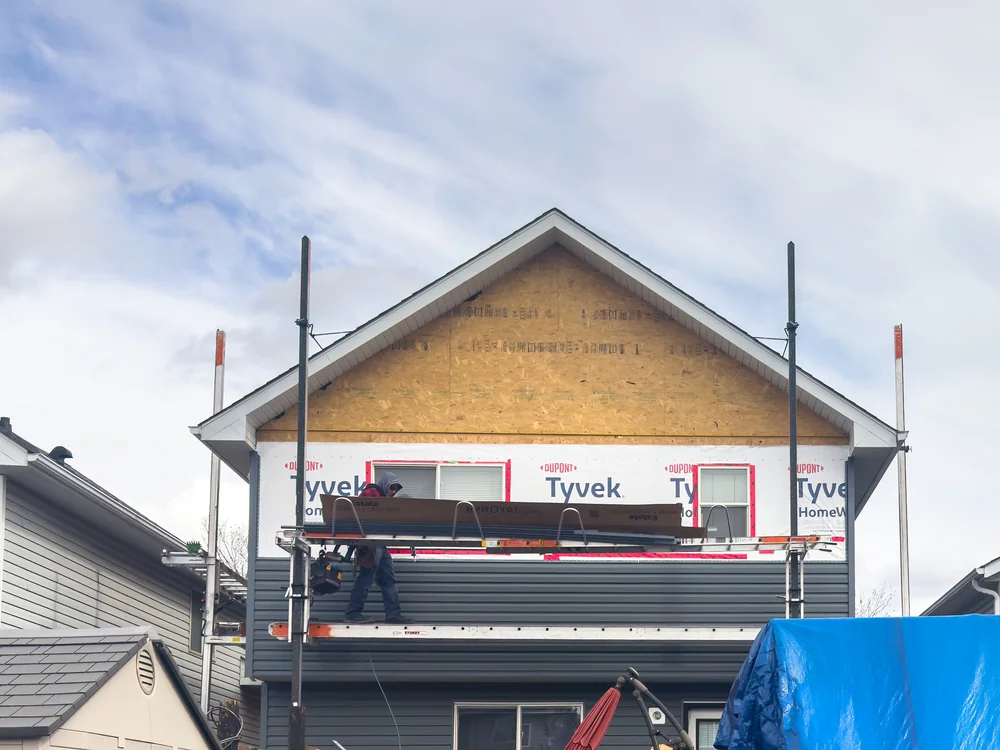
Next comes the house wrapping in Merrimack—a breathable moisture barrier that channels water away from your sheathing while letting vapor escape. This step separates amateurs from professionals. Skip it and you’re inviting mold and wood rot.
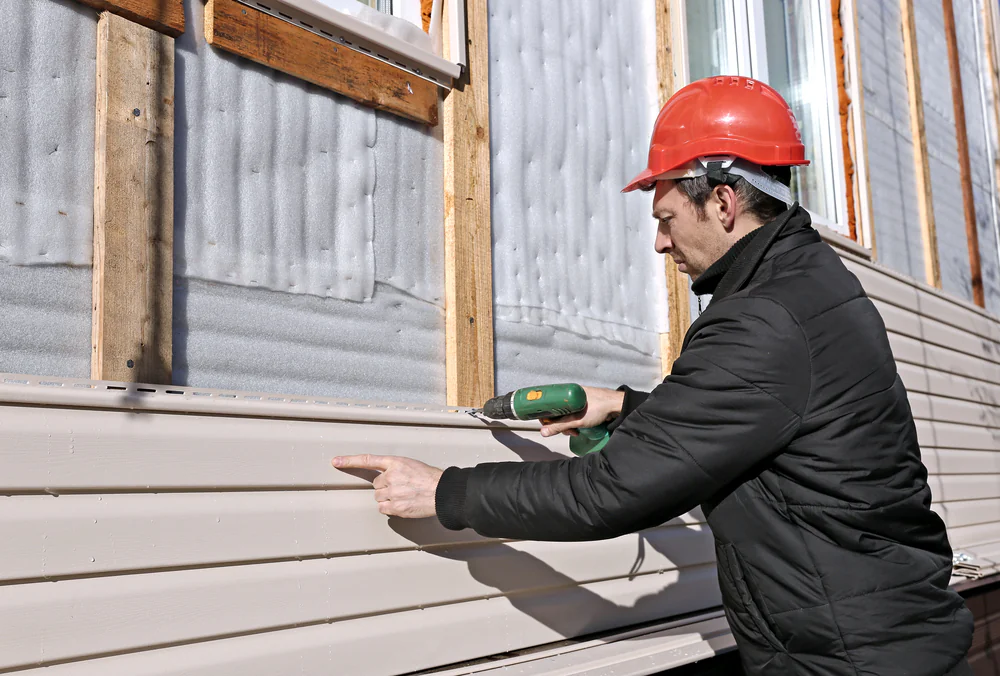
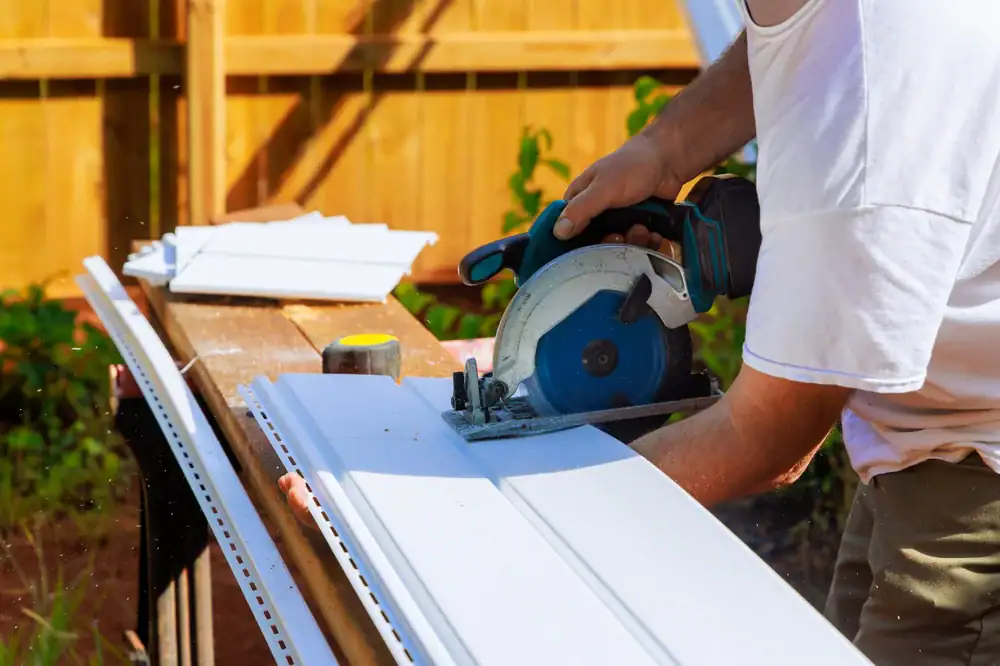
Then we install the siding itself—fiber cement, vinyl, whatever you chose—with proper spacing, flashing, and fastening. Every seam gets sealed. Every corner gets wrapped. We’re not racing to the next job.
Final step is cleanup and a walkthrough. You see what we did, why we did it, and how to maintain it. Then we hand over your warranty paperwork and we’re done.
Ready to get started?
Vinyl siding installation in Merrimack typically runs $5,000 to $13,000 for most homes, based on actual local project data. Fiber cement costs more upfront—usually $9,000 to $22,000 depending on your home’s size and complexity—but it lasts decades longer and needs almost zero maintenance.
Those numbers include removal of old siding, house wrap installation, moisture barriers, the siding itself, trim work, and cleanup. We don’t charge extra for fixing minor sheathing issues or adding insulation where it makes sense.
Merrimack homes face brutal freeze-thaw cycles every winter. That’s why we recommend James Hardie’s HZ5 product line—it’s specifically engineered for climates with extreme temperature swings, snow, and ice. It won’t crack when water freezes in the material like cheaper options do.
You’re also getting fire resistance. Fiber cement won’t ignite or melt. It won’t feed termites. And it holds color without fading, so you’re not repainting every five years like you would with wood.
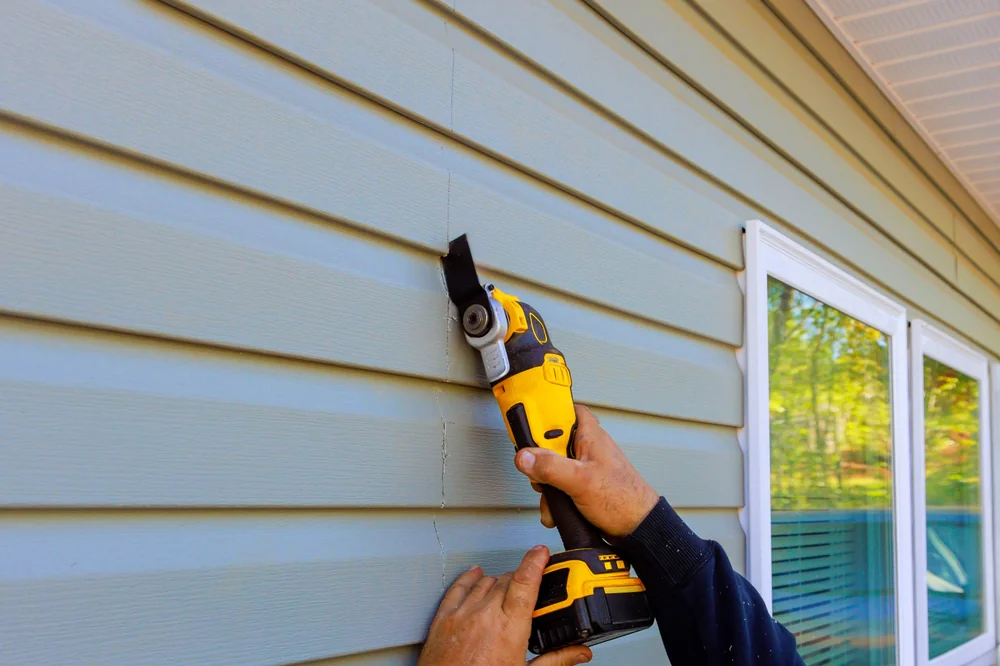
Most siding jobs take one to two weeks from start to finish. That includes removing your old siding, inspecting and repairing the sheathing, installing house wrap and moisture barriers, putting up the new siding, and finishing all the trim work.
Weather can stretch that timeline. We don’t install in heavy rain or when temperatures drop below freezing—the materials won’t seal properly and you’ll end up with problems down the road.
Bigger homes or complex designs with lots of corners, dormers, and architectural details take longer. We’ll give you an exact timeline after we see your property, but we don’t rush jobs to hit arbitrary deadlines. You want it done right, not done fast.
Vinyl expands and contracts with temperature changes. In Merrimack’s climate, that means it can crack in extreme cold or warp in summer heat. Cheaper vinyl gets brittle after a few freeze-thaw cycles and starts breaking around fasteners.
Fiber cement doesn’t move. It’s engineered to handle sub-zero temps and the constant freeze-thaw action we get here. Water can’t penetrate it, so there’s nothing to freeze and expand inside the material.
Vinyl also melts if there’s a fire. Fiber cement won’t ignite or contribute fuel to flames. And while vinyl fades over time—especially darker colors—fiber cement holds its color for decades. You’re looking at 30-50 years of life with fiber cement versus 15-25 with vinyl, assuming both are installed correctly.
Yes. House wrap is your actual weather barrier. Siding is just the first line of defense—it keeps most water out, but wind-driven rain and snow will get behind it. That’s guaranteed.
House wrap stops that moisture from reaching your sheathing and insulation. It’s breathable, so vapor from inside your home can escape, but liquid water can’t get through. Without it, you’re setting yourself up for mold, rot, and structural damage you won’t see until it’s expensive to fix.
A lot of older Merrimack homes don’t have house wrap at all. If we’re tearing off your old siding and there’s nothing underneath, we’re adding it. It’s not optional if you want your new siding to actually protect your home.
James Hardie fiber cement typically costs 30-50% more than mid-grade vinyl upfront. For a typical Merrimack home, you’re looking at $12,000-$22,000 for Hardie versus $7,000-$13,000 for quality vinyl.
But the math changes when you factor in longevity and maintenance. Hardie lasts 50+ years with almost no upkeep. Vinyl needs replacement in 20-25 years, and you’ll likely repair sections before that. Wood siding needs repainting every 5-7 years at $3,000-$8,000 per paint job.
Hardie also recoups more of its cost—about 68% according to Remodeling magazine’s Cost vs. Value Report. And because it’s fire-resistant and low-maintenance, some insurance companies offer discounts that offset the higher initial cost over time.
We can install fiber cement year-round as long as temperatures stay above freezing during installation and for 24 hours after. The caulks and sealants need time to cure properly, and they won’t do that in freezing temps.
Vinyl is trickier in winter. It gets brittle below 40 degrees and can crack when you cut or nail it. Some manufacturers void warranties for winter installation. If we do install vinyl in cold weather, we have to bring materials inside to warm up first and work in smaller sections.
The best time for siding installation in Merrimack is late spring through mid-fall. You get consistent temperatures, lower humidity, and predictable weather. But if you’ve got damage that can’t wait, we’ll make winter installation work—we just need the right conditions.
Almost nothing. Rinse it with a garden hose once or twice a year to remove dirt and pollen. Check your caulk lines every few years and touch up any spots that are cracking—that’s a 20-minute job.
You don’t need to repaint. James Hardie’s ColorPlus finish is baked on at the factory and carries a 15-year warranty against fading, cracking, and peeling. Even their primed-only boards hold paint 2-3 times longer than wood because the material doesn’t absorb moisture.
Keep snow and ice away from the base of your siding in winter. When snow piles up and melts repeatedly, it can trap moisture against the bottom edge. Just shovel it back a foot or so and you’re fine. That’s the extent of winter maintenance.