Hear from Our Customers

You’ve seen what happens when siding fails. Drafts creep in during January. Energy bills climb. Water finds its way behind panels, and suddenly you’re dealing with rot, mold, or worse.
Proper siding installation in Hampton, NH changes that. You get a home that sheds water instead of absorbing it. One that holds heat when it’s 15 degrees outside and keeps cool air in during humid July weeks. The kind of exterior that doesn’t fade to a sad beige after three seasons of coastal sun and salt spray.
When your siding actually does its job, you stop thinking about it. No more weekend inspections after every nor’easter. No more wondering if that crack is letting moisture into your walls. Just a home that looks good and performs even better, whether you’re facing a blizzard or a summer squall rolling in off the Atlantic.
We operate as an Owens Corning Preferred Contractor, which means we meet standards most companies don’t bother with. Our BuildZoom score puts us in the top 8% of Massachusetts licensed contractors—not because we pay for rankings, but because we show up, do the work correctly, and don’t leave messes behind.
Hampton homes face specific challenges. Salt air corrodes cheaper materials. High winds test every fastener. Freeze-thaw cycles expose bad installation within a single winter. We’ve worked on enough coastal properties to know what holds up and what fails, and we only install systems we’d put on our own homes.
You’re not getting a crew that learned siding installation last month. You’re getting licensed, insured professionals who understand house wrapping, moisture barriers, and why proper flashing matters more than most homeowners realize.
We start with an inspection of your current exterior. Not a sales pitch—an actual assessment of what’s failing, what’s salvageable, and what your home needs based on its age, orientation, and exposure to weather.
Once you approve the plan, we remove old siding carefully. This isn’t a demolition derby. We’re looking for hidden damage, checking sheathing condition, and identifying problems before they become your problems. If we find rot or structural issues, you’ll know before we proceed.
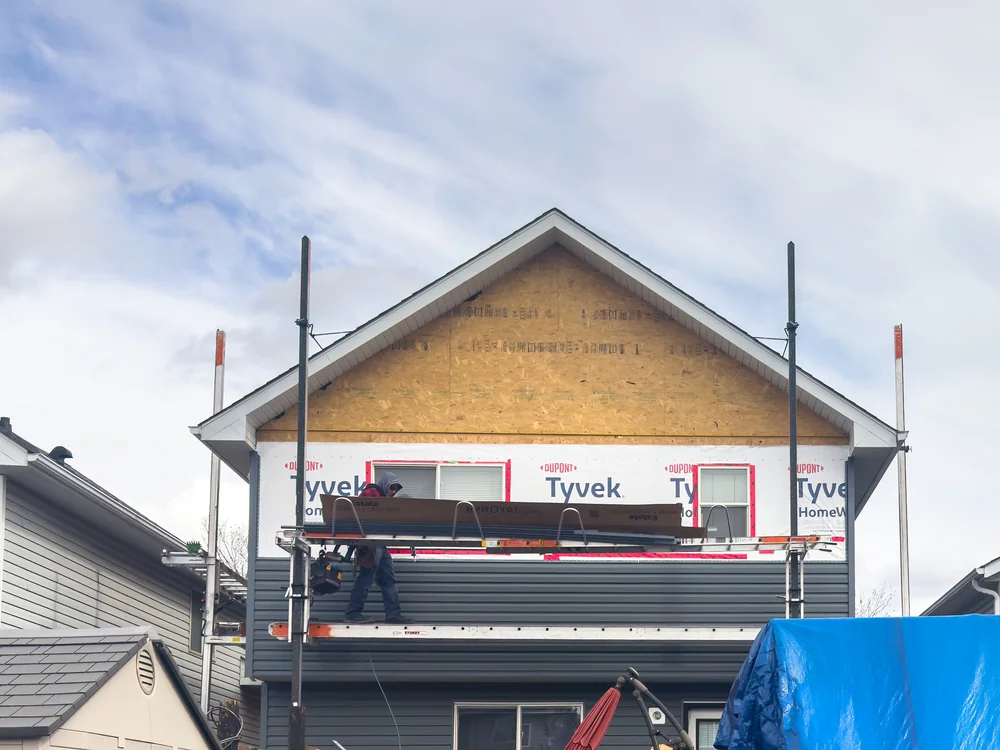
Next comes house wrapping and moisture barriers. This step separates amateur work from professional siding installation in Hampton, NH. We install breathable barriers that stop water infiltration while allowing vapor to escape—critical in humid coastal climates. Then we add insulated backing where it makes sense for your home’s energy performance.
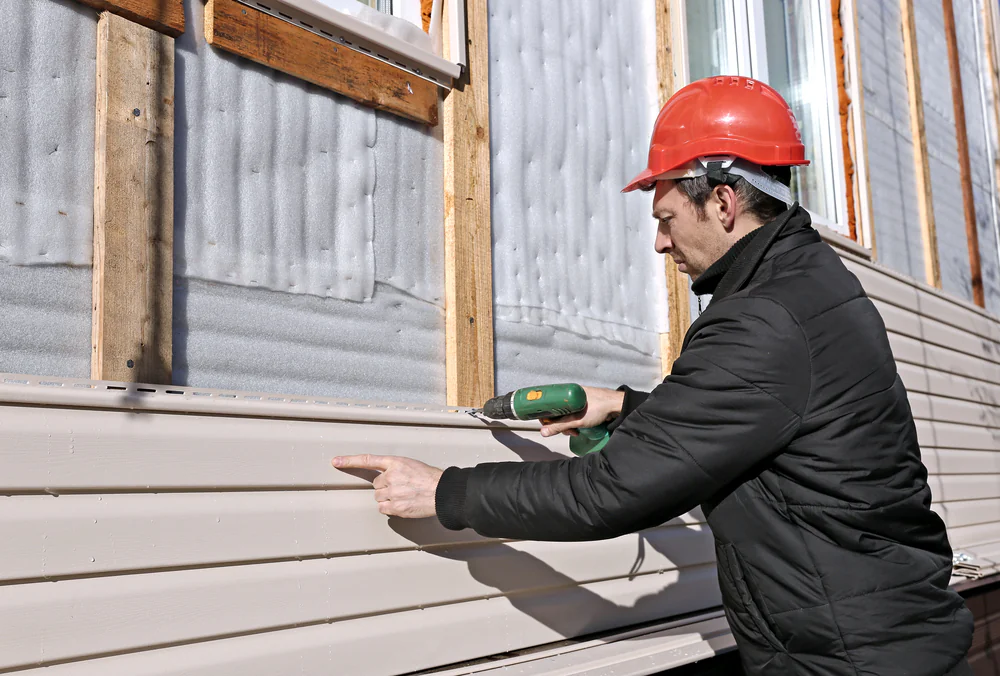
Finally, we install your chosen siding material. Every panel gets fastened according to manufacturer specs, not shortcuts. Corners get proper J-channel. Flashing goes around every window and door. We’re building a weather-resistant envelope that’ll protect your home for decades, not just until we cash your check.
Ready to get started?
Vinyl siding installation in Hampton, NH typically runs $14,400 to $18,000 for an 1,800-square-foot home. That includes quality materials rated for coastal conditions, proper house wrapping, insulated backing, and professional installation. You’re looking at siding that lasts 20 to 40 years with virtually zero maintenance—no painting, no staining, no scraping every five years.
Fiber cement siding cost in Hampton, NH sits higher, around $19,800 to $23,400 for the same size home. But you’re getting 30 to 50 years of durability, superior fire resistance, and James Hardie’s ColorPlus Technology that doesn’t fade like standard paint. For coastal properties that take a beating from salt air, that extra investment often makes sense.
Both options include house wrapping that prevents moisture penetration while letting your walls breathe. We’re not just nailing up panels—we’re building a complete weather barrier system engineered for New England’s climate extremes. Hampton sits right on the coast, which means your home faces humidity, salt exposure, high winds, and temperature swings that inland properties never see. Your siding needs to handle all of it without failing.
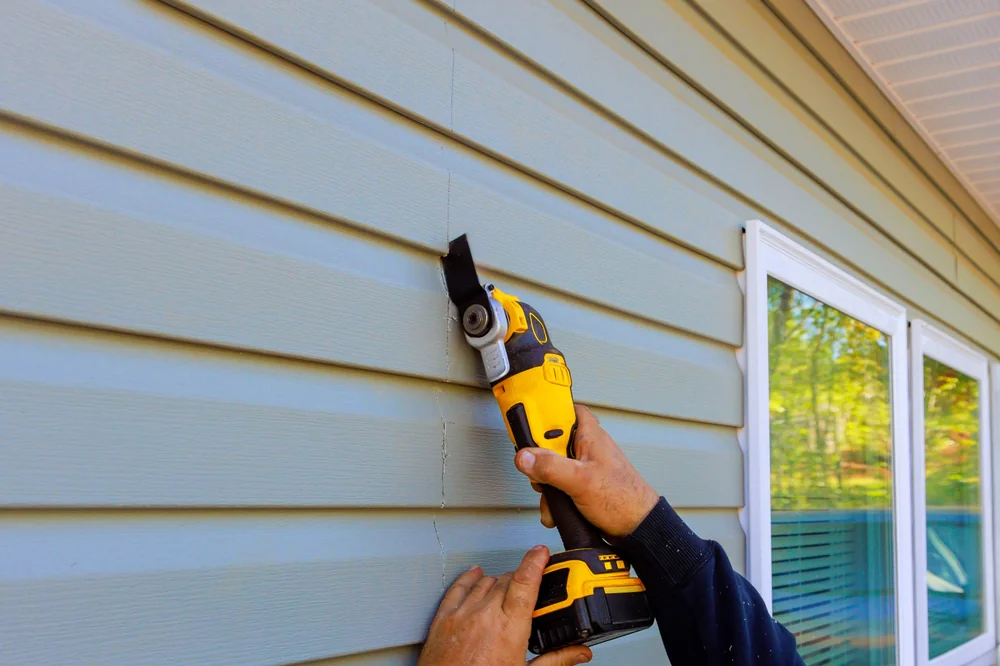
Most siding installation projects in Hampton, NH take one to two weeks, depending on your home’s size and complexity. A straightforward 1,800-square-foot ranch might be done in five to seven days. Larger homes, or those with multiple stories, dormers, or detailed trim work, can push closer to two weeks.
Weather plays a role too. We don’t install siding in heavy rain or when temperatures drop below manufacturer minimums—doing so compromises adhesion and long-term performance. Hampton’s coastal location means we sometimes pause for wind conditions that would make installation unsafe or ineffective.
The timeline includes removing old siding, repairing any sheathing damage we find, installing house wrapping and moisture barriers, adding insulation backing, and then installing your new siding with proper flashing and trim. Rushing any of these steps creates problems you’ll pay for later, so we schedule realistically and communicate clearly if weather or discoveries change the timeline.
Vinyl and fiber cement both perform well in Hampton’s coastal environment, but for different reasons. Vinyl siding handles salt air without corroding, sheds water effectively, and costs less upfront. Quality vinyl rated for coastal installations won’t fade quickly or become brittle from UV exposure, and it requires zero maintenance beyond occasional washing.
Fiber cement, particularly James Hardie products engineered for coastal climates, offers superior durability and fire resistance. It won’t warp from humidity, won’t rot if water gets behind it, and holds color longer than any other siding material. The fiber cement siding cost in Hampton, NH runs higher, but you’re getting a 30 to 50-year lifespan and performance that justifies the investment if you plan to stay in your home long-term.
Both need professional installation with proper house wrapping and flashing. Hampton’s location means salt spray, high winds, and moisture are constant factors. The siding material matters, but installation quality matters more. Bad installation ruins even premium materials within a few years.
Yes, and it’s not optional if you want your siding to last. House wrapping creates a weather-resistant barrier that stops water from reaching your sheathing and framing while allowing moisture vapor to escape from inside your walls. Without it, you’re basically inviting rot and mold to set up permanent residence in your wall cavities.
Hampton’s coastal climate makes house wrapping even more critical. You’re dealing with salt-laden humidity, wind-driven rain, and occasional nor’easters that push water into every gap and seam. Proper house wrapping channels that water down and out, away from your home’s structure, instead of letting it soak into wood that was never meant to stay wet.
We see homes all the time where previous contractors skipped house wrapping or used cheap products that failed within years. The siding looks fine from the street, but behind it, the sheathing is black with mold or crumbling from rot. Fixing that damage costs exponentially more than installing proper moisture barriers in the first place. It’s not an upsell—it’s basic building science for coastal New England construction.
James Hardie fiber cement siding in Hampton, NH typically costs $11 to $13 per square foot installed, compared to $8 to $10 per square foot for quality vinyl siding installation. For an average 1,800-square-foot home, that’s roughly $19,800 to $23,400 for fiber cement versus $14,400 to $18,000 for vinyl—a difference of about $5,000 to $6,000.
That extra cost buys you measurably better performance. James Hardie’s ColorPlus Technology resists fading far longer than vinyl. The material won’t melt from reflected sunlight or crack from impact. It’s rated for Class A fire resistance, the highest available. And the HardieZone system means you’re getting siding specifically engineered for New England’s climate extremes, not generic products designed for milder regions.
The return on investment matters too. Fiber cement siding delivers around 121% ROI according to recent data, compared to 94% for vinyl. If you’re planning to sell within a few years, fiber cement often recoups more of its cost. If you’re staying long-term, you’re looking at 30 to 50 years of durability versus 20 to 40 for vinyl. Both are solid choices—your decision depends on budget, timeline, and how long you plan to own the home.
Properly installed siding with insulated backing can noticeably reduce heating and cooling costs, especially if your current siding is old or poorly installed. Adding a one-inch foam layer under vinyl siding increases your wall’s R-value by about 5, which translates to less heat loss in winter and less heat gain in summer.
How much you save depends on what you’re replacing. If your current siding has no house wrapping, gaps around windows, or damaged sections letting air infiltrate, new siding installation in Hampton, NH will make a bigger difference. Homes built before modern energy codes often see the most dramatic improvements—some homeowners report 15% to 20% reductions in heating costs after upgrading to insulated siding systems.
The energy efficiency comes from multiple factors working together. House wrapping stops air infiltration. Insulated backing reduces thermal transfer. Properly flashed windows and doors eliminate drafts. You’re not just getting better-looking siding—you’re getting a complete thermal envelope that keeps conditioned air inside where it belongs. In Hampton’s climate, where you’re heating six months and cooling three, those improvements add up to real money every year.
We stop, document it, and show you exactly what we found before proceeding. Hidden damage is common on coastal homes—water gets behind failing siding, sits against sheathing, and creates rot that’s invisible until the old material comes off. You deserve to know what’s happening with your home’s structure before we cover it back up.
Most often, we find isolated areas of sheathing rot around windows, doors, or where flashing failed. We’ll replace damaged sections with new sheathing, treat the framing if needed, and make sure everything’s solid before installing house wrapping and new siding. This adds cost, but leaving rot in place guarantees bigger problems down the road—problems that cost far more to fix once they spread.
Occasionally we find more extensive damage that requires additional repairs. When that happens, we provide a clear estimate for the extra work and explain why it’s necessary. You’re never obligated to proceed, but understand that covering structural damage with new siding doesn’t fix anything—it just hides problems that’ll continue getting worse. Our job is to give you a home exterior that’ll last decades, and that means addressing issues we find, not ignoring them.