Hear from Our Customers

Your heating bills drop because your walls aren’t bleeding air anymore. That’s what happens when old, warped siding gets replaced with properly installed fiber cement or vinyl that actually seals your home.
You stop worrying every time a storm rolls through Bedford. No more wondering if moisture is creeping behind cracked panels or if that next freeze-thaw cycle will split something else open.
Your home looks like you care about it again. Fresh siding changes how your house sits in the neighborhood—and how you feel pulling into the driveway. It’s not vanity. It’s about protecting what you’ve built and maintaining the value you’ve worked for. When you’re ready to sell, that investment shows up in your appraisal. Fiber cement siding replacement recovers about 88% of its cost at resale, which beats most other exterior upgrades you could make.
We’ve been handling siding projects across Southern New Hampshire for over a decade. We’re based in Methuen, licensed in Massachusetts, and we know what Bedford homes face every winter.
We’re an Owens Corning Preferred Contractor, which means we meet their standards for installation quality and customer service. That’s not marketing talk—it’s a requirement they enforce. We also install James Hardie fiber cement, which is engineered specifically for climates like ours with the HZ5 product line.
You’re not getting a crew that learned siding last summer. You’re working with people who’ve seen what happens when house wrapping gets skipped or when someone uses the wrong fasteners in freeze-thaw conditions. We’ve fixed enough bad jobs to know what not to do on yours.
First, someone from our team comes out to look at your house. We’re checking your current siding condition, measuring everything, and talking through what you actually need versus what a salesperson might try to upsell you on. You’ll get material options that make sense for your budget and Bedford’s climate.
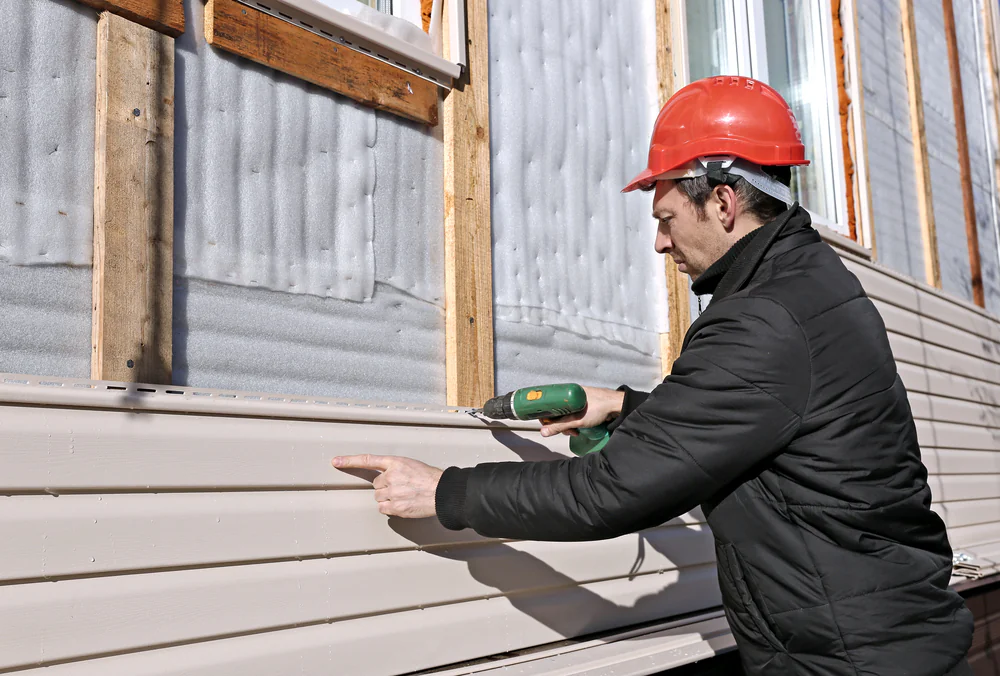
Once you approve the plan, we schedule the work and order materials. On day one, we protect your landscaping, remove old siding carefully, and inspect your sheathing and house wrapping. If we find rot or water damage underneath, we tell you before we go further. No surprises halfway through the job.
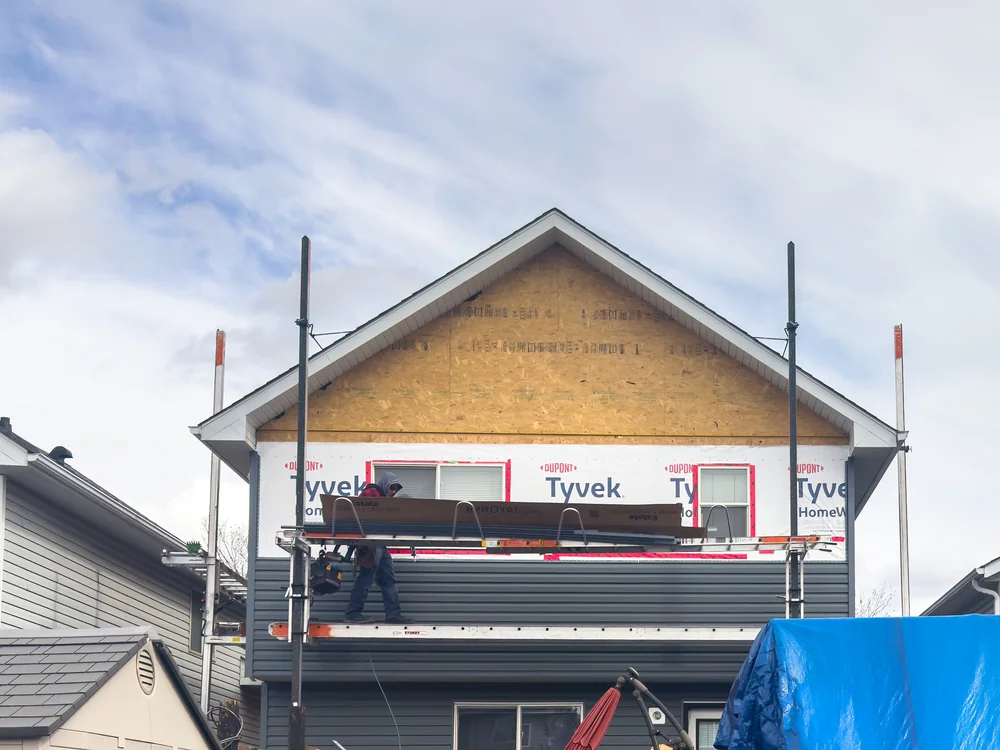
Installation starts with proper house wrapping if your current barrier is compromised. Then we install your new siding—vinyl, fiber cement, or whatever you chose—following manufacturer specs and local building codes. We’re not rushing to get to the next job. Each panel gets fastened correctly, flashed properly, and checked as we go.
Cleanup happens daily, and when we’re done, your yard doesn’t look like a construction zone. You get a final walkthrough, warranty information, and our number if anything comes up later.
Ready to get started?
Vinyl siding installation in Bedford, NH makes sense if you want low maintenance and solid performance without the highest price tag. Modern vinyl doesn’t fade like it used to, and it handles temperature swings better than older formulations. You’re looking at 20-30 years of protection if it’s installed right.
Fiber cement costs more upfront, but it’s the most durable option for New England weather. James Hardie’s HZ5 line is built specifically for areas like Bedford that see freezing temps, snow, ice, and big seasonal swings. It won’t warp, rot, or attract pests. The ColorPlus finish is baked on, so you’re not repainting every few years.
Both options improve your home’s energy efficiency when paired with proper insulation and house wrapping. That’s where a lot of heat loss actually happens—not through the siding itself, but through gaps and poor installation behind it. We handle that part correctly so your HVAC system isn’t working overtime every winter. Most Bedford homeowners spend between $5,000 and $13,000 on siding installation, depending on home size and material choice. That’s a real number based on local project data, not a national average that doesn’t apply here.
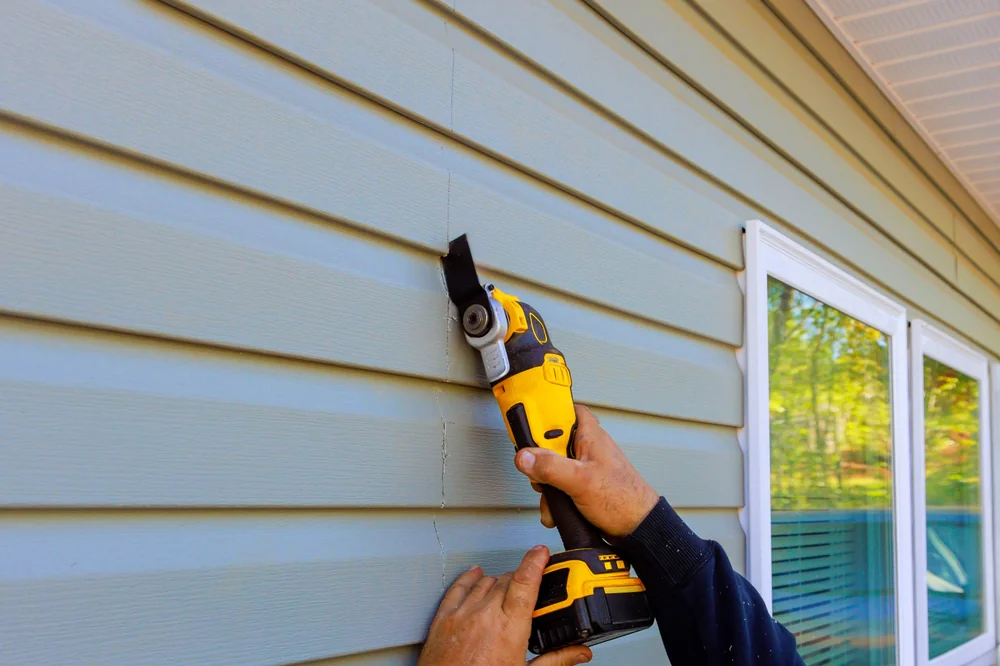
Most single-family homes in Bedford take between five and ten days for complete siding installation. That timeline assumes normal weather and no major surprises when we remove your old siding.
The size of your house matters more than anything else. A 1,500 square foot ranch goes faster than a 3,000 square foot colonial with multiple gables and trim details. We’re also slowed down if we find sheathing damage or rot that needs repair before new siding goes up.
Weather plays a role too. We can work in cold temperatures, but we won’t install in heavy rain or when ice makes it unsafe. If we hit a stretch of bad weather mid-project, we’ll make sure everything is sealed and protected until we can get back out there. You won’t have an open wall exposed to the elements overnight.
Fiber cement handles freeze-thaw cycles better than vinyl, and it won’t crack or become brittle in extreme cold. That’s the biggest functional difference for Bedford homeowners. James Hardie fiber cement is engineered for the HZ5 climate zone, which covers our area specifically.
Vinyl expands and contracts more with temperature changes. Quality vinyl siding accounts for this with proper installation techniques, but cheaper vinyl or bad installation leads to warping and buckling. Fiber cement stays dimensionally stable regardless of temperature.
The other difference is impact resistance. Fiber cement won’t dent if hail hits it or if something gets thrown against your house. Vinyl can dent or puncture, though modern formulations are much tougher than older versions. Cost-wise, fiber cement runs about 50-70% more than vinyl upfront, but it lasts longer and adds more resale value. Your choice depends on how long you plan to stay in the house and what your budget allows.
If your current house wrapping is damaged, missing, or installed incorrectly, then yes—you need to replace it. This isn’t an upsell. House wrapping is your home’s water barrier, and siding is just the first line of defense.
When we remove old siding, we inspect what’s underneath. If the wrapping is intact, properly overlapped, and doing its job, we leave it alone. But if we see tears, gaps around windows, or areas where it was never installed correctly in the first place, that needs to be fixed before new siding goes up.
Skipping this step saves you maybe $1,000-$2,000 now, but it costs you way more later when moisture gets into your wall cavities and causes rot or mold. We’ve torn off siding on homes where the previous installer skipped proper house wrapping, and the sheathing underneath was rotted through. That’s a much bigger repair bill than doing it right the first time. In Bedford’s wet climate with freeze-thaw cycles, your house wrapping matters as much as the siding itself.
Fiber cement siding in Bedford typically costs between $8 and $14 per square foot installed, while vinyl siding installation runs $4 to $8 per square foot. For an average 2,000 square foot home, you’re looking at roughly $16,000-$28,000 for fiber cement versus $8,000-$16,000 for vinyl.
Those ranges account for material quality, labor, trim work, and the complexity of your home’s design. A simple ranch costs less per square foot than a Victorian with lots of corners and detail work. The numbers also assume we’re not repairing extensive rot or structural issues underneath.
James Hardie fiber cement sits at the higher end of that range, but you’re getting a 30-year warranty and a product specifically engineered for New England weather. Cheaper fiber cement exists, but it’s not built for the HZ5 climate zone and won’t perform the same way. With vinyl, you get what you pay for too—builder-grade vinyl is thin and won’t last as long as premium options. Most Bedford homeowners end up in the $10,000-$15,000 range for quality siding installation that actually protects their investment.
New siding itself doesn’t insulate your home—but the installation process is when we fix the gaps, add insulation, and properly seal your exterior. That’s what lowers your energy bills.
When we remove old siding, we’re exposing your wall cavities and house wrapping. If there are gaps around windows, missing insulation, or areas where air has been leaking for years, we can address those issues before the new siding goes up. Proper house wrapping installation alone makes a noticeable difference in drafts and heat loss.
How much you save depends on how bad your current situation is. If your existing siding is cracked and warped with air leaking through, you might see a 10-15% reduction in heating costs after replacement. If your current siding is relatively tight, the savings will be smaller. Either way, you’re making your HVAC system’s job easier, which extends its life and keeps your home more comfortable year-round. In Bedford’s climate, where you’re heating six months a year, those savings add up over time.
If more than 30% of your siding shows damage—cracks, warping, rot, or loose panels—replacement makes more financial sense than patching it. Repairs work when damage is isolated to one area from a specific incident, like storm damage or an impact.
Look for these signs that replacement is the right call: your siding is faded or discolored across most of the house, you’re seeing higher heating bills, you notice moisture or mold inside your walls, or the siding is original to a home built more than 25 years ago. Those all point to siding that’s past its useful life.
We’ll be straight with you during the estimate. If repairs will get you another 5-10 years and you’re planning to sell soon anyway, we’ll tell you that. If your siding is failing and you’re just delaying the inevitable with patches, we’ll tell you that too. The worst financial decision is spending money on repairs every couple years when replacement would have solved the problem permanently. We’d rather give you the real assessment now than sell you something you don’t need.