Your home needs more than gutters—it needs a water management system that actually works. Here's what professional installation delivers that DIY can't.
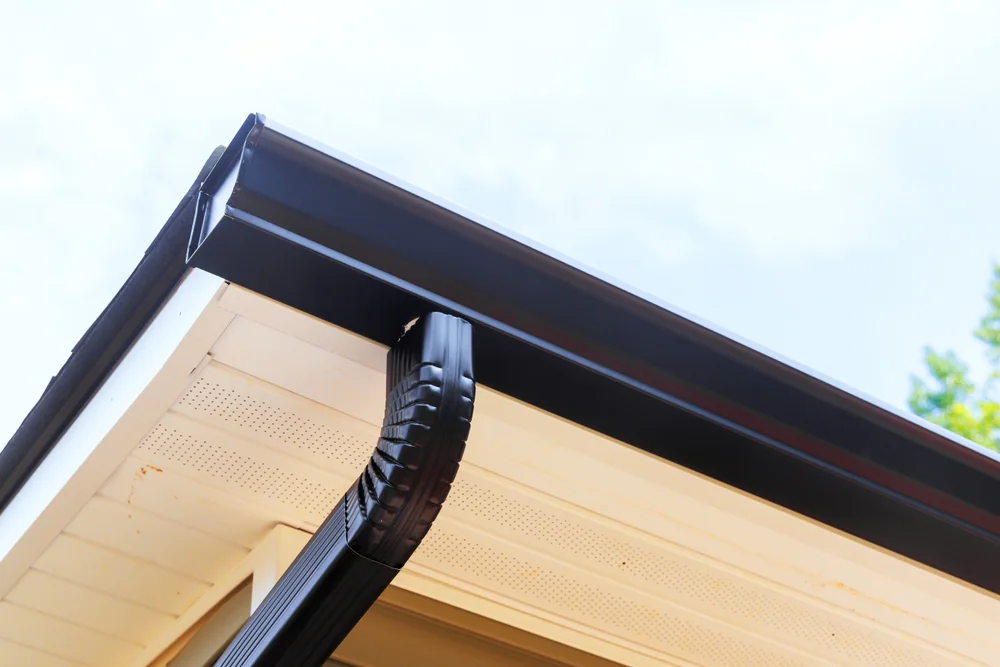
Professional gutter installation starts with understanding that your home isn’t a Lego set. It’s an architectural puzzle that needs to handle hundreds of pounds of water, ice, and the occasional brave squirrel. We don’t just nail pre-cut metal to your house; we start with precise measurements that would make a high school geometry teacher weep with joy.
Calculating the “pitch” is the secret sauce. If the gutters are too flat, they become a high-altitude mosquito nursery. If they’re too steep, your house looks like it’s wearing a lopsided hat, and the water overshoots the downspouts entirely. A pro guarantees the water moves with the efficiency of a morning commute at 3 AM.
We use special equipment to fabricate seamless gutters right in your driveway, custom-cut to the millimeter. This isn’t just for show—it’s to eliminate the “seams” that act as the Achilles’ heel of standard systems. Especially in MA and NH, where freeze-thaw cycles try to pry your house apart, that precision mounting keeps your gutters attached even when the Nor’easters start howling.
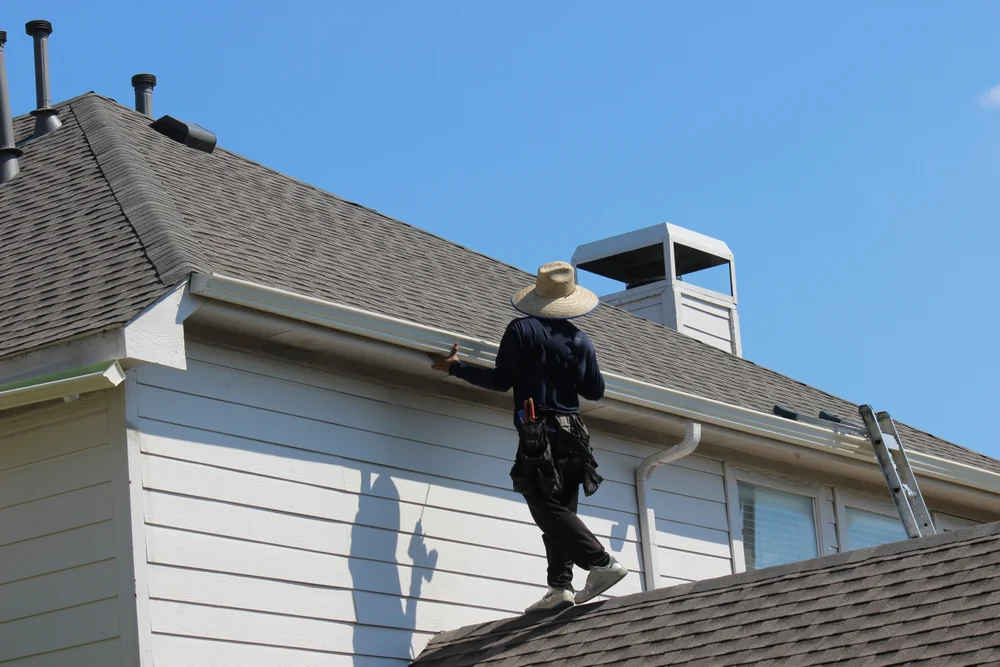
Walk through any big-box home improvement store and you’ll find sectional gutters. They’re tempting—cheap, light, and they fit in your SUV. But those 10-foot sections are basically a series of future leaks waiting for a rainy day. Every joint is a potential “drip point” that will eventually decide to retire and let water soak your fascia boards.
Seamless gutters, however, are the custom-tailored suits of the roofing world. Because they are extruded from one continuous piece of aluminum, there are no seams along the straight runs. This means there are no gaskets to dry out and no ridges to catch leaves, preventing that lovely “gutter garden” from sprouting above your windows.
While the upfront cost for seamless is a bit higher—roughly the price of a few fancy dinners—the long-term math is a slam dunk. You spend about 30% less time on a ladder scooping out muck, and the system lasts up to 50 years. For homes in Essex or Middlesex County, where winter ice is a given, a seamless system is the only way to avoid a mid-February gutter-collapse crisis.
DIY gutter installation looks great on a Saturday morning YouTube binge. By Sunday afternoon, most people realize that 500,000 ladder falls happen every year, and suddenly that “savings” on labor looks like a down payment on a hospital bill. Working at roof height while wrestling 20-foot sections of metal is a sport best left to the pros who have the insurance and the equilibrium.
Even if you stay on the ladder, the technical details are deceptively tricky. A quarter-inch slope for every 10 feet sounds easy until you’re 20 feet in the air trying to hold a level and a drill at the same time. Get it wrong, and you’ve just built a very expensive birdbath that will eventually rot your roof edge and invite mold to move into your attic.
Then there is the “Volume Problem.” Standard 5-inch gutters are fine for a light drizzle in the desert, but New England gets 48 inches of rain and heavy “heart-attack” snow. A professional knows when your roof’s square footage demands 6-inch “oversized” gutters or extra downspouts to handle the load. Buying the wrong size at the store means you’ll be doing the job twice—and nobody wants that.
Want live answers?
Connect with a Paradise Remodeling Inc. expert for fast, friendly support.
Your home’s foundation is like its “feet”—and nobody likes having wet feet. Without gutters, rainwater doesn’t just fall; it attacks the soil next to your house with the force of a pressure washer. This erodes the ground, weakens the support structure, and eventually creates a VIP entrance for water to seep into your crawl space or basement.
Over time, that unmanaged water causes the soil to expand and contract, leading to foundation cracks that make doors stick and windows jam. Fixing a foundation usually starts around $5,000 and goes up faster than a rocket. A properly installed gutter system is essentially a $4,000 insurance policy that keeps your foundation sitting on dry, stable ground.
This protection extends to your siding and windows, too. Rain bouncing off the ground splashes mud and bacteria onto your house, leading to peeling paint and rotted sills. By capturing that water at the roofline, you’re keeping your home’s exterior looking fresh and saving yourself from a weekend of power-washing and repainting.
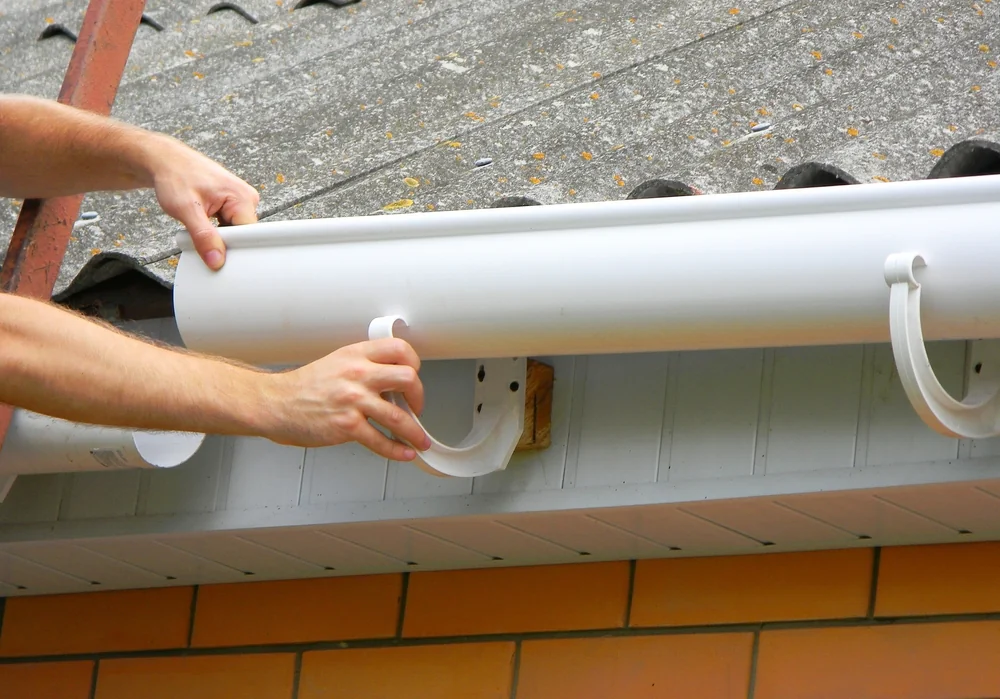
Basement flooding is like a bad breakup—it’s messy, expensive, and it leaves a lingering smell. Most people think a flood means a pipe burst, but the most common culprit is actually “hydrostatic pressure.” That’s just a fancy way of saying there’s so much water in the dirt outside your walls that it decides to push its way inside through microscopic pores in the concrete.
Clogged or poorly installed gutters are the primary recruiters for this basement moisture. When water dumps right at the base of your home, the soil becomes a saturated sponge. This creates a moisture trap that is the perfect incubator for mold. Once mold gets a foothold, you’re not just looking at property damage; you’re looking at health risks that can turn a “man cave” into a “biohazard zone.” A professional gutter setup acts as your home’s first line of defense. By directing downspouts at least 10 feet away from the house, we make sure the “splash zone” stays far from your living space. In New England, where spring snowmelt can dump months of water in a few days, this isn’t just a suggestion—it’s a necessity for keeping your socks dry and your air breathable.
You spent thousands on those hydrangeas and that perfect Japanese Maple. Without gutters, a heavy rainstorm turns your roof into a giant water cannon that can carve “Grand Canyon” style trenches through your flower beds in twenty minutes. It’s hard to have curb appeal when your front yard looks like a mud wrestling pit after every afternoon shower.
Professional installation includes strategic downspout placement to protect your “green investment.” We release the water in designated drainage areas or even underground “bubblers” so your mulch stays put and your plants don’t drown. This attention to detail keeps your yard looking like a magazine cover rather than a flood zone.
Finally, think about your resale value. When a home inspector sees sagging, leaking, or missing gutters, they start looking for “deferred maintenance.” They’ll assume if you didn’t care about the water on your roof, you probably didn’t care about the water in your walls. High-quality gutters send a message to buyers that the home has been meticulously protected, which helps you command a premium price when it’s time to move.
Your home is likely the biggest check you’ll ever write. Protecting it shouldn’t involve the cheapest materials you can find in a clearance bin. Professional gutter installation delivers a custom-engineered water management strategy that treats your house like the asset it is. From seamless fabrication to snow-load-rated mounting, we do the heavy lifting so you can stay cozy inside.
The math is simple: a quality gutter system prevents foundation cracks, mold growth, and landscape erosion. The alternative—DIY patches or ignoring the problem—is a debt that always comes due, usually in the middle of a thunderstorm at 2 AM. Investing in a system that works the first time saves you decades of headaches and thousands in “oops” repairs.
If you’re ready to trade your “roof-waterfall” for a high-performance drainage system, we’ve got you covered. With decades of experience in the MA and NH climate, we know exactly what it takes to keep your home dry and your foundation solid.
Summary:
Article details:
Share: