Before signing that roofing contract, you need to verify your contractor's credentials. These 5 questions protect you from financial liability and guarantee quality work.

Licensing isn’t just a way for the state to collect “membership fees.” It’s proof that the person standing on your shingles has actually read a book about building codes and passed a test that didn’t involve just identifying a hammer. In Massachusetts, a Construction Supervisor License (CSL) is the gold standard, proving the contractor knows how to keep your house from falling down while they’re working on it.
Think of an unlicensed roofer like a “self-taught” surgeon—sure, they might have the tools, but do you really want them poking around your vital systems? A real license requires years of documented experience. It means they’ve proven they can handle the unique challenges of New England architecture, like making sure your roof doesn’t become a giant ice-cube tray during the first February freeze.
New Hampshire is the “Wild West” of roofing because the state doesn’t mandate a specific roofer’s license. This means any guy with a ladder and a “can-do” attitude can call himself a pro. Without that state seal of approval, you’re essentially trusting a stranger’s pinky-promise that they won’t disappear the second they realize your chimney flashing is a nightmare.
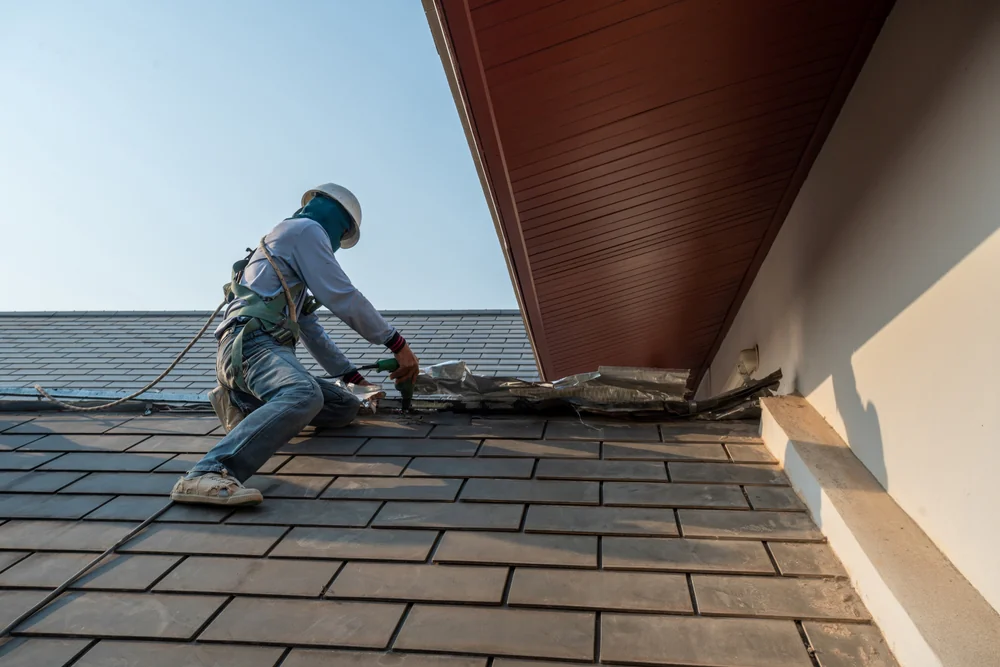
Here’s a fun legal fact that will keep you up at night: if an unlicensed worker gets hurt on your property in Massachusetts, they are legally considered your employee. Congratulations, you’re now a business owner! Unfortunately, your new “employee” just fell and needs a $50,000 knee surgery. Since you probably didn’t buy workers’ comp insurance for this one-day project, you’re the one writing the check.
Beyond the “Lawsuit Lottery,” unlicensed contractors are the kings of the “Tailgate Warranty”—a warranty that expires the moment their truck’s tailgate clears your driveway. They use cheap materials that fail faster than a New Year’s resolution, and because they’re off the grid, you can’t exactly report them to a board. You’re left with a leaking roof and a phone number that’s been disconnected.
Licensed contractors also have to follow the rules, like not putting a third layer of shingles on your roof until it sags like a tired hammock. Unlicensed guys love shortcuts because they don’t have a reputation to lose. If your roof fails an inspection when you try to sell your house, you’ll be paying a real roofer to do the whole job over again. That $3,000 you “saved” initially will look like pocket change compared to the bill for fixing a botched job.
Verification takes five minutes and is the best “insurance policy” you’ll never pay for. In MA, you can search for a Construction Supervisor License (CSL) and a Home Improvement Contractor (HIC) registration online. If your roofer says they have it but “it’s in their other pants,” treat that as a signal to politely escort them off your lawn. Real pros carry their license numbers like a badge of honor.
In New Hampshire, since the state is a bit more hands-off, you have to be the investigator. Call your local building department in Nashua, Manchester, or wherever you hang your hat. Ask if the contractor has pulled permits in the area before. A roofer who is a regular at the permit office is usually a safe bet; a roofer who winces at the word “permit” is someone you should avoid.
Always, and we mean always, ask for a Certificate of Insurance (COI). Don’t just look at it—call the agent on the paper. Some contractors have been known to show a policy that lapsed back when the Red Sox were still cursed. You need to verify that $1 million general liability policy is active today. It’s not being “difficult”; it’s making sure you don’t end up paying for a new driveway because their dumpster cracked your current one.
Want live answers?
Connect with a Paradise Remodeling Inc. expert for fast, friendly support.
Question 1: “Can you provide your license and registration numbers right now?” This is the “Put Up or Shut Up” question. A legitimate contractor won’t even blink; they’ll probably have it printed on their business card or saved in their phone. If they start to tell you a long story about how the state lost their paperwork, run—don’t walk—to the nearest exit.
Question 2: “Is your insurance current, and can I see the certificates for both liability and workers’ comp?” You want to see both. Liability covers the “Oops, I broke your window” moments, but workers’ comp covers the “Oops, I broke my arm” moments. If they only have one, you’re only half-protected, and in New England weather, half-protected is just another way of saying “wet.”
Question 3: “Who is actually going to be on my roof?” Some companies sell you the job then hire “Subcontractor Sam” and his crew of mystery men to do the actual work. There’s nothing wrong with subs if they are also licensed and insured, but you need to know who is stomping around over your head. If the salesman doesn’t know the name of the crew leader, that’s a red flag.
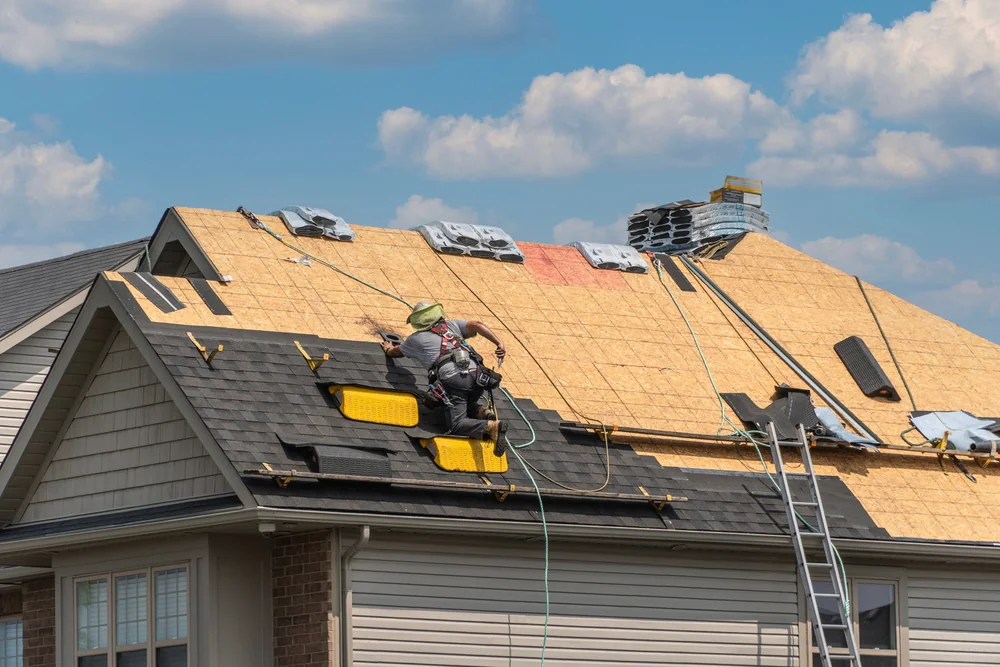
Question 4: “Will you give me a line-item contract that explains exactly what I’m paying for?” If the contract just says “Replace Roof – $12,000,” you’re setting yourself up for a fight. You want to see the brand of shingles, the type of underlayment, and a promise that they’ll clean up the thousands of nails they’re about to drop in your rosebushes. A vague contract is basically an invitation for “surprise” costs.
Let’s talk about the “Deposit Danger Zone.” If a roofer asks for 50% or more upfront, they might be using your money to pay for the materials from their last job. Standard deposits are usually around 10-20% to get you on the schedule. If they need all the cash before they even bring a ladder over, they’re likely in a financial tailspin, and you don’t want to be their parachute.
Warranties are the final piece of the contract puzzle. Ask: “What happens if this leaks in two years?” You need a manufacturer’s warranty for the shingles and a workmanship warranty for the labor. If the roofer says, “Don’t worry, it won’t leak,” remember that Mother Nature usually has other plans. Get the “who, what, and how long” of the warranty in writing, or it doesn’t exist.
Question 5: “Can I talk to three people in my town you worked for this year?” If they can’t find three people in Essex or Rockingham County who like them, that’s a pretty bad sign. Real references are the ultimate proof of life. Don’t just take the list—actually call them. Ask if the roofer showed up on time or if they treated the backyard like a personal trash can.
Watch out for the “Storm Chasers”—those guys who show up uninvited after a hailstorm like seagulls at a beach picnic. They’ll tell you they “just finished a neighbor’s house” and can give you a “special deal” if you sign right now. High-pressure sales tactics are the favorite tool of people who aren’t planning to be around long enough to answer for their mistakes.
Finally, if they insist on a “cash-only” deal, they’re likely avoiding taxes, insurance, or a trail of angry customers. Cash is great for flea markets, but not for a five-figure structural renovation. You want a paper trail that proves you paid so you have some leverage if things go south. If the deal feels like a “secret,” it’s probably because it’s a scam.
Your roof is the only thing standing between you and a very expensive indoor swimming lesson. Verifying your contractor’s credentials isn’t being “mean” or “distrustful”—it’s being a responsible homeowner. A few awkward questions now can save you years of problems and a “surprise” $50,000 medical bill for a roofer you didn’t even know.
No matter if you’re in Lawrence, Manchester, or Salem, the rules of the game are the same: get the license, check the insurance, and never pay the full amount before the work is done. The best roofers in New England will appreciate your diligence because it separates the pros from the pretenders.
If you’re tired of the “sketchy roofer” shuffle and want someone with actual credentials and a reputation for showing up, we’re here to help. We’ve been protecting MA and NH homes for decades with transparent pricing and proper licensing.
Summary:
Article details:
Share: