Explore how composite decking, multi-functional zones, and smart material choices are transforming outdoor living spaces in 2026 for New England homeowners.

Walk through any neighborhood in Essex County, MA or Hillsborough County, NH, and you’ll notice something. The decks that look brand new aren’t necessarily new. They’re composite.
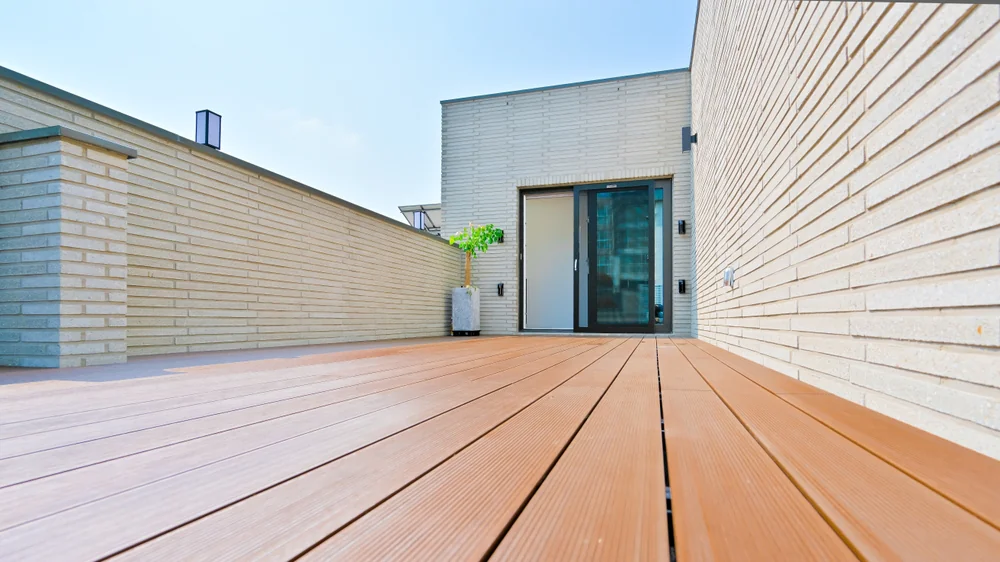
Composite decking has moved from “alternative option” to default choice for good reason. It handles New England winters without warping. It doesn’t splinter when your kids run barefoot across it. And you’re not spending every spring weekend staining and sealing.
The numbers back this up. Composite materials now make up a growing share of new deck installations, and that trend is accelerating in 2026. Homeowners are realizing that paying more upfront often means paying less over time.
Let’s talk money because that’s usually the first question. A 200-square-foot composite deck might cost you $10,000 to $20,000 installed in 2026. The same size in pressure-treated wood? Closer to $6,000 to $10,000.
That gap feels significant until you factor in what happens next. Wood decks need annual maintenance. Staining runs $1.75 to $4.50 per square foot. Sealing. Board replacement when sections start rotting. Over a 10-year period, you’re looking at $5,620 to $12,500 in upkeep for wood, depending on weather exposure.
Composite? You’re washing it down a couple times a year. That’s it.
The lifespan difference matters too. Wood decks last 10 to 15 years with proper maintenance. Composite decks are built to last 25 to 50 years. When you’re making a decision that affects your home for decades, the math shifts. You’re not just buying materials. You’re buying time back.
Here’s what else changes with composite. No splinters means safer for bare feet and pets. Moisture resistance means it handles humidity, rain, and snow melt without deteriorating. Fade resistance means the color you choose today looks similar years from now. And if you’re in a coastal area or anywhere with high moisture, composite materials significantly outperform wood.
The trade-off? Composite can get hotter in direct sun compared to wood, though newer technologies like CoolDeck are closing that gap. And if you love the authentic look and feel of real wood, composite won’t replicate that exactly, no matter how realistic the grain patterns get.
For most homeowners in Rockingham County, NH or Middlesex County, MA, the choice comes down to priorities. If you want to spend weekends on your deck instead of maintaining it, composite wins. If you’re working with a tight budget and plan to sell within a few years, wood might make sense. But for long-term value and peace of mind, composite is hard to beat.
New England weather doesn’t mess around. You get freezing winters, humid summers, and everything in between. Your deck needs to handle all of it without falling apart.
This is where material choice becomes critical. Composite decking is engineered specifically to resist moisture, temperature swings, and UV damage. Brands like Trex and TimberTech have spent years perfecting formulas that stand up to the elements. Trex decking, for example, is made from 95% recycled materials and designed to resist fading, scratches, and stains. TimberTech offers capped composite boards where a protective shell prevents moisture from reaching the core.
Those details matter when you’re dealing with frost-depth footing requirements in Massachusetts and New Hampshire. When the ground freezes and thaws repeatedly, your deck’s foundation takes a beating. Composite materials flex without cracking. Wood can split.
Another consideration is how materials handle moisture over time. In areas near wetlands or coastal regions, wood decks are constantly battling rot and decay. Even pressure-treated lumber, which is chemically treated to resist these issues, eventually breaks down. Composite materials don’t have organic fibers that rot, so they maintain structural integrity far longer.
If you’re building in a town that requires Conservation Commission approval due to proximity to wetlands, choosing materials that won’t leach chemicals or deteriorate becomes even more important. Composite decking meets environmental standards while delivering performance that wood simply can’t match in high-moisture environments.
The practical impact of choosing the right materials shows up in your daily life. You’re not replacing boards every few years. You’re not worried about your deck looking shabby before you’re ready to sell. And when a storm rolls through, you’re confident your deck will still be standing when it’s over.
For homeowners who want to enjoy their outdoor space instead of constantly maintaining it, low-maintenance composite materials make sense. They cost more initially, but they save you time, money, and frustration for decades.
Want live answers?
Connect with a Paradise Remodeling Inc. expert for fast, friendly support.
Permits aren’t the exciting part of deck installation, but they’re the part that can derail your entire project if not handled correctly. And in Massachusetts and New Hampshire, requirements vary significantly from one town to the next.
Most deck projects require building permits, especially if the deck is attached to your home or rises more than 30 inches above grade. Some municipalities require permits for any deck, regardless of size. The process typically involves submitting detailed plans, paying fees that range from $500 to $2,000, and scheduling inspections at various construction stages.
Here’s where working with us makes a difference. We know the specific requirements for Essex County, MA, Hillsborough County, NH, Rockingham County, NH, and Middlesex County, MA. We’ve worked with the local building departments before. We understand what documentation is needed and how to avoid delays.
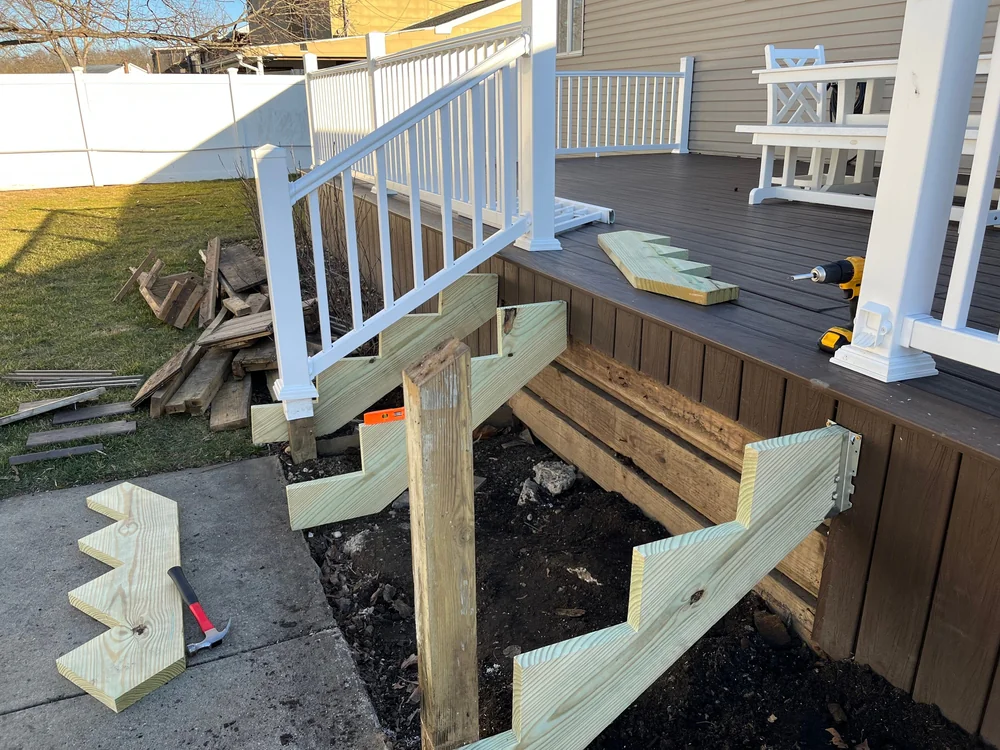
Let’s walk through what happens when you apply for a deck permit in Massachusetts or New Hampshire. It’s not as simple as filling out a form and getting approval the next day.
First, you need detailed plans. That means site plans showing the deck’s location relative to property lines and setback requirements. Foundation plans with footing and pier dimensions. Framing plans with joist layout, beam sizes, and connection details. These plans need to demonstrate compliance with the International Residential Code and any local amendments.
In Massachusetts, the building permit application must be signed by the homeowner or include a signed contract complying with MGL 142 A. You’ll submit multiple copies of your plot plan, wet-stamped and signed by a registered land surveyor. Building plans need to be wet-stamped and signed as well. Then the application goes through review by multiple departments: building, plumbing, electrical if you’re adding lights or outlets, and zoning.
The timeline? Expect 1 to 3 weeks for approval in most towns, though it can take longer if there are complications or if your application is incomplete. The building code requires action within 30 days, but that doesn’t mean instant approval.
New Hampshire follows a similar process, though specific requirements vary by municipality. Towns like Salem and Nashua have their own zoning ordinances covering building setbacks, maximum lot coverage, and allowable use. Some projects near property boundaries require public hearings before permits are issued.
Here’s what homeowners often underestimate: the inspection requirements. You’ll need an excavation inspection before concrete is poured for footings. A framing inspection once the structure is built. A final building inspection before you can use the deck. Miss any of these, and you’re looking at delays and potential fines.
When we handle this process for you, it means you’re not making multiple trips to town hall, trying to decipher code requirements, or worrying about whether your plans will pass review. We submit everything correctly the first time, coordinate with inspectors, and keep your project moving forward.
In coastal or wetland-heavy areas, you might also need Conservation Commission approval. This adds another layer of review focused on environmental impact. We’re familiar with these requirements and know how to navigate the process without unnecessary delays.
The permit process isn’t something to skip or take lightly. Building without proper permits can result in fines, requirements to tear down and rebuild, or problems when you try to sell your home. Buyers’ inspectors will notice unpermitted work, and it can kill a sale or force you to correct everything at your expense.
Every county has its quirks when it comes to building codes and permit requirements. What’s allowed in one town might not fly in the next town over. This is where our local expertise becomes invaluable.
We regularly work in Essex County, MA and Hillsborough County, NH, and we know the specific regulations for each municipality. We understand setback requirements, which can vary from 5 feet to 20 feet depending on your zoning district. We know which towns require engineered plans versus standard construction drawings. We’re familiar with local inspectors and what they look for during reviews.
In Essex County, towns like Methuen, Andover, and North Andover each have their own building departments with slightly different processes. We’ve pulled permits in all these towns and can navigate the differences smoothly. We know whether you need a surveyor’s as-built form submitted in triplicate or what specific documentation your town requires.
Hillsborough County presents similar variety. Manchester, Nashua, and smaller towns like Milford or Amherst all have their own requirements. Some require more detailed structural calculations. Others have stricter rules about deck height or railing specifications. We have this knowledge baked into our process.
Rockingham County and Middlesex County add more variation. Coastal towns often have additional requirements related to wind loads and moisture protection. Towns with conservation areas have stricter rules about where you can build and what materials you can use.
Here’s what this means practically: when you work with us, we’re not learning on your project. We’ve already built decks in your town. We know the inspector who’ll review your work. We understand local preferences for construction methods and materials.
This familiarity translates to fewer delays, smoother inspections, and confidence that your deck meets all requirements. You’re not getting surprised halfway through construction because something doesn’t meet code. Everything is planned correctly from the start.
We also maintain relationships with suppliers in the area, which can affect material availability and pricing. We know which lumberyards stock the composite decking brands that perform best in New England weather. We have connections that help keep your project on schedule.
When you’re investing $10,000 to $25,000 in a deck, working with someone who knows the local landscape inside and out isn’t just convenient. It’s protection against costly mistakes and delays that can turn a smooth project into a nightmare.
The deck trends for 2026 point toward smarter choices. Materials that last longer and require less work. Designs that create actual usable space instead of square footage you never touch. Contractors who handle the complicated parts so you don’t have to.
If you’re considering deck installation in Essex County, MA, Hillsborough County, NH, Rockingham County, NH, or Middlesex County, MA, the key is thinking beyond the initial build. What will this deck look like in 10 years? How much time will you spend maintaining it? Will it still add value to your home when you’re ready to sell?
Composite decking, professional installation, and proper permit handling aren’t the flashiest parts of the process. But they’re what separate decks that enhance your life from decks that become expensive problems. When you’re ready to move forward, we handle the entire permit-to-build process, working with you to create an outdoor space that fits your needs and lasts for decades.
Summary:
Article details:
Share: