Bold siding colors and smart repair strategies are redefining curb appeal across Massachusetts and New Hampshire. Here's what's driving the shift—and what it means for your home. Because your house shouldn't look like a generic manila folder.
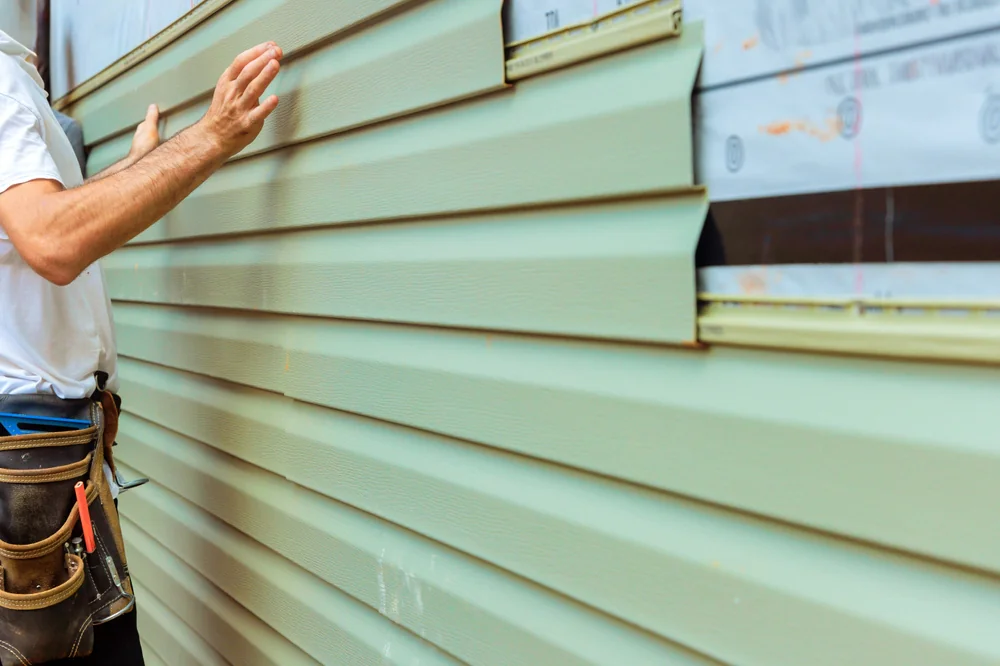
Walk through any neighborhood in Middlesex County or Rockingham County right now and you’ll see it. Deep navy. Charcoal black. Forest green. Rich terracotta. Colors that would’ve felt like a “dare” five years ago are suddenly everywhere. It turns out, people are tired of living in a world that looks like a bowl of plain oatmeal.
Homeowners are moving past safe beige and light gray because those colors don’t say much anymore. Bold siding makes a statement. It shows you’re intentional, and in a market where curb appeal can add 7% to your home’s value, that statement comes with a paycheck.
But this isn’t just about vanity. Darker, richer tones also hide dirt better—which is great for those of us who haven’t power-washed the house since the Sox won the World Series. Richer colors age more gracefully, meaning less visible wear between cleanings and a home that looks sharp longer.
Choosing siding colors in Massachusetts and New Hampshire isn’t just about your “aesthetic.” You’re picking what’s going to survive freeze-thaw cycles, ice dams, and those brutal stretches in February when the air feels like a personal insult.
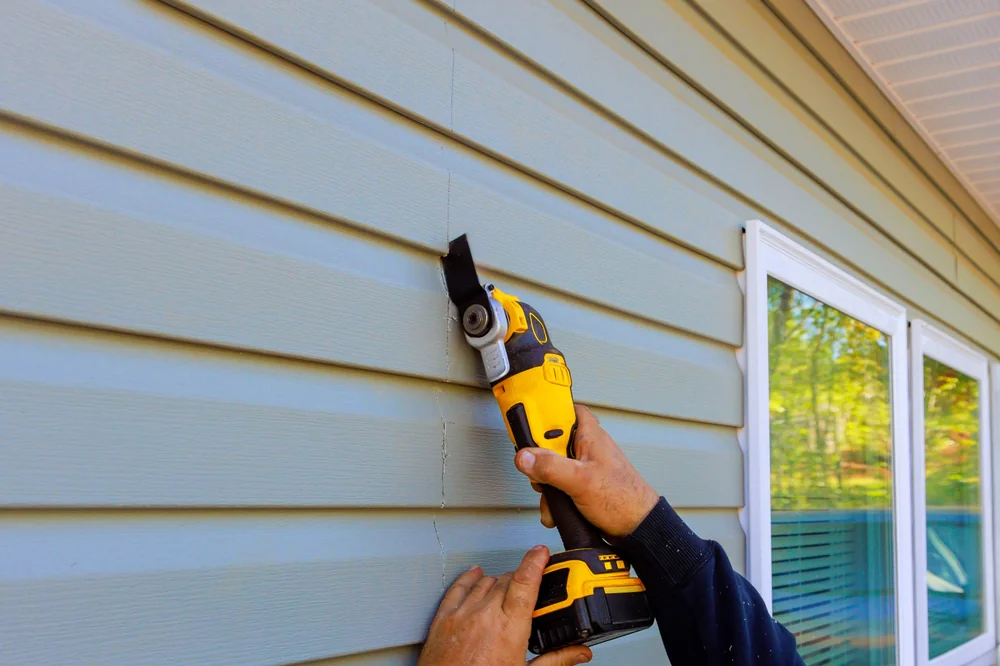
Vinyl siding gets brittle in extreme cold. If it wasn’t installed with enough room to move, it cracks like a bad joke. Fiber cement, on the other hand, is the “Chuck Norris” of siding—it handles moisture and temperature swings without flinching. Modern materials now include reflective pigments that reduce heat absorption. This is a game-changer. Five years ago, dark siding meant your AC unit would be working harder than a snowplow during a blizzard. Now, you get the bold look without the “sweat.” If you’re in Essex County or Hillsborough County, work with someone who understands local performance. Don’t let a contractor sell you a “California” solution for a “New Hampshire” winter.
What are people actually choosing? Deep evergreen is a hit in Rockingham County. Charcoal and matte black are popular in Middlesex County, especially paired with wood accents. It gives off a “sophisticated cabin” vibe that says, ‘I enjoy nature, but I also have very fast Wi-Fi.’
Navy is having a moment, particularly on modern farmhouses. And for those who want something nature-inspired but not aggressive, smoky jade and eucalyptus are gaining traction. One major trend: high-contrast combinations. Dark siding with white trim creates depth that makes architectural details pop.
Just a reminder: check your local historic district guidelines in Essex County before you paint your Colonial “Midnight Onyx.” Some preservation boards have a sense of humor, but most of them don’t. Also, think about the whole picture. A charcoal house with a charcoal roof can feel like a gothic castle—unless that’s what you’re going for, in which case, carry on with your spooky self.
Want live answers?
Connect with a Paradise Remodeling Inc. expert for fast, friendly support.
Not every siding problem requires ripping everything off and starting over. Sometimes repair is the smarter move—financially and practically. It’s the difference between buying a new pair of shoes and getting a whole new wardrobe.
If you’ve got a few cracked panels from a hailstorm or a section that lost a fight with a tree branch, repair is the right call. Small patch repairs run $100 to $300. Compare that to full replacement, which can run $10,000 to $25,000. That’s a lot of Dunkin’ runs. However, if you’re repairing something every season, or the damage covers more than 25% of your siding, your house is basically telling you it’s ready to retire.
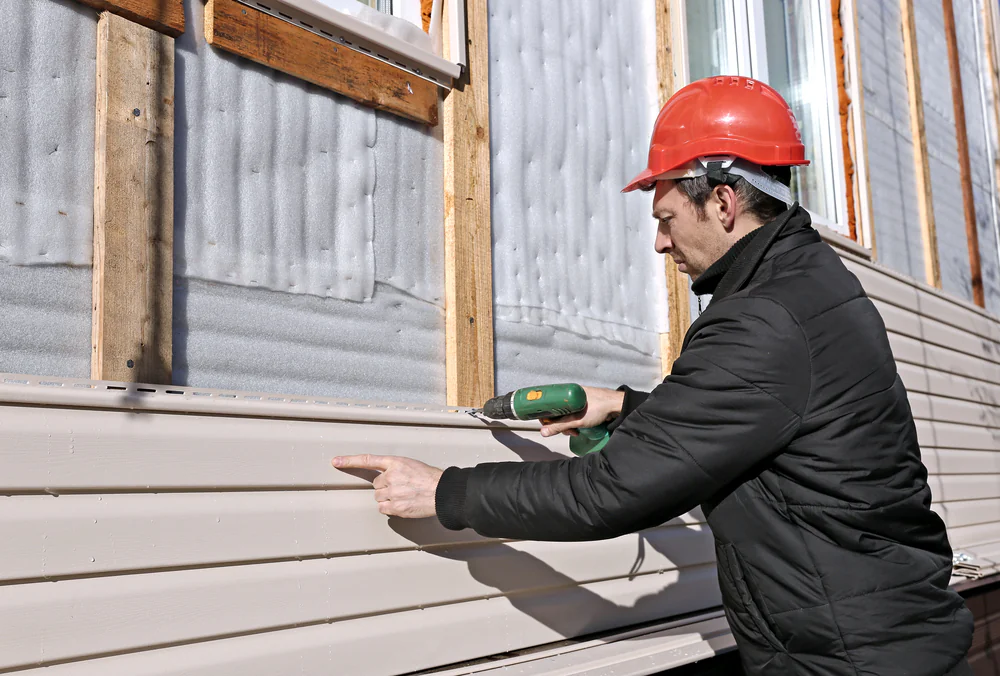
Cracks, dents, and small holes are usually repairable. Warping, widespread fading, or rot? Those are the red flags of the siding world. Vinyl is easy to fix if you can find matching panels, though matching the “fade” is like trying to find the exact same shade of denim from 1994.
Fiber cement is more durable but requires specialized tools. If you see rot, you need to be a detective. Is water getting behind the siding, or is your house just trying to become a mushroom farm? We always check what’s happening behind the panels. If the structure underneath is compromised, repairing the siding is just putting a band-aid on a shark bite.
Siding repair costs landing around $900 on average, though location matters. Labor rates in Massachusetts and New Hampshire run slightly higher than the national average because, well, living near the best sports teams in the country isn’t free.
Accessibility is another factor. First-floor repairs are a breeze. Second-story repairs that require scaffolding? That’s where the price starts to climb as fast as a squirrel on a bird feeder. Don’t forget material availability—if your siding color was discontinued in the early 2000s, you might have to replace a larger section just to make it look intentional.
One last thing—get at least three estimates. You want to compare apples to apples, not apples to some guy with a ladder and a “trust me” attitude. Look for someone with references longer than a CVS receipt.
Siding isn’t just about curb appeal; it’s about protection. It’s the raincoat for your house. Bold colors are trending because they age better and look sharper. Smart repairs save money when damage is isolated.
If you’re dealing with siding damage, fading, or just want to stop your house from looking like it’s stuck in 1982, start with a thorough assessment. Know your options and your budget. And if you’re in Essex, Middlesex, Hillsborough, or Rockingham County, we’re here to help you navigate the colors, the climate, and the occasional grumpy historic board.
Summary:
Article details:
Share: