Your deck and gutters work harder than you think—especially in New England. Here's what you actually need to know about keeping them functional. Because "shoveling the living room" isn't a winter sport.

The internet loves to throw around “every two years” like it’s gospel. Reality? Your deck’s sealing schedule depends on what it’s made of, where it sits, and how many Nor’easters it’s survived lately.
Wood decks facing full sun or sitting under trees dropping sap and needles need annual attention. Basically, if your deck is getting a “chemical peel” from the sun every day, it needs more moisturizer. Shaded decks can stretch to two or three years. The real test is the “Splash Test”: pour some water on the boards. If it beads up, you’re golden. If it soaks right in like a thirsty sponge, your seal is officially retired.
Let’s talk about what “too long” actually costs you. Unsealed wood doesn’t just “age gracefully” into gray—it absorbs water. And water in wood means rot, warping, and eventually, a deck that feels more like a trampoline than a floor. A deck board exposed to moisture without protection starts breaking down from the inside. You’ll see it first as soft spots—if you can leave a thumbprint in your wood, that’s not “character,” that’s rot. By the time boards are visibly cupped, the damage has already moved into the framing.
The cost of sealing every year is a fraction of what you’ll pay to rebuild. The math isn’t complicated: a few hundred bucks for a pro seal vs. the price of a mid-sized sedan for a new deck. Plus, the freeze-thaw cycle in Hillsborough and Rockingham Counties turns small splits into major fractures. One winter of neglect can undo years of care faster than you can say “is that board supposed to move?”
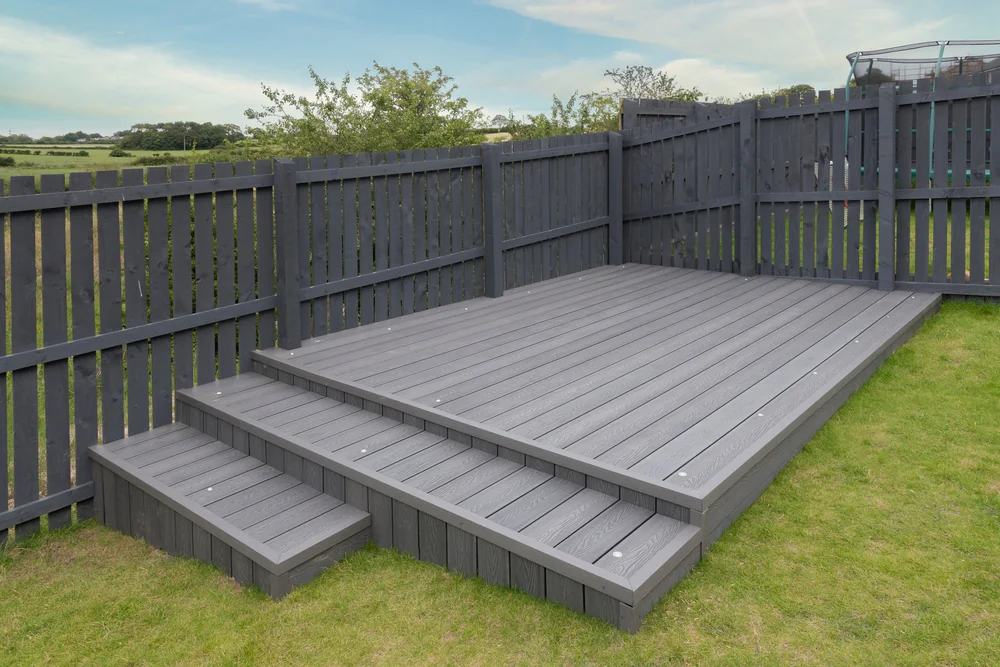
Composite decking is often marketed as the “set it and forget it” option. And yes, it’s lower maintenance. But maintenance-free? That’s a myth right up there with “painless dental work.”
Composite boards don’t need staining, but dirt, pollen, and mold don’t care about the marketing—they’ll grow anywhere there’s shade and a bit of dampness. You still need to wash it to prevent a slippery, slimy surface. Unless you’re training for an Olympic luge event on your back porch, you’ll want to keep it clean.
Also, remember the “skeleton” under the composite is usually still wood. If your gutters aren’t draining, that wood framing is still vulnerable to rot. Composite is a great long-term play, lasting up to 50 years, but it still needs a little love (and a garden hose) once in a while.
Want live answers?
Connect with a Paradise Remodeling Inc. expert for fast, friendly support.
Cleaning your gutters twice a year is solid advice—for gutters that are actually still functional. But there’s a point where cleaning is just “polishing a sinking ship.”
Sagging sections, visible rust, or water spilling over the edges even after you’ve scooped out the muck? Those aren’t maintenance issues; those are retirement notices. If your gutters are pulling away from the house, they won’t survive another New England winter. The question is: do you replace them now, or wait until they fall off during a blizzard and take your siding with them?
Ice dams are a New England specialty, and they’re not just a winter inconvenience—they’re a warning sign that your attic and gutters are having a serious disagreement.
Snow melts from attic heat, runs down to the cold eaves, and refreezes. Suddenly, you have a horizontal ice wall that forces water under your shingles and into your living room. Clogged gutters make this much worse by trapping the water right at the edge.
But listen: ice dams are also an insulation problem. If your attic is too warm, you’ll keep getting ice dams even if your gutters are gold-plated. Starting with clean, functional gutters (or adding gutter guards) is step one to keep the water moving before it turns into a structural popsicle.
You don’t always need a pro to tell you your gutters are shot.
Rust and Peeling Paint: If your gutters look like they have a skin condition, the metal is breaking down.
The “Separation Anxiety”: If there’s a gap between the gutter and the roof, water is rotting your fascia boards.
Foundation Moats: If water is pooling at the base of your house, your gutters have failed their one job. A foundation repair bill makes a gutter replacement look like a trip to the dollar store.
If you see multiple signs, don’t wait. Gutters that fall off mid-storm tend to take a lot of other expensive things down with them.
Let’s be real—deck maintenance and gutter installation aren’t exactly “cocktail party” conversation topics. They won’t make your neighbors jealous like a new kitchen might. But they’re the projects that keep your house from literally rotting away.
Every gallon of water that doesn’t drain correctly is a gallon that’s trying to ruin your life. A few hundred dollars in preventive maintenance beats a five-figure emergency fix every single time.
If you’re in MA or NH and you’ve seen the icicles and the gray boards, it’s time to stop guessing. We work with homeowners who are ready for systems that actually work. Reach out, and we’ll tell you what can be saved and what needs to go.
Summary:
Article details:
Share: