Hear from Our Customers
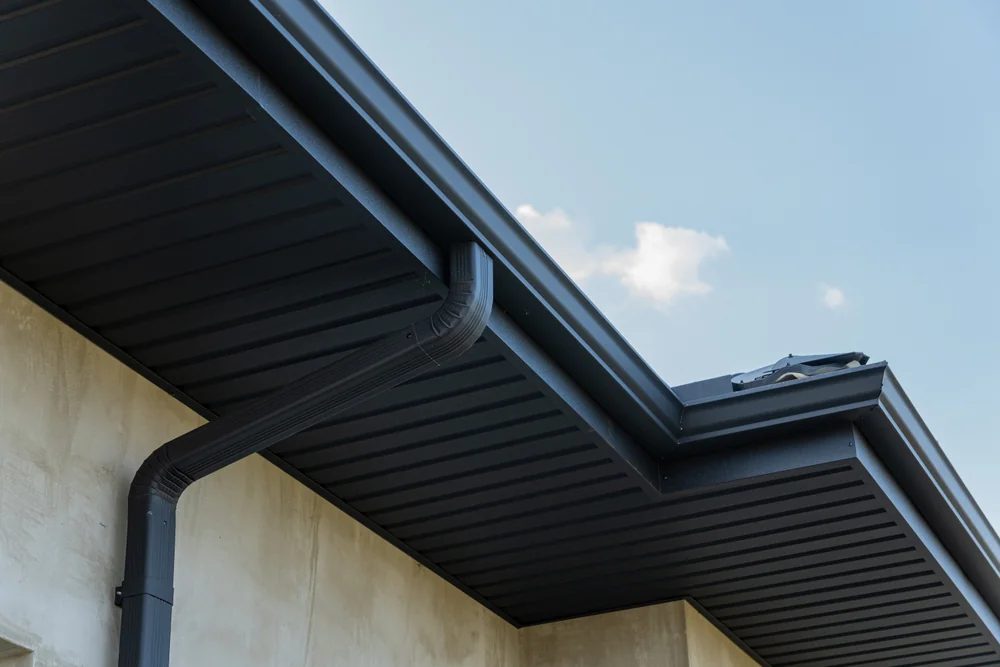
You stop worrying every time it rains. Water flows where it’s supposed to—away from your foundation, away from your landscaping, away from the basement you just finished.
Your fascia boards don’t rot out every few years. Your siding doesn’t streak with algae. And you’re not out there on a ladder twice a year trying to scoop out decomposing leaves while mosquitoes breed in standing water.
Properly installed seamless gutters do one thing really well: they move thousands of gallons of water off your roof and away from your house without you thinking about it. That’s what you’re paying for. In Littleton Common, where we get over 200 days of precipitation a year, your gutters either handle it or your house pays the price.
The difference between a gutter system that works and one that doesn’t is usually about three things: correct slope, solid attachment, and enough downspouts in the right places. Get those wrong and you’re looking at pooling, overflow, and all the damage that comes with it.
Paradise Remodeling Inc has been handling exterior work in Massachusetts for over a decade. We’re not a gutter-only company that disappears after the install—we do roofing, siding, and full exterior remodeling, so we understand how every part of your home’s envelope works together.
We’re an Owens Corning Preferred Contractor, which means we’ve met their standards for reliability and workmanship. We use quality materials like aluminum and copper, and we install seamless gutter systems that are custom-fit to your roofline.
Most of our work in Littleton Common comes from referrals. That happens when you show up on time, do the work right, and don’t leave a mess. We’ve been doing this long enough to know what holds up in New England weather and what doesn’t.
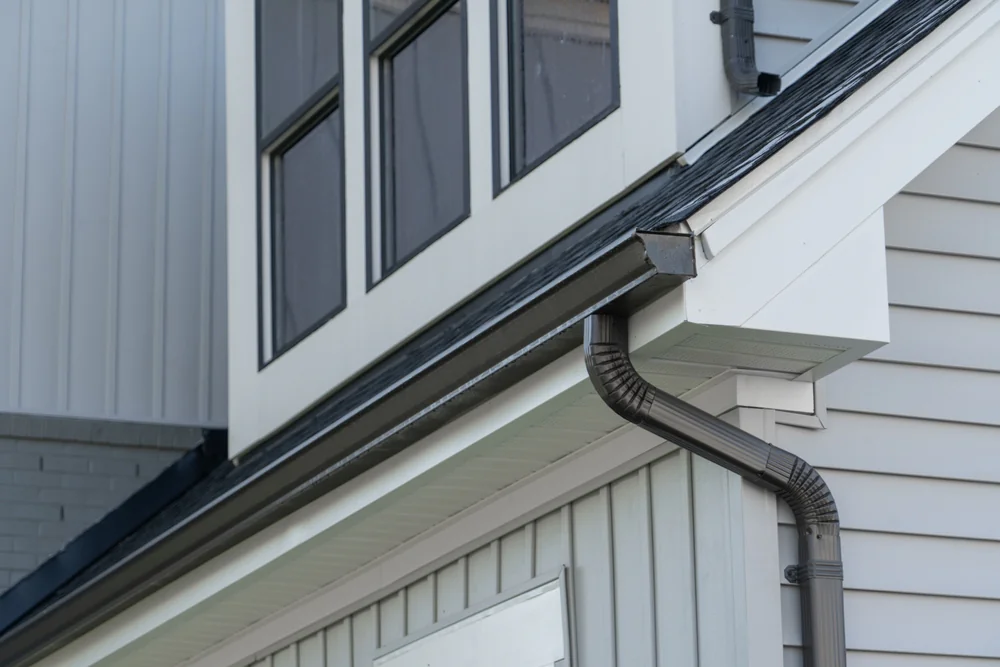
First, we come out and measure your roofline. We’re looking at total linear footage, pitch, fascia condition, and where water naturally wants to go. We’ll also check if your current downspouts are dumping water too close to your foundation—that’s a common problem we fix during installation.
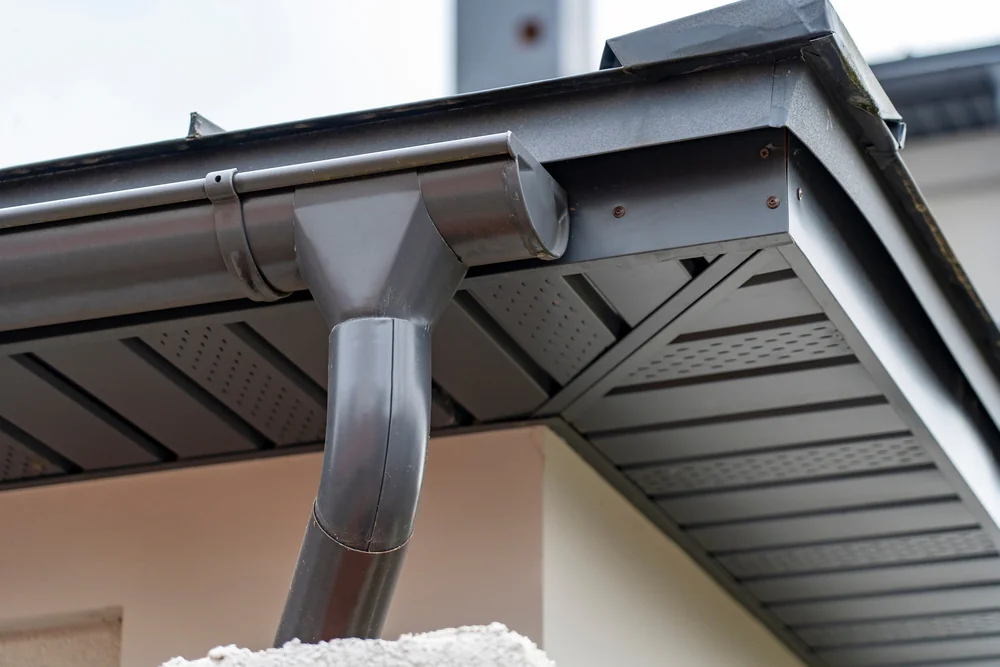
Next, we fabricate your seamless gutters on-site. No seams means fewer weak points and way fewer leaks over time. We custom-cut everything to fit your home exactly, then install with the correct slope so water moves toward the downspouts instead of pooling in the middle.
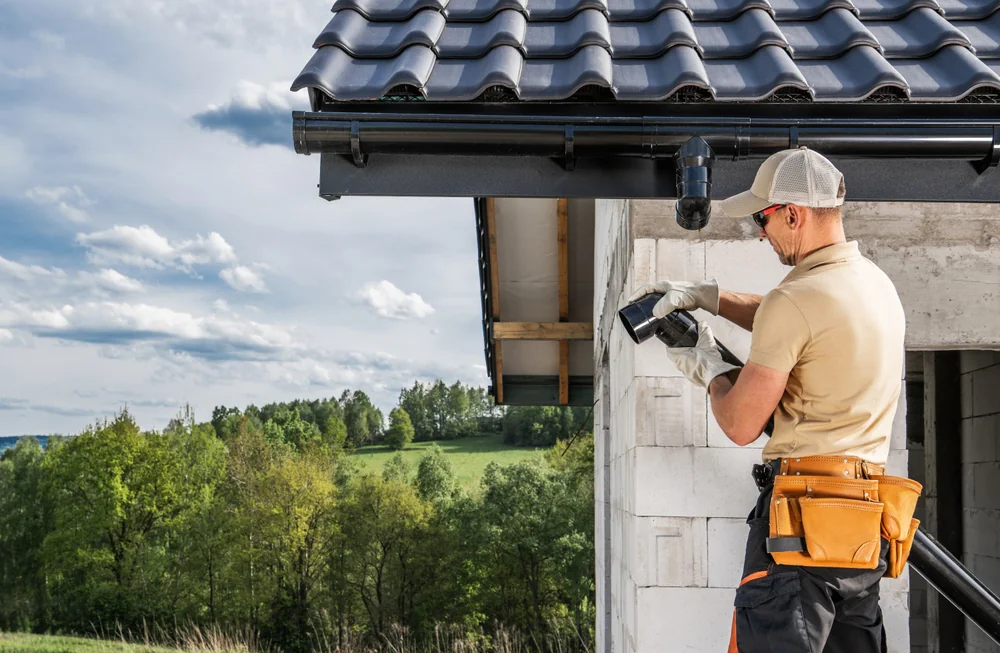
We secure the gutters to your fascia with hidden hangers or brackets—not spikes, which loosen over time. Then we install downspouts and extensions to move water at least five feet away from your foundation. If you want gutter guards, we install those last.
The whole process usually takes a day, depending on the size of your house. We clean up completely when we’re done. You’ll have a gutter system that works the way it’s supposed to, and a warranty that backs it up.
Ready to get started?
You’re getting seamless aluminum or copper gutters, custom-fabricated to your home’s measurements. Aluminum is lightweight, rust-resistant, and holds up well in Massachusetts winters. Copper costs more but lasts longer and develops that greenish patina some homeowners want.
We install the gutter system with proper pitch—usually a quarter-inch drop per 10 feet—so water doesn’t sit and stagnate. Downspouts are sized and placed to handle your roof’s square footage, and we add extensions or underground drains if your yard slopes toward your house.
If you’re tired of cleaning gutters, we can install gutter guards during the same visit. They won’t eliminate maintenance completely, but they’ll cut it way down. Most of our clients in Littleton Common go with guards because of the oak and maple trees in the area.
We also handle gutter repair and replacement if your current system is sagging, leaking, or pulling away from the house. Sometimes you don’t need a full replacement—just new hangers or a section resealed. We’ll tell you what actually needs fixing, not what makes us the most money.
Most gutter installations in Littleton Common run between $1,200 and $3,500, depending on your home’s size and the materials you choose. The average cost per linear foot is around $4 to $9 for aluminum seamless gutters, which is what most homeowners go with.
Copper gutters cost more—usually $15 to $30 per linear foot—but they last 50+ years and don’t rust. If you’re adding gutter guards, that’s another $7 to $10 per linear foot depending on the type.
The biggest cost factors are linear footage, number of downspouts, fascia condition, and whether we’re removing old gutters first. A typical single-story ranch might need 120 to 150 linear feet. A two-story colonial could be closer to 200 feet. We give you an exact quote after measuring, so there’s no guessing.
Seamless aluminum gutters typically last 20 to 25 years in Massachusetts if they’re installed correctly and maintained. Copper gutters can last 50 years or more. Vinyl gutters, which we don’t recommend for this area, crack in cold weather and usually need replacing within 10 to 15 years.
The lifespan depends on a few things: installation quality, material choice, and whether you keep them clean. Gutters that are constantly full of wet leaves will rust out faster. Gutters that overflow regularly can pull away from the fascia, which leads to wood rot and bigger problems.
New England winters are tough on gutters. Ice dams, freeze-thaw cycles, and heavy snow loads all take a toll. That’s why we use heavier-gauge aluminum and secure everything with hidden hangers instead of spikes. It costs a little more upfront, but it’s the difference between gutters that last two decades and gutters that sag after five years.
Gutter guards aren’t necessary, but they make sense if you have a lot of trees or you’re tired of cleaning gutters twice a year. About 70% of homeowners who install them say the main reason is to prevent clogs and overflow, which is a legitimate concern in Littleton Common with all the oak and maple trees.
Good gutter guards reduce maintenance, but they don’t eliminate it. You’ll still need to brush off debris occasionally, especially after storms. The cheap mesh screens you see at hardware stores usually cause more problems than they solve—they trap small debris and create a mat that blocks water.
We typically recommend micro-mesh or solid cover guards. They cost more, but they actually work. If your roof is surrounded by pine trees that drop needles, or if you’re physically unable to climb a ladder safely, guards are worth the investment. If you’ve got a clear roofline and don’t mind cleaning gutters yourself, you can skip them.
We replace them before installing new gutters. Rotted fascia won’t hold gutter hangers securely, and if we install over damaged wood, your new gutters will sag or pull away within a year or two.
Fascia rot usually happens because old gutters overflowed or leaked for too long. Water runs down the back of the gutter, soaks into the wood, and eventually the board deteriorates. It’s common, and it’s fixable—we just need to address it before we hang new gutters.
We’ll inspect your fascia during the estimate and let you know if any sections need replacing. Most of the time it’s just a few boards, not the whole house. We use primed or PVC fascia depending on your preference, then paint or wrap it to match your trim. It adds to the cost, but it’s the only way to do the job right.
If your gutters are sagging, pulling away from the house, or leaking at multiple seams, replacement usually makes more sense than patching. Same thing if they’re dented, rusted through, or more than 20 years old.
You might only need repairs if the problem is isolated—like one section that’s leaking or a downspout that came loose. We can reseal seams, replace hangers, or reattach sections that have pulled away. That’s a lot cheaper than a full replacement, and if the rest of the system is solid, there’s no reason to replace it.
During the estimate, we’ll walk around your house and show you exactly what’s going on. We’ll tell you if repairs will actually fix the problem or if you’re just delaying the inevitable. Most homeowners appreciate the honesty, and it’s why a lot of our work comes from referrals.
Yes, but it’s not ideal. We can install gutters in winter as long as temperatures are above freezing and there’s no ice on the roof or fascia. Sealants and adhesives need certain temperatures to cure properly, and working on icy ladders isn’t safe for anyone.
Most homeowners in Littleton Common schedule gutter installation in spring or fall. The weather’s more predictable, and we’re not dealing with frozen ground or snow piles blocking access to downspout areas. That said, if you’ve got an urgent issue—like gutters that tore off during a storm—we’ll work with you to get it handled as quickly as conditions allow.
If you’re planning ahead, spring and early summer are your best bet. You’ll have more scheduling flexibility, and your new gutters will be ready before the heavy fall rains and winter freeze-thaw cycles. Waiting until you have an emergency usually means paying more and dealing with water damage in the meantime.
Other Services we provide in Littleton Common