Hear from Our Customers
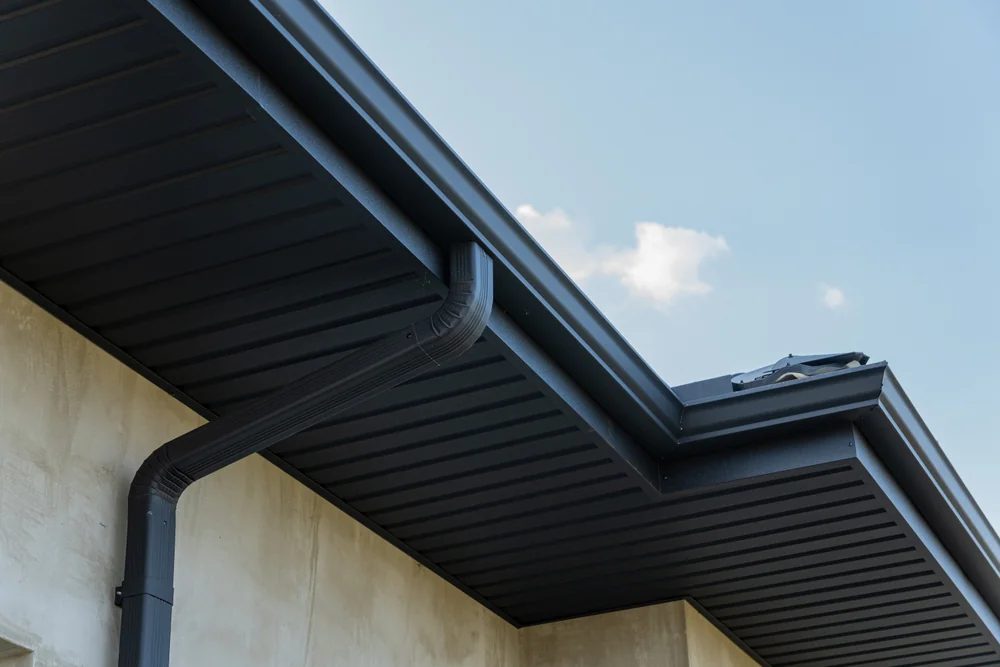
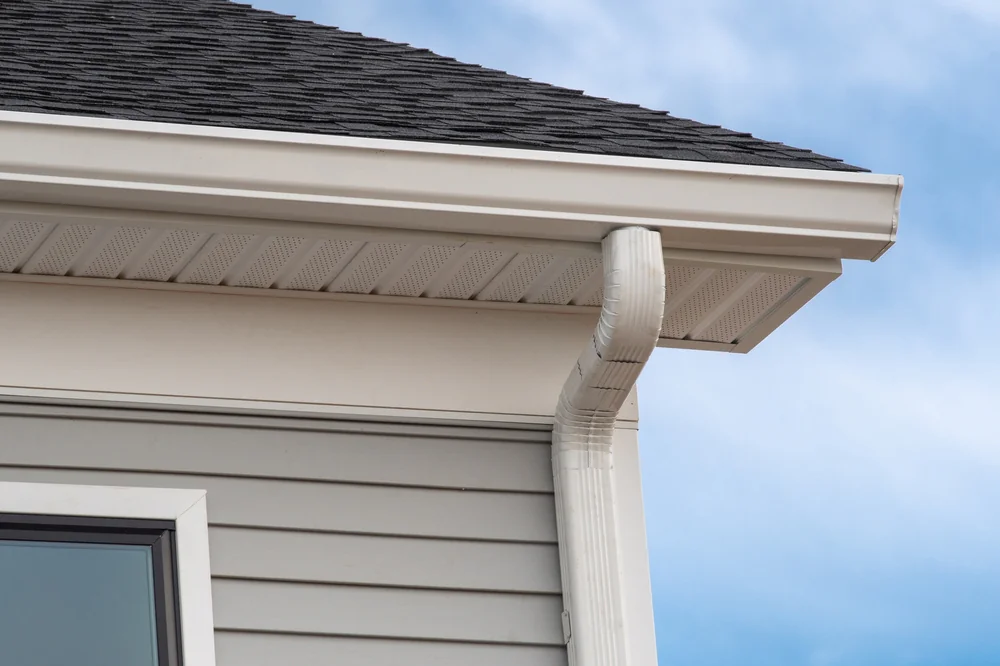
Here’s what happens when your gutters actually work: water goes where it’s supposed to. Not into your foundation. Not pooling against your basement walls. Not turning into ice dams that rip your fascia apart come February.
You stop seeing those brown stains creeping across your ceiling. Your landscaping doesn’t get washed into the street every time it rains. And you’re not out there on a ladder every fall, scooping out wet leaves and pine needles.
Properly installed seamless gutters handle Hudson’s weather without constant maintenance. They’re sized right for the volume of water coming off your roof. They’re pitched correctly so water moves instead of sitting. And they’re attached in a way that doesn’t pull away the first time ice builds up.
We’ve spent 18 years working on homes across Hudson and the North Shore. We’re an Owens Corning Preferred Contractor, which means we’ve met specific standards for quality and reliability that most contractors don’t bother with.
Our BuildZoom score puts us in the top 8% of licensed contractors in Massachusetts. That’s not marketing talk—that’s a third-party ranking based on licensing, insurance, and actual project history.
We’re local, licensed, and insured. We show up when we say we will. And we don’t leave until the job’s done right, because we know you’ll see us around town.
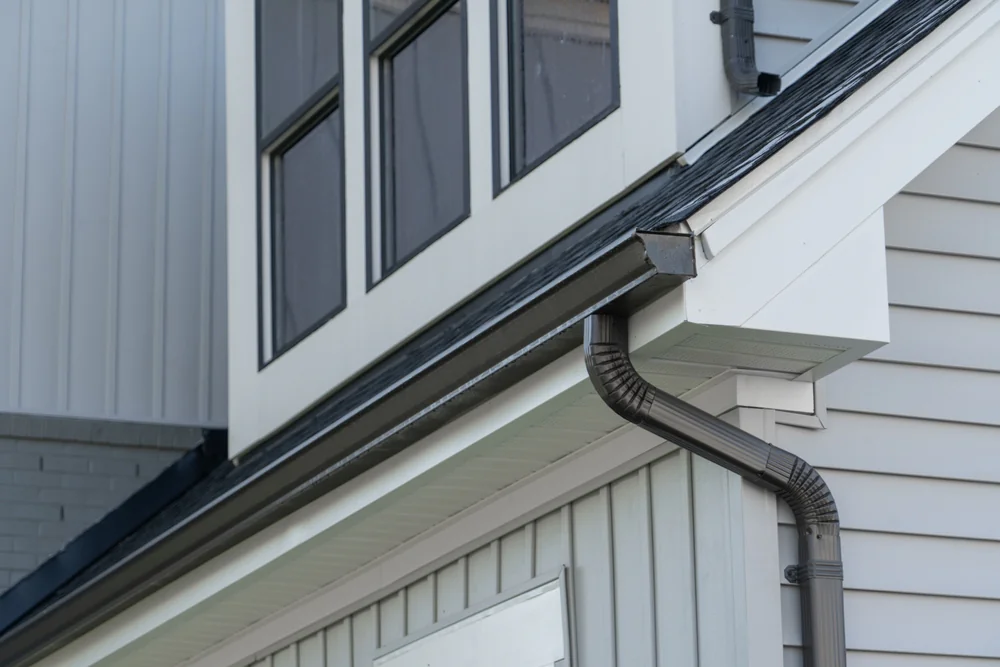
We start by measuring your roofline and calculating how much water your roof sheds during heavy rain. Most homes in Hudson need 5-inch gutters, but some roofs require 6-inch to handle the volume. We don’t guess.
Next, we fabricate your seamless gutters on-site using .032 aluminum. No seams means no leaks. We custom-fit every section to your home’s exact measurements, so there’s no piecing together pre-cut lengths that never quite match.
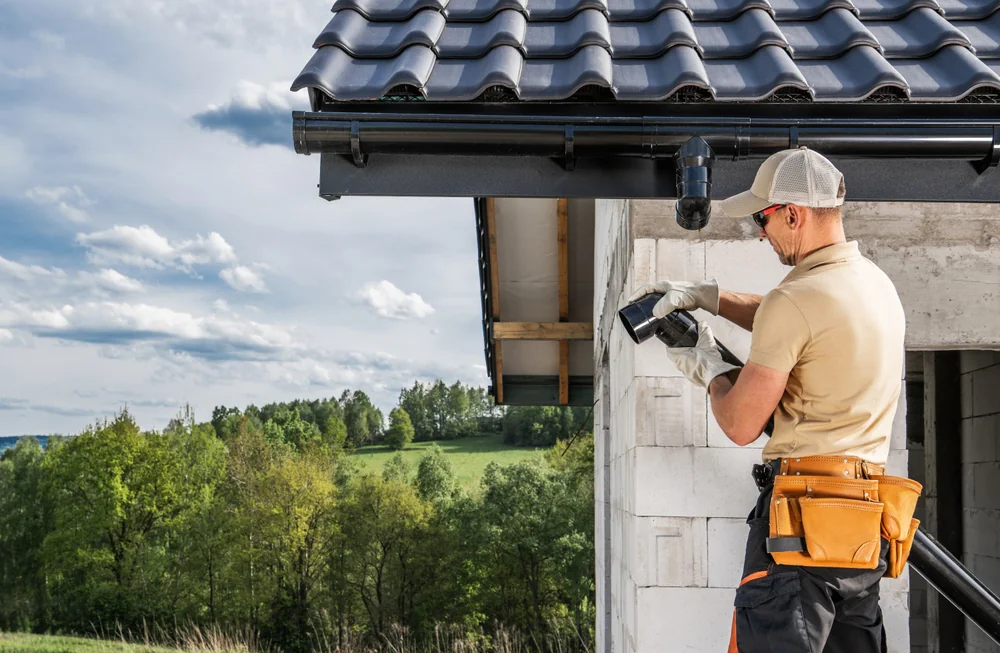
Then we install them with the correct pitch—enough slope to move water, but not so much that it looks off or causes overflow at the downspouts. We secure them properly to your fascia so they don’t sag or pull away when snow and ice load them up.
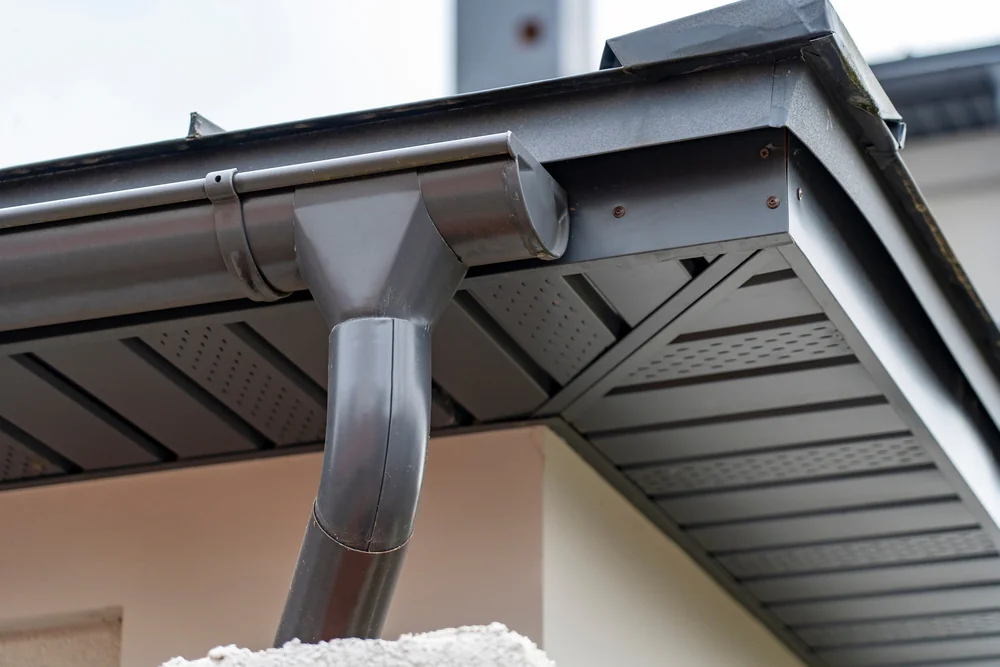
Finally, we install downspouts in locations that actually move water away from your foundation. If your grading doesn’t naturally carry water away, we’ll tell you. Because installing new gutters on a house with drainage problems just moves the problem, it doesn’t fix it.
Ready to get started?
You get custom seamless gutters made from .032 aluminum that won’t rust and should last 20 years. They’re thicker than the standard .027 you’ll find at big-box stores, which means they hold their shape and don’t dent as easily.
You get proper sizing for Hudson’s climate. Massachusetts averages 200 days of precipitation a year, and we’ve seen rainfall intensity increase over the past decade. Your gutters need to handle that volume, plus snow melt, without overflowing.
You also get gutter guard installation if you want it. If you’ve got trees near your roofline—oak, pine, maple—guards keep the channels clear so you’re not climbing a ladder four times a year. We’ll walk you through whether guards make sense for your property or if they’re overkill.
And you get downspouts positioned to move water at least four feet from your foundation. That’s the minimum. If your yard slopes toward your house or you’ve got clay soil that doesn’t drain well, we’ll recommend extensions or drainage solutions that actually work.
Most gutter installations in Hudson run between $1,800 and $4,500, depending on your home’s size, roofline complexity, and whether you’re adding gutter guards. A typical single-family home with 200 linear feet of gutters usually falls in the $2,200 to $3,000 range for seamless aluminum with downspouts.
The price includes custom fabrication on-site, professional installation with proper pitch and secure mounting, and downspouts that direct water away from your foundation. If you’re replacing old gutters, removal and disposal add to the cost, but we handle that as part of the job.
Gutter guards add roughly $8 to $12 per linear foot if you want them. For some homes, they’re worth it. For others, they’re unnecessary. We’ll tell you which category you’re in based on your roof pitch, nearby trees, and how much maintenance you’re willing to do.
Seamless gutters are fabricated on-site in one continuous piece for each section of your roofline. Sectional gutters come in pre-cut lengths that get pieced together with connectors and sealed at the joints.
The difference matters because every seam is a potential leak point. Over time, the sealant breaks down from freeze-thaw cycles, and those joints start dripping. Seamless gutters eliminate that problem entirely—no seams, no leaks.
Seamless also looks cleaner. You don’t have visible connectors every ten feet. And because they’re custom-made for your exact measurements, they fit better and perform better. The cost difference is minimal, usually $1 to $2 per linear foot, but the lifespan and performance difference is significant.
It depends on your roof’s square footage, pitch, and how much water it sheds during heavy rain. Steeper roofs move water faster, which means more volume hitting your gutters at once. Larger roof sections obviously collect more water.
Most homes in Hudson do fine with 5-inch gutters. But if you’ve got a steep roof, a large unbroken roofline, or you’ve noticed your current gutters overflowing during storms, you probably need 6-inch.
We calculate this during the estimate. We measure your roof, check the pitch, and look at your drainage patterns. If 5-inch will handle it, that’s what we’ll recommend. If you need 6-inch, we’ll tell you why and show you the math. There’s no upselling here—just proper sizing based on how much water your roof actually produces.
Gutter guards work if you’ve got the right kind of debris problem and you install the right type of guard. If you’ve got oak trees dropping acorns and leaves, or pine trees shedding needles year-round, guards can save you from cleaning your gutters three or four times a year.
But they’re not magic. Some debris still gets through, and you’ll still need to rinse them off occasionally. And if your trees drop heavy seed pods or helicopters, some guard styles actually make the problem worse by creating a surface for debris to mat up on.
We install micro-mesh guards for most Hudson homes because they block pine needles and small debris better than screens or foam inserts. They cost more upfront, but they require less maintenance. If you’ve only got a couple trees and you don’t mind cleaning gutters once a year, skip the guards and save the money.
Most gutter installations take one day, sometimes two if you’ve got a larger home or complex roofline. We fabricate the gutters on-site, so there’s no waiting for materials to arrive. We show up, take measurements, run the aluminum through the machine, and install everything the same day.
As for landscaping, we’re careful. We set up our equipment on your driveway when possible. If we need to work near your beds or shrubs, we’ll let you know ahead of time and take precautions. We’re not dragging ladders through your hostas or driving stakes into your lawn.
After we’re done, we clean up. That means hauling away your old gutters if we’re replacing them, picking up any metal shavings or scraps, and making sure your property looks the same as when we arrived—just with new gutters that actually work.
Ice dams happen when heat escapes through your attic, melts snow on your roof, and that water refreezes at the colder roof edge where your gutters sit. The ice builds up, blocks drainage, and forces water under your shingles. It’s one of the most common—and most damaging—winter problems in Massachusetts.
Properly installed gutters help, but they don’t solve an ice dam problem caused by poor attic insulation or ventilation. If your attic’s losing heat, you’ll get ice dams no matter what gutters you have. We’ll tell you if that’s what’s happening, because installing new rain gutters won’t fix it.
What does help: making sure your gutters are clear before winter, installing heat cable in problem areas if needed, and addressing the insulation issue in your attic. We can handle the gutter side of things. For attic work, we’ll point you toward what actually needs to happen so you’re not dealing with the same problem every February.