Hear from Our Customers
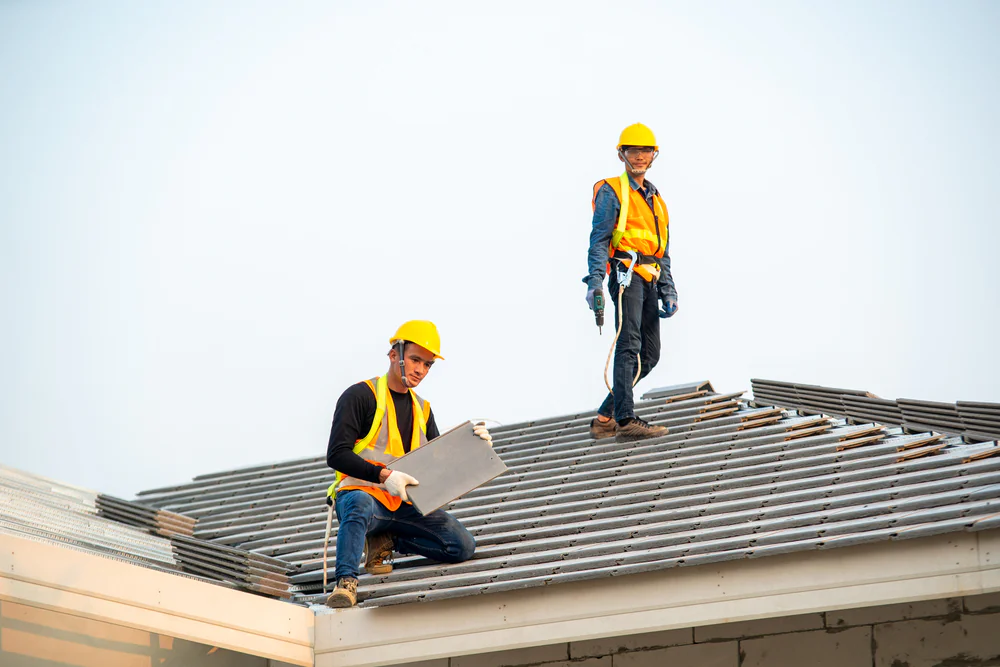
You stop worrying every time it snows. You’re not climbing into the attic with a flashlight looking for leaks. You’re not calling your insurance company because another shingle blew off.
A roof that works means you sleep through storms instead of lying awake wondering if water’s getting in. It means your heating bill isn’t through the roof because warm air’s escaping. It means you can sell your house when you’re ready without scrambling to patch things up first.
When your roof’s done right, it disappears from your to-do list. That’s what matters. Not the brand of shingle or the pitch angle—just knowing it’ll hold up when the next nor’easter rolls through Newbury.
We work throughout Newbury and Essex County because we’re based here in Methuen. We’ve seen what happens to roofs when you get three feet of snow in a week, then it melts, then it freezes again.
We’re an Owens Corning Preferred Contractor, which means we meet their requirements for quality and reliability. We’re fully licensed and insured. Our BuildZoom score puts us in the top 8% of Massachusetts contractors—not because we’re trying to win awards, but because we show up and do the work correctly.
You’ll find us working on homes built in the 1940s that need complete tear-offs, and newer construction that just needs storm damage repairs. Different problems, same approach: figure out what’s wrong, explain what it’ll take to fix it, then get it done.
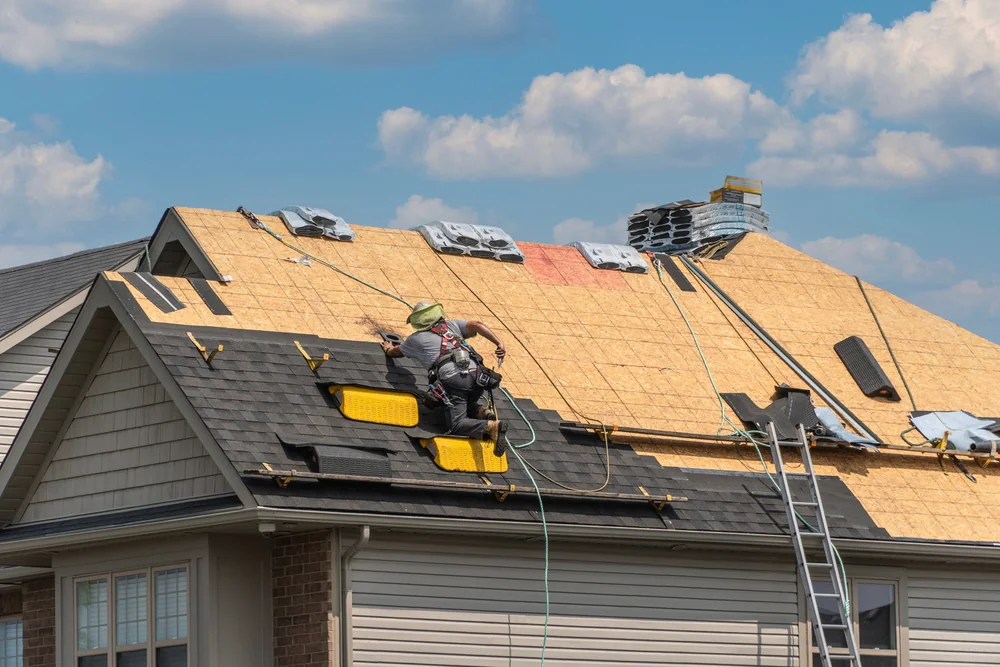
First, we come look at your roof. Not from the ground with binoculars—we get up there and check the actual condition. We’re looking for missing shingles, damaged flashing, signs of ice dam damage, soft spots that mean water’s been getting in.
Then we tell you what we found. If it’s a simple repair, we’ll say that. If you need a full replacement, we’ll explain why and what it’ll cost. We don’t upsell you on things you don’t need, and we don’t downplay problems that’ll get worse.
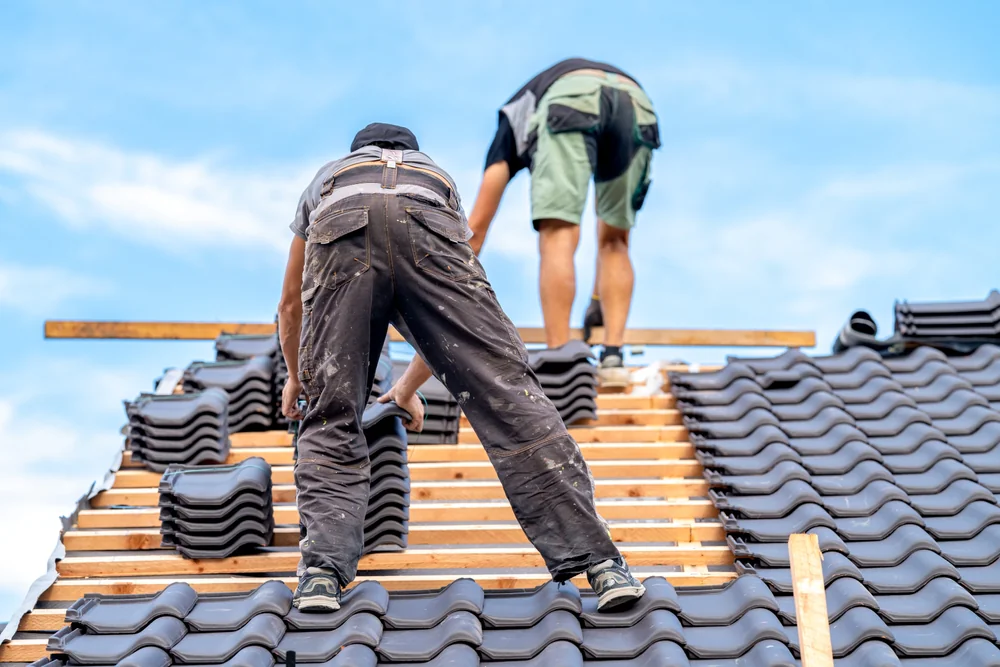
Once you’re ready to move forward, we handle the permits and order materials. Most jobs in Newbury take a couple of days depending on size and weather. We protect your property, tear off the old roof if needed, install new underlayment and shingles, replace any damaged decking, and clean up completely when we’re done.
You get a roof that’ll handle whatever winter throws at it. And if you’re dealing with insurance because of storm damage, we’ll work with them directly so you’re not stuck playing middleman.
Ready to get started?
You’re getting a complete roofing job, not a patch-and-pray situation. That means proper ventilation so your attic doesn’t turn into a sweatbox in summer or an ice dam factory in winter. It means flashing around chimneys and vents that’s actually sealed. It means drip edge that directs water into gutters instead of behind your fascia.
In Newbury, where 34% of homes were built before 1940, we often find roof decking that needs replacing. We don’t cover up rotted wood and hope for the best. If the structure’s compromised, we fix it before we put new shingles down.
We use quality materials—Owens Corning Duration shingles that hold up to wind and impact, Mule Hide products for flat or low-slope sections. These aren’t the cheapest options at the supply house, but they’re what we’d put on our own homes. The average roof replacement in this area runs around $10,550 for an 1,800-square-foot home. Your actual cost depends on pitch, complexity, and what we find once the old roof’s off.

If you’re missing a few shingles after a storm or you’ve got a small leak in one spot, that’s usually a repair. You patch the problem area, replace damaged materials, and you’re good for years.
You’re looking at replacement when you’ve got widespread damage—curling shingles across multiple sections, granule loss that’s left bare spots, or multiple leaks in different areas. If your roof’s over 20 years old and you’re starting to see issues, replacement usually makes more sense than throwing money at repairs that’ll just buy you another year or two.
The real answer comes from getting up there and looking. We’ll tell you honestly whether a repair will actually solve your problem or if you’re just delaying the inevitable. Most homeowners in Newbury are dealing with older homes—the median construction year here is 1962—so replacement is common. But we’re not going to push you toward a $10,000 job if a $800 repair will handle it.
First, don’t get up there with a hammer or a heat gun. You’ll do more damage than the ice dam already has.
Call someone who can safely remove the ice and check for damage. Ice dams form when heat escapes through your roof, melts snow, and that water refreezes at the edge where it’s colder. The ice builds up and forces water back under your shingles. By the time you see the dam, water’s often already gotten into your attic.
Short term, we remove the ice carefully and check for leaks or damaged shingles. Long term, you need better attic insulation and ventilation so heat stops escaping through your roof. That’s the only real fix. You can rake snow off your roof all winter, but if warm air’s still getting out, you’ll keep making ice. Massachusetts winters are brutal enough without fighting the same problem every February.
Maybe. It depends on what caused the damage and what your policy covers.
Most policies cover sudden damage from storms—wind that rips off shingles, hail that dents or cracks them, tree branches that punch through. They don’t cover wear and tear or damage that happened because you didn’t maintain the roof. And you typically need to file within a year of the storm, or you’re paying out of pocket.
Here’s what actually happens: we document the damage with photos and notes. We can work directly with your insurance adjuster to show them what needs fixing. Sometimes they’ll approve everything. Sometimes they’ll push back and we’ll need to explain why certain repairs are necessary. Either way, you’re not navigating that process alone.
If the damage is clearly storm-related and you file promptly, you’ve got a decent shot at coverage. If your roof was already failing and the storm just finished it off, that’s harder. We’ll be straight with you about what we think insurance will cover before you file a claim.
Most residential jobs take two to three days if weather cooperates. Smaller homes or simple layouts might be done in a day. Larger homes with multiple levels, steep pitch, or complex details might take four or five days.
Weather’s the wildcard. We’re not putting down shingles in the rain or when it’s below freezing. We’re not leaving your roof open overnight if there’s precipitation in the forecast. So a job that should take two days might stretch to four if we get typical New England weather.
We move fast when we’re working—tear-off in the morning, new roof going down by afternoon. But we’re not cutting corners to hit some arbitrary timeline. You want it done right more than you want it done Friday. We protect everything, work efficiently, and clean up completely. Most customers are surprised how quick it goes once we start, but we’d rather give you a realistic timeline than promise two days and take five.
Asphalt shingles are the standard for good reason. They handle freeze-thaw cycles, they’re cost-effective, and when installed correctly with proper underlayment and ventilation, they’ll give you 20-25 years.
We use Owens Corning Duration shingles on most jobs. They’re impact-resistant, they hold up to wind, and they don’t curl or crack the way cheaper shingles do after a few New England winters. The architectural style looks better than basic three-tab, and the warranty’s actually worth something.
Metal roofing’s gaining popularity because it sheds snow and lasts 40+ years. It costs more upfront—sometimes double what asphalt runs—but you’re probably never replacing it again. For flat or low-slope sections, we use Mule Hide products that handle ponding water and temperature swings.
The material matters less than the installation. You can put premium shingles on a roof with bad ventilation and inadequate underlayment, and it’ll fail early. You can use mid-grade materials installed correctly with attention to detail, and it’ll outlast the expensive stuff done wrong. That’s where the Owens Corning Preferred Contractor certification actually means something—we’re installing to their standards, not winging it.
If your roof’s over 15 years old or you’ve been through major storms, yes. You want to catch small problems before they become expensive ones.
Most damage starts small. A lifted shingle lets a little water in. That water sits in your decking. The wood starts to rot. By the time you see a stain on your ceiling, you’re not just replacing shingles anymore—you’re replacing decking, maybe dealing with mold, possibly looking at interior repairs.
An inspection catches that lifted shingle before water gets in. We check flashing, look for granule loss, make sure your ventilation’s working, and spot any areas where age or weather’s taking a toll. If everything looks good, you know you’re fine for another few years. If we find issues, you can address them on your timeline instead of scrambling when a leak forces your hand.
Given that most homes in Newbury were built in the 1960s or earlier, your roof’s probably due for attention even if it looks okay from the ground. We’re not trying to create work—we’re trying to save you from emergency repairs during the next blizzard when every roofer in Essex County is booked solid.